
Last updated November 18, 2026
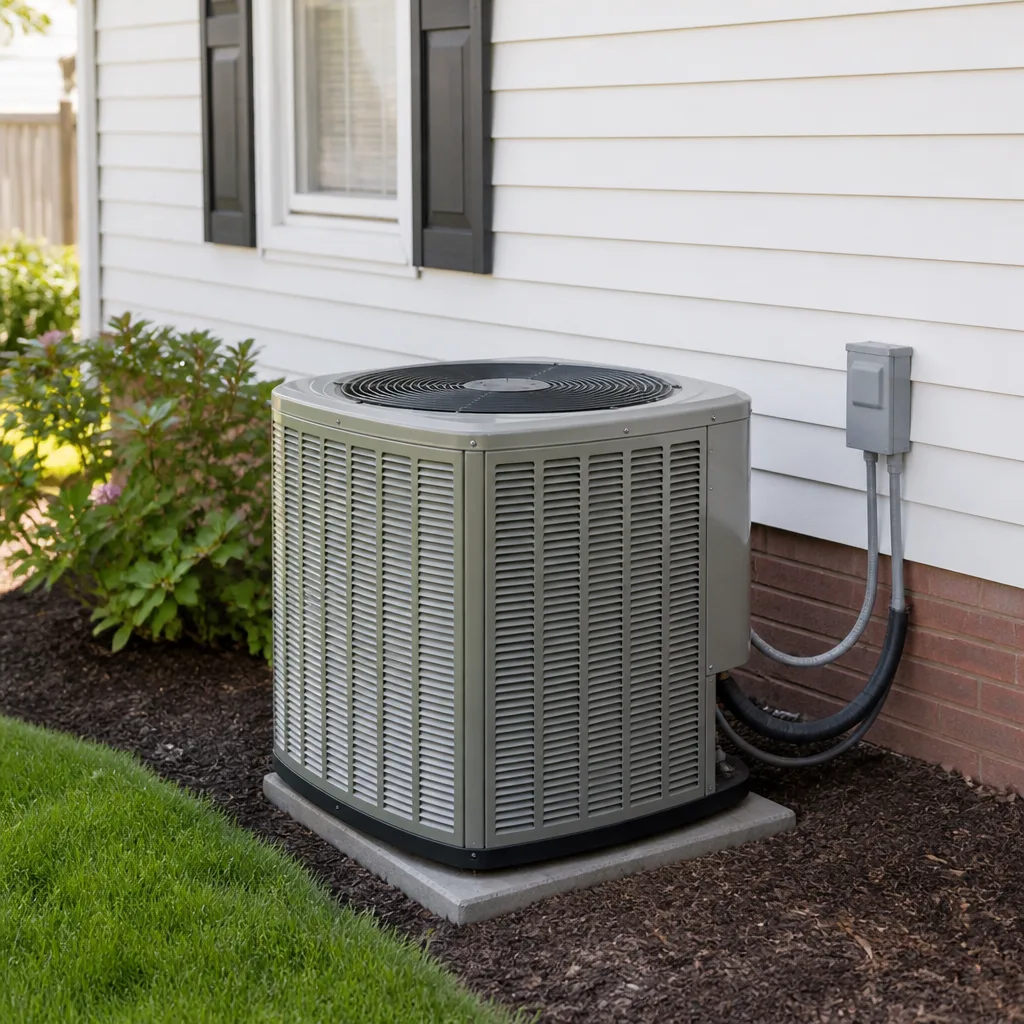 AC repair
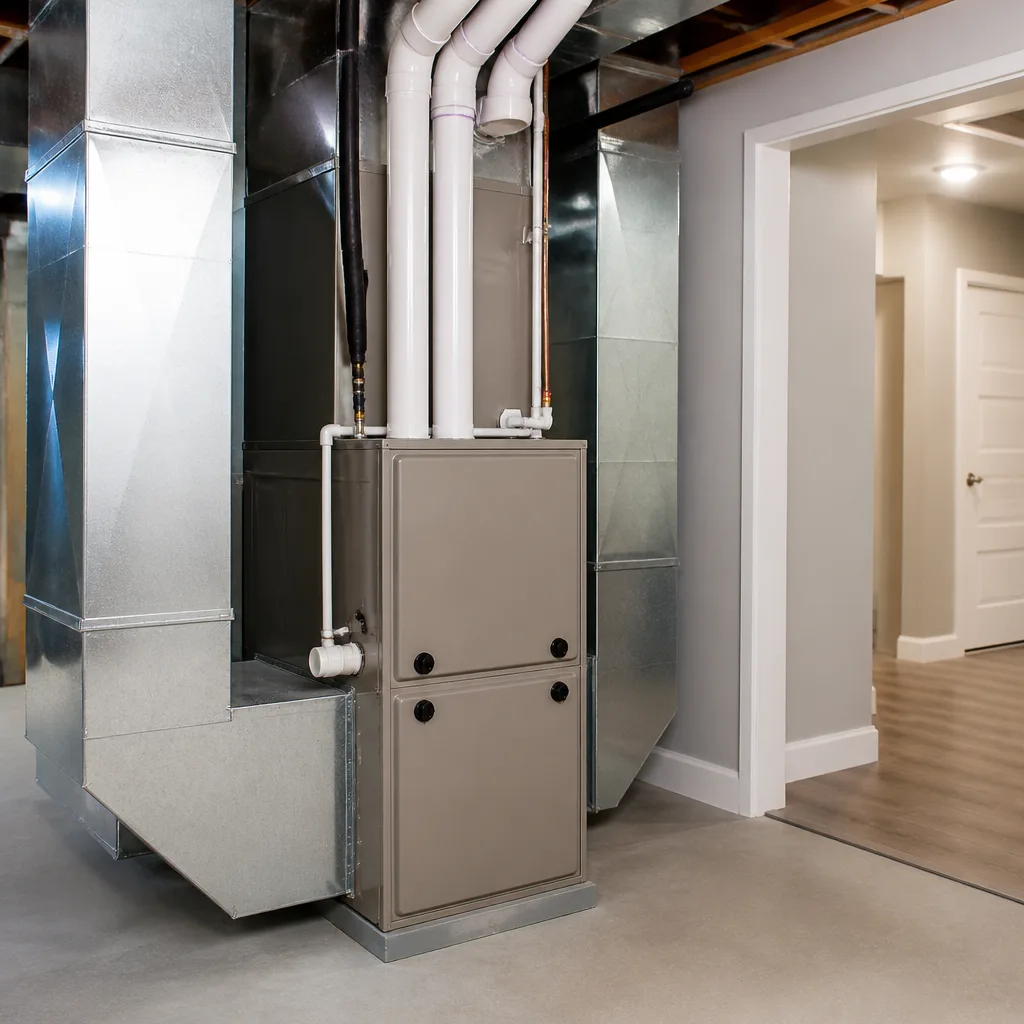 Furnace & heating
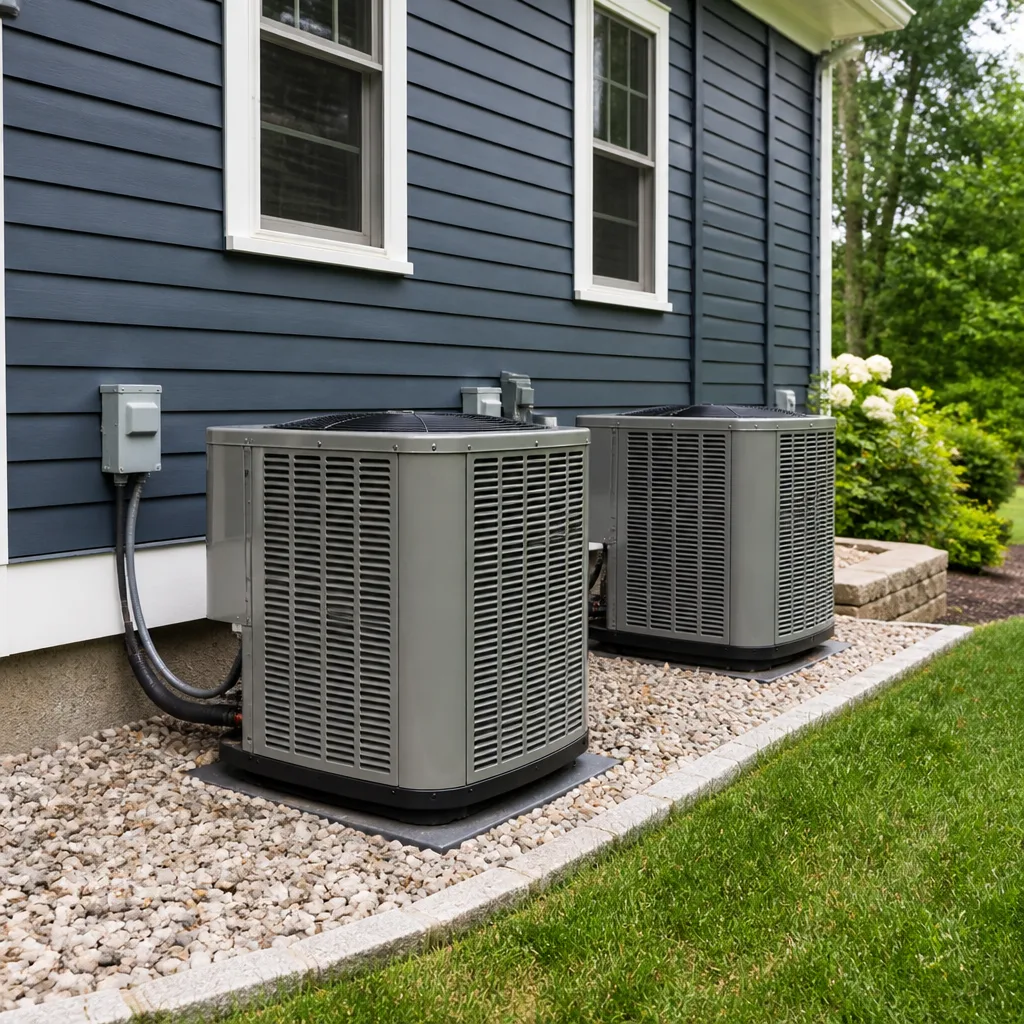 Heat pumps
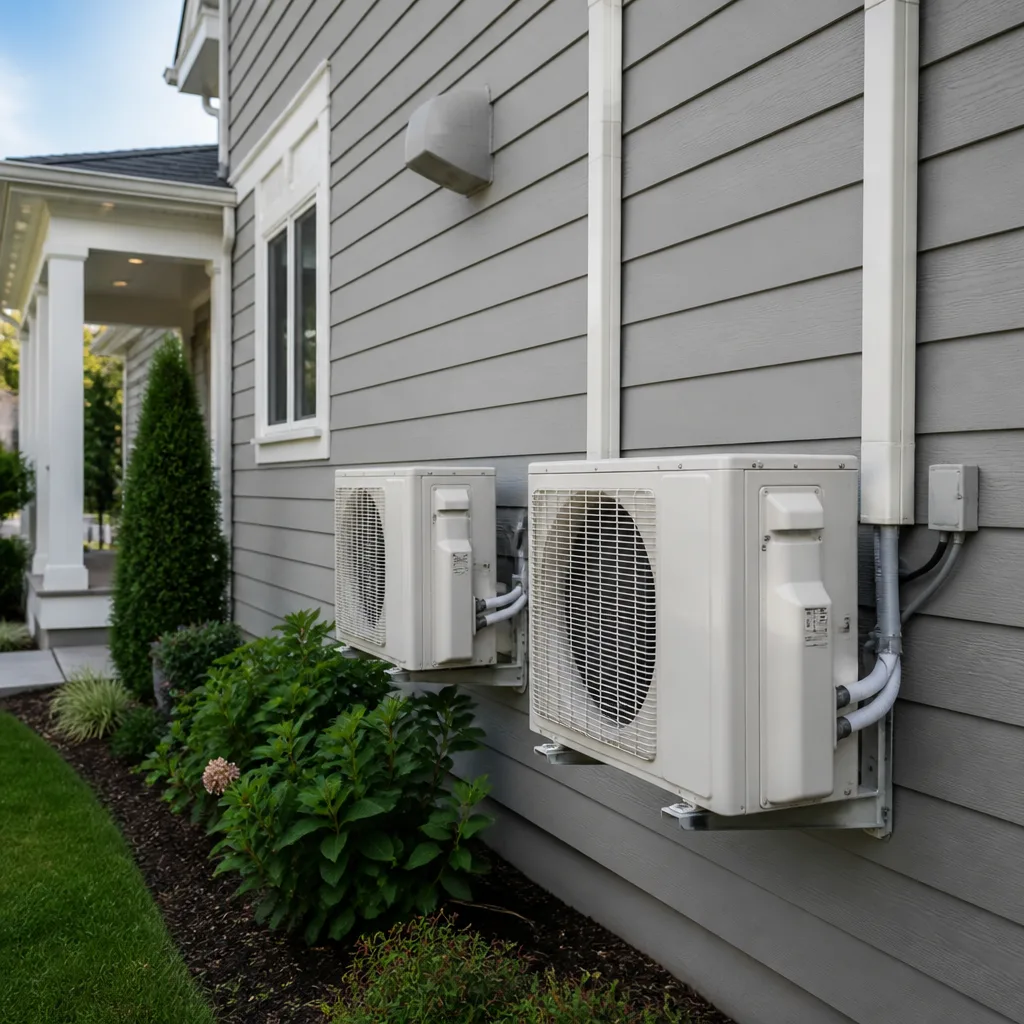 Ductless mini splits
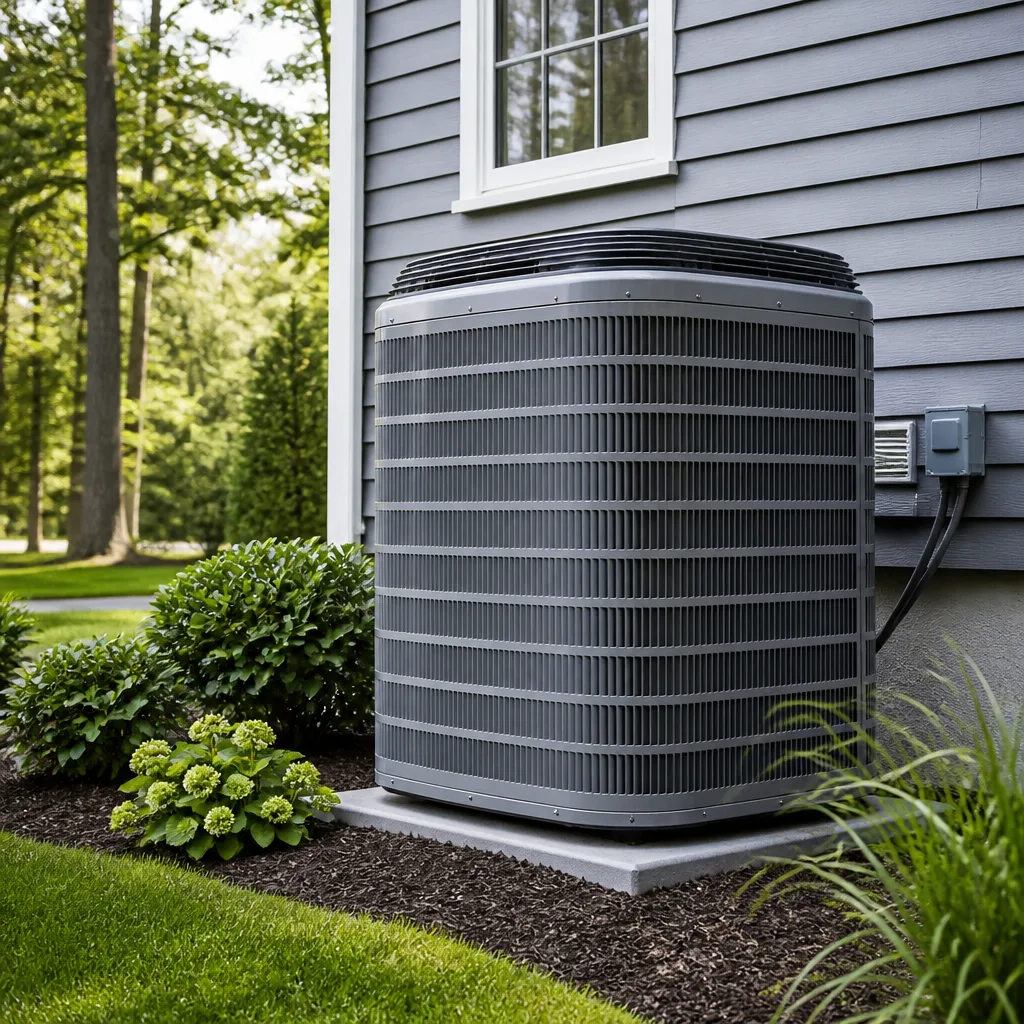 Carrier
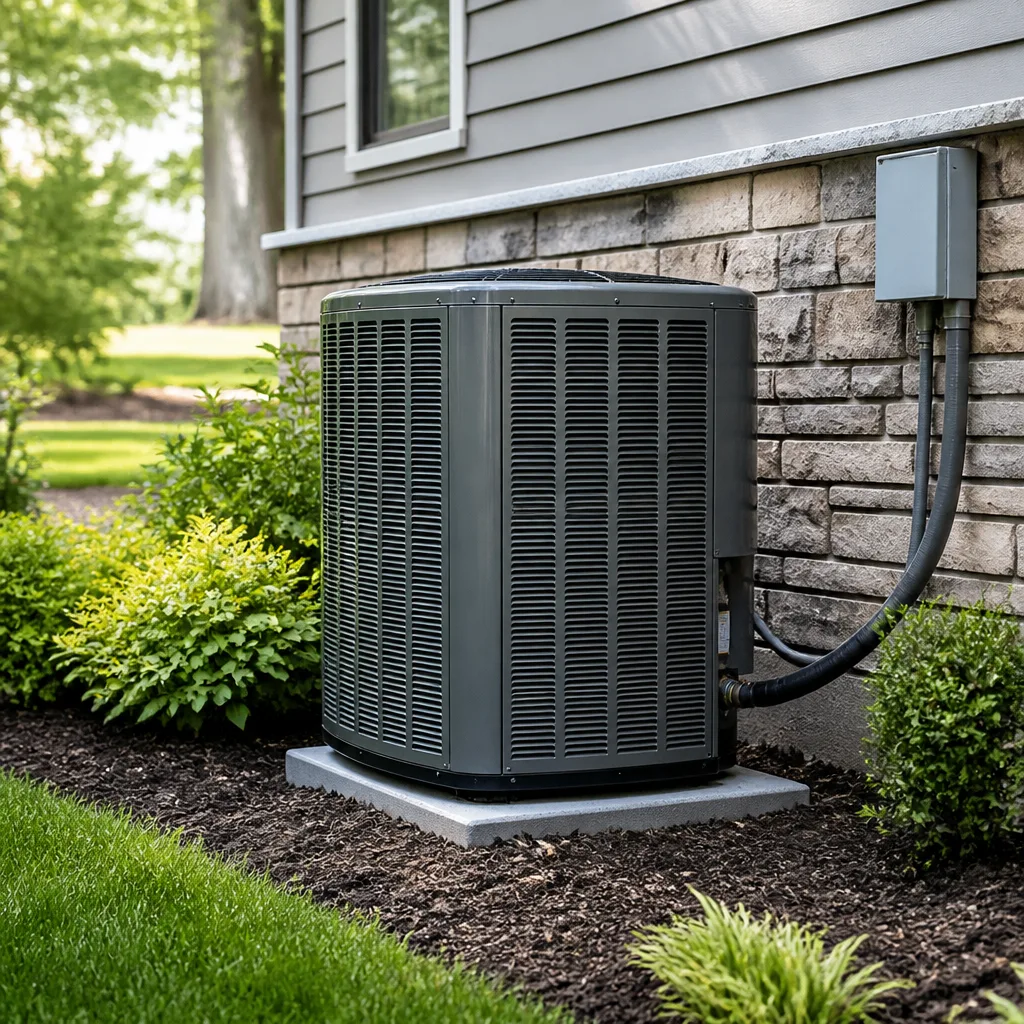 Trane
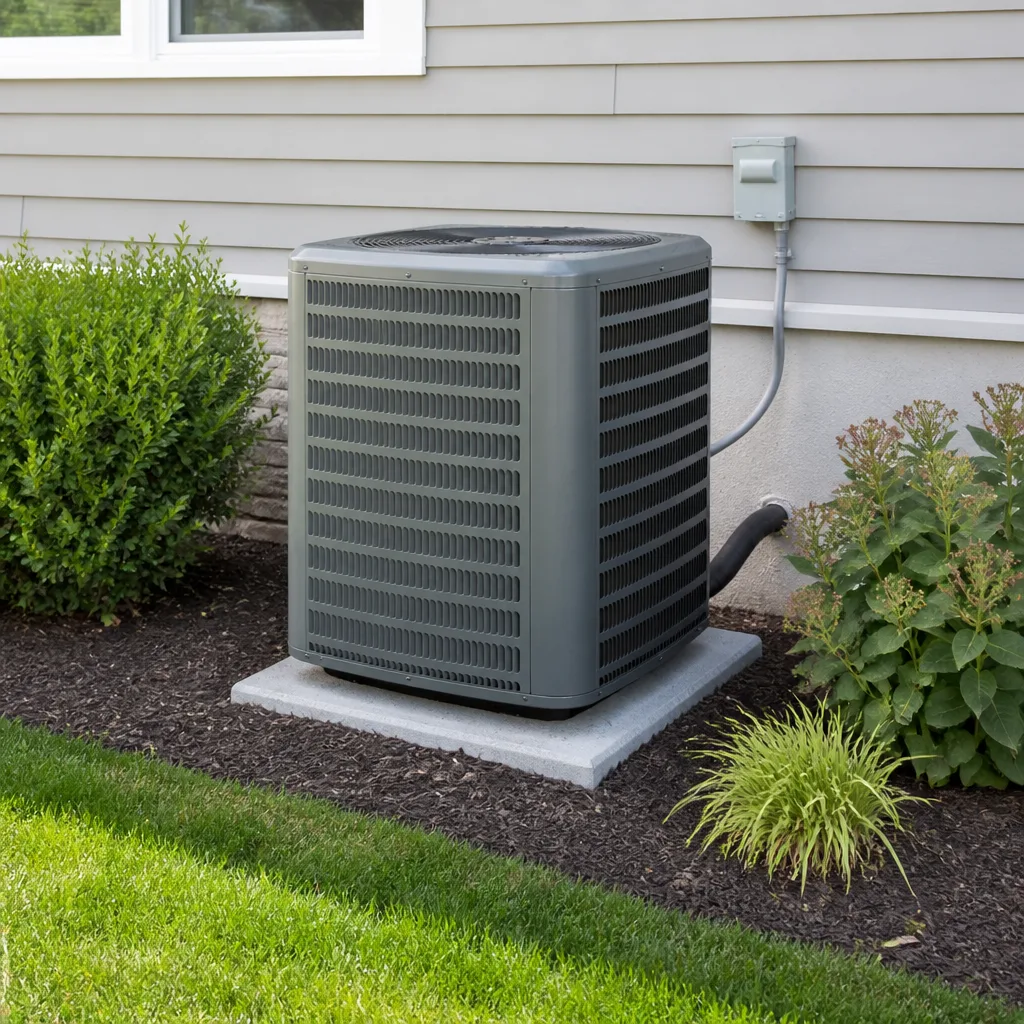 Goodman
Seasonal tune-up and full diagnostic on your Carrier, Trane, or Goodman system - readings shown to you before any repair is proposed
Diagnosis first, numbers second - you approve the repair price before a single part goes in.
Get your free estimateThe Complete AC Repair & Installation Guide for Spring Valley Homeowners
The National Weather Service logged more than 40 days above 105°F across the Las Vegas valley in 2023. On the west side, in Spring Valley, attic temps routinely run 20 degrees hotter than the outdoor number, and a lot of the air conditioners bolted to those attics were never sized for it. The house you bought in 1998 was built to a load assumption from 1998. The summers since have not been polite about that gap. This guide is about what actually works on a Spring Valley ranch house: how to read the signs your system gives you, how to verify anyone who touches it, and how to tell a repair that buys you two summers from an installation that makes sense for a home you plan to stay in.
Quick Answer
In Spring Valley, most AC failures come down to one of three things: a failed capacitor or contactor, a refrigerant leak at the evaporator coil, or a system that was undersized for the home’s real load the day it was installed. A proper diagnosis starts with electrical and pressure readings, not a guess. Repairs typically run a few hundred dollars; a full replacement is a load-calculated decision that should never happen on the same day you called about a breakdown.
Styles & brands we work with
- AC repair
- Furnace & heating
- Heat pumps
- Ductless mini splits
- Carrier
- Trane
- Goodman
Table of Contents
- Why Spring Valley Homes Run Hotter Than the Rest of the Valley
- How a Spring Valley AC Actually Works, and Where It Fails
- How a Real Diagnostic Should Go: Readings First, Numbers Second
- How to Verify Any HVAC Contractor in Nevada Before They Touch Your System
- Repair or Replace? The Question That Costs Spring Valley Homeowners the Most
- NV Energy Rebates and What Actually Qualifies in Spring Valley
- Red Flags Specific to Rotating-Crew National Outfits
- What a Real Installation Looks Like on a 1990s Spring Valley Ranch House
Why Spring Valley Homes Run Hotter Than the Rest of the Valley
Spring Valley sits in a low bowl on the west side of the Las Vegas valley, and that geography is not a small detail. Heat pools. By 4 p.m. in August, the air sitting over a stretch of stucco-and-tile ranch homes in Spring Valley can be a couple degrees warmer than the same afternoon in Henderson, which catches more breeze off the open ground east of the strip corridor. The stucco itself matters too. Stucco is a great exterior finish and a terrible heat radiator. It holds the day’s heat and hands it back to the walls well past sunset, which is exactly when a lot of Spring Valley homeowners notice their system can’t keep up.
Then there’s the sun exposure. West-facing walls in Spring Valley take the full afternoon hit. A house with a garage on the west side and a single-story ranch footprint has a much larger west-facing surface than a two-story build in Summerlin with the same square footage, because a two-story builds up instead of out. That’s why load calculations for Spring Valley can’t be copied from a Henderson or Summerlin job. Same valley, different geometry. A contractor running a calc off square footage alone is going to get this wrong every time.
Attic ductwork makes it worse. Between 1985 and 2005, most tract homes in Spring Valley were built with flex duct run through the attic. When that attic hits 140°F, the duct loses efficiency before the cold air ever reaches the register. Flex duct also sags. A 20-year-old duct run that has sagged three inches loses more cooling than most homeowners realize. If your back bedroom never gets as cold as the living room, the ductwork is the first suspect, not the condenser.
How a Spring Valley AC Actually Works, and Where It Fails
A split-system air conditioner does one thing well: it moves heat out of your house and dumps it in the outdoor air. The refrigerant loop handles that, the compressor does the pumping, and a set of electrical parts – the capacitor and contactor, mostly – tell the compressor when to run. When a Spring Valley system fails in July, it almost always fails at one of those electrical parts first, because capacitors are cheap components sitting in 140°F attics.
Here’s what fails, in rough order of how often we see it in Spring Valley:
- Run and start capacitors. The most common failure, and usually the cheapest fix. A run capacitor costs a fraction of what a compressor does. This is why the capacitor gets tested before anyone says the word compressor.
- Contactor pitting. The contactor is the relay that closes and opens to start the compressor. Two decades of switching cycles pit the contacts and the compressor stops getting a clean voltage signal.
- Evaporator coil leaks. Coils sitting in an attic in Spring Valley corrode faster than coils sitting in a garage. Formicary corrosion is common in this climate.
- Undersized tonnage. A 1990s Spring Valley ranch that was built with a 3-ton condenser for 1,800 square feet is often living with a 7 to 9 degree indoor-to-outdoor temperature split when the outdoor number is 110°F or higher.
- Attic duct failure. Sagging, disconnected, or crushed flex duct in the attic.
The compressor is the last thing to die, not the first. If a technician tells you on the phone that your compressor is failing before anyone has tested the capacitor and the refrigerant pressures, that’s a sales call, not a diagnostic.
How a Real Diagnostic Should Go: Readings First, Numbers Second
We’ve seen enough misdiagnoses in Spring Valley to know exactly how the good version goes. The readings come first. The numbers come second. Nothing should be quoted before both exist. Here’s what a real diagnostic visit looks like on a Spring Valley house:
- Listen to the customer first. When does the system struggle? Which rooms? What changed in the last two weeks? A homeowner who’s been in the house for 20 years knows more about it than a technician who’s been on-site for 20 minutes. The system tells you what’s wrong if you let it.
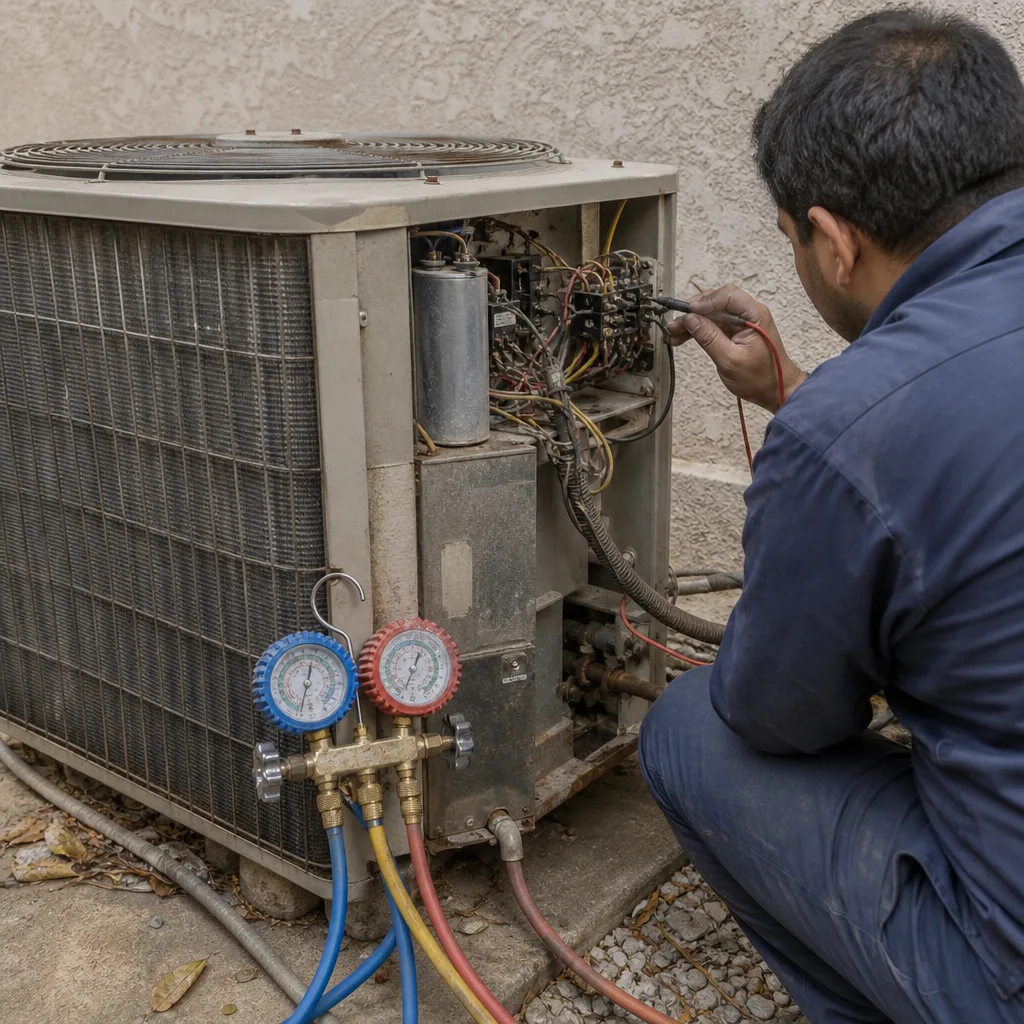
- Visual inspection of the outdoor unit and attic air handler. Contactor, capacitor, disconnect, refrigerant lines. Duct runs at the plenum and the last register.
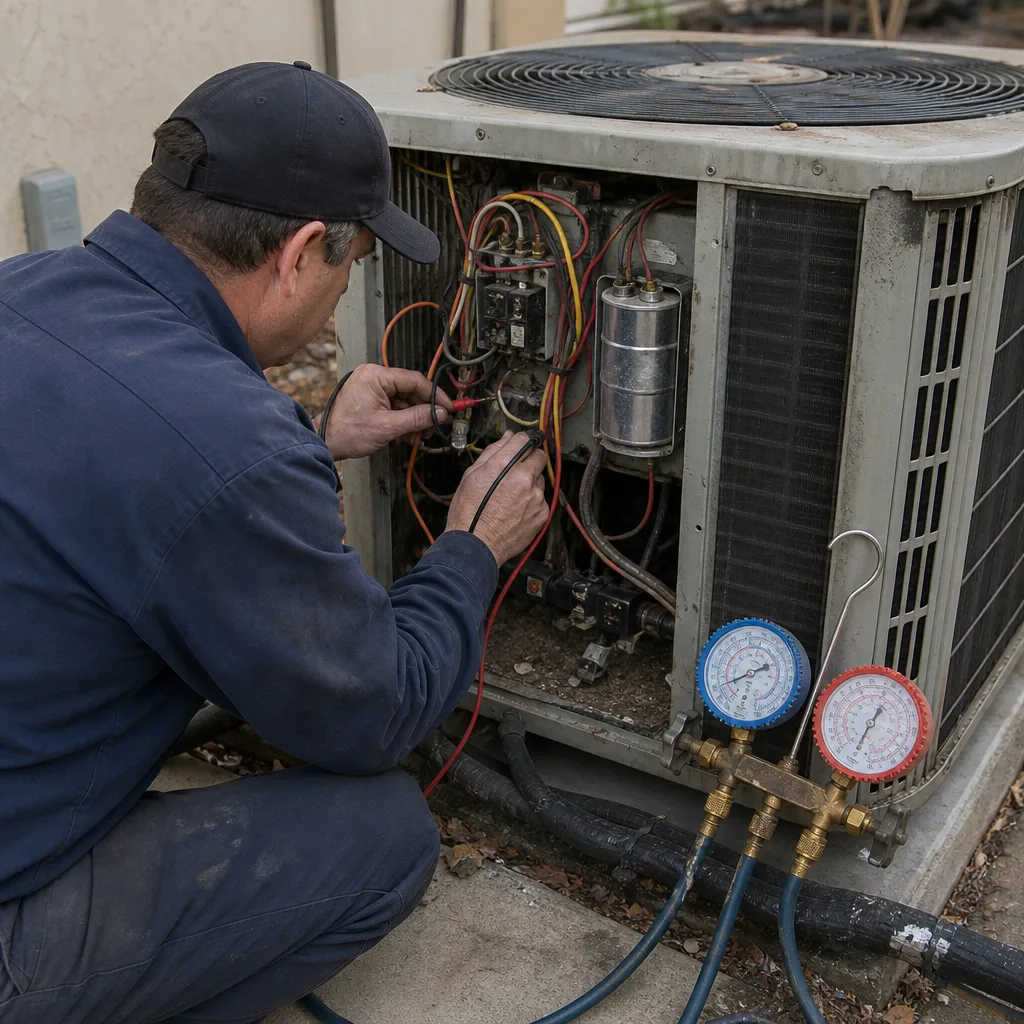
- Electrical readings. Test the capacitor with a meter, not a hand-guess. Check amp draw on the compressor. Verify voltage at the contactor.
- Refrigerant pressures and superheat/subcooling. These numbers tell you whether the system is properly charged and whether the evaporator coil is leaking. This is a separate step from the electrical check, and both need to happen.
- Temperature split. The difference between return-air and supply-air temperature across the coil. This tells you how well the system is actually cooling, not just running.
- Written findings and numbers before any work begins. This is the moment where a fair contractor and a rotating-crew national outfit start to look different. You see the readings and the numbers together, and you approve the work with both in front of you.
No step should be skipped because it’s a hot afternoon. A proper diagnostic on a Spring Valley system takes about 45 to 60 minutes. If someone is in and out in 15 and already has a quote in hand, that quote is probably built on a guess.
How to Verify Any HVAC Contractor in Nevada Before They Touch Your System
Nevada licenses HVAC contractors through the Nevada State Contractors Board, and the license lookup on the NSCCB website is free and public. Every reputable HVAC contractor in Spring Valley or anywhere else in Clark County holds a license with a classification that covers air conditioning work – typically a C-21 classification. Before you let anyone sign a quote or open the outdoor unit, spend three minutes on the lookup.
A valid license tells you four things, and they matter:
- The contractor is registered with the state. Unlicensed work isn’t just cheaper – it leaves you with no recourse if the install is wrong, no bond to claim against, and no state record to complain to.
- The license is active, not expired. The lookup shows status. Expired licenses exist on a lot of old business cards.
- The classification covers the work. A license for general construction isn’t a license for refrigerant handling. The lookup shows classification, and C-21 is what you want for AC.
- The names on the quote match the names on the license. A rotating-crew outfit might quote you under one business entity and dispatch a subcontractor under another. The license should match the paperwork you’re signing.
You should also check for a published business address. A contractor who won’t give you an address – not a P.O. box, not a phone number – is a red flag in any market, and Spring Valley is no exception. When you call Ray’s Heating & Air Spring Valley home, you get a name, a license number, and an address anyone can verify. That’s not a marketing angle. It’s the baseline any Spring Valley homeowner should demand.
Repair or Replace? The Question That Costs Spring Valley Homeowners the Most
Here’s the honest version. A repair buys you two summers. A replacement makes sense for a home you plan to stay in. Most Spring Valley homeowners get told the wrong thing at this fork because the rotating-crew national outfit makes more money on the replacement. You need a threshold, not a pitch.
The threshold depends on three numbers, and any real contractor in Spring Valley should be willing to talk you through all three:
- Age of the system. A condenser pushing 15 years or more in Spring Valley is at the edge. Past 18, you’re on borrowed time, and replacement planning is genuinely worth doing before it dies in August.
- Repair cost as a share of replacement cost. If the repair is approaching half the cost of a new system, replacement usually makes more sense. If it’s a $280 capacitor replacement on a 12-year-old unit, repair is clearly right.
- Refrigerant type. If your system runs R-22, that refrigerant has been phased out under federal rules, and the price to service a leak has climbed for years. This is a real factor in Spring Valley, where a lot of 1990s ranch homes still run R-22 systems. An R-22 leak is where repair starts to make less sense.
Do not let anyone pressure you into replacing a working system on the same day you called about a breakdown. Replacement is a load-calculated decision that deserves a written quote, a load calculation, and time to think. If a Spring Valley homeowner with a comfortable budget and a 20-year-old system calls us, the conversation is about the plan. If they call with a 12-year-old system and a failed capacitor, the conversation is about getting the capacitor replaced today.
NV Energy Rebates and What Actually Qualifies in Spring Valley
NV Energy runs rebate programs for high-efficiency HVAC equipment, and Spring Valley homeowners do qualify for many of them. The programs change, and the specific dollar amounts and qualifying efficiency thresholds shift from year to year, so any guide that prints a current dollar figure in a blog post is a guide you should verify directly with NV Energy before you schedule an install.
What doesn’t change is the shape of the program. Rebates generally fall into two buckets:
- Equipment rebates for qualifying systems. High-efficiency split systems and heat pumps that meet a seasonal efficiency threshold. The threshold moves; the equipment model number is what determines qualification.
- Installation-quality rebates. Some programs include additional rebates for verified installation quality – proper commissioning, measured airflow, and documented refrigerant charge. This is not something every contractor in Spring Valley bothers to do, because it takes extra time and paperwork.
Brands like Carrier, Trane, Lennox, and American Standard all manufacture equipment that clears various efficiency thresholds. But the model matters more than the brand. A base Carrier model and a high-end Carrier model can sit on opposite sides of the qualifying line. When you’re comparing written quotes, ask specifically: Does this exact model number qualify for the current NV Energy rebate? If the answer is vague, that’s your answer.
Red Flags Specific to Rotating-Crew National Outfits
The pain point for a lot of Spring Valley homeowners isn’t price. It’s being quoted one number on the phone and another at the door. Several things make that pattern possible, and each is a red flag on its own:
- The quote isn’t signed or itemized. A real quote names the specific equipment, the specific labor, and the specific parts. An unsigned quote with a lump-sum number is a quote that can change.
- No load calculation before the installation recommendation. A proper Manual J load calculation is required for a properly-sized install. If the person recommending the replacement hasn’t measured the house, they don’t actually know what size system it needs. This is the biggest single red flag in Spring Valley, because the wrong tonnage is the most expensive mistake you can make.
- The technician has never been to your house before. This is the rotating-crew problem in a sentence. You call about a system that failed last August and had a repair then, and the person who shows up has no record of that repair and no memory of your system. Read the review-and-return rate honestly: if the national outfit sends a different face every visit, that continuity is worth something.
- No published address. Everyone requires an invoice. Nobody should be evasive about where the business lives. Look it up before you schedule.
- Same-day replacement pitch on a repair call. A system that failed this morning is not a system that has to be replaced by this evening. Any contractor who pushes that has a business model that depends on it.
Compare that with the alternative: a name on the truck, a recurring face, and a phone that rings through to a person who has seen the house before. That’s what you’re paying for at the end of the day, and it isn’t the hourly rate.
What a Real Installation Looks Like on a 1990s Spring Valley Ranch House
Installation on a 1990s Spring Valley ranch house is not a “same-day swap.” Anyone who tells you otherwise hasn’t done it properly. Here’s what a real installation actually looks like, and what should be in the written scope:
- Manual J load calculation. Room-by-room, accounting for window orientation, stucco wall assembly, insulation day-one quality, and attic ductwork. This is where Spring Valley homes differ from a Henderson install even at the same square footage.
- Manual S equipment selection. Matching the equipment model to the actual load. Oversizing is just as wrong as undersizing – an oversized system short-cycles and doesn’t dehumidify well in the shoulder months.
- Duct evaluation and often replacement. A new condenser attached to 25-year-old sagging flex duct in the attic is a new system running at old efficiency. In Spring Valley, we frequently find the ductwork is the weak link. The written scope should say whether duct is being replaced or tested.
- Written fixed price and scheduled install date. Not a range. Not “up to.” A fixed price and a date on the calendar, before anything is ordered.
- Rebate and financing paperwork handled. If you’re using an NV Energy rebate or financing, the paperwork is part of the install, and it should be handled by the contractor, not mailed to you to figure out.
- Commissioning at the end. Measured airflow, verified refrigerant charge, documented temperature split. You should see the numbers before the technician leaves.
If you’re weighing a full replacement, spend time with the AC Repair & Installation in Spring Valley page to see how we scope jobs, and if the conversation turns to heat pumps as an alternative, the Heat Pump & Mini Split in Spring Valley guide covers what qualifies and how sizing differs on a ranch home. For homeowners thinking past the summer, the Heating & Furnace in Spring Valley guide covers how the winter side of the same system is handled.
Common Mistakes to Avoid
- Believing a phone diagnosis. A technician who tells you the compressor is bad before stepping on the property is guessing. A real diagnostic starts on-site, with the capacitor tested and pressures read.
- Accepting a quote that doesn’t name a model number. “High-efficiency 3-ton” is not a model number. You need the exact number to check NV Energy rebate eligibility and warranty terms.
- Replacing the condenser on old ductwork. This is common in Spring Valley, where the attic flex duct from 1998 is still in place. The new system runs on old duct and the results disappoint.
- Missing the load calculation. If the person recommending the system hasn’t measured the house room-by-room, they don’t know what tonnage it needs. Wrong tonnage is the most expensive install mistake there is.
- Letting a same-day replacement pitch land. A system that failed today can usually be repaired. Replacement decisions deserve a written quote and a night’s sleep.
- Skipping the license lookup. Three minutes on the Nevada State Contractors Board site will tell you whether the person quoting you has an active license with the right classification. Do it.
- Overlooking the west-facing wall. If the outdoor unit is jammed up against a west wall in full afternoon sun, it’s working harder than it needs to. Shade, clearance, and airflow around the condenser matter more in Spring Valley than the brochure says.
See the difference
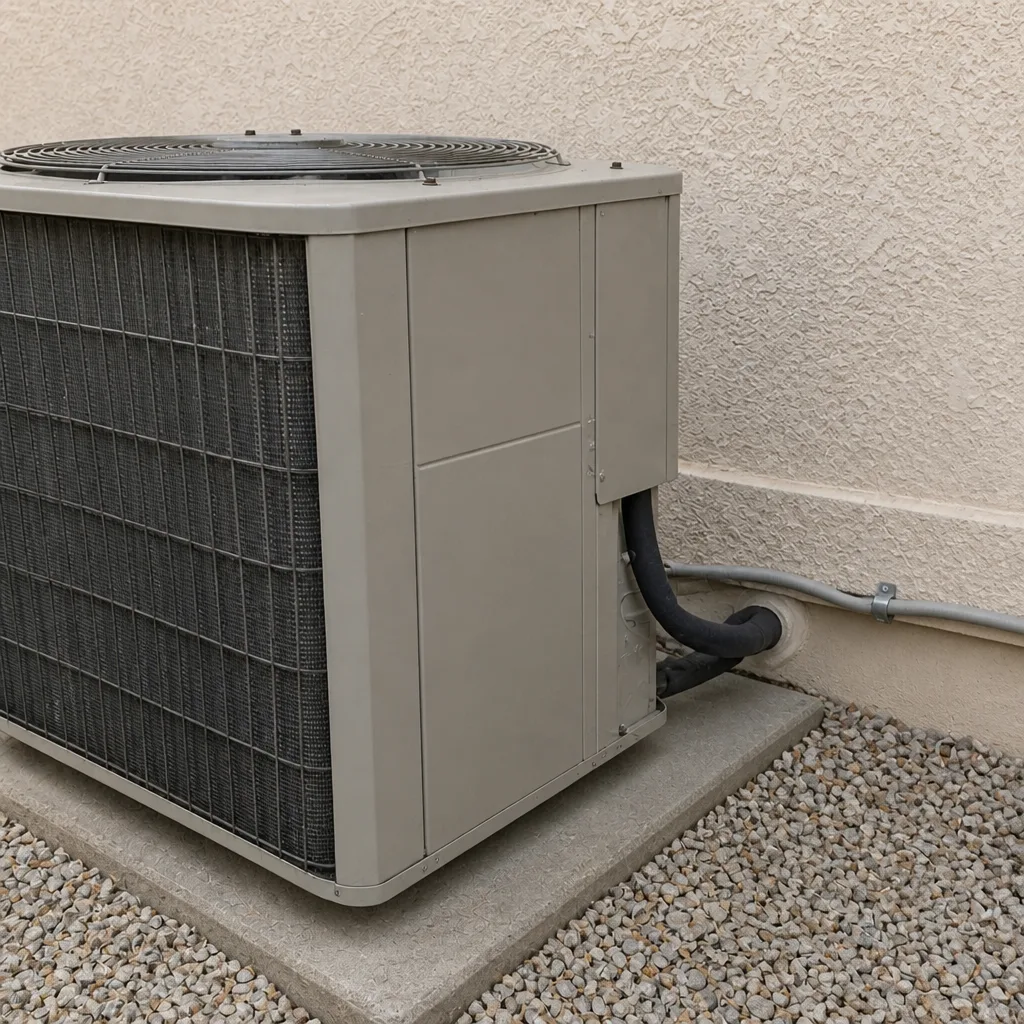
 Before
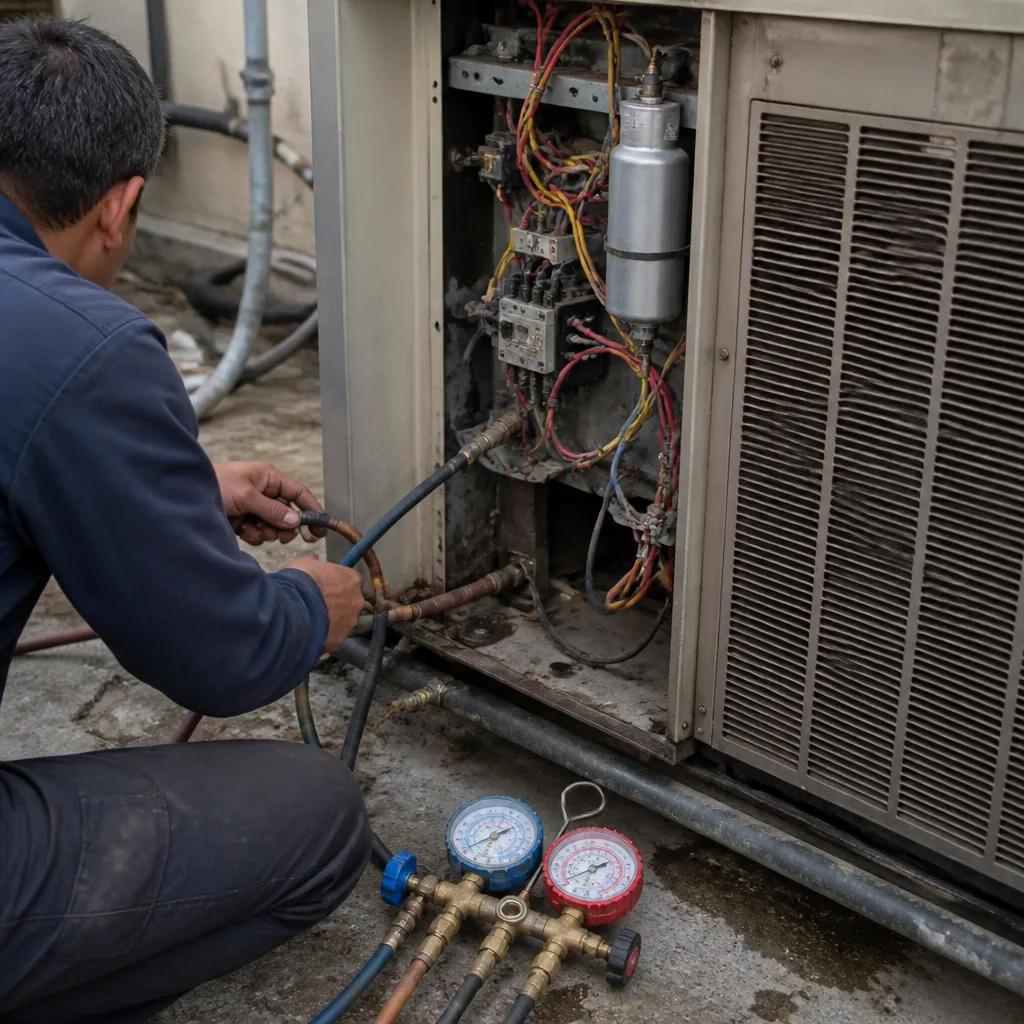
 After
 Before
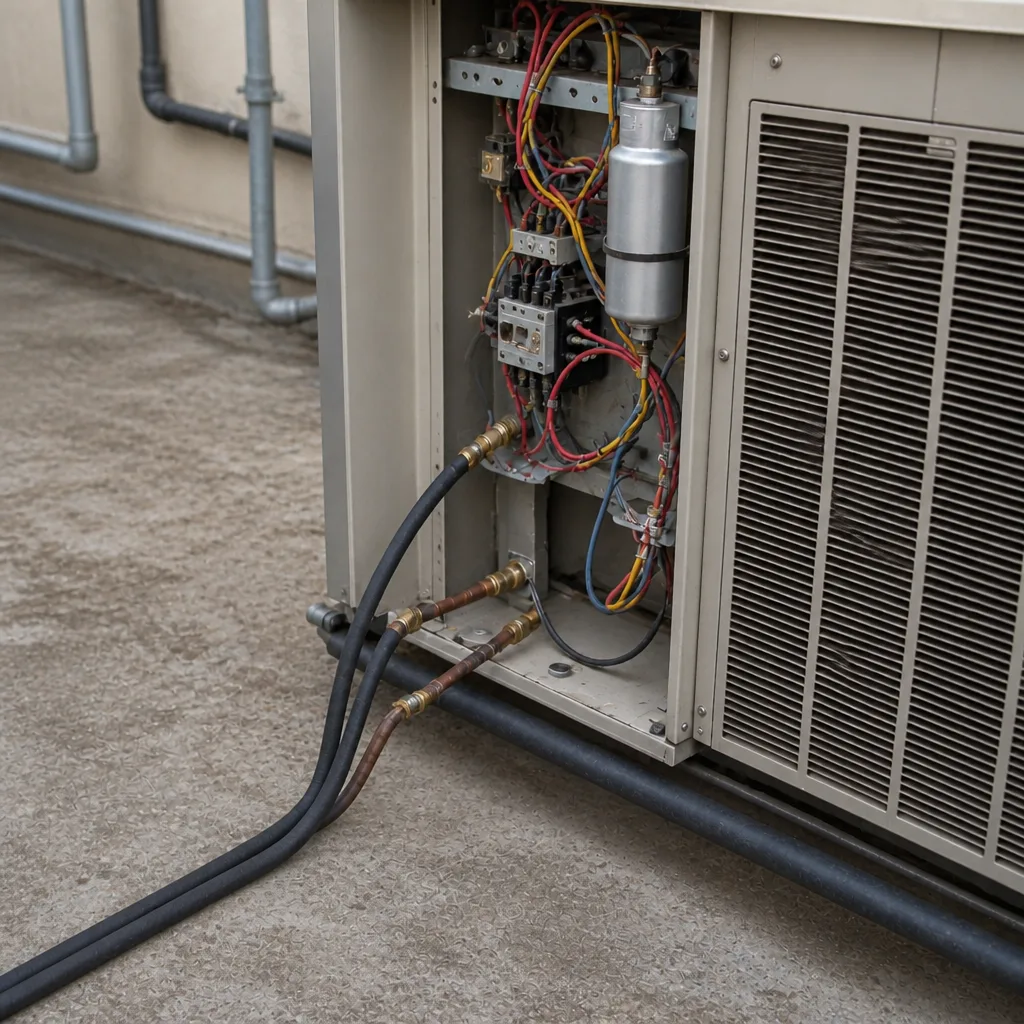 After
 Before
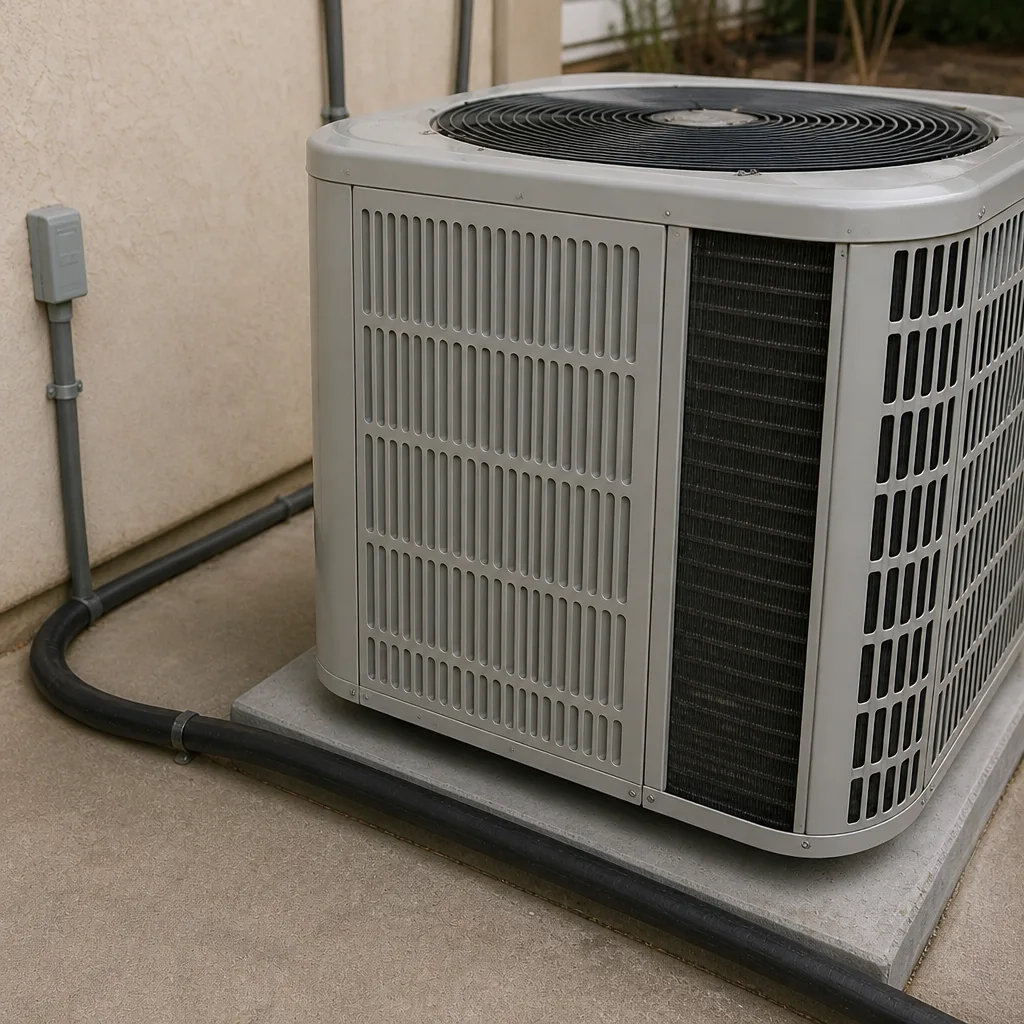 After
When to Call a Professional
Some things a homeowner can check safely. Some absolutely cannot be DIY’d, and refrigerant handling is one of them – it requires EPA certification and equipment no homeowner has. Call a professional the moment you notice any of these: warm air coming from the registers when the system is running, a breaker that trips repeatedly on the AC circuit, ice forming on the indoor coil or outdoor refrigerant lines, the outdoor unit humming but not spinning up, or a burning smell at the air handler. Also call if the outdoor unit is 15 years old and this is the second repair in two summers – that’s the moment a repair-or-replace conversation is worth having while you have time. Never open the outdoor unit or the electrical panel yourself. The capacitor and the contactor hold a charge that can injure you, and the 240-volt circuit isn’t something to troubleshoot by feel. Ray’s Heating & Air Spring Valley offers free estimates in Spring Valley – call (833) 620-7288.
Frequently Asked Questions
Most Spring Valley AC repairs fall in the range of a few hundred dollars for common electrical failures like capacitors and contactors, and somewhat more for refrigerant work or evaporator coil issues. The number depends entirely on the diagnostics, so a fair contractor will give you readings and a written price before starting. Call (833) 620-7288 for a free estimate – the diagnostics come first.
Yes. Spring Valley summer breakdowns get priority, and our phones are answered by a live person around the clock. A failed system in August is a genuine health risk for older homeowners, so we take it seriously. Call (833) 620-7288 and we’ll get a real person on the line today.
Spring Valley sits in a lower bowl on the west side, and heat pools there faster than on the open east side. Add the stucco wall assembly holding the day’s heat past sunset, plus attic ductwork losing efficiency in 140°F attics, and the gap is real. Load calculations for Spring Valley homes can’t be copied from a Henderson or Summerlin job. Call (833) 620-7288 to schedule a load calculation – the estimate is free.
Yes, and no exceptions. A Manual J load calculation measures the house room-by-room so the system is sized to the actual home, not to a rule of thumb. In Spring Valley, where 1990s ranch homes have larger west-facing surface area than two-story builds of the same size, this matters more than most homeowners realize. Call (833) 620-7288 and we’ll walk you through the calc.
Yes, NV Energy runs rebate programs for qualifying high-efficiency equipment, and Spring Valley homeowners qualify for many of them. The current dollar amounts and efficiency thresholds change, so verify them with NV Energy and confirm the exact model number qualifies before you sign. We handle the rebate paperwork as part of the installation. Call (833) 620-7288 with the quote in hand.
Go to the Nevada State Contractors Board website and search the license number. Look for an active status and a C-21 classification, which covers air conditioning work in Clark County. Then make sure the name on the license matches the name on the quote you’re asked to sign. Call (833) 620-7288 to see our published license and address.
The Bottom Line
Spring Valley is not Phoenix, and it isn’t Henderson either. The bowl traps heat, the older tract-home ductwork loses efficiency every summer, and the grid strains in August right along with every compressor in the neighborhood. The right approach follows from those facts: get real readings before you get a number, verify the license before you let anyone touch the unit, and refuse to make a replacement decision on a hot afternoon without a load calculation in hand. Whether you’re looking at a straightforward repair or planning for the next system, come and talk to a neighbor who answers his own phone.
Call (833) 620-7288 for a free estimate from Ray’s Heating & Air Spring Valley. You’ll get a live person, upfront pricing grounded in real diagnostics, and the 90-Day Done Right Promise in writing on every job.
Written by the team at Ray’s Heating & Air Spring Valley.