
Last updated November 18, 2026
 AC repair
 Furnace & heating
 Heat pumps
 Ductless mini splits
 Carrier
 Trane
 Goodman
Seasonal tune-up and full diagnostic on your Carrier, Trane, or Goodman system - readings shown to you before any repair is proposed
Diagnosis first, numbers second - you approve the repair price before a single part goes in.
Get your free estimateAir Quality & Ventilation Warning Signs Every Homeowner Should Know
If two people in the same house both start having sinus trouble every spring, the first assumption is seasonal allergies. Usually that’s right. Sometimes it isn’t. Sometimes the return air duct runs through the garage and pulls a little exhaust in every time somebody starts a car, and nobody connects the two because the symptoms show up hours later, in a different room. Bad indoor air in Spring Valley almost never announces itself with a dramatic symptom. It shows up as a headache after dinner, a musty smell that only appears on hot days, or allergy-like symptoms your doctor can’t quite pin down. This guide covers the warning signs most homeowners miss, the ones a general HVAC checklist leaves out, and how to tell a quick checkup from a call-today situation.
Quick Answer
The warning signs of an air quality or ventilation problem are usually subtle: a musty smell that shows up on hot days, condensation on windows or vents, dust that settles again within a day of cleaning, exhaust fans that don’t hold a tissue against the grille, and allergy-like symptoms that improve when you leave the house. If anyone in the home has headaches, dizziness, or breathing trouble that clears up outdoors, treat it as urgent and get the system looked at today rather than next week.
Styles & brands we work with
- AC repair
- Furnace & heating
- Heat pumps
- Ductless mini splits
- Carrier
- Trane
- Goodman
Table of Contents
- The Subtle Symptoms Most People Blame on Something Else
- Visible Signs on Vents, Registers, and Exhaust Fans
- The Tissue Test: Check Airflow Without Any Tools
- Warning Signs That Mean Call Today vs. Schedule Soon
- Why Spring Valley Dust and Dry Air Create Their Own Warning Signs
- Return Ducts, Garage Air, and the Fumes You Can’t Smell
- Filters, Seals, and the Maintenance That Prevents Most of This
- Common Mistakes to Avoid
The Subtle Symptoms Most People Blame on Something Else
Here’s what we’ve learned after years of walking into homes across Spring Valley: the homeowner has usually already decided what’s wrong before we get there. They think it’s allergies. They think it’s the carpets. They think the house is just dusty because it’s the desert. Sometimes they’re right. But there’s a pattern that points to ventilation instead of illness, and it’s worth knowing because the fix is usually mechanical, not medical.
The tell is location and timing. Seasonal allergies follow the pollen calendar and get better when you go inside. A ventilation problem follows the house. Watch for these:
- Symptoms that improve when you leave. If the headache fades within an hour of driving to the store, the house is doing something to you.
- Everyone in the house affected at once. Allergies hit one person harder than others. A ventilation issue tends to hit everybody, pets included.
- Symptoms that cluster in one room. The bedroom over the garage. The back office near the return. A single room that’s consistently worse points to a duct or pressure problem serving that room.
- A musty smell only on hot days. This is a big one in Spring Valley. When the system runs hard in July, it pulls air from everywhere, including spaces that stay damp. If the smell arrives with the heat, suspect the return side.
- Waking up congested but clearing by mid-morning. That’s the signature of stale overnight air in a closed-up bedroom with a blocked or undersized return.
None of these prove a ventilation problem on their own. Together they’re a strong enough pattern that it’s worth having someone put a gauge and a smoke pencil on the system. A good technician will test the readings first and show you the numbers before recommending anything. On a repair call, that’s exactly the order we work in.
Visible Signs on Vents, Registers, and Exhaust Fans
You don’t need a meter to spot half of these. Walk the house with a flashlight and look at the supply registers, the return grilles, and the exhaust fans in the bathrooms and kitchen.
- Streaking or dark staining around a register. Air leaking past a poorly sealed boot pulls dust and insulation particles with it. The stain is the trail.
- Condensation on or near a vent in summer. In a dry climate like Spring Valley’s, water on a register usually means a duct is sweating because it’s badly insulated or pulling humid air from an unconditioned space.
- Rust or corrosion inside a return grille. Moisture has been sitting there a while. That’s mold territory.
- A bathroom exhaust fan that can’t hold a tissue. Hold a single square of toilet paper up to the grille while the fan runs. If it won’t stay, the fan is moving far less air than it should. That fan’s job is to push moisture out; a weak fan leaves it in the walls.
- Visible dust on the grille face within days of wiping it. Normal. Dust that builds up in a matter of hours on a freshly cleaned grille is a sign the system is pulling from a dirty source.
- A flex duct that’s kinked, crushed, or hanging loose in the attic. A crushed duct doesn’t just cut airflow. It can create a path for attic air to mix into the supply.
Any one of these is a “schedule a checkup” item. Several at once, or any of them in a room where people sleep, moves it up the list.
The Tissue Test: Check Airflow Without Any Tools
This takes about five minutes and costs nothing. It gives you real information to share with whoever you call, and it can point to whether you have a supply problem or a return problem. Here’s the process:
- Turn the system fan to ON at the thermostat so the blower runs without heating or cooling. Give it a minute to settle.
- Hold a single square of tissue flat against a return grille. It should pull tight and stay. If it flutters or drops, the return is restricted or the blower is starved.
- Do the same at each supply register. You should feel steady, even flow. If one register feels noticeably weaker than the others, that branch of ductwork is suspect.
- Check the filter slot. Pull the filter and note the brand and size. A filter that’s loaded with dust can cut return airflow enough to make the whole test unreliable.
- Do the tissue test at each bathroom and kitchen exhaust fan with the fan on and the door closed. If the tissue falls, the fan isn’t moving what it should.
- Note anything that surprised you. Room-by-room notes are gold for a technician; “the airflow feels weak somewhere” is not.
Important safety note: this test is about observation only. Do not pull panels, open the blower compartment, or reach into ducts or the air handler. A furnace or heat pump contains high-voltage wiring and moving parts. The person at your door should be trained, insured, and licensed for the work. You’re just gathering evidence.
If you want a read on how your system is behaving overall, the Ray’s Heating & Air Spring Valley home page is the place to start.
Warning Signs That Mean Call Today vs. Schedule Soon
Most air quality issues are not emergencies. A few are. Here’s how we sort them when the phone rings.
Call today
- Headaches, dizziness, or nausea that hit multiple people in the house and clear when you go outside. Get out, ventilate, and get someone out to look at the system today.
- A rotten-egg or exhaust smell inside the house. This is not an air quality nuisance. Leave and call from outside.
- Anything that looks like soot, scorching, or burning near a furnace, vent, or air handler. Shut the system off at the thermostat and call.
- Carbon monoxide alarms going off. Evacuate and call the fire department first, then us.
- A duct that has visibly collapsed or come disconnected in an attic, garage, or crawlspace. You’re pulling air from a space not meant to feed the house.
Schedule soon
- Persistent musty smell only on hot days.
- Condensation or water marks at vents and registers.
- Exhaust fans that fail the tissue test in a bathroom that grows mold on the ceiling or grout.
- Dust returning to surfaces within hours of cleaning.
- A bedroom that’s stuffy every morning even though the thermostat is set correctly.
The “call today” list is about protecting people. The “schedule soon” list is about protecting the house and the equipment. Both matter, but they’re not the same urgency, and a straight-shooting tech should tell you which one you’re in during the call, not after a sales pitch.
Why Spring Valley Dust and Dry Air Create Their Own Warning Signs
Spring Valley homes get a version of this problem that a generic air quality guide won’t tell you about. Our climate does three things to a duct system that most people don’t think about.
First, the dust. Spring Valley’s surrounding desert produces fine, powdery dust that does not settle the way heavier soil does. It creeps in through every small crack, and the HVAC system is the biggest vacuum in the house. A return that draws from a garage, an attic, or a leaky closet pulls that dust into the living space with every cycle. That’s the source of dust that returns within an hour of wiping the furniture.
Second, the dryness. Low humidity sounds like a good thing until you realize it’s masking problems. In a humid climate, homeowners notice moisture instantly. In Spring Valley, mold and condensation issues in a duct or air handler can go weeks before anyone puts two and two together, because the visible signs are so much subtler. A musty smell that shows up in August is often a moisture problem that started in the winter.
Third, the long cooling season. In Spring Valley, the AC runs from early spring into fall. That means the filter loads faster, the blower runs more hours, and any dust source in the return system cycles back into the house many more times per year than in a cooler climate. The dust never gets a break. So does every quiet problem in the system.
What we’ve found over and over: a Spring Valley home that “feels fine” in October can be a real problem by July, because the system has run hard through a full season without anyone looking at the readings. If you want a picture of your home’s actual climate and code picture, a good foundation is the Heat Pump & Mini Split in Spring Valley page, since heat pumps and mini-splits are the systems most likely to run all year.
Return Ducts, Garage Air, and the Fumes You Can’t Smell
This is the section we’d want every homeowner to read. The most common serious air quality issue we find in this area isn’t in the filter. It’s in where the return duct runs.
A return duct’s job is simple: pull air from the house and bring it back to the air handler for another round. In a lot of homes built in the last several decades, that return runs through the garage, a mechanical closet, or a low crawlspace to get to the air handler efficiently. When it’s sealed right, that’s fine. When it develops a leak, a crack at a joint, or a poorly sealed boot, it starts pulling the air from its surroundings into the living space. A return that leaks inside the garage picks up exhaust fumes off every car start. It picks up lawnmower fuel. It picks up attic dust. All of that gets delivered back into the house through a supply register, mixed in with the air the system is supposed to be conditioning.
You can’t always smell it. The characteristic smell of cold vehicle exhaust is heavily diluted by the time it travels through ductwork and a blower. But the people breathing it have less detectable versions of the same symptoms: headaches, fatigue, disorientation, a wheeze that shows up after a nap and fades outdoors. This is one of the easiest things to diagnose with a smoke pencil and one of the most commonly missed when someone only checks the filter and the register screens.
If your home has a return in a garage, a closet, or a low crawlspace, and someone in the house has respiratory symptoms your doctor can’t explain, that’s worth a same-week check. It’s usually a sealing problem, not a rebuild, and it’s fixable.
Filters, Seals, and the Maintenance That Prevents Most of This
Simple preventive steps go a long way. None of these are dangerous, and most take an afternoon.
Filter basics. Change the filter on the schedule that matches your home, not the calendar on the box. Spring Valley homes with pets, allergies, or a long cooling season often need more frequent changes than the standard 90-day advice. A MERV 8 to MERV 11 filter handles most residential dust and pollen well. Going higher than MERV 13 in a standard residential system can starve the blower and cut airflow, which is its own air quality problem. Size matters as much as rating; a filter that doesn’t seal the slot lets air bypass it completely. Ask anyone who’s been in the trade long enough and they’ll tell you about the “filter” that’s been sitting so loosely in its slot it’s barely doing anything.
Seal the obvious gaps. A can of mastic and a roll of foil tape will close visible gaps at boots, plenum joints, and duct connections. This is not a DIY job for anyone who has to reach past electrical components or work inside a tight attic; keep that in mind and call if it gets dicey. A roll of weatherstripping at attic access panels and garage door seams will cut the dust load in half.
Keep the exhaust fans running. Bathroom fans should run 15 to 20 minutes after a shower, not 30 seconds. Kitchen hoods should vent outside, not re-circulate through a charcoal filter. If the hood in your kitchen just blows air back into the room, it’s not a vent – it’s a filter, and it needs to be cleaned far more often than most people manage.
Watch the condensate. In a Spring Valley summer, an AC can pull several gallons of water out of the air each day. The condensate pan and drain need to stay clear so that water goes where it’s supposed to. A pan that’s growing a film of algae or a drain line that’s plugged is a moisture source inside the system, which is exactly what we don’t want.
Have the system checked at the change of season. A spring cooling tune-up should include a filter check, a static pressure reading, a supply-and-return airflow check, and a look at the ductwork visible in the attic or crawlspace. A fall heating check should include the same on the heat side, plus a look at the heat exchanger on a furnace. If you’ve never seen a written report of what was found, ask for one.
Air quality is one of the most common reasons people call us in the first place. If you’re noticing anything in this guide, the AC Repair & Installation in Spring Valley page is the fastest way to understand what a service call looks like, and the Heating & Furnace in Spring Valley page covers the heating-side version of the same story. Heat pumps and mini-splits are covered on their dedicated page as well. We service all the major brands, including Carrier, Trane, and Lennox, and can look at American Standard systems without missing a beat.
Common Mistakes to Avoid
- Assuming allergies before checking the system. If everyone in the house feels worse indoors and better outdoors, get the system looked at before you spend another season on antihistamines.
- Installing the highest-MERV filter you can find. A filter that’s too restrictive starves the blower, drops airflow, and can freeze the coil on a hot Spring Valley afternoon. MERV 8 to 11 is right for most homes.
- Running the bathroom fan for 30 seconds after a shower. Moisture needs 15 to 20 minutes of exhaust. Short runs leave the humidity in the walls and grout lines.
- Ignoring a consistent musty smell on hot days. That smell is a moisture source. It doesn’t cure itself by winter, and it usually gets worse by the next July.
- Patching a duct with a strip of duct tape and calling it done. Standard duct tape loses adhesion in attic heat. It needs mastic or foil tape made for the job, and often a call to a technician who can reach the part of the duct you can’t see.
- Sealing up a house without thinking about ventilation. Tightening a home for energy efficiency without adding any fresh air is one of the surest ways to build a ventilation problem into a house that didn’t have one.
- Forgetting the garage. A leaky return in a garage is the single most undertreated air quality issue we see in this area. If someone in the house has unexplained symptoms and there’s a garage return, that’s worth ruling out first.
See the difference
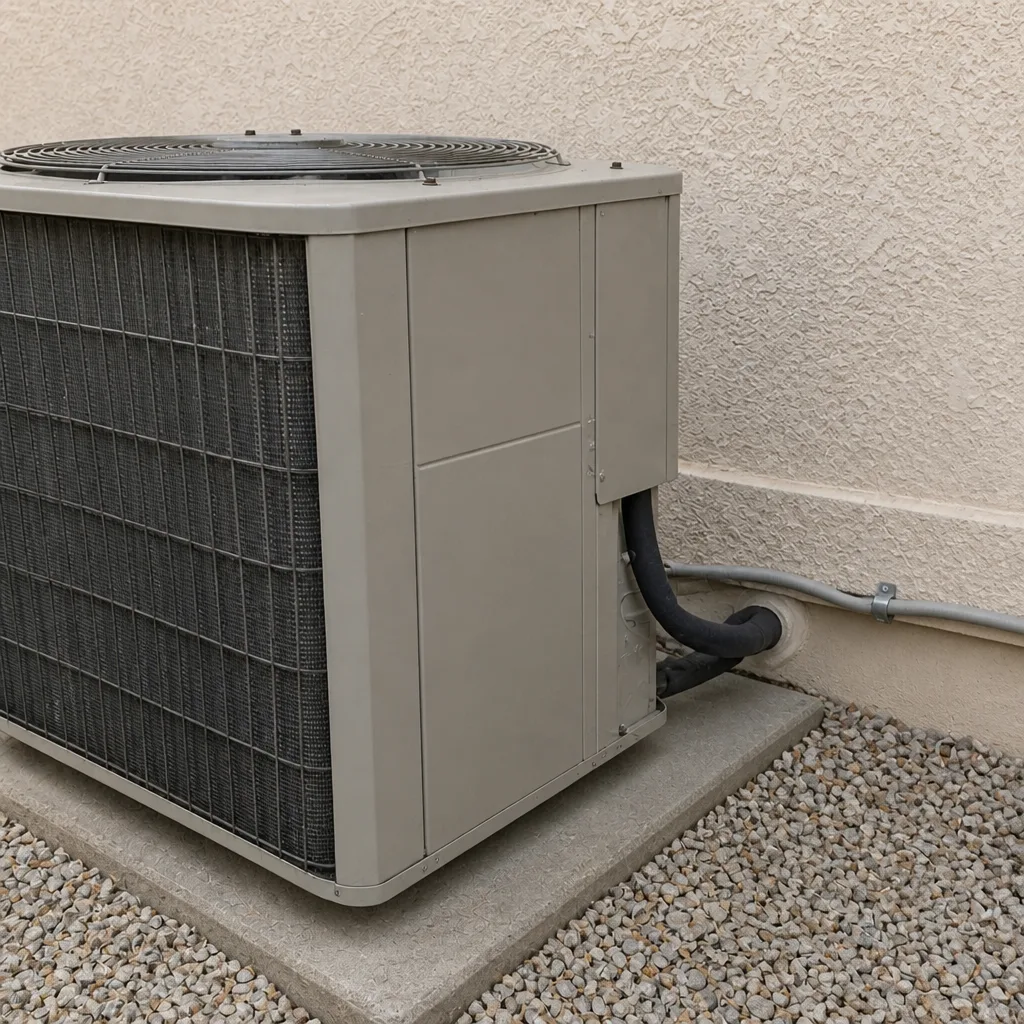
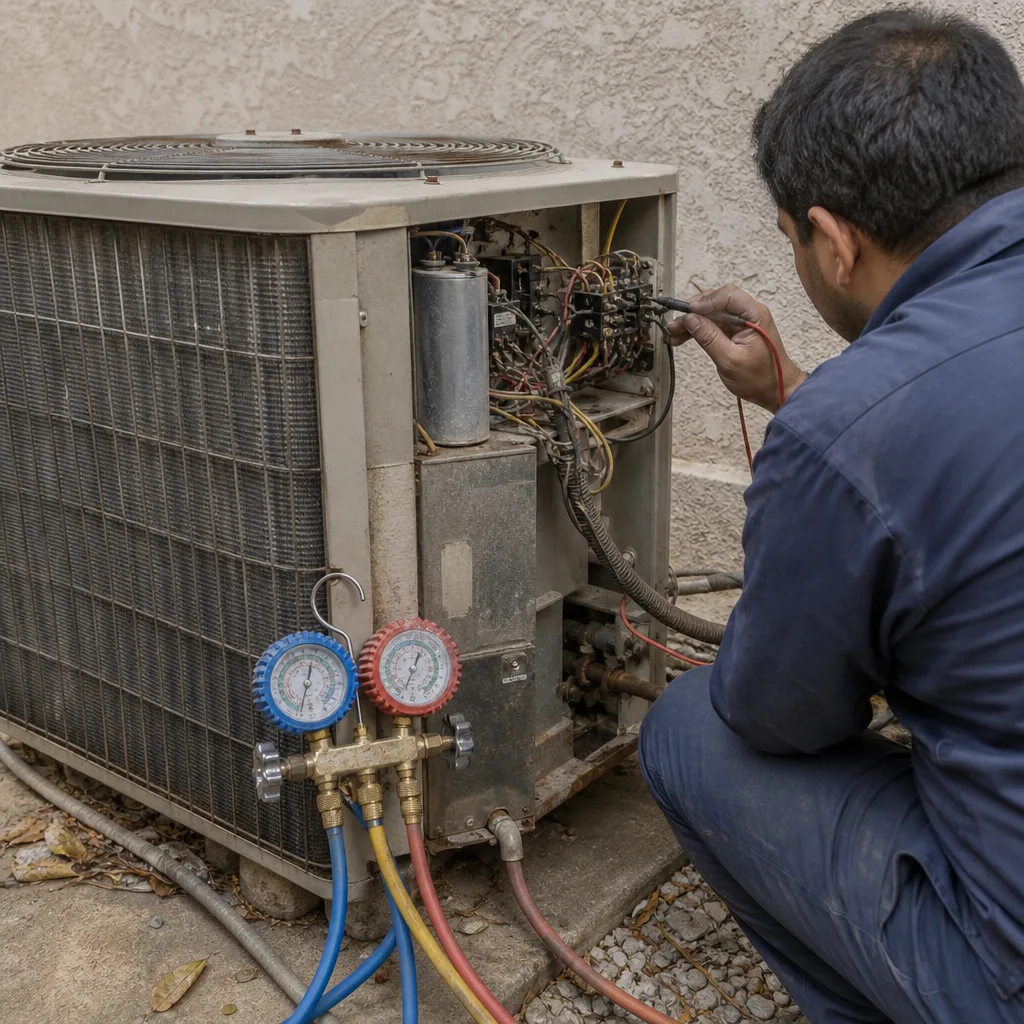 Before
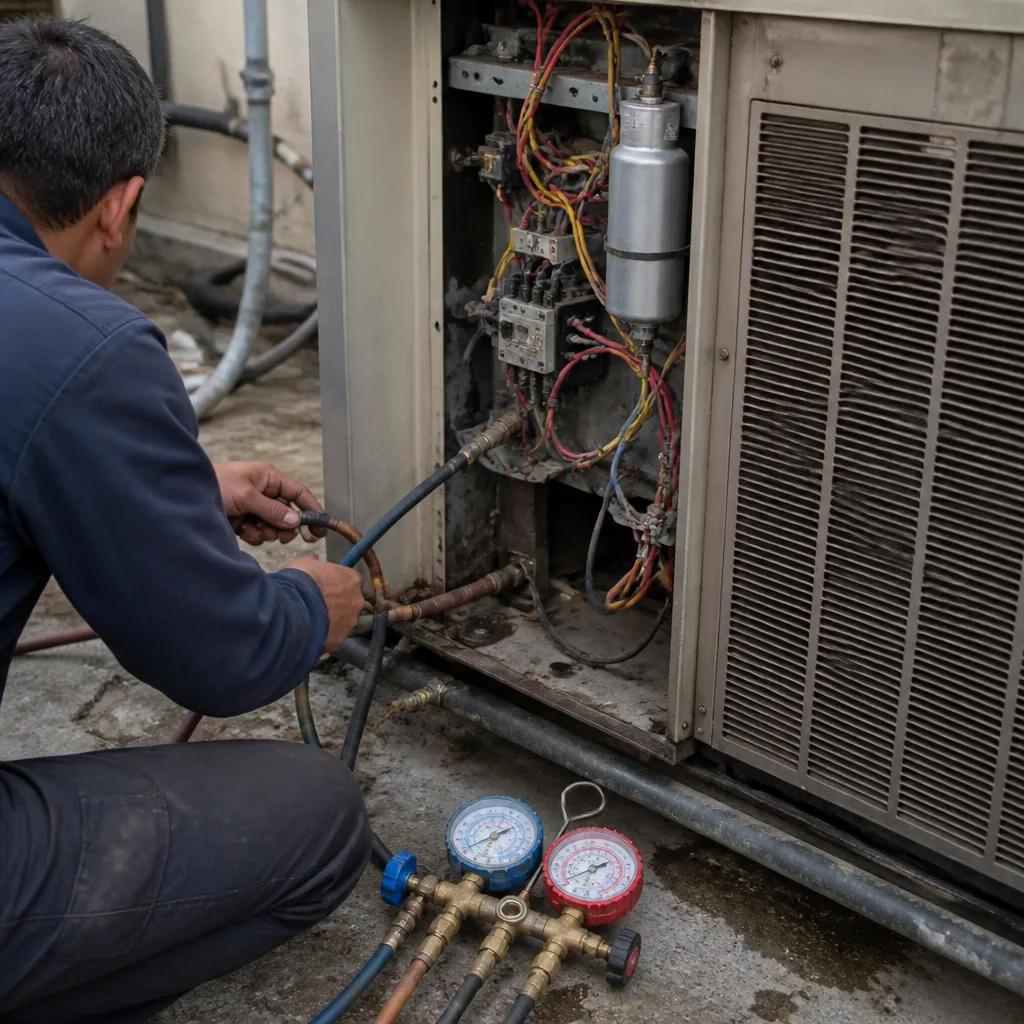
 After
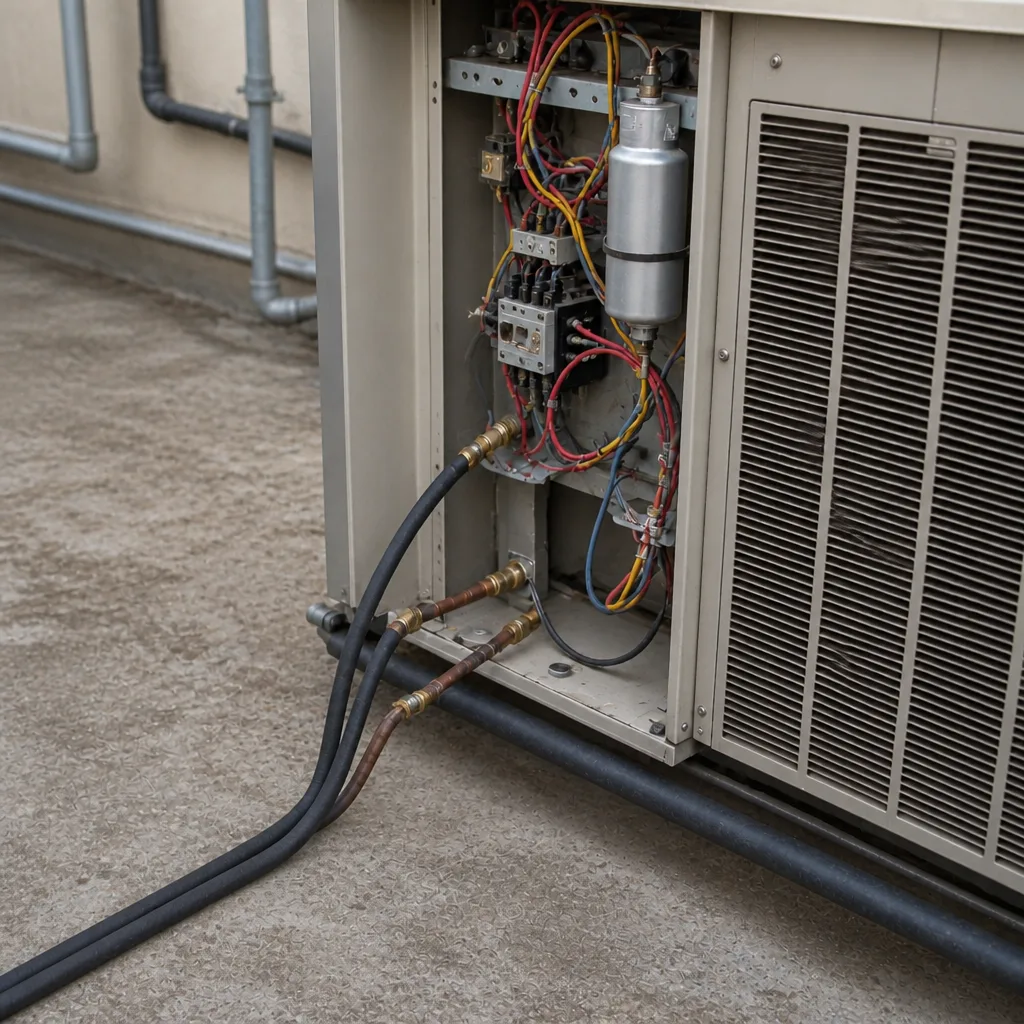
 Before
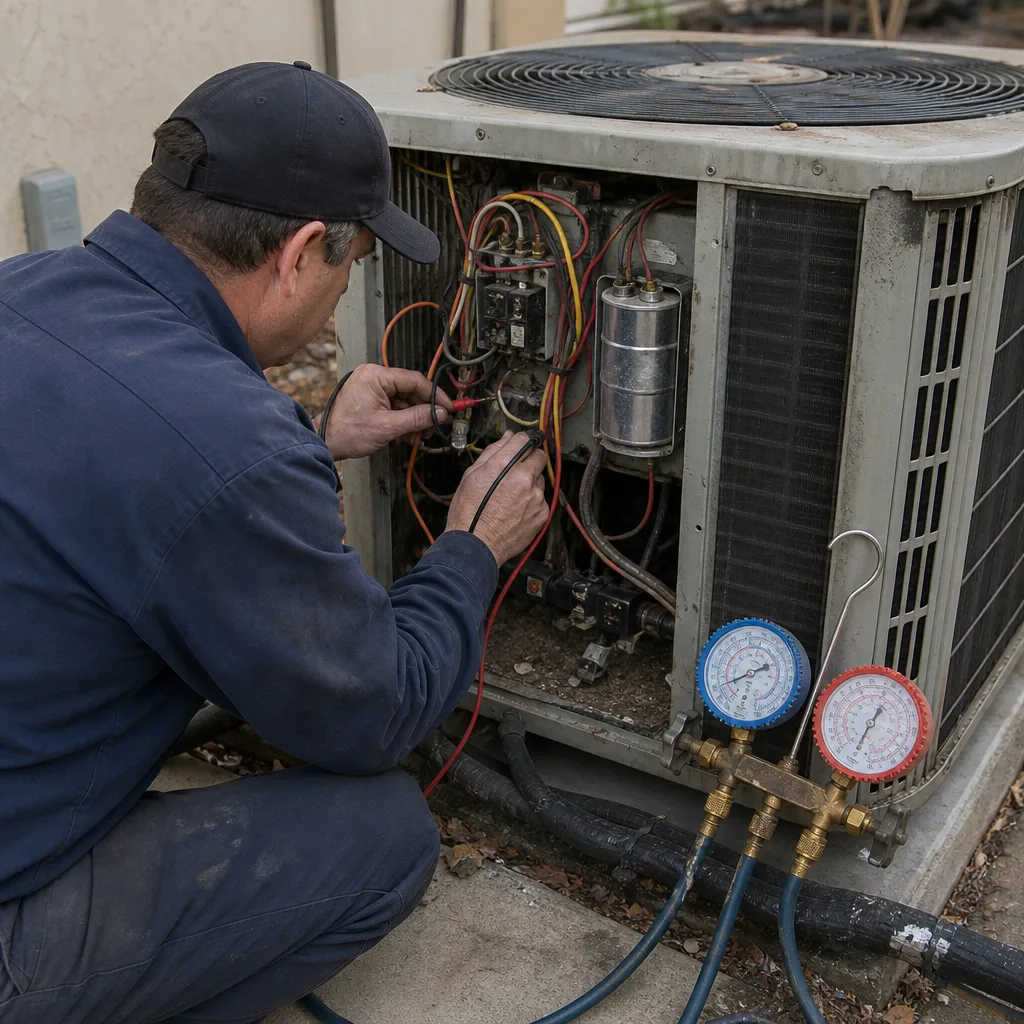
 After
 Before
 After
When to Call a Professional
Call today if anyone in the home has headaches, dizziness, nausea, or breathing trouble that clears up outside the house, or if you smell exhaust, gas, or anything burning. Call today if a carbon monoxide alarm sounds, a duct is visibly disconnected, or you see soot near a vent. Beyond that, call to schedule a checkup if you have a musty smell that returns on hot days, condensation at vents, exhaust fans that fail the tissue test, or dust that comes back within hours. Any of those deserve a look with real readings, not a guess over the phone. Ray’s Heating & Air Spring Valley offers free estimates in Spring Valley – call (833) 620-7288. Background-checked, uniformed technicians, upfront pricing, and our 90-Day Done Right Promise on every job.
Frequently Asked Questions
The earliest signs are usually subtle: a musty smell that shows up only on hot days, dust that returns to surfaces within hours of cleaning, condensation at vents or on windows, and allergy-like symptoms that improve when you leave the house. If symptoms are shared by multiple people in the home and clear up outdoors, treat that as a serious sign and get the system checked today.
Hold a single square of tissue against the grille with the fan running and a closed door. If the tissue doesn’t stay, the fan is moving far less air than it should. A working bathroom fan should hold the tissue tight and clear the mirror of steam within a few minutes.
That pattern almost always means the system is pulling air from a moisture source when it’s working hardest, which is during peak cooling. In Spring Valley, that source is often an underinsulated duct in a hot attic, a condensate pan with a wet film on it, or a return line running through a humid space. The smell doesn’t exist in colder months because the system runs less. It comes back every summer until the source is sealed or fixed.
Yes, and it’s one of the most commonly missed issues we find in this area. If the return is sealed properly, it’s fine. If it develops a leak, it pulls garage air – including exhaust fumes and lawn equipment vapors – into the living space through the supply registers. A smoke pencil test by a technician will confirm it in a few minutes.
Only up to a point. MERV 8 to MERV 11 filters handle most residential dust, pollen, and pet dander well in a standard system. Going above MERV 13 in a typical home can restrict airflow, which causes its own air quality and equipment problems. Size and a tight seal in the filter slot matter as much as the rating.
At minimum twice a year, once before cooling season and once before heating season. A good check for a Spring Valley home should include a filter inspection, a static pressure reading, a supply-and-return airflow check, and a look at the visible ductwork. If you’ve never seen a written report of what was found, ask for one; you should be able to read the numbers yourself.
The Bottom Line
Bad indoor air almost never shows up as the obvious symptom. It’s the headache after dinner, the musty smell that only appears in July, the allergies that show up for everybody in the house at once. The tissue test, a flashlight walk of the vents, and a look at where the return duct runs will tell you more than you’d expect. Spring Valley’s dust and long cooling season make the same problems louder here than in most places, so a Spring Valley home deserves a real check at the change of every season. If the checklist in this guide rings any bells, call Ray’s Heating & Air Spring Valley at (833) 620-7288 for a free estimate. Readings first, numbers second, no surprises.
Written by the team at Ray’s Heating & Air Spring Valley.