
Last updated November 18, 2026
 AC repair
 Furnace & heating
 Heat pumps
 Ductless mini splits
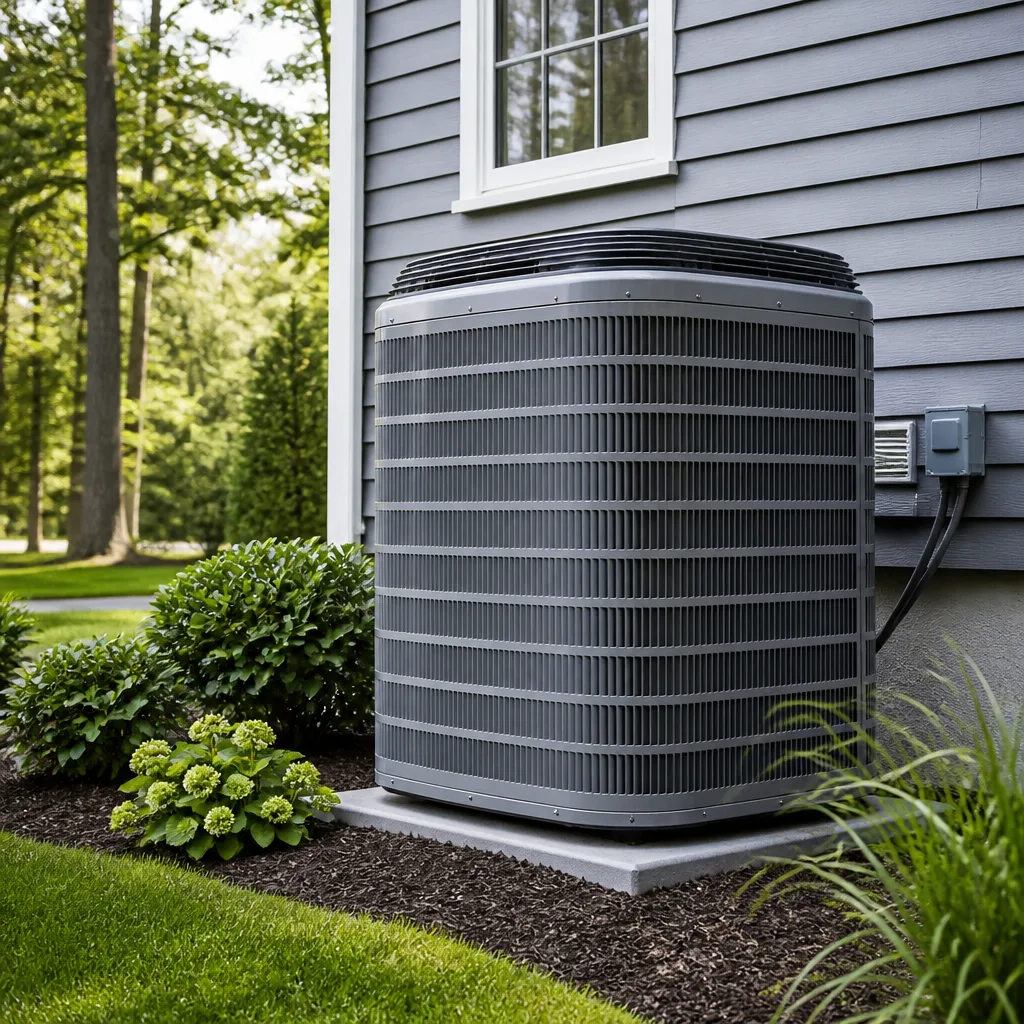 Carrier
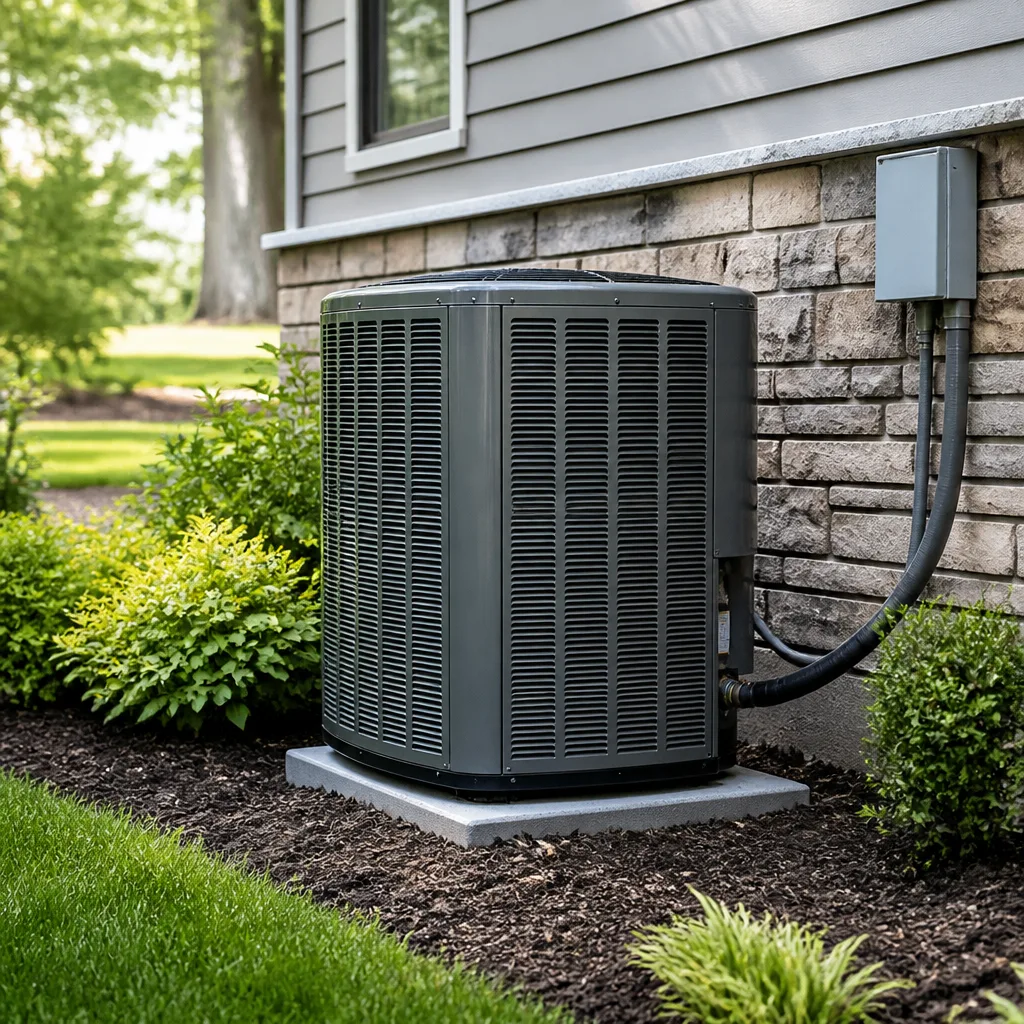 Trane
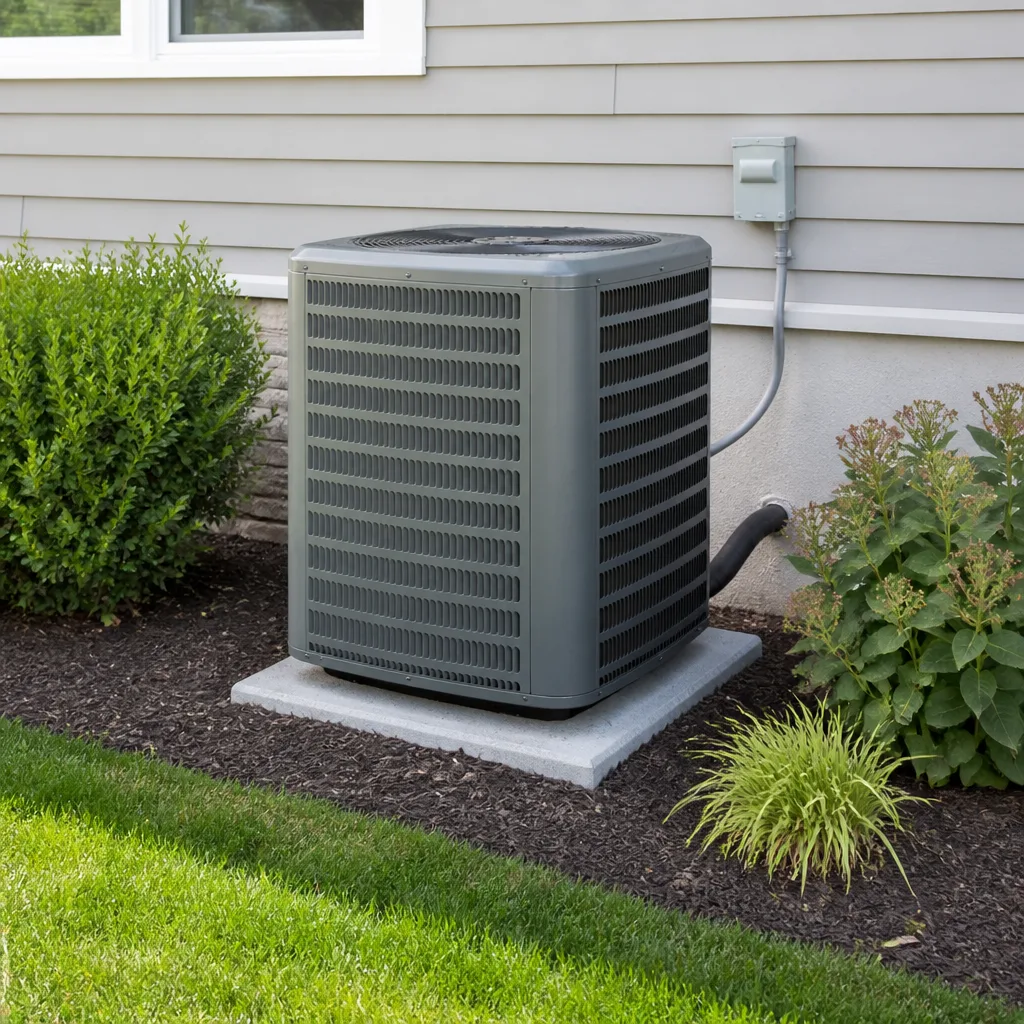 Goodman
Seasonal tune-up and full diagnostic on your Carrier, Trane, or Goodman system - readings shown to you before any repair is proposed
Diagnosis first, numbers second - you approve the repair price before a single part goes in.
Get your free estimateAir Quality & Ventilation Troubleshooting: Common Problems and How to Fix Them
If your house smells fine but someone in it has had a cough or headaches for three months straight, there’s a better-than-average chance the HVAC system is spreading the problem through every room every time it cycles. That’s the part that trips people up. Bad air almost never announces itself. You can’t see it, and most of the time you can’t smell it. What you get instead is a kid with a runny nose that never quite clears up, windows that sweat on the inside, and a house that feels stuffy two hours after you finished cleaning. In Spring Valley, where our attics run hot and our monsoon weeks run humid, we see these same complaints over and over. This guide walks you through finding the source instead of chasing the symptoms.
Quick Answer
Most indoor air quality problems trace back to four sources: a dirty drain pan or moldy coil, duct leaks pulling attic air into the house, filters that don’t seat properly and let dust bypass, and fresh-air exchange that’s too low for the number of people living there. Fixing those four things solves the majority of “stuffy house” complaints in Spring Valley. Air purifiers and plug-in filters help with some of it, but they can’t fix a duct system that’s leaking attic air into your living room.
Styles & brands we work with
- AC repair
- Furnace & heating
- Heat pumps
- Ductless mini splits
- Carrier
- Trane
- Goodman
Table of Contents
- Start With the Symptom, Then Find the Source
- Why Spring Valley’s Older Ducts Leak Attic Air Into Your Home
- The Humidity Problem Nobody Connects to Air Quality
- CO and CO2: The Invisible Problems
- Filter Seating, Bypass, and Why Your Surfaces Stay Dusty
- What an Air Quality Inspection Should Actually Cover
- Ventilation: Getting Fresh Air Into a Well-Sealed Home
Start With the Symptom, Then Find the Source
The fastest way to troubleshoot air quality is to work backwards from what you’re noticing. Symptoms are clues, and different clues point to different culprits. Here’s the path we walk homeowners through on the phone before anyone even rolls a truck.
- Musty smell, especially when the AC kicks on: look at the evaporator coil and the drain pan first. A pan that’s held standing water grows mold, and the blower pushes that smell through every register in the house.
- Chemical or exhaust smell: check for duct leaks near an attached garage or a gas appliance. Fumes get pulled into the return and distributed instead of venting outside.
- Dusty surfaces within a day or two of dusting: filter bypass or duct leakage. The system is pulling unfiltered air from somewhere it shouldn’t.
- Condensation on windows and a clammy feel: humidity is running high. More on that below.
- Headaches, fatigue, a cough that won’t quit: could be low fresh-air exchange, could be CO. Treat this one seriously and check the monitors.
In Spring Valley we see musty smells come up most often in homes where the air handler sits in a closet or a garage without a proper drain line slope. Water pools, and within a season you’ve got a biology experiment growing in the pan. That smell doesn’t stay in the closet. If you want a plain-language look at what your system is doing during cooling season, our AC Repair & Installation in Spring Valley page covers the cooling side of the same story.
Why Spring Valley’s Older Ducts Leak Attic Air Into Your Home
This is the one that surprises people most. In a lot of Spring Valley’s older housing stock, the ductwork runs through an unconditioned attic. On a July afternoon that attic isn’t 90 degrees, it’s pushing 130. And here’s the physics: when your return duct or supply joints have gaps, the pressure difference between the attic and the living space means the system pulls attic air in. That air carries insulation fibers, dust, and whatever else has settled up there over the years.
No air purifier on the market fixes that. You can buy the best filter money can buy and it won’t touch air that’s entering downstream of the filter. The leak has to be sealed.
What we look for:
- Disconnected or separated joints at the plenum and at flex duct connections. These fail with age and heat.
- Torn or crushed flex duct running over rafters or pinched through tight framing.
- Return air pathways that use the building cavity as a duct. Common in older homes, and a direct path for attic air.
- Missing or degraded mastic and tape at every seam. Standard duct tape doesn’t hold up in a 130-degree attic for long.
Sealing those leaks does two things: it keeps attic air out of the living space, and it makes the system run more efficiently because it’s no longer conditioning the attic. In our experience, that’s one of the highest-value fixes a Spring Valley homeowner can make, and it’s not expensive compared to what people spend on gadgets that don’t address the source.
The Humidity Problem Nobody Connects to Air Quality
Spring Valley’s monsoon weeks run July through September, and during that stretch indoor humidity in some homes climbs above 60%. Most homeowners don’t connect that number to their air quality symptoms, but they should. Sixty percent is where mold growth accelerates. It’s also where dust mites thrive and where a house starts to feel clammy no matter what the thermostat says.
Why does humidity get high indoors even with the AC running? A few reasons:
- Oversized AC. It cools the house fast and shuts off before it’s pulled enough moisture out of the air. Short run times mean poor dehumidification.
- Too much fresh-air infiltration from gaps, doors, and windows that don’t seal.
- Fans venting into the attic instead of outside. Bathroom and kitchen exhaust should always go out.
- A coil that’s dirty or iced and can’t do its dehumidifying job even when it runs.
If you’re seeing condensation on the inside of windows during monsoon season, treat that as a signal. It means the air in the house is holding more moisture than it should. We’ve walked into homes in Spring Valley where the window frames were growing mold in the corners and the homeowner thought it was just a “swamp cooler” thing. It wasn’t. It was a humidity problem that a proper tune-up and maybe a whole-house dehumidifier would have solved. If you’re also noticing the heating side running unevenly through the winter, our Heating & Furnace in Spring Valley page gets into the same airflow issues from a different angle.
CO and CO2: The Invisible Problems
Carbon monoxide and carbon dioxide get lumped together because the names sound alike, but they’re two different concerns.
Carbon monoxide comes from combustion. A gas furnace with a cracked heat exchanger, a water heater with poor venting, a car idling in an attached garage. It’s colorless and odorless and it can kill you. A $30 CO monitor from any hardware store will tell you when levels are elevated. What it won’t tell you is whether the source is your furnace, your water heater, or your neighbor’s car warming up in the driveway. That’s a diagnostic job.
Carbon dioxide comes from people breathing. In a well-sealed, energy-efficient home with doors and windows closed up tight, CO2 can build up over a long evening of guests over, or a family of five sleeping with everything closed up. High CO2 doesn’t usually cause severe harm, but it does cause drowsiness, poor sleep, and that heavy, stuffy feeling a lot of people describe. A CO2 monitor tells you whether fresh-air exchange is adequate. Most homes don’t have one, and most homeowners don’t realize their house may need more ventilation, not less.
If you’ve got a gas furnace or water heater and you haven’t had the heat exchanger and venting checked in the last few years, get that checked. Our team sees cracked heat exchangers in Spring Valley more than homeowners expect. If you want to know what signs to watch for on the heating side, our Heat Pump & Mini Split in Spring Valley page also covers how those systems handle fresh-air and combustion differently.
Filter Seating, Bypass, and Why Your Surfaces Stay Dusty
You dust on Saturday. By Monday there’s a fresh coat on the coffee table. The filter’s clean. What gives?
Filter bypass. It’s the single most common reason a homeowner with a clean filter still has a dusty house. The filter is only as effective as the seal around it. If there’s a gap at the edge where the filter slides in, or the filter is slightly undersized, or the frame is warped, or the filter keeps getting sucked out of place by the blower, then unfiltered air goes right around it and into the living space. Every pound of dust that bypasses the filter gets distributed through the house.
Here’s how to check for it yourself before you call anyone:
- Pull the filter and look at the slot. Does the filter sit flat against the edges, or is there a visible gap?
- Run the system for a minute and watch the filter. If it flexes, pulls away, or chatters, it’s not seating right.
- Check the filter size against the slot. Off-by-a-quarter-inch is a bigger deal than it sounds.
- Look at the filter after a month. If it’s barely dirty but the house is dusty, air is going around it.
Fixing filter seating is cheap and quick. Sometimes it’s a new filter frame, sometimes it’s a bigger filter cabinet, sometimes it’s just a properly sized filter. We see this in a lot of Spring Valley homes where the system was installed decades ago and the filter slot has always been slightly too generous. If you’re already thinking about the filter box, that’s a good time to look at the whole airflow picture, which our Ray’s Heating & Air Spring Valley home page covers.
What an Air Quality Inspection Should Actually Cover
Not every “air quality” call is the same. Some companies will walk in, run a sales pitch on an air purifier, and be gone in fifteen minutes. That’s not an inspection. Here’s what should actually happen, so you can verify it was done.
- Duct integrity. Visual inspection of accessible duct runs, joints, and connections. Look for disconnected flex, torn insulation, and gaps. Ask whether the technician checked the return side, not just the supply side.
- Coil condition. The evaporator coil should be checked for dirt, mold, and ice. A coil that’s dirty or biofouled is a problem regardless of how good the filter is.
- Drain pan and drain line. Pan should be dry, clean, and sloped. Drain line should flow freely. Standing water means a problem.
- Filter seating and size. Filter should sit flush with no bypass. Frame integrity should be checked.
- Return air pathway. Where is return air coming from, and does it pull from a clean space? If return uses the building cavity, that’s a concern.
- Combustion safety if gas is present. Heat exchanger, venting, and CO test at minimum.
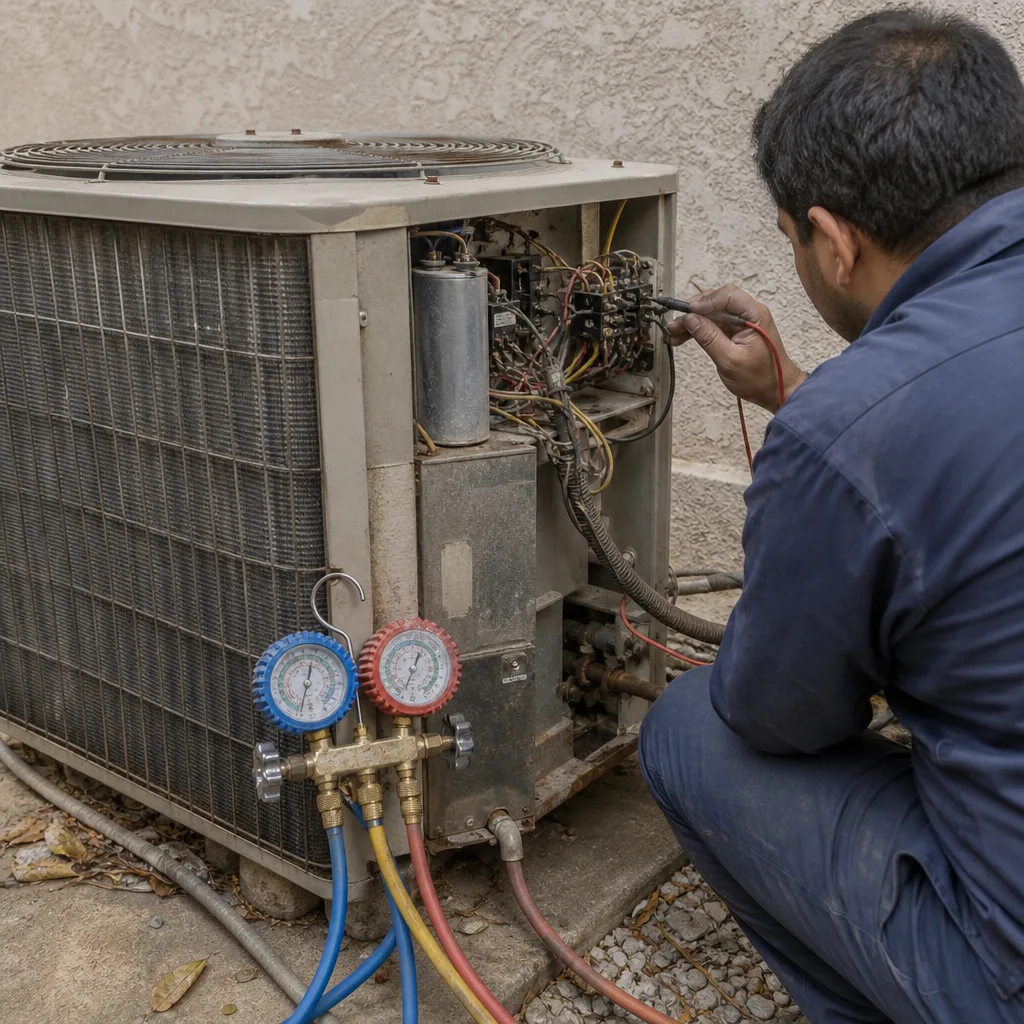
Ask the technician to write down readings. If they tell you the coil is dirty, there should be a number or a photo attached. We’ve seen too many Spring Valley homeowners told they need a whole new system when the real problem was a dirty coil and a leaky return. If you want the numbers first, that’s how we work.
Ventilation: Getting Fresh Air Into a Well-Sealed Home
Here’s the irony of energy efficiency. The tighter your house, the less fresh air gets in, and the more your indoor air quality depends on mechanical ventilation. Homes built in the 1950s leaked so much air that fresh-air exchange was never a problem. Newer homes and homes that have been weatherized are different. They need help.
Options we’ve installed in Spring Valley homes, depending on the situation:
- Bathroom and kitchen exhaust fans to code, venting to the outside, with proper flow. This alone makes a difference in mold-prone bathrooms.
- ERVs (energy recovery ventilators) that push stale air out and pull fresh air in, exchanging some of the heat and moisture in the process. Good for our climate.
- Small whole-house dehumidifiers when monsoon humidity is the real issue and fresh-air exchange would just bring in more moisture.
- Makeup air systems for homes with large exhaust hoods, so the house doesn’t pull air from the garage or attic when the fan runs.
If you’re on a heat pump or mini-split system, ventilation gets a little more interesting because these systems move less air than a traditional ducted setup. We get into that in more detail on our Heat Pump & Mini Split in Spring Valley page. For most homeowners, the starting point is a real conversation about how the house is being used, how many people are in it, and where the air actually comes and goes.
Common Mistakes to Avoid
- Buying a whole-house air purifier as the first move. If the real problem is duct leakage or filter bypass, a purifier can’t fix either, and you’ll spend hundreds on a device that doesn’t touch the source. Fix the source first.
- Running the fan continuously when the coil is wet or the pan is standing full. You’ll just distribute mold spores through every room. If you don’t know the coil and pan condition, don’t run the fan on “on” continuously.
- Ignoring window condensation. In Spring Valley during monsoon season, condensation usually means indoor humidity is above 60%. That’s above the threshold where mold accelerates. Treat it as a warning, not a quirk.
- Only changing the filter, never checking that it seats correctly. A clean filter that bypasses its slot does nothing. If dust reappears in a day, the filter isn’t the whole story.
- Using a plug-in CO detector without checking the gas appliances too. A CO monitor tells you when levels are elevated but not where the source is. Annual furnace and water heater inspection catches combustion problems early.
- Blocking return air vents with furniture. We’ve walked into Spring Valley homes where a couch or a bookshelf covered a return grille. Airflow drops, static pressure rises, and the system starts pulling air from wherever it can, which is usually the attic or the crawlspace.
- Treating indoor air quality as a filter problem instead of a system problem. The filter is one part of a system: the coil, the drain pan, the ducts, the return pathway, and the fresh-air exchange all matter.
See the difference
 Before
 After
 Before
 After
 Before
 After
When to Call a Professional
Some of this you can check yourself: look at the filter, look for visible duct gaps, check the drain pan for standing water, and see if windows are sweating. But a few of these need a trained eye and a proper tool set. Call a professional if you notice a musty smell coming from the registers, if you see mold anywhere on the coil or pan, if anyone in the house has a CO monitor that’s ever gone off, if a gas furnace hasn’t been inspected in a couple of years, or if you’re seeing dust on surfaces within a day or two of cleaning and the filter looks clean. Duct sealing, combustion checks, and ventilation design involve real diagnostics and sometimes real safety risk, so don’t guess at them.
Ray’s Heating & Air Spring Valley offers free estimates in Spring Valley – call (833) 620-7288. We’ll come look, walk you through what we see with the readings in hand, and let you decide the next step without a sales pitch.
Frequently Asked Questions
Stuffy air with the AC running usually means one of three things: the fresh-air exchange is too low for the number of people in the home, the return air pathway is restricted, or the filter is bypassing and the system isn’t actually filtering. In Spring Valley’s tighter homes, low fresh-air exchange is the most common of the three. Start with a filter-seating check, then a return-air-pathway check.
No. A musty smell from the vents is almost always coming from a moldy evaporator coil or a drain pan holding standing water. A purifier downstream of the coil can’t remove the source, and it won’t stop the smell. The fix is cleaning or replacing the coil and draining the pan. If you’re smelling it in Spring Valley, call (833) 620-7288 and we’ll diagnose the source first.
Signs your ducts are leaking attic air include higher dust levels in the house, a stuffy smell in summer afternoons, higher power bills than similar homes, and visible gaps or disconnected flex at joints in the attic. During a thorough inspection the technician can check duct seams, mastic condition, and return-air pathway. If you suspect ducts and you want a quote on sealing, call (833) 620-7288 for a free estimate.
Around 60% indoor relative humidity is where mold growth accelerates. In Spring Valley’s monsoon weeks, July through September, homes can climb above 60% without any obvious sign other than windows sweating. If you’re seeing condensation, the humidity is likely above the threshold. Call us at (833) 620-7288 to talk through a dehumidifier or ventilation fix.
Not by itself. A CO monitor tells you if carbon monoxide is present but not where it’s coming from. It won’t catch a cracked heat exchanger before the CO level rises. Annual inspection of any gas furnace and water heater is the part a monitor can’t do. If you want that inspection done, call (833) 620-7288.
Once a year is a reasonable baseline, typically paired with your seasonal AC or heating tune-up. If anyone in the house has respiratory symptoms that won’t clear, or you’ve seen musty smells, condensation, or excess dust, get it checked right away rather than waiting. In Spring Valley’s older housing stock, duct and coil issues tend to appear between tune-ups if they haven’t been addressed. Call (833) 620-7288 – estimates are free.
The Bottom Line
Most air quality problems in Spring Valley come down to the same handful of sources: a dirty coil or wet drain pan, duct leakage pulling attic air into the living space, filter bypass letting dust around the filter, low fresh-air exchange in a tight home, or elevated humidity during monsoon season. Every one of those has a real, definable fix, and every one of them shows up as a symptom before it shows up as an air quality reading. Pay attention to what the house is telling you. Condensation, musty smells, dust that returns overnight, and constant low-grade headaches are all clues. The right next step isn’t another air purifier. It’s a proper inspection with readings in hand, so you know what’s actually going on before anyone quotes a fix.
Everybody at Ray’s Heating & Air Spring Valley knows we’re competing with outfits whose trucks you won’t recognize next time. If you want the guy who shows up, does the diagnostic, and shows you the readings before quoting a number, call (833) 620-7288 for a free estimate. Ask anyone on your street. You can also check what we do on the Ray’s Heating & Air Spring Valley home page, our AC repair side, the heating and furnace side, and the heat pump and mini-split page. We work on Carrier, Trane, Lennox, Goodman, Rheem, York, Daikin, Bryant, and American Standard.
Written by the team at Ray’s Heating & Air Spring Valley.