
Last updated November 18, 2026
 AC repair
 Furnace & heating
 Heat pumps
 Ductless mini splits
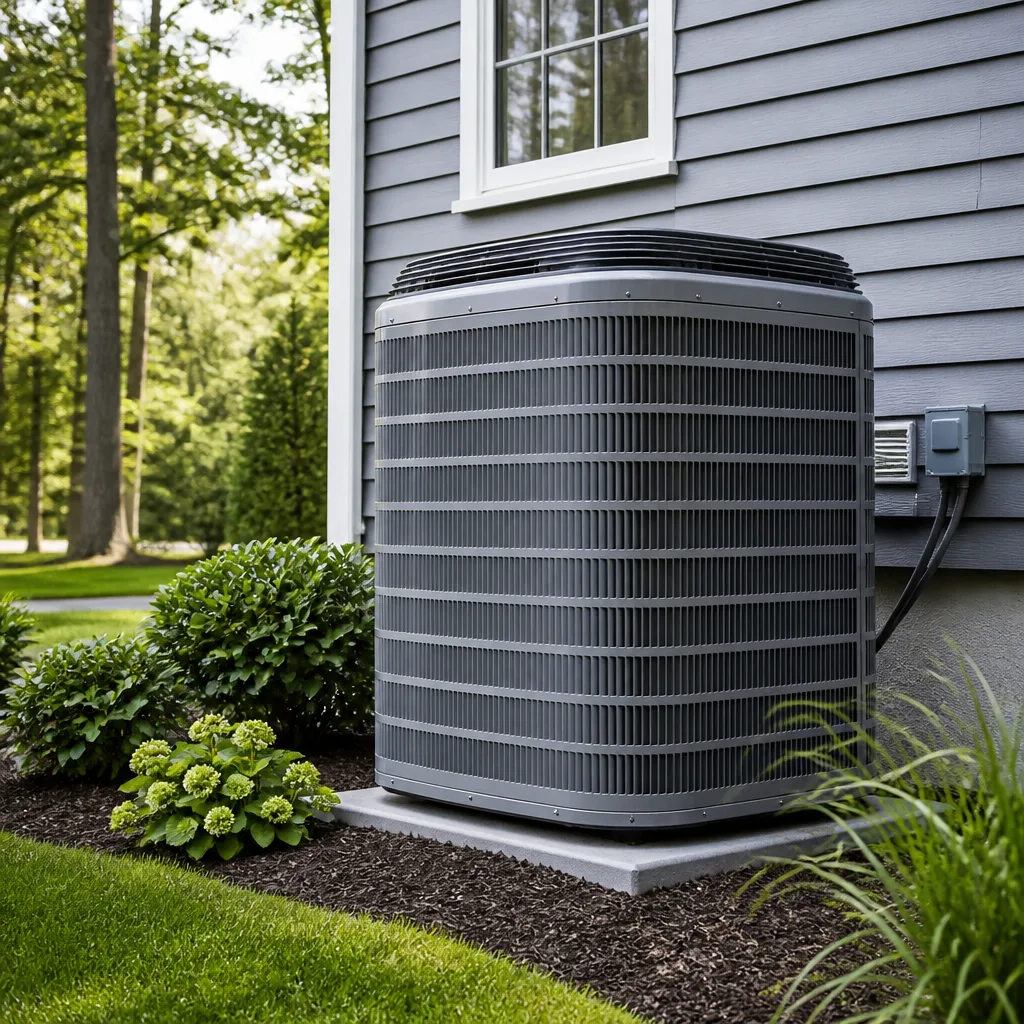 Carrier
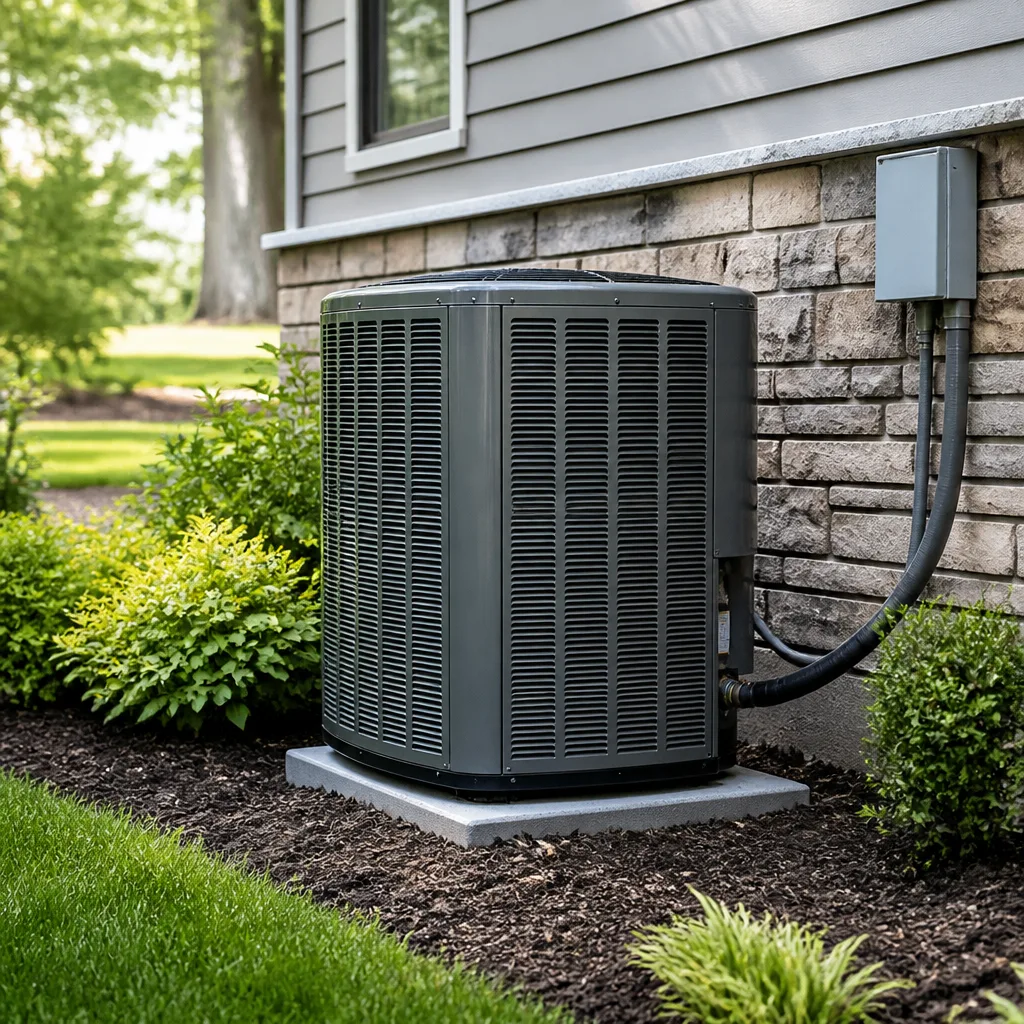 Trane
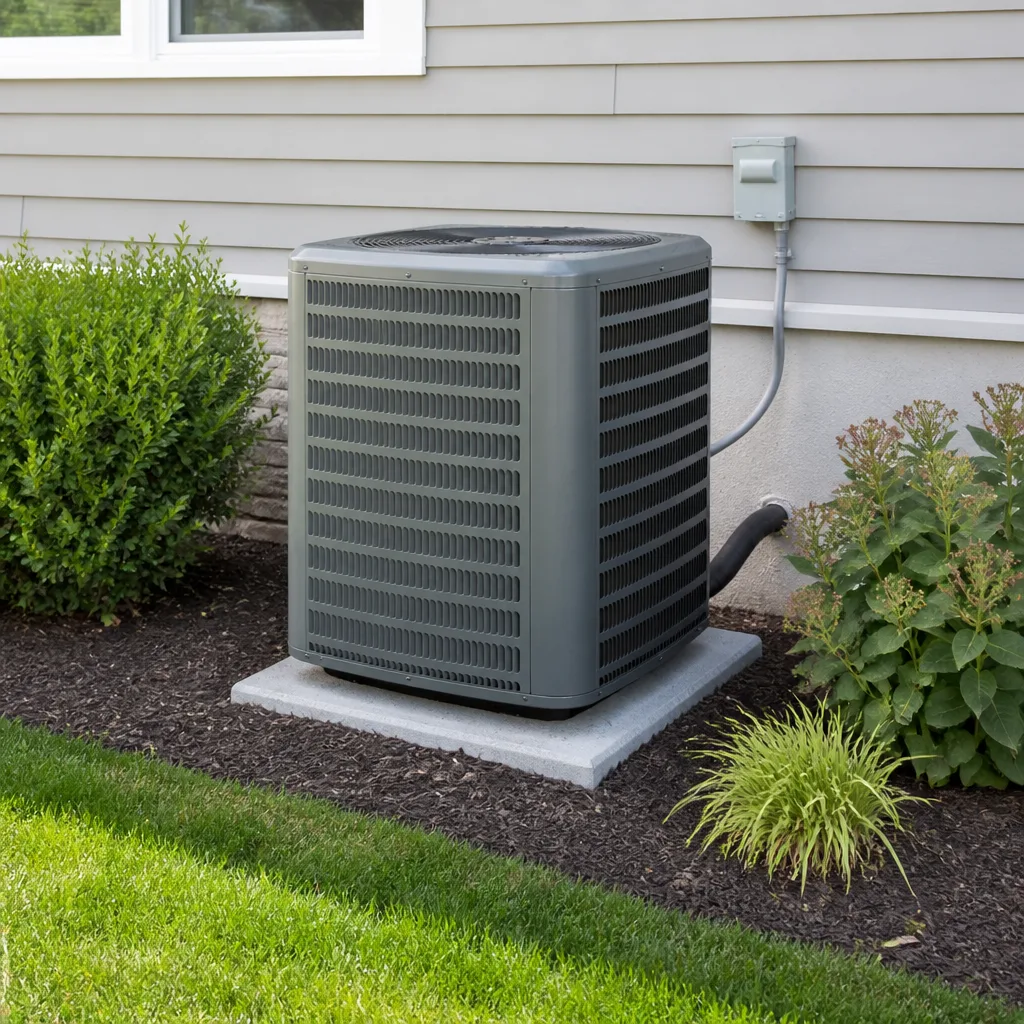 Goodman
Seasonal tune-up and full diagnostic on your Carrier, Trane, or Goodman system - readings shown to you before any repair is proposed
Diagnosis first, numbers second - you approve the repair price before a single part goes in.
Get your free estimateAC Repair & Installation Warning Signs Every Homeowner Should Know
Your AC will almost always tell you it’s dying before it actually dies. The problem is the signals look like minor annoyances: a slightly longer run cycle, a faint chemical smell near the return vent, a utility bill that’s $40 higher than last June. Most people chalk those up to “it’s just hot out.” In Spring Valley, where a July afternoon sits above 105°F for days at a stretch, that habit is what turns a $200 capacitor swap into a $2,000 August emergency. We’ve walked into hundreds of homes where the homeowner said, “it was fine last week.” It was not fine last week. The system was sending a bill, a smell, or a sound – and nobody was reading it. This guide teaches you to read it.
Quick Answer
The earliest warning signs your AC is failing are a utility bill 15 to 25 percent above the same month last year, run cycles that stretch longer while delivering less cool air, short-cycling (repeated on-off every few minutes), a faint musty or burning smell near a return vent, and ice forming on the refrigerant line or indoor coil. Catching any of these early usually means a repair in the low hundreds. Waiting until August in Spring Valley usually means compressor replacement, refrigerant leak chasing, or a full system swap – the expensive tier.
Styles & brands we work with
- AC repair
- Furnace & heating
- Heat pumps
- Ductless mini splits
- Carrier
- Trane
- Goodman
Table of Contents
- The Utility Bill Signal That Predicts a Failure 60 to 90 Days Out
- What Short-Cycling Really Does to Your Compressor
- The Smell Inventory: Three Different Problems, Three Different Smells
- Ice on the Lines or the Unit – Simple or Serious?
- Your 15-Minute Visual Inspection of the Outdoor Unit
- Installation Red Flags Before the Crew Shows Up
- Spring Valley-Specific Failure Patterns
- Common Mistakes to Avoid
The Utility Bill Signal That Predicts a Failure 60 to 90 Days Out
Here’s the pattern we trust most. Compare this June’s kWh to last June’s kWh on your NV Energy bill. Not the dollar amount – actual kilowatt-hours, because rates shift. If your usage is up 15 to 25 percent while the weather was similar, and nothing else in the house changed, your system is working harder for the same output. That’s the fingerprint of a slow refrigerant leak or a compressor losing efficiency. On a 2,000-square-foot Spring Valley home charged the standard way, expect to see roughly 300 to 500 extra kWh you can’t explain. That reads as $40 to $70 on the bill.
Why 60 to 90 days? Refrigerant leaks don’t announce themselves. A tiny leak at a Schrader valve or a brazed joint bleeds a little charge each season, and the system compensates by running longer to hit setpoint. Long run cycles burn more electricity quietly. By the time the house feels warm, the compressor has been pushing hard for weeks – sometimes months – and that’s when the real damage gets priced.
What to do with this information:
- Pull last year’s June, July, and August statements. Write down kWh usage for each month, not dollars.
- Compare to this year’s same-month kWh. Flag anything 15 percent or higher with similar weather.
- Check whether the thermostat setpoint changed. A new baby, a new roommate, a medical need – those raise usage honestly.
- If usage is up and nothing human changed, get refrigerant pressures checked. A $90 diagnostic that catches a leak on day one beats a $600 recharge in August.
We see this pattern constantly in Spring Valley homes built between 1995 and 2010, where the original R-22 equipment got swapped for R-410A but the line sets stayed. Older line sets under new refrigerant have a leak profile of their own, and a slow bleed there is exactly what the bill reads as first.
What Short-Cycling Really Does to Your Compressor
Short-cycling is your system turning on, running for two to five minutes, shutting off, then repeating within ten or fifteen minutes. Homeowners often describe it as “it keeps starting and stopping” and assume it’s a thermostat quirk. It is almost never a thermostat quirk. It’s a mechanical or electrical fault somewhere in a short list: a failing capacitor, an overcharged or undercharged system, a dirty evaporator coil, a bad contactor, an oversized system for the ductwork, or a thermostat sensor on the fritz.
What makes short-cycling expensive is that it wears the compressor exponentially, not linearly. A compressor is a motor with oil that needs the motor running to circulate the oil. On a healthy long cycle, oil lubricates bearings the whole way through. On a short cycle, the compressor starts – the highest-current, highest-heat moment in its whole operation – and shuts off before oil has finished circulating. Every start costs you more wear than an hour of steady running. A compressor that starts 20 times an hour instead of 3 is doing the equivalent wear of running seven times as hard.
We’ve pulled compressors in Spring Valley that read healthy on paper and were dead because they’d been short-cycling since early summer. By the time the homeowner called us, the bill had been climbing for six weeks.
The short list of what actually causes it, in order of how often we find it:
- Failing capacitor. The cheapest cause and the easiest to test. We test the capacitor before anyone says the word “compressor.” Always.
- Dirty evaporator coil or blower. Restricted airflow pushes pressure limits and trips the system off on safety.
- Low refrigerant. The compressor’s pressure switch trips it off before it overheats.
- Oversized system. A unit too big for the square footage cools the air fast and satisfies the thermostat before enough moisture is pulled from the air. Common when someone swapped a 3-ton for a 4-ton without doing a load calculation.
- Bad contactor or control board. Rarely the first thing, but real.
If your system is short-cycling, that’s worth the call today. Our AC Repair & Installation in Spring Valley page lays out what a same-day visit looks like.
The Smell Inventory: Three Different Problems, Three Different Smells
A smell near a return vent is data. Which smell tells you which problem. We’ve seen homeowners treat a burning-wire smell as “just dusty” for two weeks and end up replacing a blower motor.
Smell #1: Burning, electrical, plastic-y
That’s a hot component, not a dirty filter. Most often a failing blower motor, a pitted contactor in the outdoor unit, a wire that’s arcing inside a junction box, or a capacitor that’s blown and cooking its case. Shut the system off at the breaker and call someone. This is not a smell to sleep on, and it isn’t a smell to solve with a fresh filter.
Smell #2: Faintly sweet, chemical, like new plastic or nail polish remover
That’s refrigerant. The refrigerant itself has almost no smell, but the lubricant traveling with it does, and a leak at the indoor coil or a Schrader valve lets both out. This smell usually shows up alongside the utility bill signal from the last section – if you’re seeing both, you have a leak worth confirming with gauges today. R-410A doesn’t damage the ozone layer, but it still costs a lot to replace, and a leak won’t seal itself.
Smell #3: Musty, wet, mildewy drain smell
That’s the condensate drain line or the drain pan. In Spring Valley, where monsoon-season humidity spikes hard in July and August, a slow-clogged drain line is one of the most common service calls we run. The water sits, grows algae, backs up, and eventually shuts the system down on a float switch – or worse, overflows into ceiling drywall. A musty smell deserves a $150 drain clearing, not a new system.
If you can’t place a smell, don’t guess. Our Ray’s Heating & Air Spring Valley home page has the number and a live person answers it around the clock.
Ice on the Lines or the Unit – Simple or Serious?
Ice on the large insulated copper line (the suction line) coming out of your outdoor unit, or frost forming on the indoor coil behind the filter, looks dramatic. It’s actually a sign the system is running below its designed temperature – which sounds good and is very bad. Here’s the short version: low refrigerant pressure makes the coil colder than it should be, moisture in the air freezes onto it, the ice chokes airflow, airflow loss makes the coil colder still, and the whole thing spirals. Ice is a symptom, not a problem on its own.
Ice can mean two different things depending on what else you’re seeing.
- Ice plus a filter you know is dirty or a return vent you’ve blocked with furniture: this is an airflow problem. A dirty filter, a closed register, a crushed flex duct in the attic, or a return vent covered by a couch all choke airflow and freeze a coil. Fix the airflow, thaw the system (shut it off, let it thaw with the fan running), and see if the ice stays away. If it does, you’ve solved it.
- Ice plus a clean filter, clear returns, and a normal bill last month: this is a refrigerant charge problem, and there’s a leak somewhere – condenser coil, indoor coil, line set, or a Schrader valve. Charge alone doesn’t fix it. You have to find the leak, then charge. Anyone who offers to “top it off” without leak searching is charging you twice.
Don’t chip ice off with a screwdriver. We’ve seen punctured coils from that move. Shut the system off and let it thaw, then call. If it’s early season, this is a cheap visit. If it’s mid-August in Spring Valley, we’re booked tight and the visit waits – which is exactly why reading these signs in May and June matters so much.
Your 15-Minute Visual Inspection of the Outdoor Unit
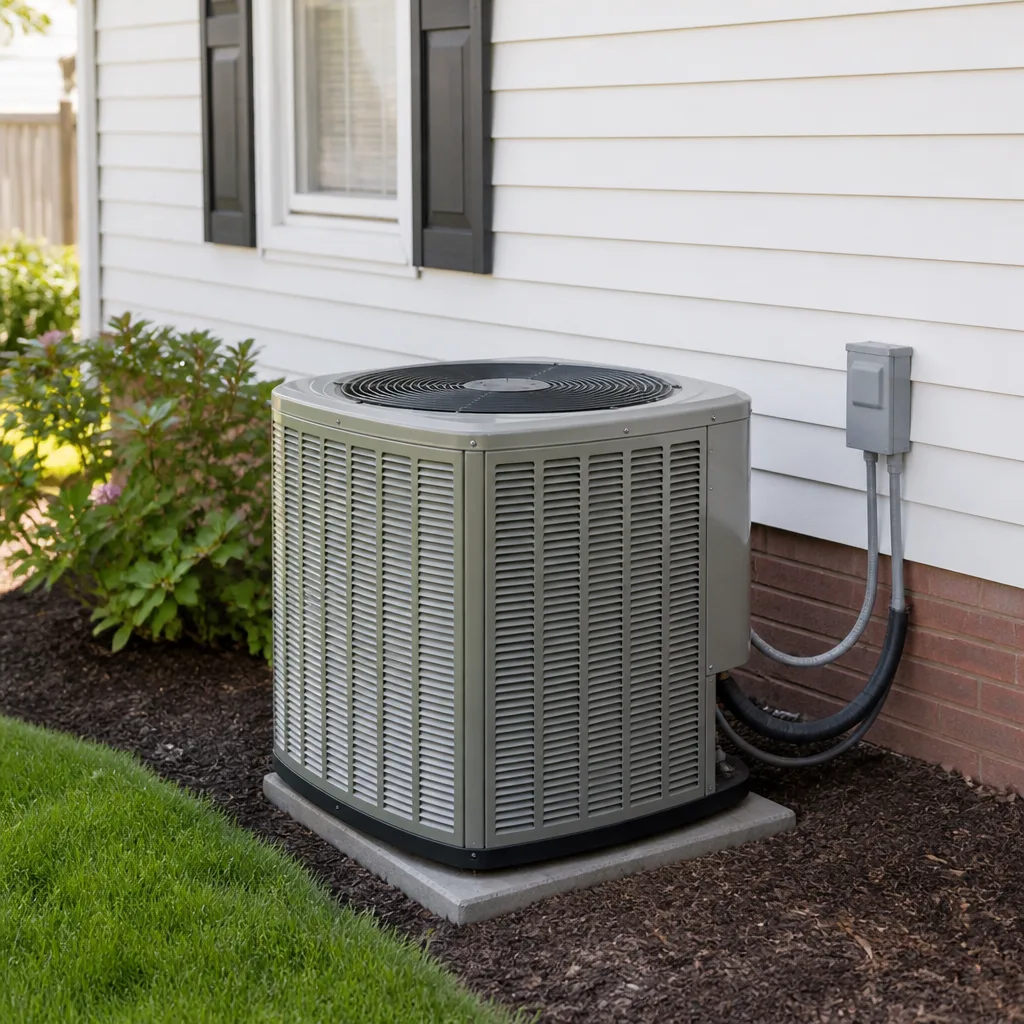
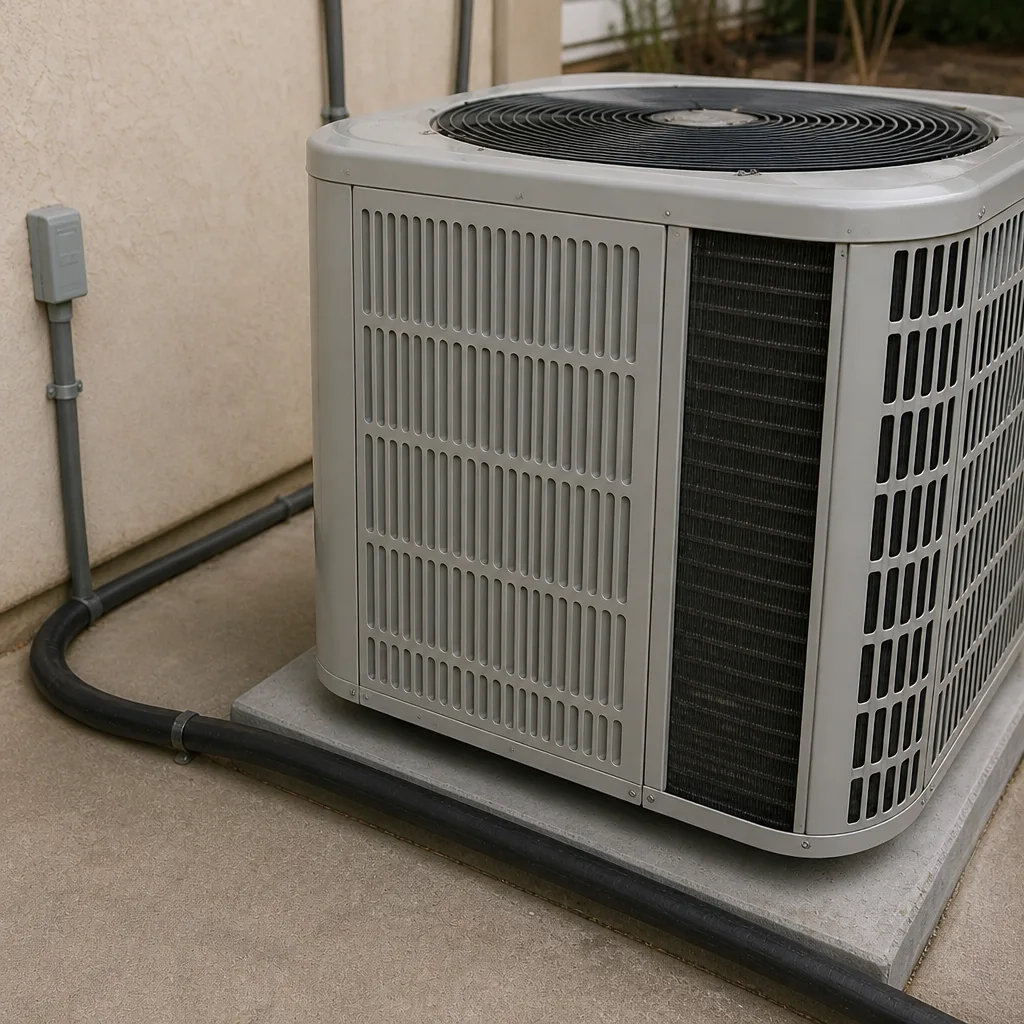
A fifteen-minute walk around your outdoor condenser catches most problems before they become emergencies. This is the single highest-value habit a homeowner can build, and it costs nothing but attention. Do it once a month between April and September.
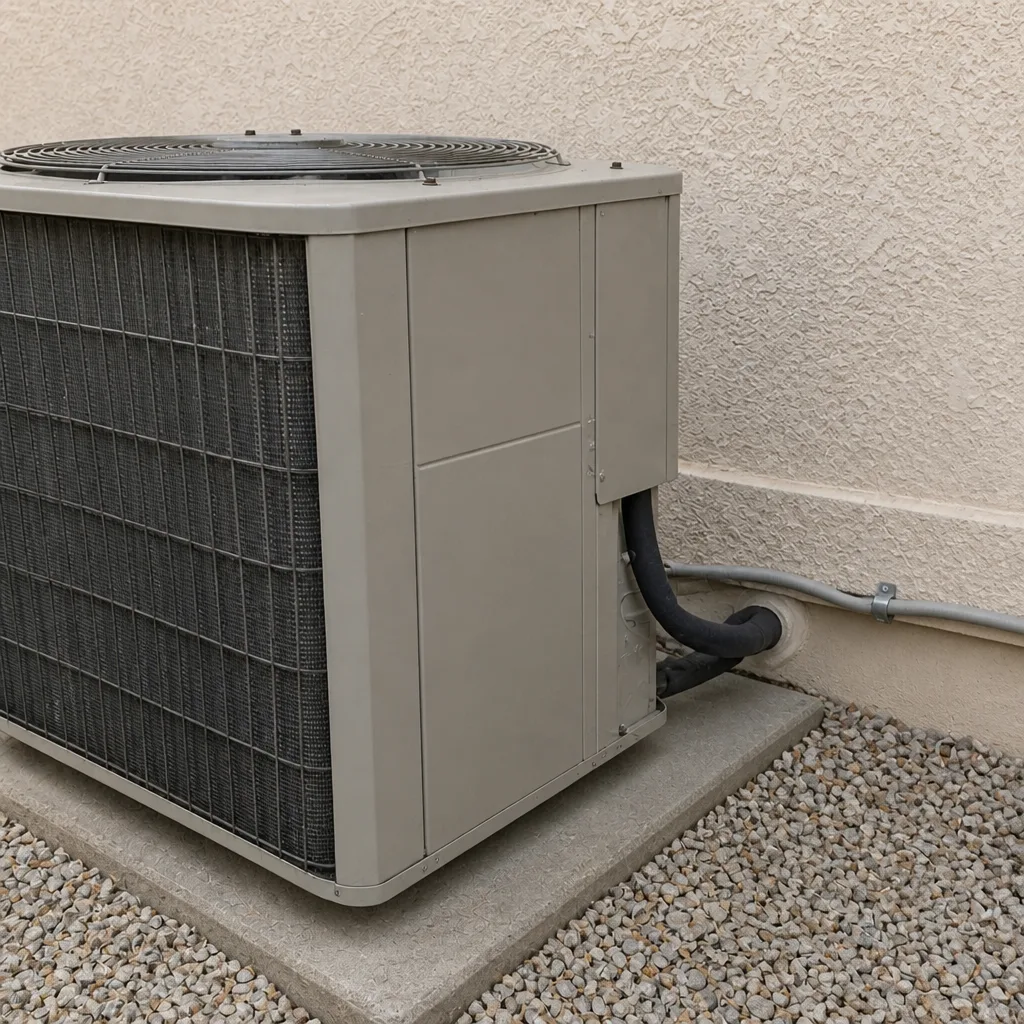
- Look at the concrete pad. Is the unit level? A tilted unit strains the compressor and flexes refrigerant lines. If it’s tipped, get it set. Simple fix, prevents a real one.
- Clear the sides and top. Two feet of clearance minimum on all sides, and nothing stacked on top. In Spring Valley, we find pool floats, landscape rock bags, and patio cushions stacked against units more often than you’d guess. Starved airflow is starved airflow.
- Look at the fins. The aluminum fins behind the fan should be visibly clean. If they’re packed with cottonwood seed, dust, or last season’s pollen, they can’t shed heat. A soft rinse from the inside out – not a pressure washer, which bends fins – clears them.
- Check the disconnect box and the whip. Is the conduit intact? Is the whip (the flexible cable from the wall to the unit) cracked or sun-damaged? Sun-baked insulation on a disconnect whip is a fire risk in our heat. This is a call-a-pro item, not a DIY project.
- Look for ice on the large line. If there’s frost, shut it off and refer to the ice section above.
- Look for oil stains on the copper or the concrete. Refrigerant carries oil with it. An oil stain at a brazed joint means a leak. That’s a tiny repair now and a compressor repair later.
- Listen for 30 seconds. Steady fan whoosh and a low compressor hum are normal. A buzzing contactor, a clanking fan, or a rattling panel all mean something.
- Look at the filter inside. Hold it to a light source. If you can’t see light through it, it’s overdue. In a dusty Spring Valley summer with the windows open, filters run out in 30 days, not 90.
Anything on that list that looks off is worth a photo and a call. Our Heating & Furnace in Spring Valley page covers the furnace-side check you run in October, and the same DIY visual logic applies in fall.
Installation Red Flags Before the Crew Shows Up
The single most common reason a replacement system fails in its first three years is a bad install, not a bad brand. A Lennox, Goodman, Rheem, or York unit all get delivered as good equipment – what happens on install day decides whether it lasts 15 years or 7. Here’s what to watch for, in order.
- No load calculation in writing. Any contractor swapping a system without a Manual J load calculation is guessing at tonnage. Guessing wrong means short-cycling, humidity problems, and premature failure. Ask for the calculation before signing.
- They match a new condenser to an old coil (or vice versa). Mismatched equipment kills efficiency and voids some warranties. A matched indoor/outdoor set is the only correct install.
- They skip the nitrogen purge during brazing. If they don’t purge with nitrogen while brazing, they oxidize the inside of the copper, and that debris circulates in the refrigerant stream for years. You can’t see it. You feel it in year four.
- Line set size is “close enough.” Wrong-diameter line sets are a common shortcut. It should match the equipment spec exactly.
- No permit pulled. A replacement is permitted work in most jurisdictions. A contractor who “knows a guy” who doesn’t pull permits is protecting his margin, not your warranty.
- Commissioning readings not documented. Subcooling and superheat should be measured and written down at startup. If they can’t hand you those numbers, they didn’t take them.
If you’re considering a heat pump or mini-split swap, our Heat Pump & Mini Split in Spring Valley page has the sizing specifics for our climate. Spring Valley is a good heat pump market – mild winters, short shoulder seasons – but sizing and commissioning matter more than the badge on the box.
Spring Valley-Specific Failure Patterns
Spring Valley sits in a weird pocket. Our summers are hot enough to run the AC 14 hours a day for months, our monsoon humidity spikes in July and August, and our winters get cold enough to fire the furnace for six or eight weeks. The equipment wears differently here than in a milder climate.
Three patterns we see again and again in Spring Valley:
- April-through-June capacitor failures. Heat and thermal cycling age capacitors on a curve. Ours fail in late spring, right when the first 100-degree weekend hits and systems go from occasional use to all-day. That’s why a capacitor test in April saves a no-cool call in June.
- July-August condensate backups. Monsoon humidity loads the indoor coil harder than the dry heat of June does. Slow-clogged drain lines that ran fine in May clog shut by late July. If you haven’t had the drain cleared in two years, get it done in June.
- Dust and cottonwood on the condenser. Our spring winds carry fine dust and cottonwood seed. A condenser that doesn’t get hosed off in May carries a film of that into August. It’s the single simplest thing a homeowner can do.
Ray’s Heating & Air has been working Spring Valley homes since 2002. Our technicians have up to 24 years of experience, and every job carries the 90-Day Done Right Promise – if it’s not done right, we make it right, and one call brings Ray back. Phones are answered by a live person, 24/7, not a voicemail maze.
Common Mistakes to Avoid
- Assuming “it’s just hot out.” A 15-degree difference between thermostat setpoint and actual room temp on a 105-degree day in Spring Valley is not normal. It’s a refrigerant, airflow, or compressor problem that started cooling slowly.
- Charging refrigerant without finding the leak. “Topping it off” is a $500 bandage on a wound that keeps bleeding. If refrigerant is low, there’s a leak. Fix the leak.
- Replacing a filter three sizes too small. Wrong-size filters slip, leak air around the edges, and defeat the whole point. Match the filter to the return grille dimensions printed on the grille itself.
- Letting a “diagnostic” turn into a sales presentation. Ask for the readings before anyone says the word “compressor.” You should see pressures, superheat, subcooling, capacitor microfarads, and amp draws – not just a verdict.
- Skipping spring maintenance because “it’s running fine.” Every failure we see in August had a cheap fix in May. A $150 tune-up in April is not a luxury in our climate, it’s the reason the system lasts 15 years instead of 8.
- Not asking for a permit on replacement. In Spring Valley, a permitted swap protects your warranty and your resale. A contractor who dodges permits is dodging accountability.
- Using a rotating-crew national outfit for a repair. The person at your door should know your system. Ours do, and they show up background-checked and uniformed – the same people you saw last time, not a stranger every visit.
See the difference
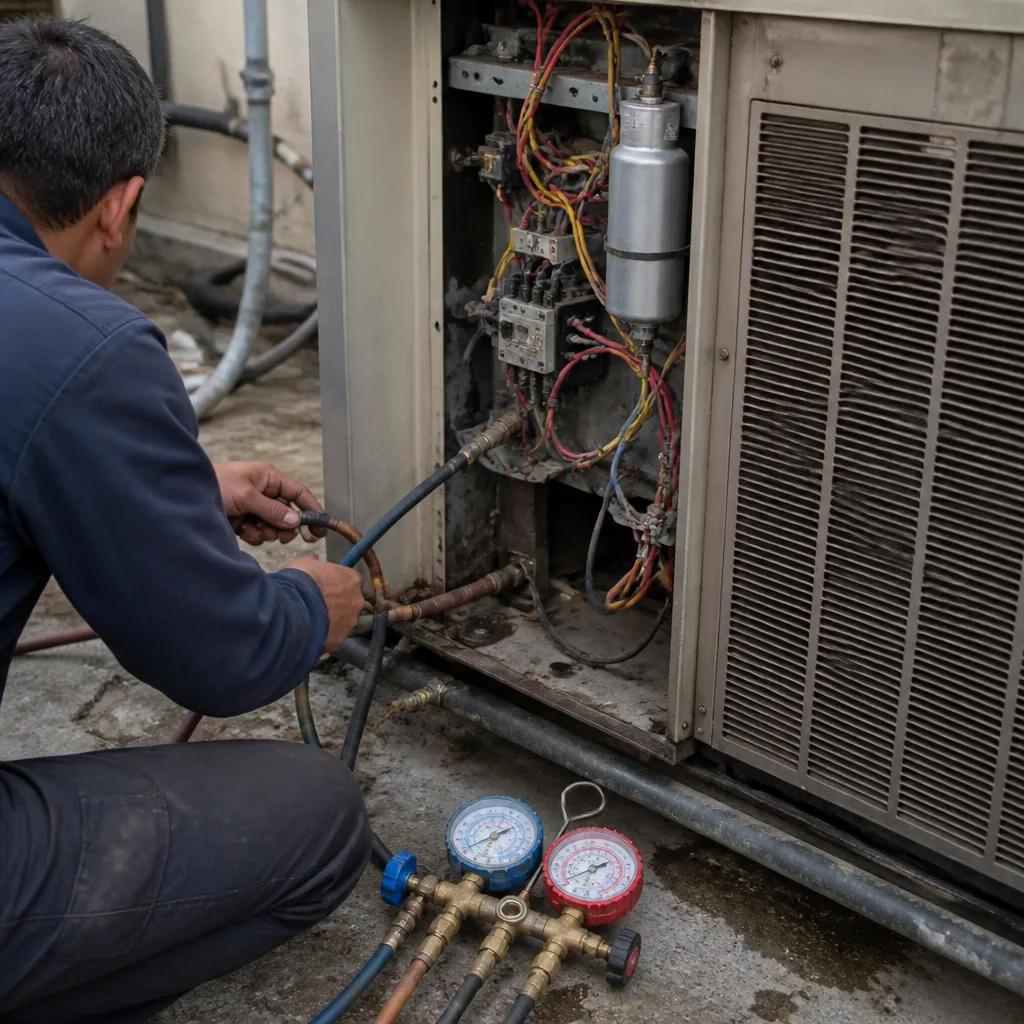
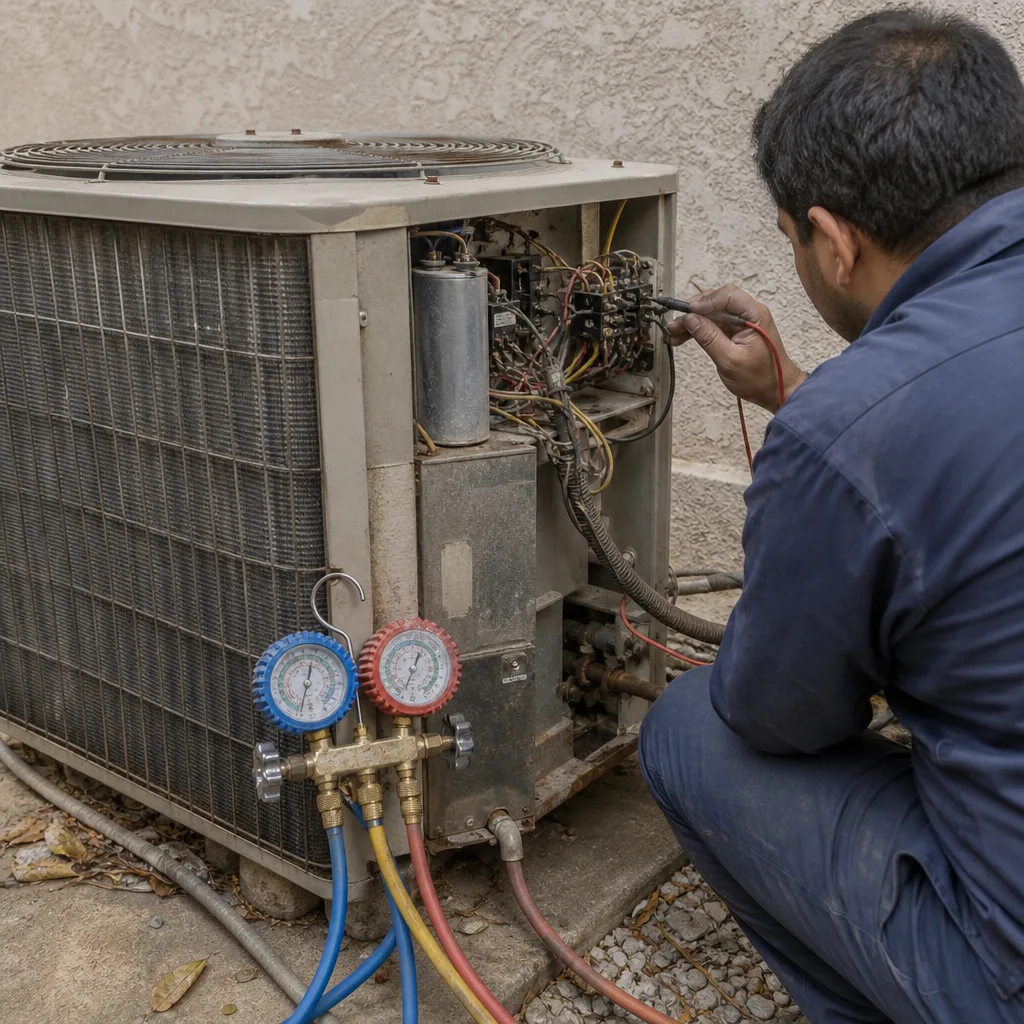 Before
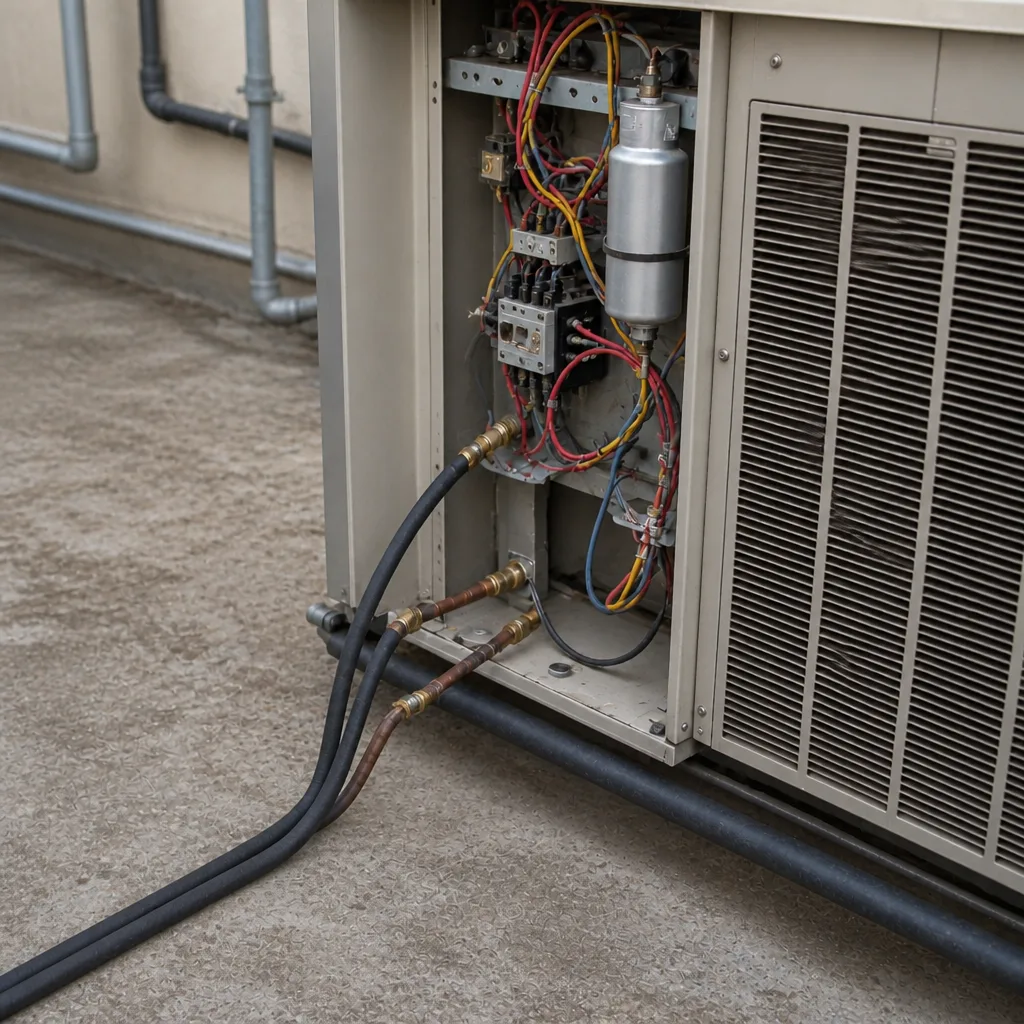
 After
 Before
 After
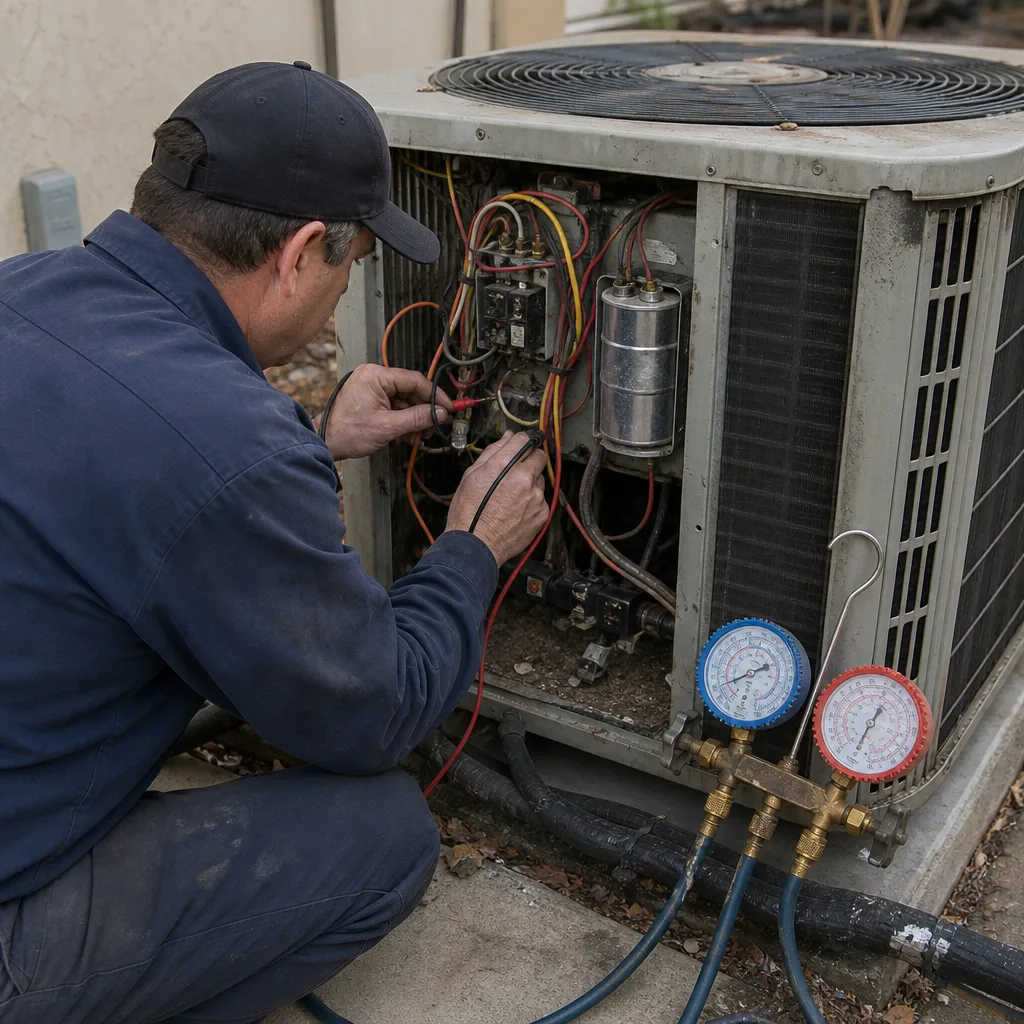 Before
 After
When to Call a Professional
Call a professional the same day for any of these: a burning electrical smell near a return vent or at the outdoor unit, ice on the suction line with a clean filter, short-cycling every few minutes, a system that runs but doesn’t cool the house within 10 degrees of setpoint, or an unexplained jump of 15 percent or more in your NV Energy usage compared to the same month last year with similar weather. In Spring Valley, delayed AC calls in July and August cost more, because the diagnostic that runs $90 in June runs the same in July but the repair it catches is dramatically bigger by then. Ray’s Heating & Air Spring Valley offers free estimates in Spring Valley – call (833) 620-7288. A live person picks up, day or night, and it’s often Ray himself.
Frequently Asked Questions
The earliest reliable sign is a jump in kilowatt-hours – not dollars – on your utility bill compared to the same month last year with similar weather. A 15 to 25 percent rise with no other explanation usually points to a slow refrigerant leak or a compressor losing efficiency, and it typically shows up 60 to 90 days before the system stops cooling. If you see that jump, get pressures checked before summer peaks. Call (833) 620-7288 for an exact quote – estimates are free.
That’s short-cycling, and it accelerates compressor wear exponentially because every start burns more than steady running does. The most common cause we find is a failing capacitor, followed by low refrigerant, a dirty evaporator coil, or a system oversized for the ductwork. A capacitor test takes two minutes and costs far less than a compressor. Call (833) 620-7288 to get it looked at today.
No. Ice on the outdoor unit or the suction line means the system is running below its designed temperature, which almost always means low refrigerant or restricted airflow. If your filter is clean and returns are clear, it’s a refrigerant problem and there’s a leak somewhere. Shut the system off at the thermostat, let it thaw, and call (833) 620-7288. Don’t chip the ice off – that’s how coils get punctured.
Burning electrical components smell sharp, plastic-like, and usually come from a failing blower motor, a pitted contactor, or a failing capacitor. Shut the system off at the breaker and call a professional – this is not a fresh-filter problem. A sweet chemical smell is a different animal: that’s refrigerant. Call (833) 620-7288 and we’ll walk you through which is which over the phone before anyone comes out.
Most Spring Valley AC repairs land in the $180 to $650 range depending on the part. A capacitor or contactor swap sits at the bottom of that range, refrigerant leak search and recharge sits in the middle, and blower motor or control board replacement sits at the top. Compressor replacement runs much higher and often makes a good case for replacement of the whole system. Call (833) 620-7288 for an exact quote – estimates are free, and readings come first, numbers second.
The rule of thumb is repair if the system is under 12 years old, the repair is under 30 percent of a replacement, and it hasn’t had two or more major repairs in the last three years. Replace if it’s over 15 years old, uses R-22 refrigerant, or has had repeated compressor-adjacent failures. Do the math on the utility bill too: a 15 percent usage creep with a 15-year-old system rarely gets better. Call (833) 620-7288 and we’ll give you both numbers honestly.
The Bottom Line
Your AC sends warning signals weeks before it fails, and they look like annoyances: a bill that’s climbed $40, a run cycle that’s a little longer than last year, a smell you can’t quite place, a bit of frost on the line. Read those signals and you’re looking at a few-hundred-dollar repair. Ignore them through a Spring Valley July and the same underlying issue shows up as a compressor swap or a full replacement. Fifteen minutes a month with your eyes on the outdoor unit, one annual tune-up in April, and a habit of pulling the kWh history every June catches most of it. It’s a skill, and it’s learnable. When something doesn’t look right, call (833) 620-7288 for a free estimate – a live person answers, every hour of every day, and it’s often Ray himself. Whether it’s a Spring Valley AC repair today or a heating tune-up in October, our team shows up the same way: readings first, numbers second, and the 90-Day Done Right Promise in writing.
Written by the team at Ray’s Heating & Air Spring Valley.