
Last updated November 18, 2026
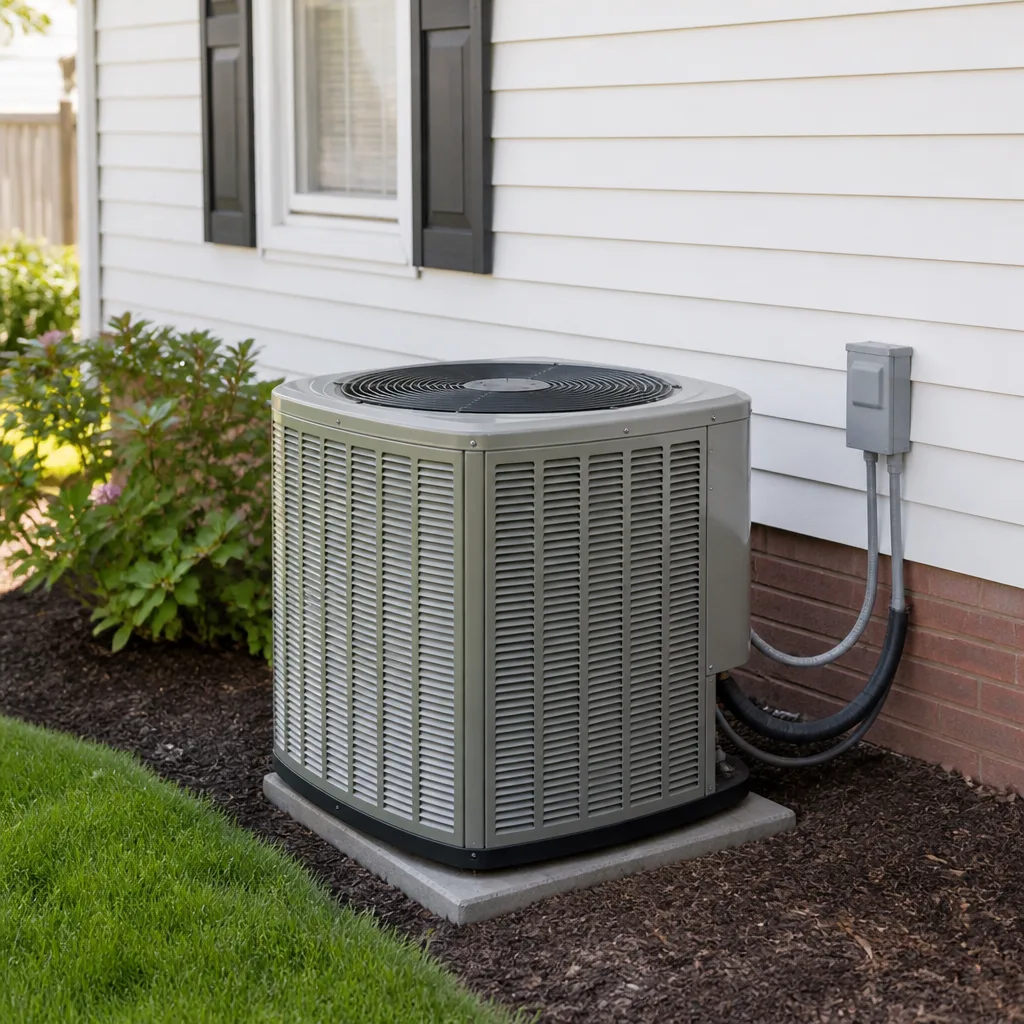 AC repair
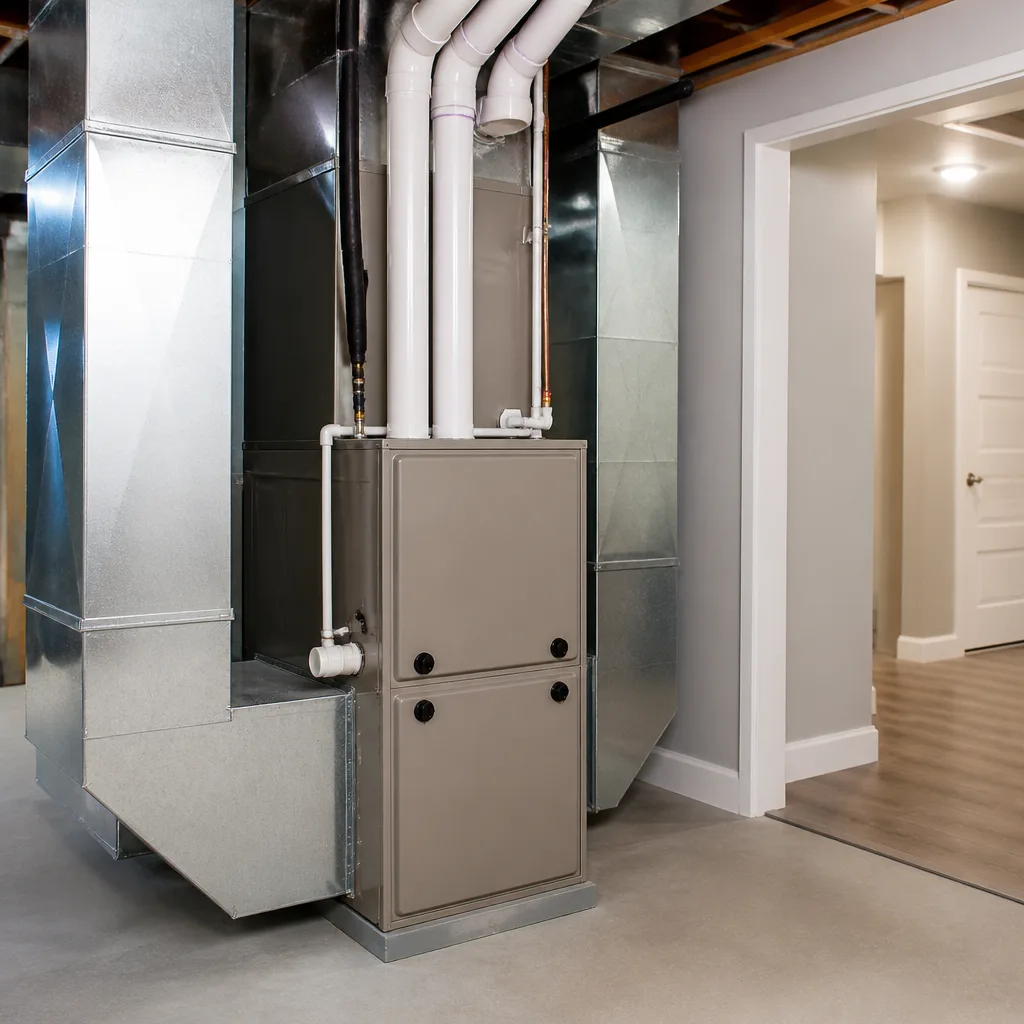 Furnace & heating
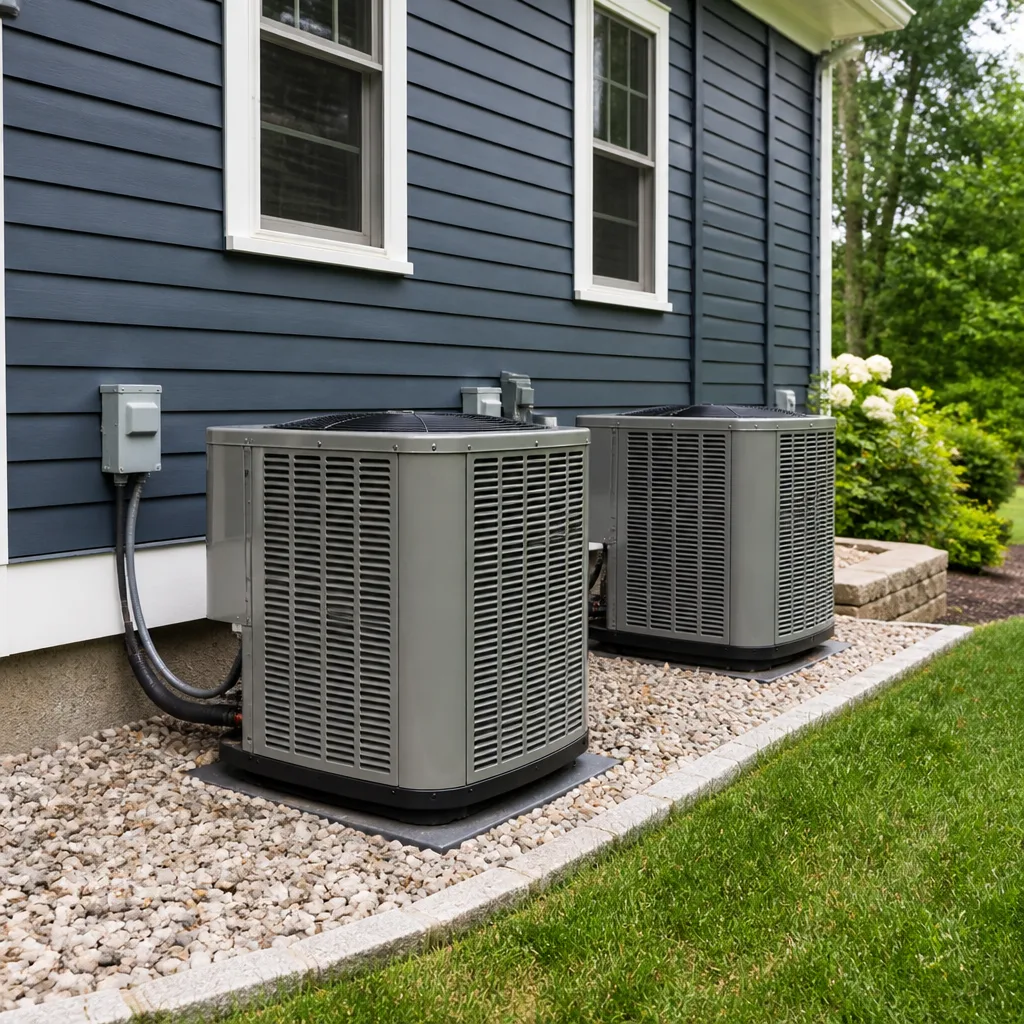 Heat pumps
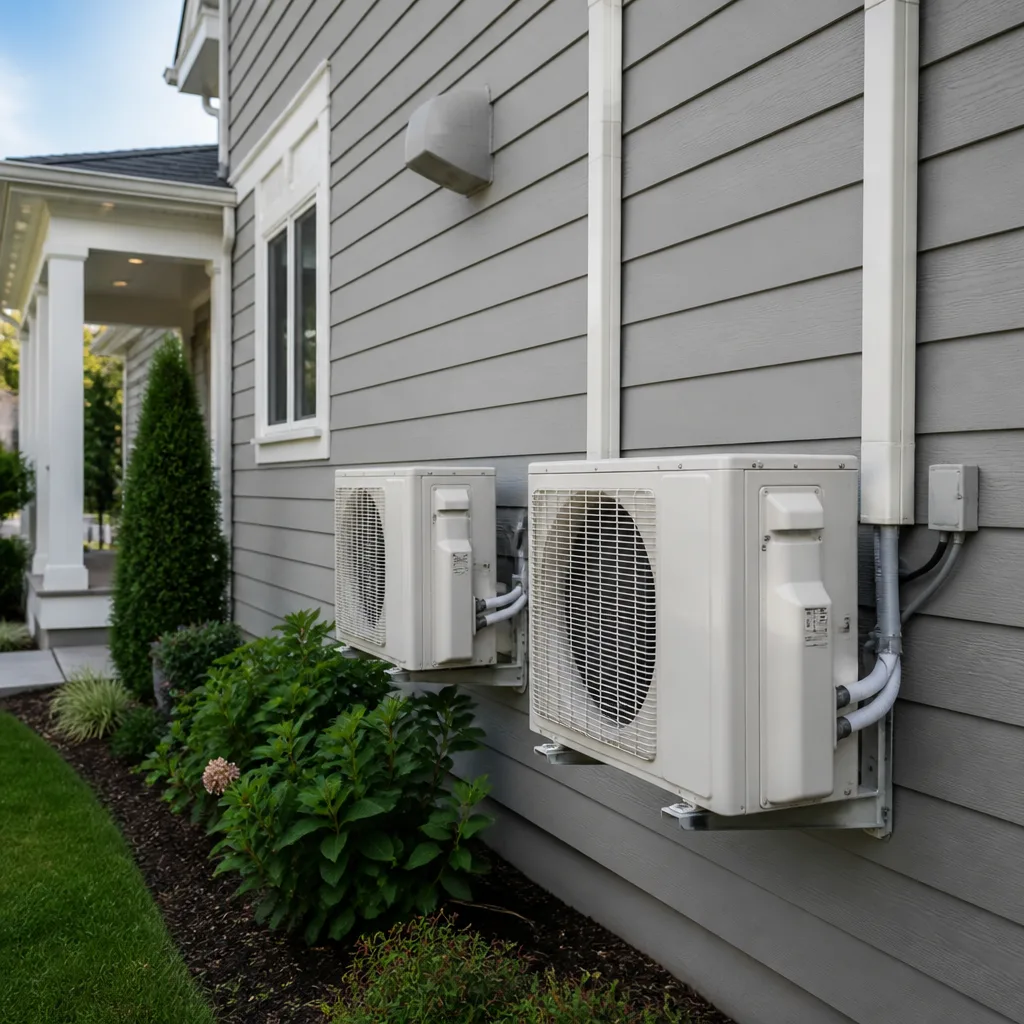 Ductless mini splits
 Carrier
 Trane
 Goodman
Seasonal tune-up and full diagnostic on your Carrier, Trane, or Goodman system - readings shown to you before any repair is proposed
Diagnosis first, numbers second - you approve the repair price before a single part goes in.
Get your free estimateAC Repair & Installation Maintenance Checklist for Spring Valley Homeowners
If you’re doing your AC tune-up in June, you’re already late. By the time the tech leaves, you’ve got maybe one bad week before you’re calling someone at midnight because the house is 88 degrees. In Spring Valley, the window that actually matters is March into April, before the first 100-degree day lands, and then again in October after the heat breaks. Miss either one and you’re paying for it in July. This guide walks you through both windows, the hard-water condensate problem that bites this valley harder than most, the filter math nobody gets right, and what to write down after every visit so you have a real history if something fails under warranty.
Quick Answer
Spring Valley homeowners should run a pre-season AC checklist in March through April (filters, condenser coil cleaning, condensate drain flush, refrigerant line inspection) and a post-summer checklist in October (line-set protection before temperature cycling, drain float switch test, capacitor readings). Change filters every 4 – 6 weeks during dusty months, not the 90 days printed on the box. Document every service visit with date, readings, and parts so warranty claims hold up.
Styles & brands we work with
- AC repair
- Furnace & heating
- Heat pumps
- Ductless mini splits
- Carrier
- Trane
- Goodman
Table of Contents
- The March – April Pre-Season Checklist
- Dust, Pollen, and Caliche: Why Spring Valley Is Different
- The Condensate Drain Protocol (Hard Water Kills Float Switches)
- Filter Change Reality Check for Spring Valley
- The October Post-Summer Checklist
- Refrigerant Lines and Temperature Cycling Damage
- What to Document After Every Service Call
- Common Mistakes to Avoid
- When to Call a Professional
The March – April Pre-Season Checklist
Spring Valley sits at the eastern edge of the Las Vegas Valley, which means by mid-May you can be looking at triple-digit afternoons, and by June the system is running flat-out until October. The March – April window is the last calm stretch before that. Here’s what we run through on every Spring Valley house in that window.
- Pull and inspect the filter. Don’t just swap it. Look at it. If it’s gray and matted after four weeks, you’ve got a dust load problem that a longer interval won’t fix.
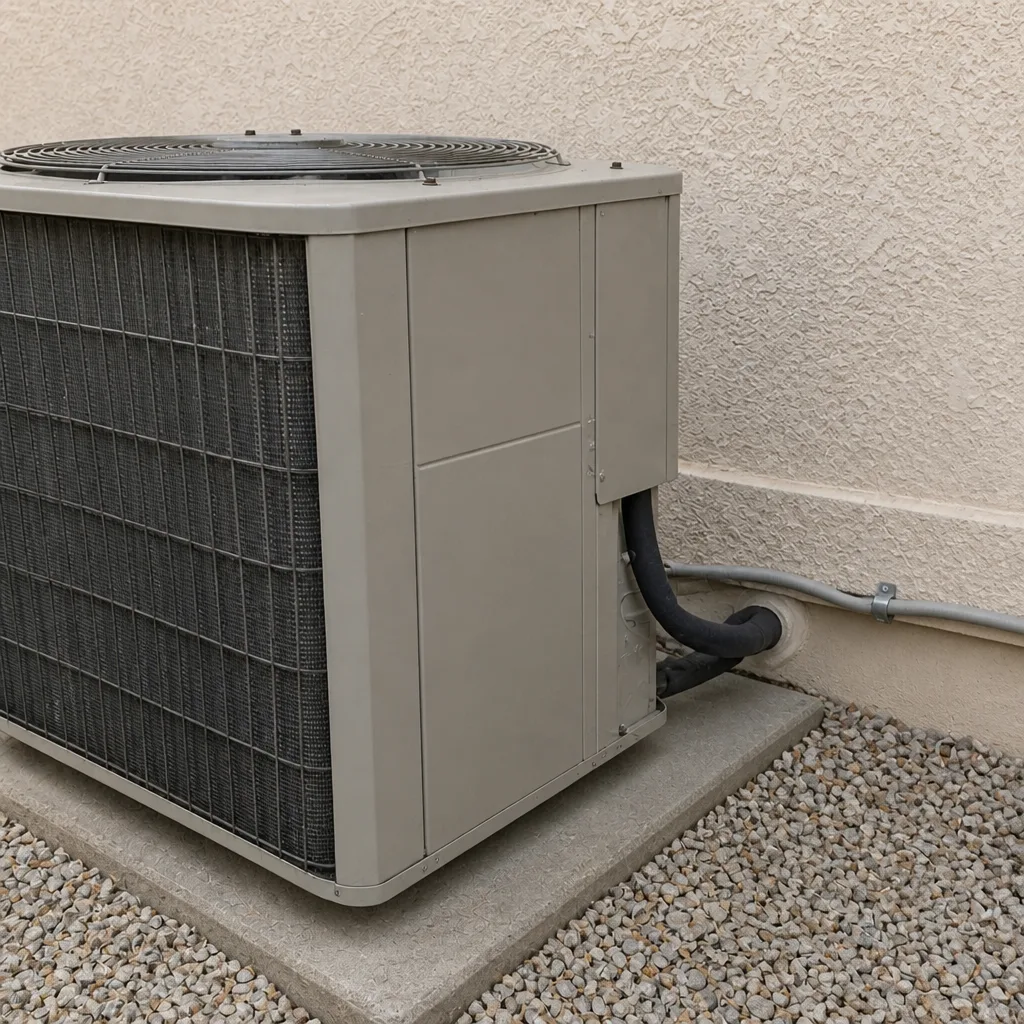
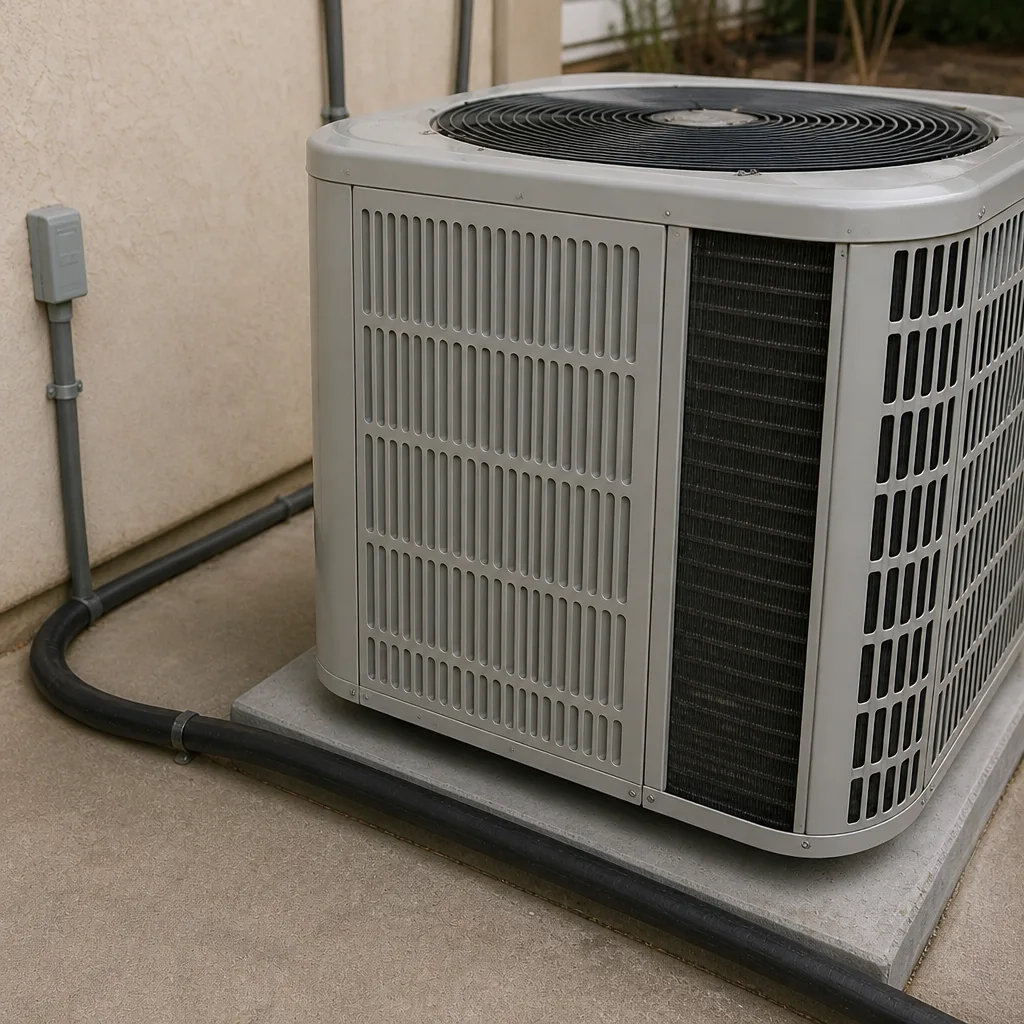
- Wash the outdoor condenser coil. Spring Valley dust and cottonwood pollen pack the fins tight by April. A garden hose from the inside out, low pressure, once, done right, buys you a cooler-running condenser all season.
- Clear the pad and the fan shroud. We find tumbleweeds wedged against the coil more often in Spring Valley than anywhere else we work. Clear it before the fan starts pulling hot air through it.
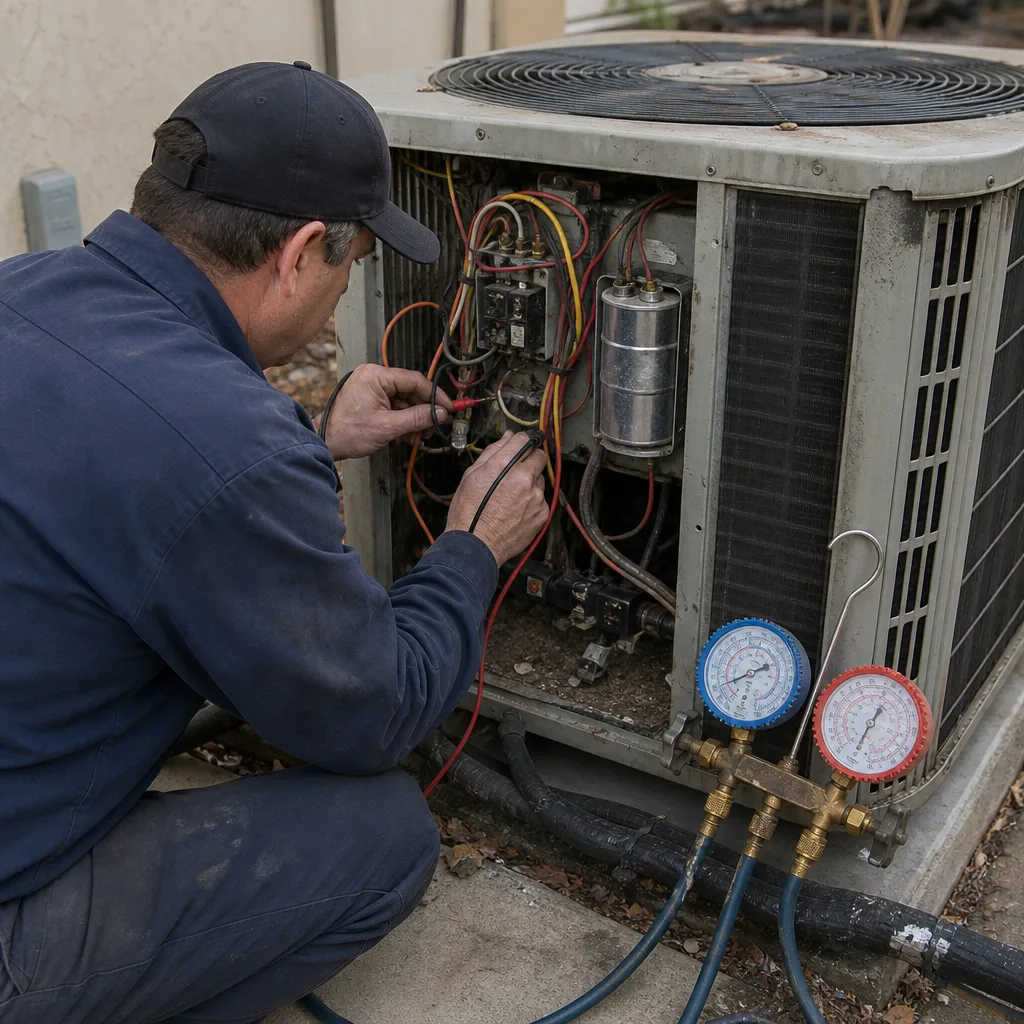
- Test the capacitor under load. Nameplate rating means nothing once it’s been through a summer. We test it before anyone says the word compressor.
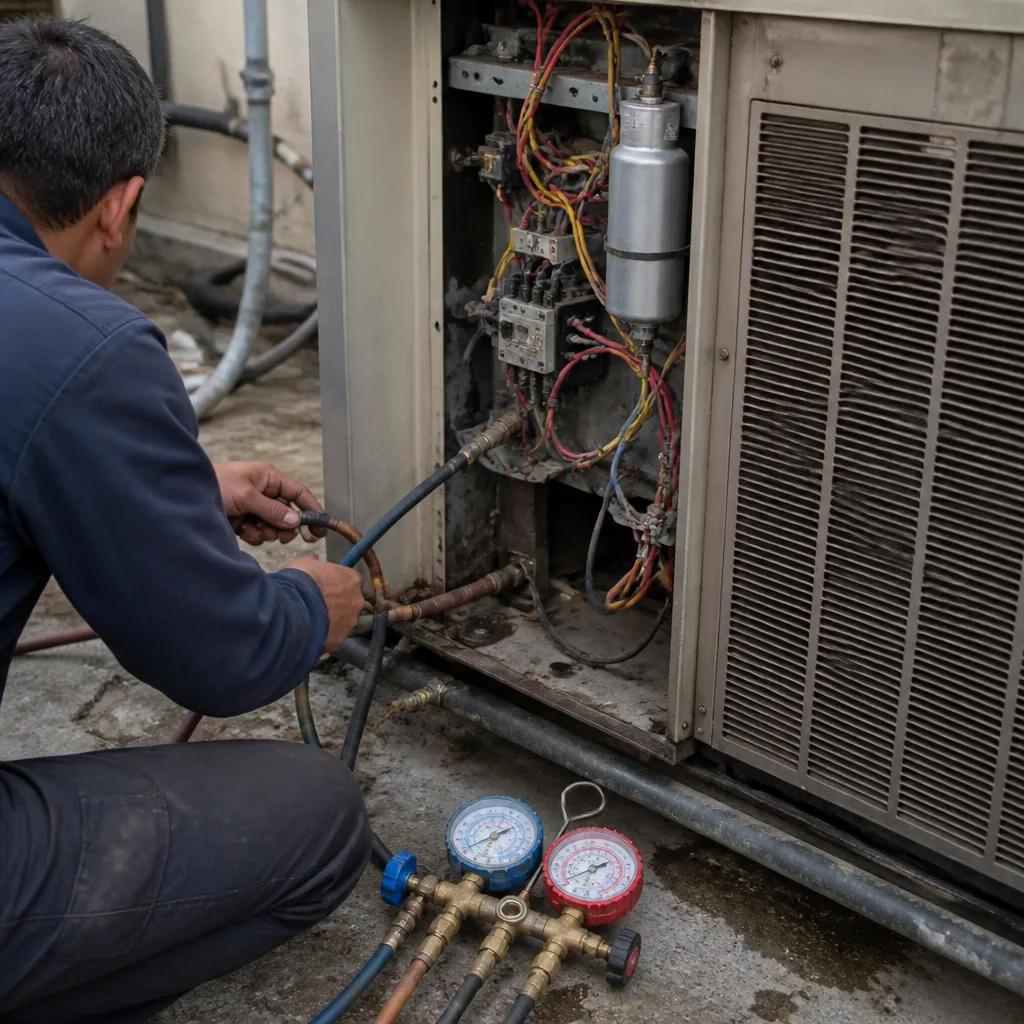
- Check refrigerant pressures and superheat/subcool. Reading first, verdict second.
- Flush the condensate drain line and test the float switch. (More on this below – it’s the number-one spring failure in Spring Valley.)
- Inspect the line-set insulation where it runs along the exterior wall. UV eats it. If it’s crumbling, replace it now, not in September.
- Check the thermostat against a real thermometer. Calibration drifts, and a reading that’s 3 degrees off will run your system longer than it needs to.
If you’re not comfortable pulling panels or touching electrical, that’s fine. A pre-season tune-up covers all of this and it’s a flat number, not a bait-and-switch. Our AC Repair & Installation in Spring Valley page has the flat pricing for a tune-up as opposed to a repair call.
Dust, Pollen, and Caliche: Why Spring Valley Is Different
Most AC checklists you’ll find online were written for a climate with humidity and rain. Spring Valley has neither, and that changes what wears out first. Three things drive that here:
- Wind-driven dust from the eastern flats. Spring wind events blow fine silt that finds its way into the outdoor coil fins, the return grille, and the blower wheel. Blower wheels in Spring Valley get out of balance from dust buildup more than anywhere we work, and an out-of-balance wheel will eat a blower motor bearing inside two seasons.
- Cottonwood and olive pollen, mid-March through April. It coats the condenser like felt. This is why we do coil cleaning in the pre-season window specifically, not later.
- Caliche dust. If you’ve ever dug a post hole in Spring Valley, you know caliche. It’s a calcium-carbonate hardpan that powders up when disturbed. It also aerates on the breeze. Fine caliche dust is abrasive and mildly alkaline. It wears on filter media, blower bearings, and any lubricated surface it settles on.
What that means for the checklist: filter intervals in Spring Valley are shorter than the box says, coil cleaning is non-optional, and blower wheel inspection should happen once a year, not “as needed.” A blower wheel that hums or vibrates is dust-loaded, and it’s cheaper to clean it than replace it.
The Condensate Drain Protocol (Hard Water Kills Float Switches)
Here’s a fact that surprises people who move to Spring Valley from a wet climate: our condensate float switches fail faster here, not slower. You’d think low humidity would be easier on them. It isn’t, because what kills the switch isn’t water volume. It’s mineral scale.
Spring Valley water runs hard. That hard water sits in the drain pan and the trap between cooling cycles, evaporates, and leaves a scale crust. That crust bridges the float, holds it open or jammed shut, and eventually the switch either fails to trip (pan overflows, ceiling stain, drywall call) or trips on a nuisance scale buildup and shuts the system down while the house climbs past 90. We see both every summer in Spring Valley.
The protocol, and it’s the one we run:
- Pull the float switch and test it manually – lift the float, confirm the system shuts off.
- Flush the drain line with clean water, from the top, until it runs free at the outside termination.
- Inspect the trap for scale – white crust is the culprit. If there’s visible scale inside the trap, replace the trap, don’t just flush it.
- Pour a cup of white vinegar down the drain line, let it sit 20 minutes, flush again. This dissolves scale where a plain flush won’t.
- Reinstall and confirm switch trips and resets correctly.
Do that in March, and again in October. Twice a year is not too often in this water. If your switch has already failed, don’t run the system “just until the tech comes.” An overflowing pan will find your ceiling.
Filter Change Reality Check for Spring Valley
The box says 90 days. For a Spring Valley house, that number is optimistic to the point of being wrong. Here’s the math we recommend:
- Standard 1-inch fiberglass or pleated filter: change every 4 – 6 weeks during spring dust season and through the summer, every 6 – 8 weeks in winter.
- 4- or 5-inch media cabinet filter: 6 – 9 months is fine, but check it at month 6, don’t wait for the box.
- During a wind event or a nearby construction project: check it that week. Spring Valley wind storms load a 1-inch filter in three days flat.
- Homes with pets: cut the 4 – 6 week interval down to 3 – 4 weeks during spring and summer.
Don’t over-filter your way into a problem, either. A MERV 13 pleated filter in a 1-inch slot puts a lot of strain on a residential blower. If you want higher filtration, the right answer is a media cabinet or a filter rack sized for it, not a thicker filter crammed into a thin slot. We’ve pulled more than one blower motor that died from being choked by an over-restrictive filter it was never sized for.
The October Post-Summer Checklist
The two weeks after the last 100-degree day in Spring Valley are the second window that matters. Here’s why: your system just ran flat-out for five months, and the first cold nights are coming. That temperature swing does real work on the equipment. This is the list we run in October:
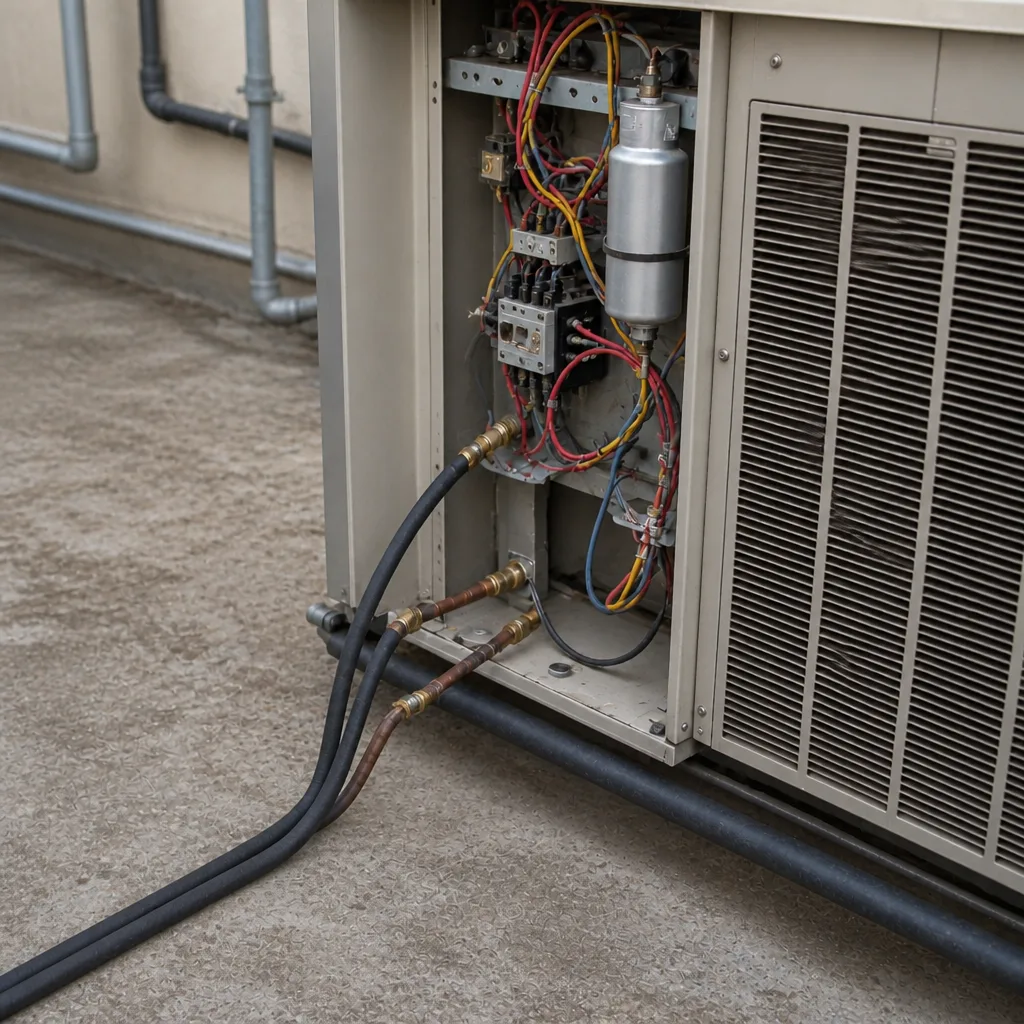
- Inspect the full refrigerant line-set from the outdoor unit into the wall penetration. Look for UV-cracked insulation, chafing where it enters the wall, and any abrasion from the sun on the horizontal run.
- Check the liquid line insulation for cracks. This is Spring Valley-specific: the swing from 95°F afternoons to 50°F nights contracts the copper and opens hairline cracks in the insulation. Once it’s cracked, UV finishes it off.
- Test the capacitor again. Capacitors lose capacitance through a summer, and a weak cap will drag the compressor through the winter on any heat-pump system.
- Clean the condensate pan and flush the drain again. Same protocol as spring.
- Check refrigerant pressure at a cooler ambient. October readings are more accurate than July readings because you’re closer to the rating point.
- Inspect the condenser contactor points. Pitted contactor points are a common post-summer failure.
- Test the heat side on any heat pump or dual-fuel system. You do not want to discover a reversing valve problem on the first cold morning.
If your system is a heat pump or a mini-split, the October checklist runs a bit deeper. Our Heat Pump & Mini Split in Spring Valley page covers the reversing valve and defrost checks in more detail.
Refrigerant Lines and Temperature Cycling Damage
The thing that wears refrigerant lines in Spring Valley isn’t heat. It’s the swing between heat and cold. Our diurnal range here is routinely 30 to 35 degrees during spring and fall – 92 in the afternoon, 58 the same night. That swing works the copper every single day.
What happens, in plain terms: copper expands during the hot part of the day and contracts overnight. The insulation around it is a different material and expands at a different rate. Over two or three years, that cycle opens hairline cracks at the joints, at the wall penetration, and where the line is strapped to the exterior wall. Once the insulation is open, UV light finishes it, and sunlight on exposed copper is exactly the scenario that stresses the refrigerant charge.
What to check, in March and October:
- Run a hand along the full exterior length of the liquid and suction lines. Felt cracking or crumbling? Replace the insulation.
- Inspect the wall penetration boot. That’s the number-one leak point.
- Look at the strapping. Loose strapping allows vibration at the joint, and vibration plus cycling is the combination that opens lines.
- Look for oil stains near any joint. Refrigerant oil weeping out is a signal a leak is present or forming.
UV-rated insulation is the right replacement material. The cheap stuff from the box store will fail inside a Spring Valley summer.
What to Document After Every Service Call
This is the single most overlooked part of home AC maintenance, and it’s the one that actually saves you money. If a part fails within the manufacturer’s warranty window (typically 5 – 10 years on the compressor, 5 – 10 on the coil, depending on the brand – Carrier, Trane, Lennox, and Goodman all have different terms), the manufacturer will ask for proof of regular maintenance. No history, no claim. It’s that simple.
What to write down, every single visit, no exceptions:
- Date of service – exact, not “spring 2026.”
- Company name and license number. Get it off the invoice, not the truck.
- Technician name (for reference only) and the invoice number.
- Readings taken: refrigerant pressures, superheat, subcool, capacitor microfarad readings, static pressure, amp draw on the blower and compressor.
- Parts replaced – part number, brand, cost.
- What was inspected but not replaced – the notes matter. “Coil inspected, cleaned” is a data point if you later claim a coil leak.
- Filter type and MERV rating installed.
Keep it in a folder, not a shoebox. Or scan the invoice to a folder on your phone. When the compressor fails at year six and the manufacturer asks how often you serviced it, you’ll want every one of those invoices in one place. A maintenance history is a warranty file.
Common Mistakes to Avoid
- Doing the tune-up in June. By June in Spring Valley the system is already under full load, and you can’t afford a two-day downtime. March and April are the tune-up windows. June is the emergency window.
- Trusting the 90-day filter promise. Caliche dust and cottonwood pollen don’t read the box. Check the filter monthly during spring and summer, and replace it when it’s loaded, not when the calendar says to.
- Skipping the October visit because “it’s cooling fine.” Cooling fine in October says nothing about the heat side. If you have a heat pump, an untested reversing valve is a gamble you’re taking with January.
- Letting a condensate float switch run on scale. A $12 part that fails can cost $1,200 in ceiling and drywall. Test it in March and October, no exceptions.
- Using a higher-MERV filter than the blower was sized for. Throwing a MERV 13 in a 1-inch slot doesn’t improve your air quality – it starves your blower and burns out the motor.
- Not getting the license number on the invoice. An invoice without a license number is a mystery folded in half. Ask for it, write it down.
- Calling the number on the truck magnet instead of the one you trust. In Spring Valley we’ve seen the same house hit by three different national-outfit sales reps in six years. Ask who’s coming before you book. If they can’t tell you, wait for someone who can.
When to Call a Professional
Some spring maintenance is homeowner work: filter changes, clearing the pad, hosing off the condenser coil from the outside. The rest of it – opening panels, testing capacitors and contactors, checking refrigerant pressures, flushing a hard-water-contaminated drain trap, inspecting the line set – is not homeowner work, and shouldn’t be. If you hear a hum from the outdoor unit that isn’t the fan, if the breakers trip when the system starts, if you see oil weeping near a joint, if the pan has standing water, or if the house isn’t hitting setpoint by mid-afternoon in April, that’s a call. Getting ahead of those problems in March costs a lot less than getting behind them in July. For heat-side issues in the same windows, our Heating & Furnace in Spring Valley page covers what to check before the first cold night.
We’re Ray’s Heating & Air Spring Valley, and we offer free estimates in Spring Valley – call (833) 620-7288. Ray’s number goes to a live person, day or night. No rotating crew. Same background-checked people, same 90-Day Done Right Promise in writing, same name on the invoice.
See the difference
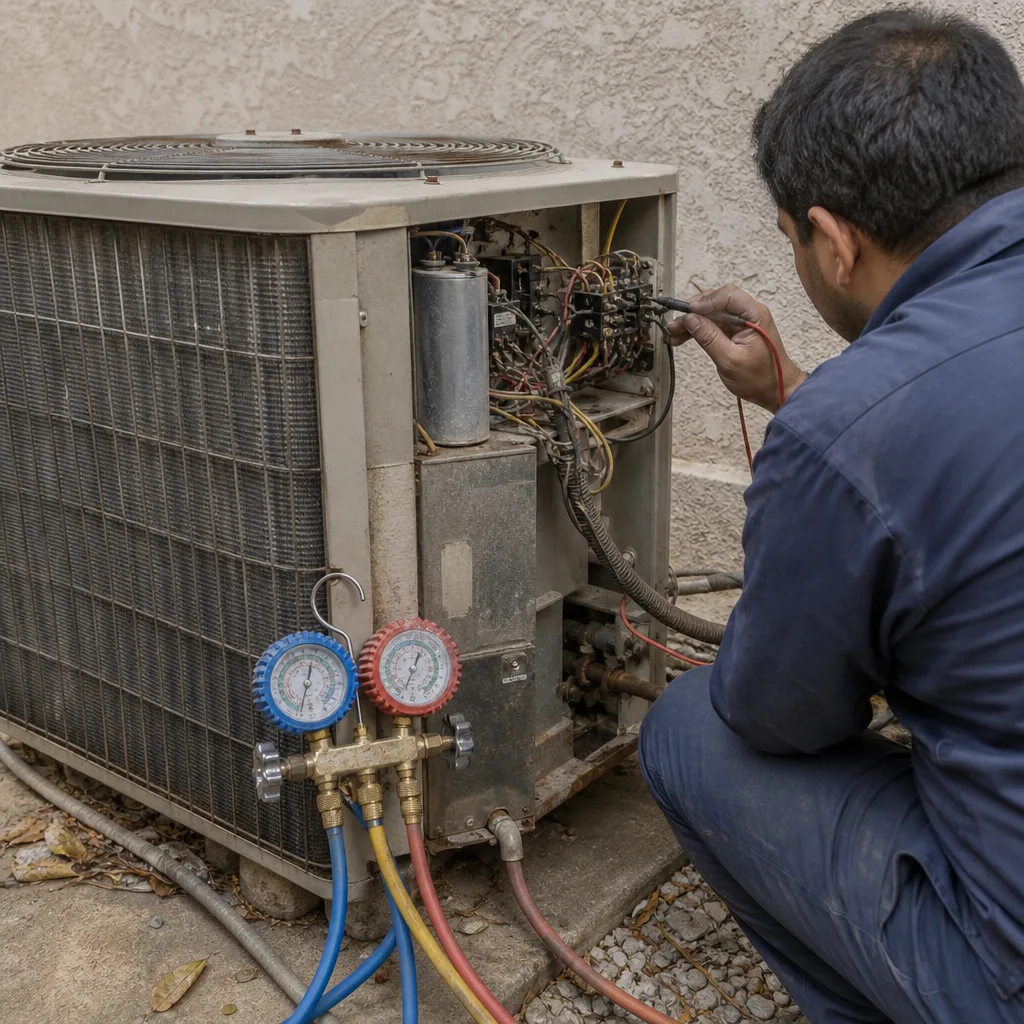 Before
 After
 Before
 After
 Before
 After
Frequently Asked Questions
March or April, before the first 100-degree day. That’s the pre-season window in Spring Valley. By June the system is under full load and a two-day downtime becomes an emergency. October is the second window, and it’s just as important for heat-side testing and refrigerant line inspection.
Every 4 – 6 weeks during spring dust season and through summer, and every 6 – 8 weeks in winter, for a standard 1-inch filter. The 90-day promise on the box doesn’t account for Spring Valley’s caliche dust and cottonwood pollen. Check monthly in spring; replace when loaded.
Hard water. Spring Valley water leaves mineral scale in the drain pan and trap, and that scale bridges the float. Flush the drain line and trap twice a year (March and October) with a vinegar soak, and replace any trap with visible scale. Call (833) 620-7288 if it’s tripping now – a stuck switch is an overflow waiting to happen.
Yes, and for two reasons. First, a pre-season tune-up catches capacitor degradation and refrigerant charge drift before they become a June failure. Second, a documented service history is what the manufacturer will ask for if a part fails inside the warranty window. No history, no claim.
Tune-up and diagnostic on a heat pump is a same-visit process. Repair depends on the part and whether it’s on the truck. Replacement is scheduled, not same-day – it has to be sized to your load and the equipment has to be ordered. We handle all the major brands including Carrier, Trane, and Goodman, and the estimate is written before any work starts.
Spring Valley routinely swings 30-plus degrees between afternoon and overnight, and that works the refrigerant line-set copper against the insulation. Over two to three years it cracks the insulation, exposes the copper to UV, and can open joints. It’s the number-one non-obvious wear item in this climate, and it’s checked in both the March and October visits.
The Bottom Line
The right time to touch your AC in Spring Valley is March and April, then again in October. Move your filter math to match the dust and pollen load here, not the box. Test the float switch twice a year because the hard water will kill it faster than anywhere wetter would. Inspect the line-set insulation in both windows, because the 30-degree daily swing will crack it. And document every visit with date, readings, and parts, because that file is what turns a manufacturer’s warranty into a paid claim instead of a shrug. Get ahead in spring. Stay ahead in fall. Everything in between just runs.
Written by the team at Ray’s Heating & Air Spring Valley.
Contact
If you’re in Spring Valley and you’d rather not chase a checklist on your own, call (833) 620-7288 for a free estimate. Ray answers the phone himself, often at two in the morning. Upfront pricing, readings before numbers, and the 90-Day Done Right Promise in writing. Start at our Ray’s Heating & Air Spring Valley home page for everything we do across repair, install, and maintenance.