
Last updated November 18, 2026
 Heat pumps
 AC repair
 Furnace & heating
 Ductless mini splits
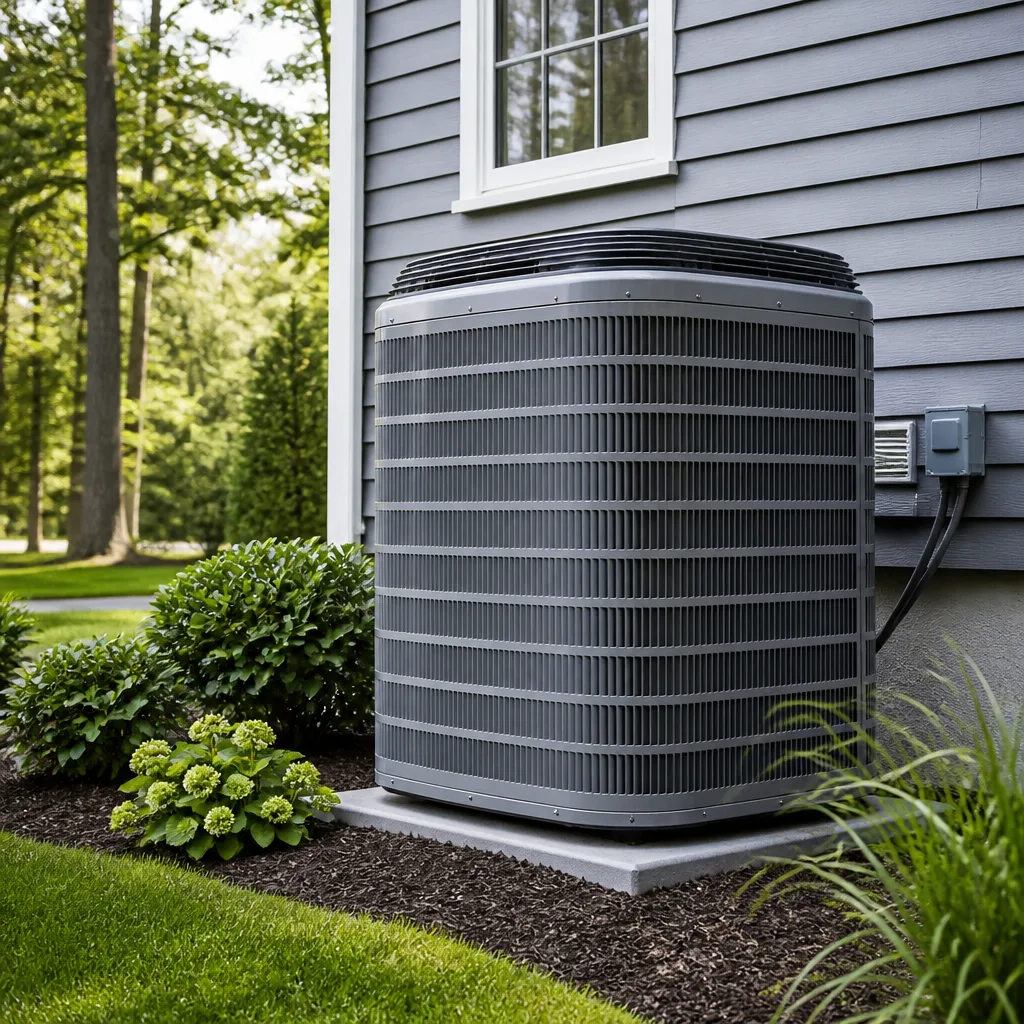 Carrier
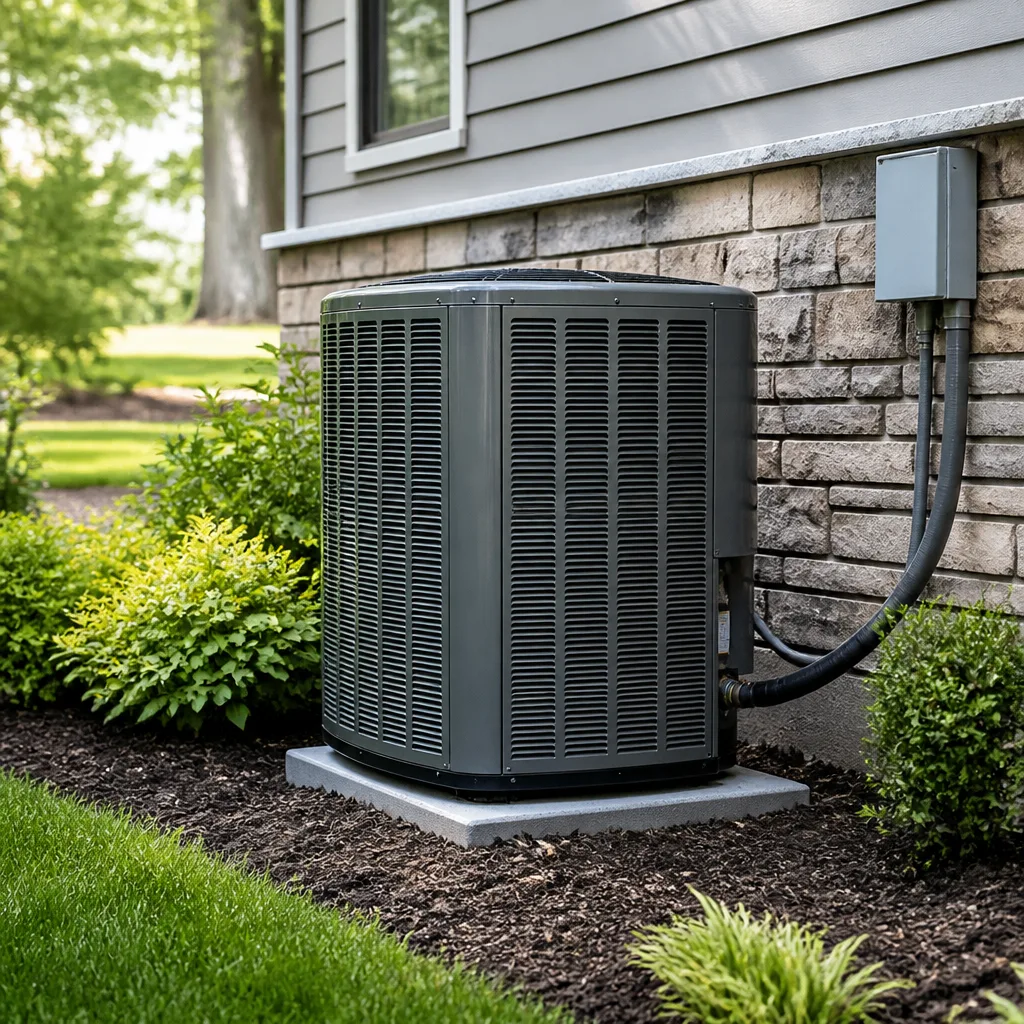 Trane
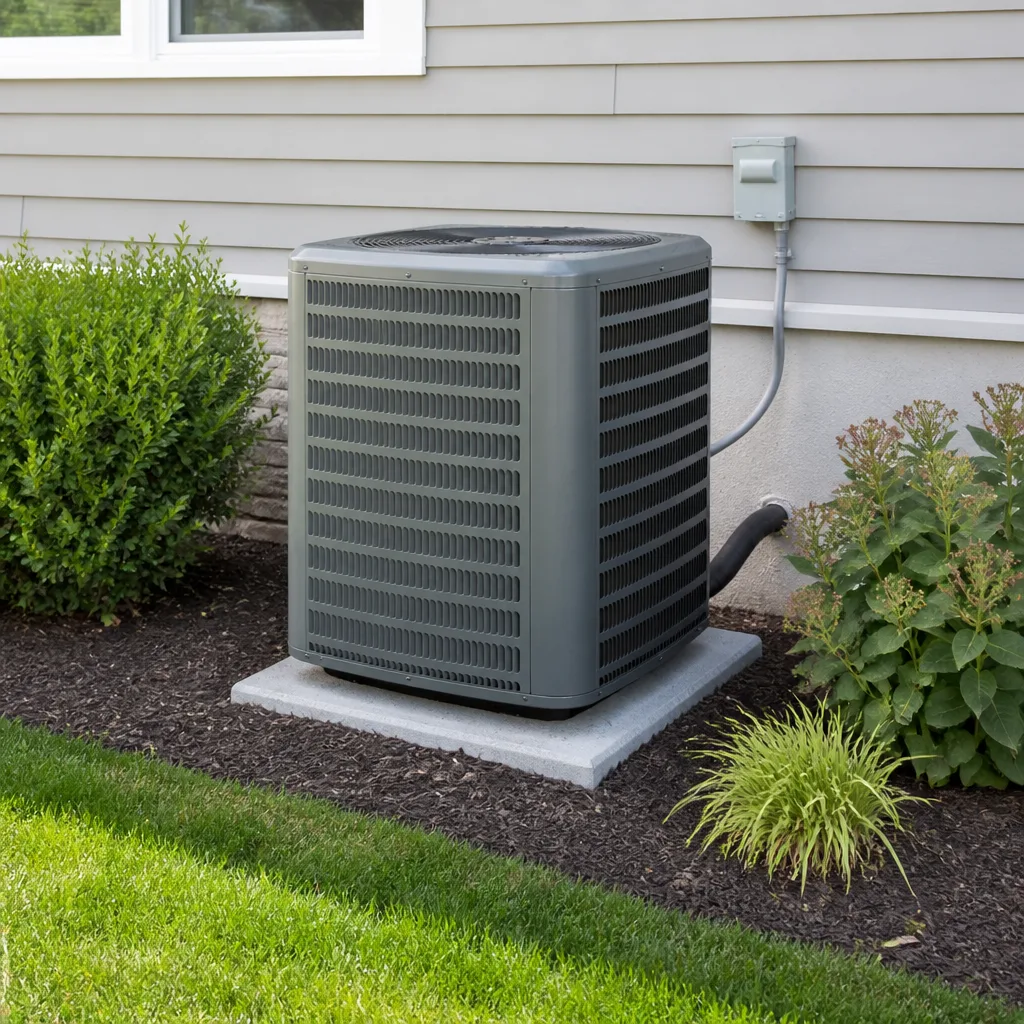 Goodman
Seasonal tune-up and full diagnostic on your Carrier, Trane, or Goodman system - readings shown to you before any repair is proposed
Diagnosis first, numbers second - you approve the repair price before a single part goes in.
Get your free estimateThe Complete Heat Pump & Mini Split Guide for Spring Valley Homeowners
Heat pump and mini-split efficiency ratings are tested at 95°F. Spring Valley regularly hits 115°F for weeks at a stretch, and that gap is where three out of five budget-brand units quietly give up capacity right when you need them most. The advice you read online, written for a house in Oregon or Tennessee, doesn’t account for our summers, our dust, our stucco, or the caliche grit that coats a condenser coil in a single season. This guide is built around what actually works in Spring Valley. You’ll learn what the ratings really mean, how to size a system for a stucco house in 89147, which coil coatings survive our dust, how the NV Energy rebate math runs, and what a real installed job costs from equipment to permit.
Quick Answer
For a Spring Valley home, a properly sized heat pump or mini-split will run you roughly $4,500 to $9,500 installed for a single-zone system and $9,000 to $18,000 for a multi-zone whole-home setup, depending on electrical work and permits. Look for SEER2 of 15 or better and HSPF2 of 8 or better; anything above that is mostly a marketing number in our climate zone. Size it with a real Manual J load calculation, not a rule of thumb. And budget for an electrical panel check, because older Spring Valley homes often need one before a heat pump goes in.
Styles & brands we work with
- AC repair
- Furnace & heating
- Heat pumps
- Ductless mini splits
- Carrier
- Trane
- Goodman
Table of Contents
- What SEER2 and HSPF2 actually mean for Spring Valley
- Why Spring Valley homes get undersized
- Dust, caliche, and what happens to your coil in one year
- The NV Energy rebate, honestly
- What it really costs, line by line
- Which brands hold up in the desert
- Common mistakes to avoid
- When to call a professional
What SEER2 and HSPF2 Actually Mean for Spring Valley
SEER2 is the cooling efficiency number, and HSPF2 is the heating side. Both are lab ratings measured under controlled conditions. The higher the number, the less electricity the system uses to do the same amount of work. That’s the simple version, and if that’s all you take from this section, you’ll be ahead of most shoppers.
Here’s where it gets local. The federal test conditions for cooling are set at 95°F outdoor temperature. Spring Valley spends a big chunk of July and August well above that. When a system is pushed past its test temperature, capacity drops and the compressor works harder. Cheap units hit that wall sooner. A unit advertised at 20 SEER2 can fall off a cliff at 115°F if the condenser coil and compressor aren’t built for it. The rating is a starting point, not a promise.
For Clark County’s climate zone, the thresholds that actually matter:
- SEER2 of 15 or better is the practical floor. Below that, you’ll feel it on a summer NV Energy bill.
- HSPF2 of 7.5 to 8 is plenty. Our winters are mild, and paying a premium for HSPF2 of 10 or 11 is money spent on a season that barely matters here.
- Capacity at 115°F is the number the spec sheet buries. Ask to see the extended performance data, not just the headline rating.
That last point is where most shoppers get taken. The headline SEER2 gets printed in bold. The capacity at design temperature is in the fine print, if it’s shown at all. Ask for it.
Why Spring Valley Homes Get Undersized
An undersized heat pump runs constantly and never quite catches up. In a Spring Valley summer, that means a house that hovers at 80°F no matter what the thermostat says, a compressor that wears out years early, and an electric bill that makes you question the whole purchase. The cause is almost always the same: a contractor who sized the system by square footage instead of by the actual house.
A real Manual J load calculation accounts for window orientation, attic insulation, duct leakage, wall construction, and infiltration. It takes an hour or two on site. A rule-of-thumb estimate takes five minutes and gets the number wrong, especially in older Spring Valley neighborhoods where the 1970s and 1980s stucco homes have attic insulation that has settled to half its original depth. A stucco wall with degraded insulation and single-pane windows in a west-facing room loads very differently than the generic house the sizing chart assumes.
Steps to size correctly:
- Do a room-by-room Manual J. Not a whole-house guess. Every room gets its own load number.
- Inspect the attic insulation depth and the duct condition. Leaky ducts in a 110°F attic can waste 20 to 30 percent of your cooling before it reaches the room.
- Check window orientation and glazing. A west-facing wall of single-pane glass is a load multiplier that a square-foot chart ignores.
- Verify the electrical panel capacity. A heat pump draws serious amps; an undersized panel means a panel upgrade before the unit goes in.
- Match the head count to the loads. For a mini-split, one oversized indoor head cools unevenly. Multiple right-sized heads beat one big one.
If a bid arrives with a number on it before anyone has set foot in your attic, ask why. We’ve seen plenty of Spring Valley homes where the previous system was a full ton undersized, and nobody noticed until the first August after the install.
Dust, Caliche, and What Happens to Your Coil in One Year
The Las Vegas valley adds a specific load to any heat pump: airborne grit. Spring and early summer bring dust storms that push fine particulate through the coil within hours. Caliche dust, the powdery residue from our soil, is particularly aggressive because the particles are small enough to pack into fins and hard enough to abrade a cheap coating. Over a single season, an unprotected condenser coil can lose 10 to 20 percent of its heat-transfer efficiency. Over three or four seasons of neglect, the system runs hot and quits early.
What actually holds up:
- Factory-coated coils. Look for manufacturers who apply a corrosion-resistant coating to the aluminum fins at the factory, not a spray-on aftermarket treatment. Daikin and Bryant both offer coated coil options worth asking about.
- Coil guards and screens. An inexpensive screen around the outdoor unit cuts the grit load and is easy to rinse.
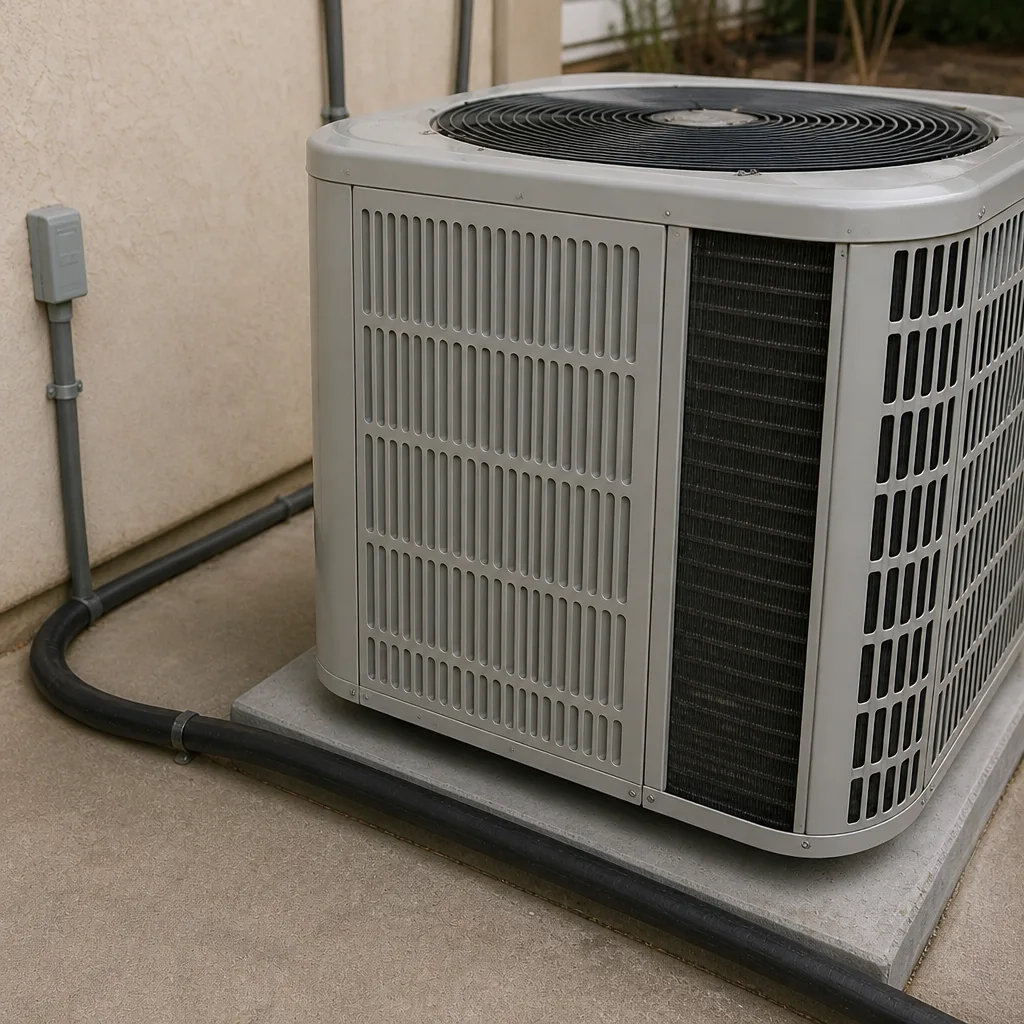
- Routine coil cleaning. Twice a year in Spring Valley, more if there’s construction nearby. A garden hose rinse on a cool morning handles most of it; deeper cleaning needs a technician.
- Filter discipline. A clogged filter starves the system and makes the coil problem worse. Change it every 30 to 60 days during cooling season here.
This is the part where cheap units fail fastest. A budget-brand condenser with thin fins and no coating is a three-to-five-year coil in this valley. A Rheem or York unit with a coated coil and a guard is a ten-year-plus coil if you keep it clean. The equipment price gap is real. The replacement gap is bigger.
For more on how we handle repair and replacement across the valley, see our Heat Pump & Mini Split in Spring Valley page.
The NV Energy Rebate, Honestly
NV Energy runs a residential rebate program for high-efficiency heat pumps, and it’s real money, but the qualifying thresholds and paperwork trip up a lot of homeowners. As of 2024, the program generally paid rebates in the range of a few hundred dollars up to roughly $2,000 to $3,000 per system depending on efficiency tier and whether it’s a whole-home heat pump versus a mini-split, and there are income-qualified tiers that pay more. The exact dollar amounts change, and you should confirm current figures with NV Energy directly or ask for the current rebate schedule when you get a bid.
What qualifies, in plain terms:
- Must be a qualifying high-efficiency heat pump, typically SEER2 of 15.2 or higher and HSPF2 of 8.1 or higher.
- Must be installed by a licensed contractor who can provide the equipment model numbers and the AHRI certificate.
- Must include proof of installation and the dated invoice.
- Gas-to-electric conversions may qualify for additional incentives.
Paperwork steps most installers skip:
- Save the AHRI certificate. It’s the document proving the system meets the efficiency tier. Get it before the install, not after.
- Photograph the model and serial plates on the outdoor unit and the indoor head before the crew drives off.
- Keep the itemized invoice showing equipment, labor, and permit separately.
- Submit through NV Energy’s online portal within the program window, or hand it to the contractor if they offer to file it for you.
Ask any contractor to walk you through the rebate before they quote. If they can’t, that’s a sign they haven’t done it recently. For more on rebates and installation logistics, our Heating & Furnace in Spring Valley page covers the furnace side of the same paperwork.
What It Really Costs, Line by Line
The number on the ad and the number on the invoice are two different things. Here’s what a real Spring Valley install looks like, based on what we see on bids across the valley:
- Single-zone ductless mini-split, equipment: $2,000 to $4,500
- Single-zone mini-split, labor and line set: $1,800 to $2,800
- Multi-zone mini-split (three to four zones), equipment: $5,000 to $9,000
- Multi-zone, labor and line sets: $3,000 to $5,500
- Whole-home heat pump, equipment: $4,500 to $8,000
- Whole-home heat pump, labor and duct work: $3,500 to $6,000
- Electrical panel upgrade (if needed): $1,500 to $3,500
- Permit: $150 to $450
- Duct sealing or replacement (if needed): $800 to $3,500
Total installed, a single-zone mini-split lands at roughly $4,500 to $9,500 and a whole-home heat pump at $9,000 to $18,000 once permits, electrical, and any duct work are included. An electrical panel upgrade is the item most online quotes leave out, and it’s the one that adds the most. Older Spring Valley homes with 100-amp panels frequently need an upgrade to a 200-amp service before a heat pump goes in. Get the panel looked at during the estimate, not after.
For a full wiring, install, and repair walkthrough, see AC Repair & Installation in Spring Valley.
Which Brands Hold Up in the Desert
We service all the major names: Carrier, Trane, Lennox, Goodman, Rheem, York, Daikin, Bryant, and American Standard. The three we lean toward for Spring Valley heat pump and mini-split work, based on how they hold up in our climate:
- Daikin. Strong mini-split lineup, coated coils available, and a reputation for holding capacity at high outdoor temps. Good fit for Spring Valley’s ductless work.
- Rheem. Reliable heat pump side, parts readily available, and serviceable. The kind of equipment that doesn’t leave you waiting a week for a control board.
- York and Bryant. Both offer solid value tiers, and both have coated coil options worth asking about. Bryant shares a lot with Carrier underneath.
What matters more than the badge is the model. A high-end Carrier is not the same as an entry-level Carrier. Ask to see the specific model, the extended performance data at 115°F, and the coil coating spec. If the contractor can’t produce those three things, keep asking.
The other thing that matters is who installs it. A top-tier unit with a sloppy install, undersized line set, or a leaky duct connection performs worse than a mid-tier unit done right. The labor is where the quality lives. Our Ray’s Heating & Air Spring Valley home page has more on how we approach that.
Common Mistakes to Avoid
- Sizing by square footage. A generic chart ignores attic insulation, window orientation, and duct condition. Spring Valley stucco homes regularly get undersized this way and spend summers running nonstop.
- Buying on the headline SEER2 alone. The lab rating at 95°F says almost nothing about performance at 115°F. Ask for extended performance data at design temperature.
- Skipping the electrical panel check. A heat pump draws serious amps. An older 100-amp panel in 89147 or 89117 may need an upgrade before install, and that cost needs to be in the bid, not a surprise.
- Ignoring the coil coating. In this valley, an uncoated coil loses efficiency in a single dust season. Look for factory-applied corrosion protection.
- Filing the NV Energy rebate after the fact. The AHRI certificate and the photographed model plates need to be in hand before the crew leaves. Chasing them down later is a headache.
- Believing the ad price. The $99 install ad never includes the panel upgrade, the line set, or the permit. Get a written line-item bid.
- Hiring a rotating crew. A system that gets a different face every visit never gets properly diagnosed. You want the same person who has been in your attic before, not a stranger reading a clipboard.
When to Call a Professional
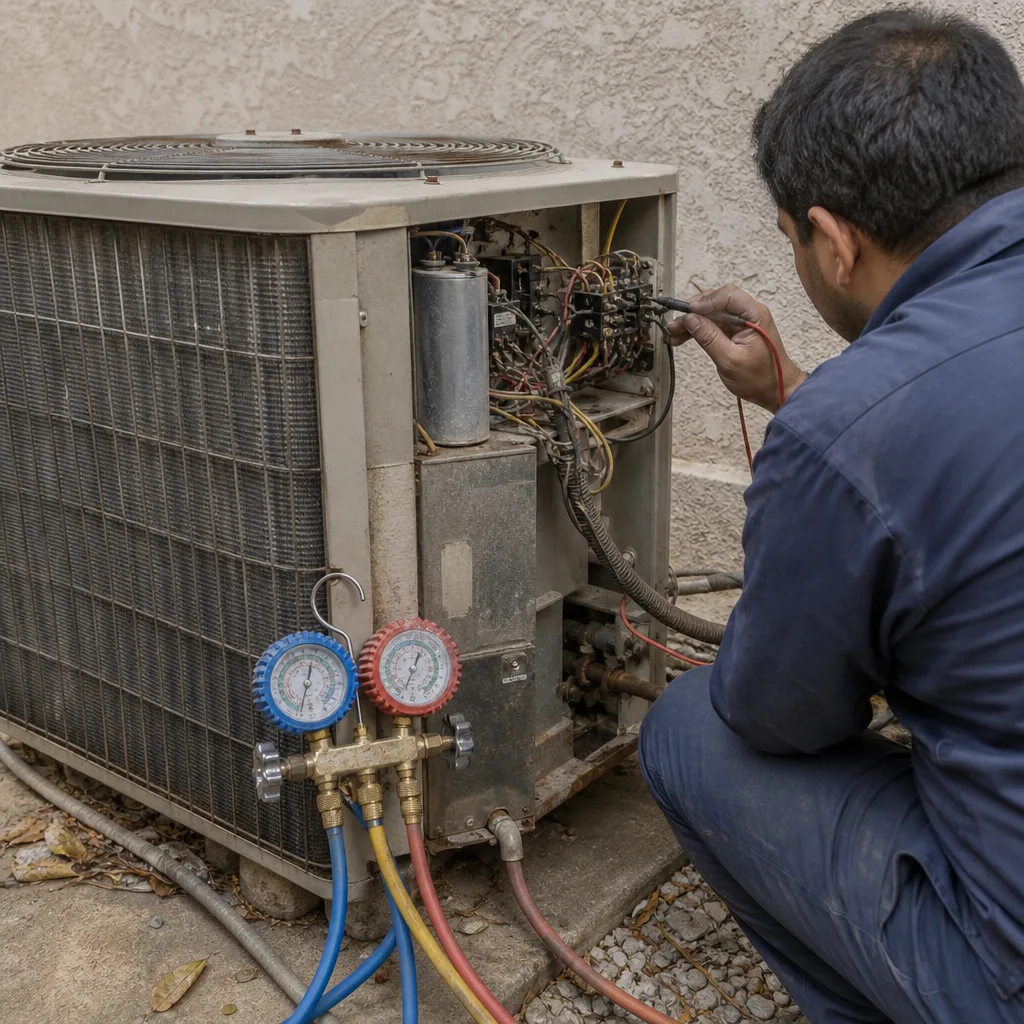
Most heat pump and mini-split problems aren’t DIY territory. If your system is short-cycling, blowing warm air in summer, tripping the breaker, or running constantly without hitting the setpoint, that’s a diagnostic issue, and guessing at it costs more than calling. Same for anything touching refrigerant lines, electrical connections, or the compressor. Those are not homeowner jobs. The good news is that a competent diagnosis is quick: read the superheat and subcool, test the capacitor before anyone says the word compressor, check the coil and filter, verify the load. Ray’s Heating & Air Spring Valley offers free estimates in Spring Valley, and we’ll give you a second opinion on any written bid you’ve already got. Call (833) 620-7288. We answer the phone around the clock, every day.
See the difference
 Before
 After
 Before
 After
 Before
 After
Frequently Asked Questions
Size is determined by a Manual J load calculation, not square footage alone, and most Spring Valley homes of 1,500 to 2,200 square feet land between 2 and 3.5 tons of cooling capacity depending on insulation, windows, and duct condition. A stucco home with degraded attic insulation often needs more than a chart would suggest. Get the load calculated on site; a wrong-size system runs constantly and quits early.
It depends on the house. A mini-split is ductless and ideal for additions, garages, and homes without ductwork, while a whole-home heat pump uses existing ducts and handles the full house. In Spring Valley, multi-zone mini-splits are common in older stucco homes with poor ducts. A whole-home heat pump is usually the better fit when the ducts are in decent shape. Either one works; the sizing and install quality matter more than which type you pick.
You likely qualify if you install a high-efficiency heat pump with SEER2 of 15.2 or better and HSPF2 of 8.1 or better through a licensed contractor, and you submit the required paperwork. Rebate amounts vary by efficiency tier and system type, and some income-qualified tiers pay more. Confirm the current schedule with NV Energy or ask for it at your estimate.
A single-zone mini-split runs about $4,500 to $9,500 installed in Spring Valley, and a multi-zone whole-home setup lands around $9,000 to $18,000 once electrical work and permits are included. The ad price is usually equipment only. Ask for a written line-item bid that separates equipment, labor, electrical, duct work, and permit. Call (833) 620-7288 for a free estimate.
Constant running in a Spring Valley summer usually means the system is undersized, the coil is clogged with dust, or the duct system is leaking cool air into a 140°F attic. Any of those will make the unit run nonstop and never quite hit the setpoint. A diagnostic visit will tell you which one it is before you start replacing parts.
Twice a year at minimum, and more if there’s construction, a dusty lot, or a dust storm nearby. The Las Vegas valley loads a coil faster than most of the country because of caliche grit. A coil guard and a filter changed every 30 to 60 days during cooling season cuts the load. Deeper cleaning needs a technician.
The Bottom Line
Heat pump and mini-split advice written for other states gets the sizing wrong, the coil coating wrong, and the rebate paperwork wrong for Spring Valley. Size it with a real Manual J on site. Look for SEER2 of 15 or better and HSPF2 around 8, and ask for capacity data at 115°F. Budget for the electrical panel upgrade in the bid, not after. File the NV Energy rebate with the AHRI certificate in hand. Expect $4,500 to $9,500 for a single-zone system and $9,000 to $18,000 for a whole-home job, all in. And pick whoever is going to be the one showing up next year, not a rotating crew.
If you’re ready to get a real number on your house, Ray’s Heating & Air Spring Valley would be glad to come out. We run the readings first, show you the numbers, and put the 90-Day Done Right Promise in writing on every job. Free estimates, no trip charge inside the county, and a live person on the phone around the clock. For an honest look at your system, visit our Ray’s Heating & Air Spring Valley home page or call (833) 620-7288 today. Ask anyone on your street.
Written by the team at Ray’s Heating & Air Spring Valley.