
Last updated November 18, 2026
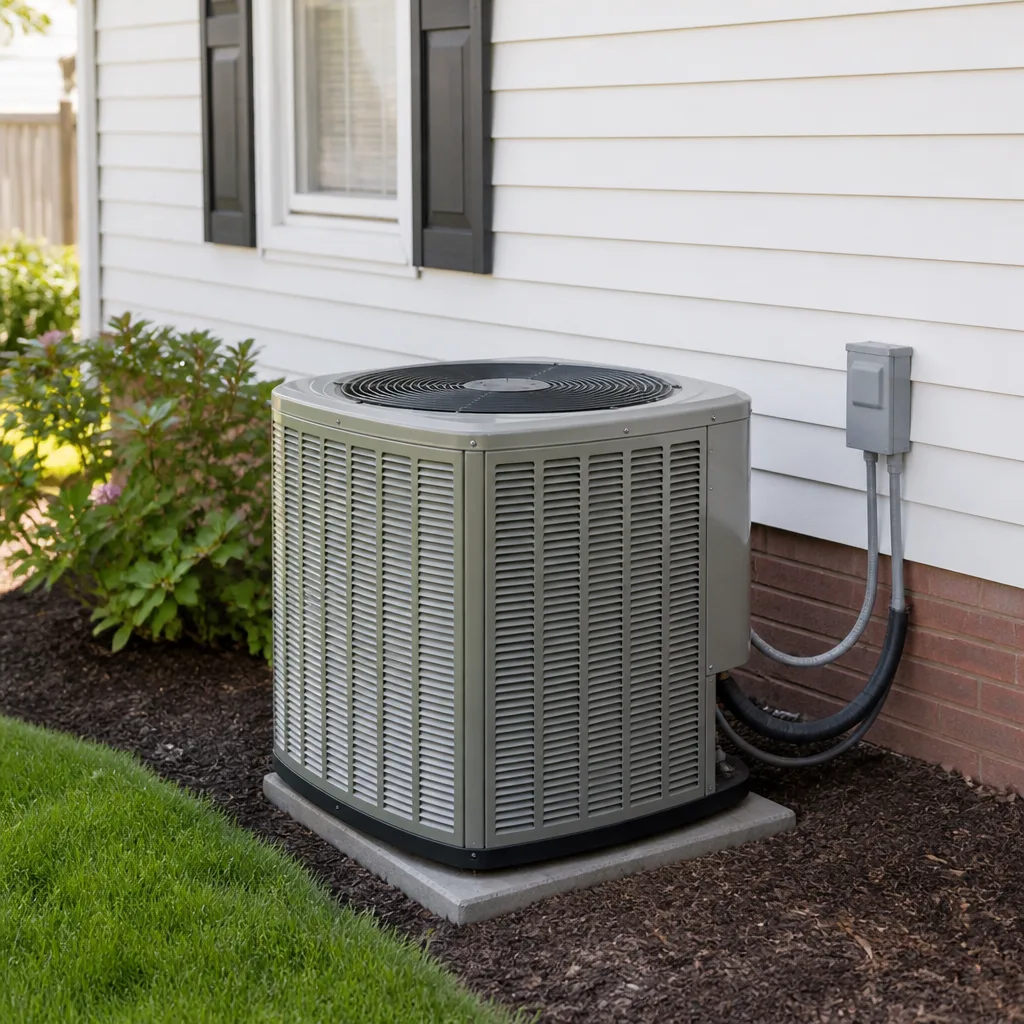 AC repair
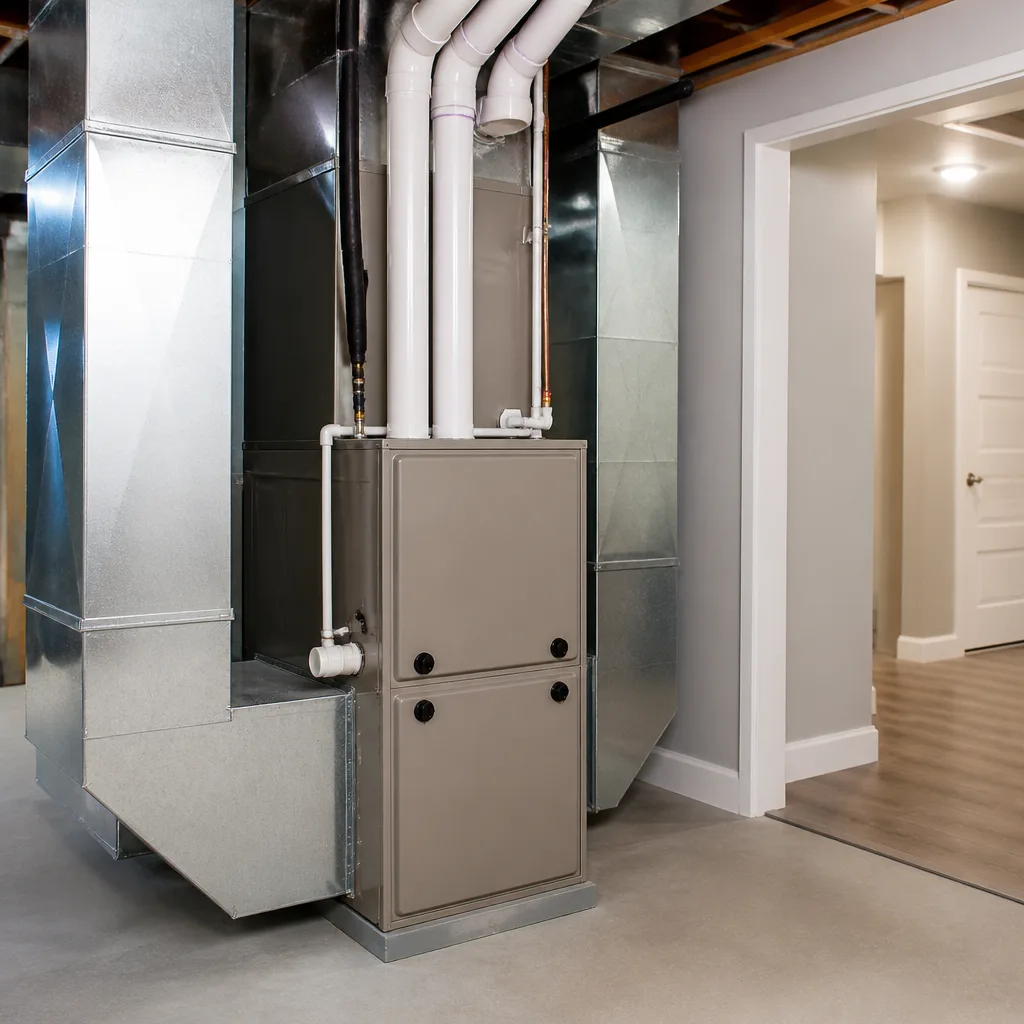 Furnace & heating
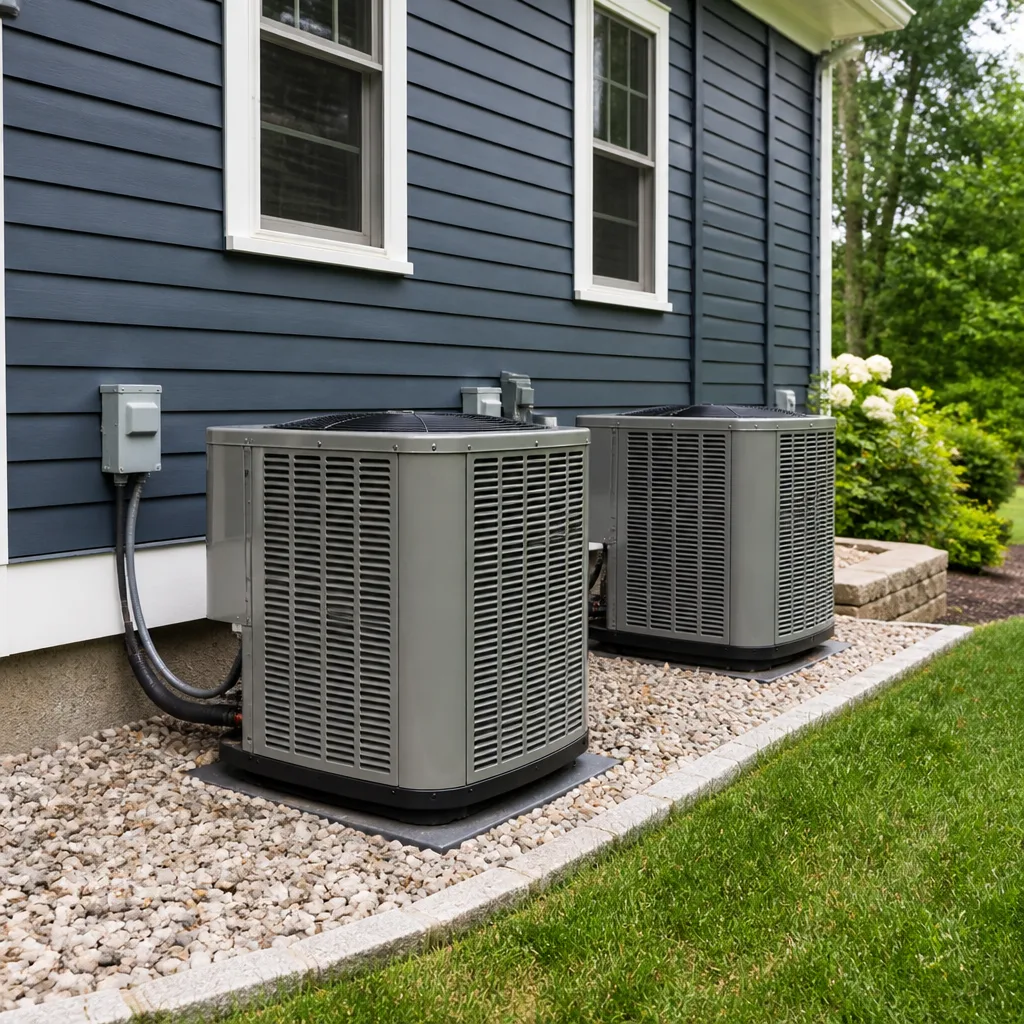 Heat pumps
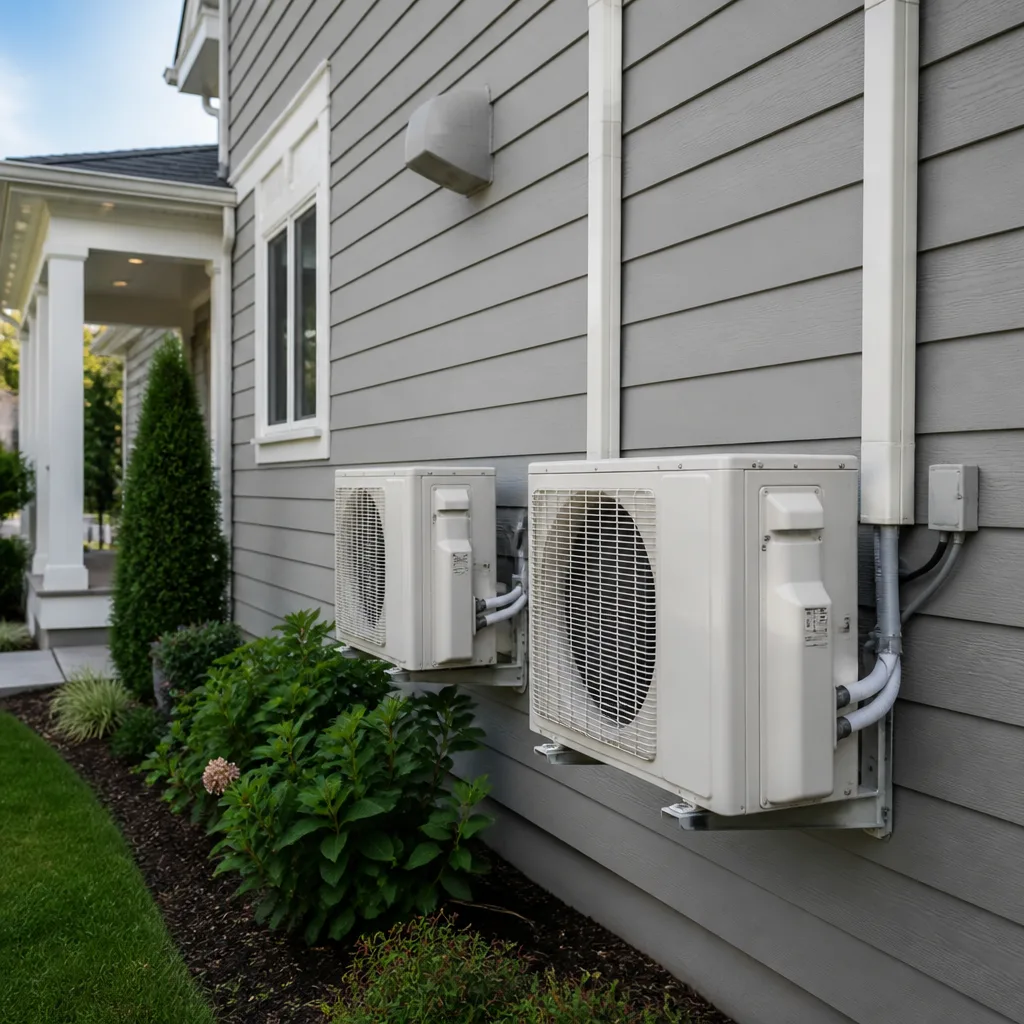 Ductless mini splits
 Carrier
 Trane
 Goodman
Seasonal tune-up and full diagnostic on your Carrier, Trane, or Goodman system - readings shown to you before any repair is proposed
Diagnosis first, numbers second - you approve the repair price before a single part goes in.
Get your free estimateHow Long Does Emergency & Commercial HVAC Take? Timelines and What to Expect
A tech can pull into your driveway in 45 minutes. If the compressor is shot and that part isn’t on the truck, you’re still sleeping in a hot house tonight. That gap between arrival time and resolution time is the thing nobody explains when you call, and it changes how you should plan the next 12 hours. In Spring Valley, where July afternoons sit above 105 degrees, knowing which number you’re actually asking about is the difference between a rough night and a dangerous one. This guide breaks down real timelines for emergency and commercial HVAC work, where delays happen, and how to get an honest answer over the phone before anyone shows up.
Quick Answer
Most emergency HVAC calls run 1 to 3 hours from the time you call to a working system again if the fix is something the tech can make on the spot, like a failed capacitor, a clogged drain line, or a bad contactor. If a major part is needed, same-day resolution depends on whether that part is sitting in a Spring Valley or Las Vegas warehouse. Plan for same-day for common failures and 24 to 72 hours for compressors, blower motors, and specialty equipment.
Styles & brands we work with
- AC repair
- Furnace & heating
- Heat pumps
- Ductless mini splits
- Carrier
- Trane
- Goodman
Table of Contents
- Arrival Time vs. Resolution Time: Why They’re Different
- The Real Timeline Breakdown: Where the Hours Actually Go
- Which Repairs Get Done on the Same Visit
- How Parts Availability in the Las Vegas Area Affects Your Timeline
- What to Do With Elderly Family, Infants, and Pets During the Wait
- How to Get an Honest Timeline Over the Phone
- Commercial HVAC: Why the Clock Runs Differently
- Commercial Repair and Replacement Timelines
Arrival Time vs. Resolution Time: Why They’re Different
When your AC quits at 4 p.m. on a Friday in Spring Valley, the first thing you want to know is how fast someone can get to the door. That’s arrival time. It’s the number contractors quote because it’s the easy one. Resolution time is when cold air is actually moving again. Those two numbers can be 90 minutes apart, or they can be two days apart. The difference is almost always parts and diagnosis.
A tech who arrives in an hour with a full understanding of what typically fails on your brand gets you cooled down fast. A tech who arrives in an hour and then has to guess at the diagnosis adds hours on the back end. That’s why the honest answer to “how long will this take” almost always comes with a “depends on what we find” attached, and any contractor who skips that caveat is either guessing or selling.
In our experience, the homeowners who get the fastest resolution are the ones who ask two separate questions up front: “How soon can you be here?” and “Once you’re here, what’s the realistic window to fix it, assuming it’s a common failure?” The second question is where a good contractor gets specific. They’ll tell you a bad capacitor is 30 minutes of work, a blower motor is a parts run, and a compressor is a different conversation entirely.
The Real Timeline Breakdown: Where the Hours Actually Go
Here’s how an emergency HVAC call actually unfolds, with realistic time blocks for Spring Valley conditions:
- Call to dispatch confirmation: 5 to 15 minutes. This is where you describe the symptom, the address, and the brand. A live person answering the line matters here. Voicemail mazes eat 20 minutes before anyone even starts.
- Dispatch to arrival: 45 minutes to 2 hours depending on time of day and where the tech is coming from. During a triple-digit heat wave in Spring Valley, that window stretches because everyone else is calling at the same time.
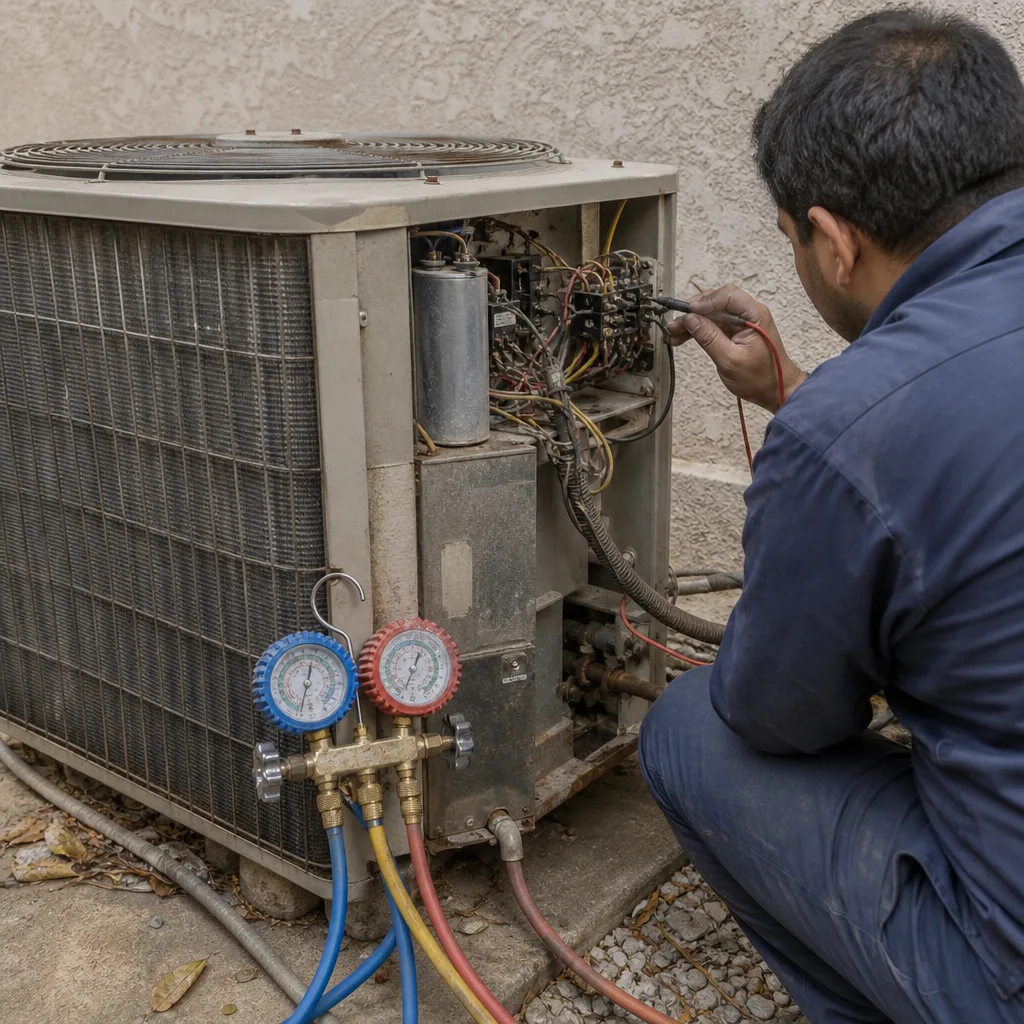
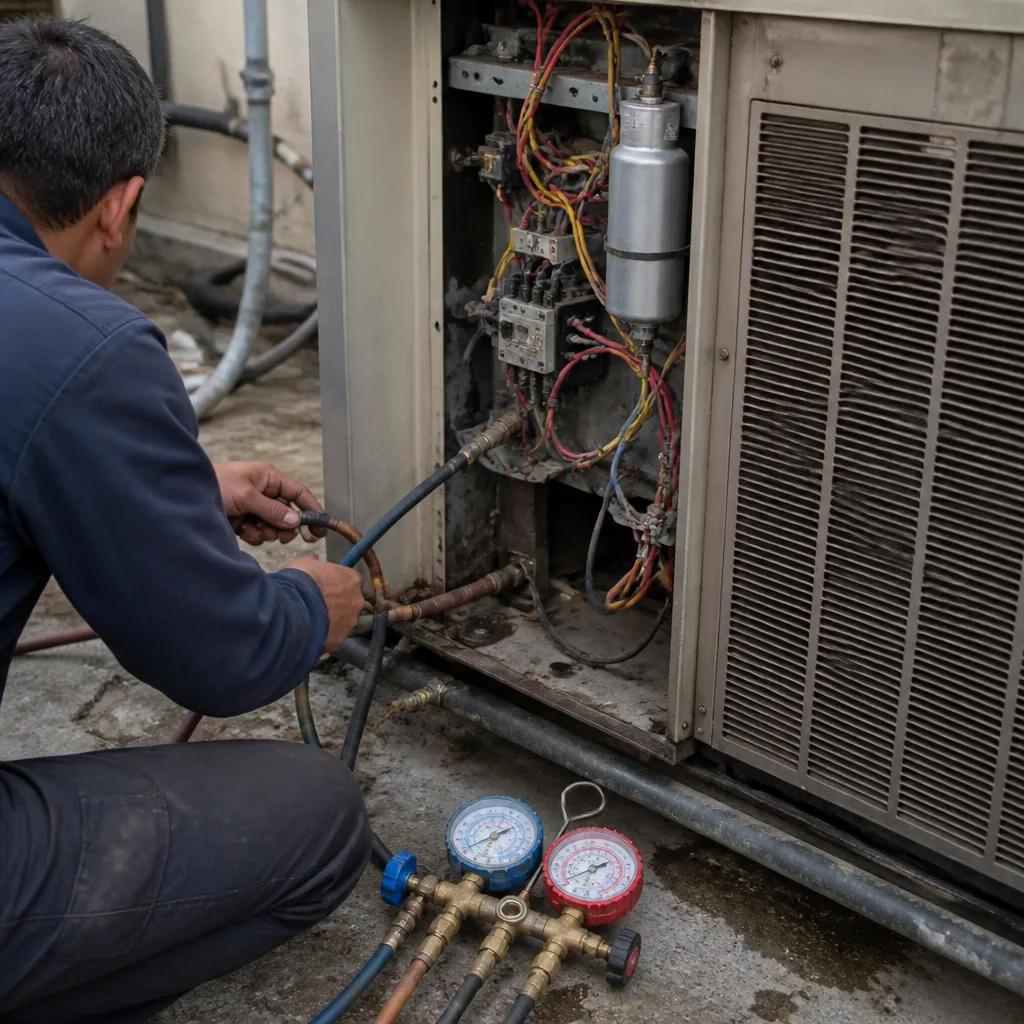
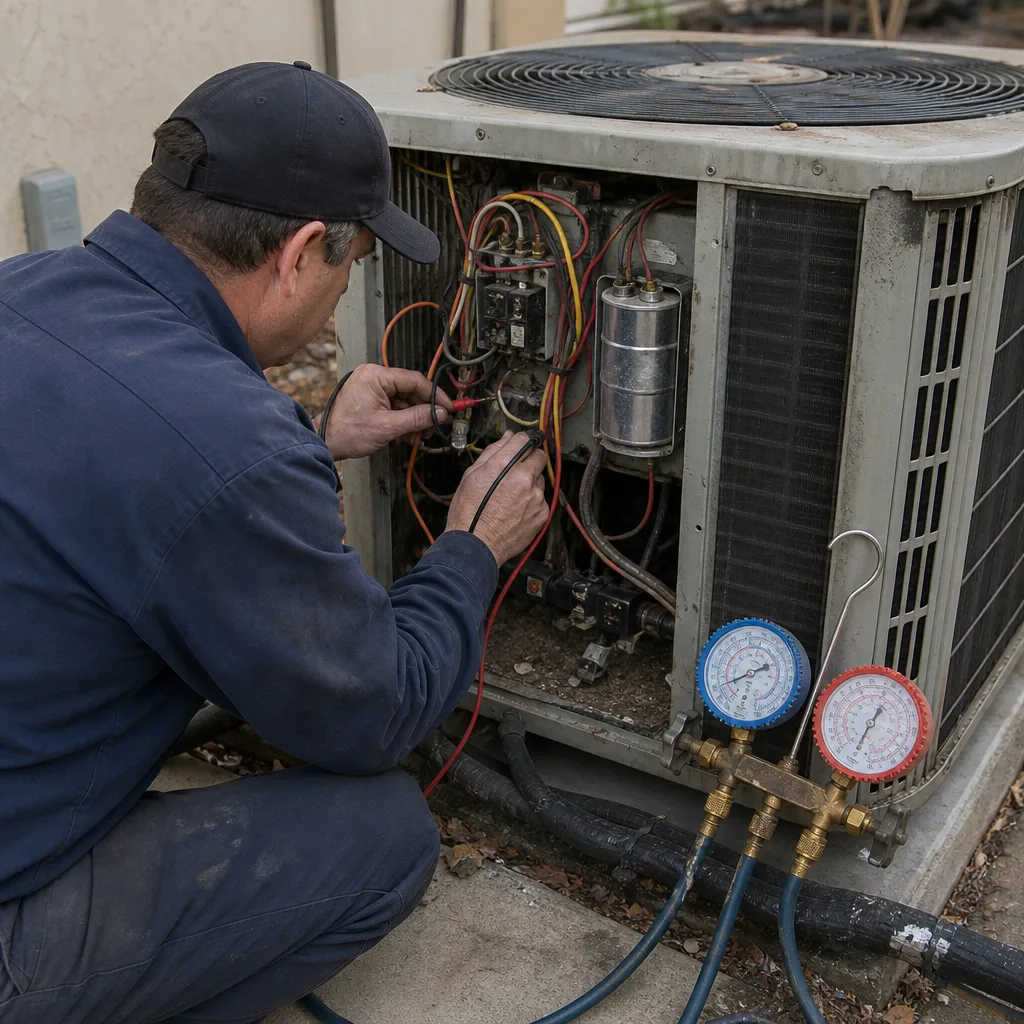
- Arrival to diagnosis: 20 to 45 minutes. This is where the readings happen. A good tech checks refrigerant pressures, tests the capacitor, and reads the control board before saying a word about the compressor.
- Diagnosis to repair (same-visit fix): 30 minutes to 1 hour. Capacitors, contactors, drain line clogs, and thermostats all fall in this bucket.
- Diagnosis to repair (parts needed): 2 to 24 hours. This depends on warehouse stock and whether the part has to come from a Las Vegas supplier.
The single biggest place the timeline blows up is between steps 3 and 4. A diagnosis that comes before the readings – “sounds like your compressor” without testing anything – is the number one cause of a return visit and a second day without cooling. Ask for the readings. You should see them before anyone quotes you a repair.
Which Repairs Get Done on the Same Visit
Some failures are everyday events for anyone who works in Spring Valley heat, and those almost always get handled on the spot. Others are genuinely a parts-and-schedule situation. Here’s the honest split:
Same-visit repairs (usually 1 to 3 hours total)
- Failed run capacitor – the most common summer failure, and one Ray tests before anyone says the word “compressor”
- Bad contactor or relay
- Clogged condensate drain line – extremely common in Spring Valley’s humidity swings during monsoon season
- Tripped float switch and water backup
- Thermostat failure or misconfiguration
- Dirty condenser coil causing high head pressure – a coil cleaning gets you back to normal
- Loose wiring or a tripped breaker
Parts-run or next-visit repairs
- Blower motor failure – usually requires a specific match for your air handler
- Compressor failure – the big one, and often a same-day-to-three-day window depending on stock
- Control board or circuit board replacement
- Refrigerant leak repair – diagnosis is fast, but the repair and recharge take a scheduled return
- Heat exchanger issues on the heating side – these get shut down for safety and scheduled, never rushed
If your system is a Carrier, Trane, Lennox, or American Standard, common wear parts are more likely to be found locally because those are the brands most Spring Valley homes run. Off-brand or older equipment can push the timeline out a day while a supplier tracks down the right match.
For a fuller look at how we handle specific repairs, see our page on AC Repair & Installation in Spring Valley.
How Parts Availability in the Las Vegas Area Affects Your Timeline
Spring Valley sits close enough to the Las Vegas supply chain that most common parts can be sourced the same day. That’s a real advantage, and it’s worth understanding because it directly sets your resolution timeline. Here’s what to expect from a parts standpoint:
- Capacitors, contactors, thermostats, drain parts: Almost always on the truck or a short warehouse run. Same-day.
- Blower motors and inducer motors: Usually in stock at a Las Vegas supplier, but the tech may need to make a supply run. Same-day to next-morning.
- Compressors: Varies by brand and tonnage. Common Carrier and Trane sizes are often available locally. Specialty or older equipment can be 1 to 3 days.
- Control boards: Brand-dependent. Some are on the shelf; some are ordered from the manufacturer and shipped, which can push to 2 to 3 business days.
- Complete systems and heat pumps: Not an emergency same-day item. This is a scheduled install with equipment ordered to match your home’s load calculation.
The takeaway: common failures get common parts. Rare equipment gets a longer window. If you know your brand and model number when you call, a good contractor can give you a much sharper estimate of the resolution timeline for your specific situation.
What to Do With Elderly Family, Infants, and Pets During the Wait
In a Spring Valley summer, a broken AC isn’t just uncomfortable for a healthy adult. For a 78-year-old parent, an infant, or a pet, indoor heat can turn serious quickly. The resolution window matters most for these households, so plan around it while you wait:
- Move everyone to the lowest floor first. Heat rises. A ground floor or basement stays 5 to 10 degrees cooler than upstairs.
- Close off the sunny side of the house. Pull the blinds on west- and south-facing windows. In Spring Valley afternoon sun, that alone can shave several degrees off a room.
- Use cross-ventilation, not just a fan. A fan blowing into a closed room just moves hot air around. Open two windows on opposite sides and pull outside air through.
- Set up a cooling station. Cool damp cloths on the neck and wrists for elderly family members. Small pets belong in the coolest room, not on the sunny side of the house.
- Know the threshold to leave. If your indoor temperature crosses into the high 80s and you have an infant or an elderly person in the home, go somewhere cool. A neighbor, a relative, a public library. It’s not an overreaction.
- Tell the contractor when you call. A household with an infant or a medical concern gets triaged differently by a real contractor. Say it on the phone.
If your heating system fails in winter rather than summer, the risk profile flips but the urgency is the same. Our team handles those calls too. See Heating & Furnace in Spring Valley for the cold-weather side.
How to Get an Honest Timeline Over the Phone
You can get a real answer before a tech ever pulls into the driveway if you ask the right questions. Here’s what separates a straight answer from a vague one:
- Ask what “now” means. Not “as soon as possible” – ask for a window. A real contractor gives you one and calls if it slips.
- Describe the symptom in detail. “It’s blowing warm air” vs. “it’s running but never cools” vs. “it’s completely dead” all point to different failure modes and different timelines.
- Give your brand and rough age. This tells the tech what parts to expect and whether to bring stock for it.
- Ask whether they charge a trip fee. A sneaky trip fee attached to a “free estimate” is a red flag. Ray’s Heating & Air doesn’t charge one inside our own county.
- Ask whether the estimate is in writing. Any written estimate is worth a free second opinion if you want one.
- Ask what happens if the diagnosis changes. A good contractor says “here are the readings, here’s what we’re seeing” before quoting a repair. That’s the honest version.
Here’s a sample ask: “If it’s a bad capacitor, how fast can this be fixed tonight? And if it’s not, what’s the realistic window?” A solid answer separates those two cases. A vague one doesn’t.
Commercial HVAC: Why the Clock Runs Differently
Commercial HVAC timelines work on a different scale than residential. A retail store or a small office in Spring Valley can usually survive a short outage, but a restaurant, a medical office, or a food-storage facility cannot. That changes the priority and the plan:
- Response is usually faster. Commercial systems have redundancy in some cases and are treated as a business-continuity problem, so response windows are tighter.
- Diagnosis takes longer. A commercial package unit or a rooftop split is more complex to check than a residential condenser. Expect 45 to 90 minutes rather than 20 to 45.
- Parts are often more brand-specific. Trane, Lennox, and Carrier commercial equipment often uses parts that aren’t interchangeable. Supply runs can be longer.
- Replacement is scheduled, never rushed. A commercial system replacement involves a load calculation, ordering, permits as required, and a set install date. Same-day is not a real promise on that work, and any contractor who makes it is overselling.
What a business owner should expect from a commercial call: a firm arrival window, a clear diagnosis, an honest same-day vs. multi-day call, and a fixed written price before anyone starts work.
Commercial Repair and Replacement Timelines
Numbers to plan around, based on real commercial calls we’ve seen in Spring Valley and the surrounding areas:
- Simple commercial repair (capacitor, contactor, thermostat): 2 to 4 hours total, arrival to repair.
- Mid-level repair (blower motor, board, drain issue): same day to next business day depending on stock.
- Major component repair (compressor, large blower): 1 to 3 business days, sometimes longer if the part is on back-order from the manufacturer.
- Commercial replacement: typically a multi-week process from diagnosis to install, including load calculation, equipment selection, permit pull as required, and scheduling.
For heat pump and mini-split equipment specifically, which is increasingly common in newer Spring Valley construction, the timeline depends on whether the system is a repair or a replacement. Repairs fall into the same windows above; replacements are scheduled. See Heat Pump & Mini Split in Spring Valley for detail on those systems.
Common Mistakes to Avoid
- Believing a same-day promise on a replacement. Emergency repair can be same-day. Replacement involves load calculation, ordering, and a scheduled install date. Anyone promising to swap a whole system same-day is either guessing or using the wrong equipment match.
- Accepting a diagnosis without readings. If a tech walks in and says “compressor” without testing the capacitor, ask for the readings. It’s the most common misdiagnosis in Summerlin and Spring Valley homes.
- Calling a national number and expecting a local tech. A lot of the big franchise numbers route through a call center and dispatch whoever is closest. You may get a different face every time, and worse, one who has never seen your system before.
- Skipping the second opinion. Any written estimate is worth a free look from a second contractor, especially on anything over a few hundred dollars. It costs you a phone call.
- Waiting out a “small” failure in a heat wave. A failing capacitor or a tripped float switch becomes a compressor failure fast when you keep resetting the breaker. Get it looked at before the cheap fix turns into an expensive one.
- Not knowing the trip-fee policy up front. A contractor with a surprise trip fee attached to a “free estimate” is not free. Ask on the phone before they roll.
- Ignoring the air handler and ductwork. A brand-new condenser tied to a leaking duct system is a wasted repair. In older Spring Valley homes with original ductwork, the leak matters as much as the equipment.
See the difference
 Before
 After
 Before
 After
 Before
 After
When to Call a Professional
Call a professional the moment any of these are true: the system is tripping the breaker repeatedly, the unit is running but not cooling, you see ice on the indoor coil or refrigerant lines, you smell burning or a chemical odor, the outdoor unit is making a rhythmic clunking or grinding noise, or the drain pan is overflowing. Compressor and high-voltage work belongs to a trained technician, period. Capacitors store a lethal charge even after the disconnect is pulled, and refrigerant handling requires a licensed tech and recovery equipment. Do not open the panel yourself. Ray’s Heating & Air Spring Valley offers free estimates in Spring Valley – call (833) 620-7288.
Frequently Asked Questions
Most emergency HVAC repairs take 1 to 3 hours from your call to a working system, assuming the failure is a common one like a capacitor, drain line, or contactor. If a major part is needed, plan for same-day to 72 hours depending on parts availability in the Las Vegas area.
Yes for common failures – capacitors, contactors, drain clogs, thermostat issues. No for anything that requires ordering equipment, and never for a full system replacement, which is always scheduled. Call (833) 620-7288 and we’ll tell you honestly which category you’re in before we roll.
Yes. During a summer heat wave, more homes are calling at once and arrival windows stretch. Spring and fall are faster. If you’re calling in July or August, expect a longer arrival window but the same-day repair still holds for common failures.
Rare, off-brand, or older equipment takes longest. Common brands – Carrier, Trane, Lennox, American Standard – usually have parts on a Las Vegas warehouse shelf. Rare or discontinued equipment can push a repair out 2 to 5 business days.
If it’s under 10 years old and the repair is under a quarter of a new system’s cost, repair it. If it’s over 15 and the compressor is gone, replacement usually makes more sense. Any honest contractor will tell you which side of that line you’re on. See our Ray’s Heating & Air Spring Valley home page for an overview of all our services.
Not with us. Background-checked technicians who’ve seen your system before handle your call. If a repair doesn’t hold, one call brings Ray back under the 90-Day Done Right Promise, in writing, on every heating and cooling job.
The Bottom Line
Arrival time and resolution time are not the same number, and the gap between them is where a bad contractor hides the bad news. Common failures get fixed same-visit; major parts and full replacements take longer, and any contractor who won’t say so on the phone is selling, not explaining. Ask for the arrival window and the realistic resolution window separately. Ask for the readings before the diagnosis. Ask for the written price before any work starts. And if it’s a repair in Spring Valley, in the middle of a heat wave, call (833) 620-7288 for a free estimate. We answer around the clock, and the person who answers is the one who shows up.
Written by the team at Ray’s Heating & Air Spring Valley.