
Last updated November 18, 2026
 Heat pumps
 AC repair
 Furnace & heating
 Ductless mini splits
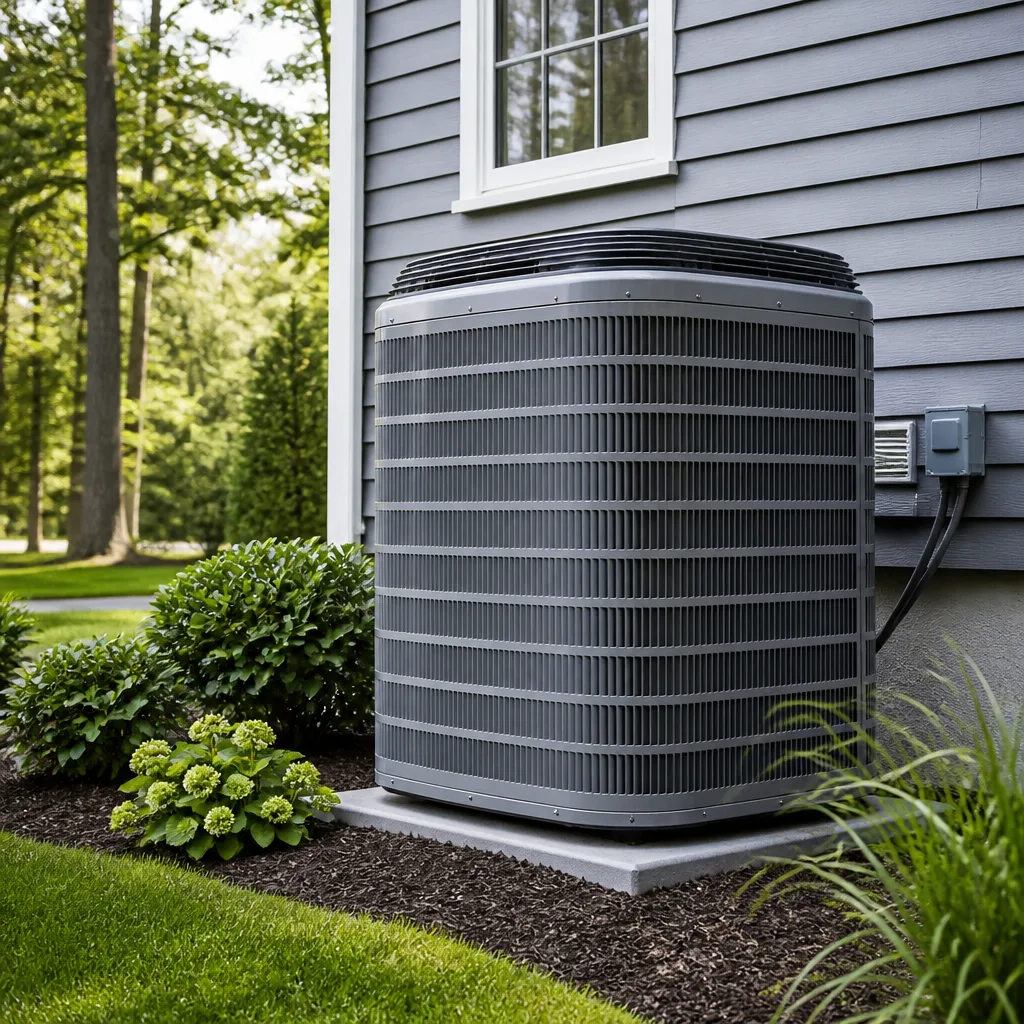 Carrier
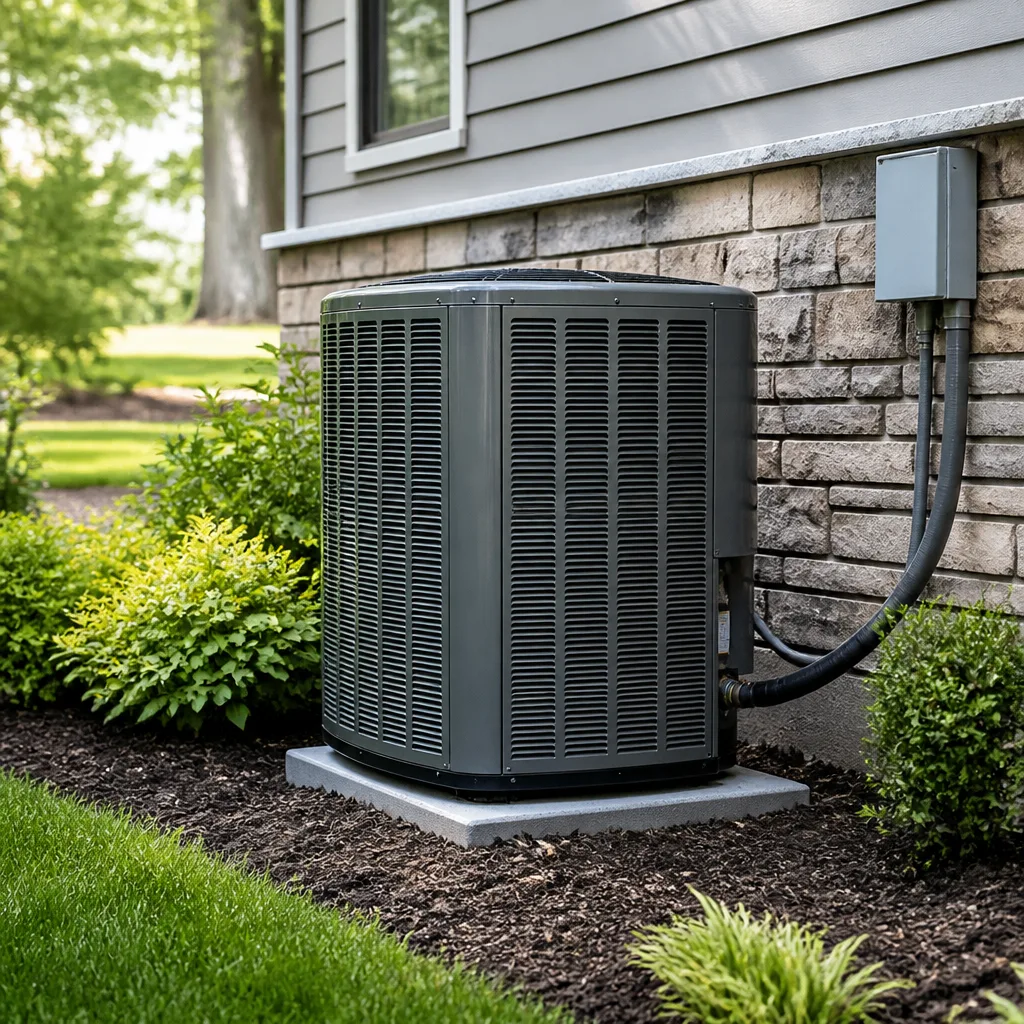 Trane
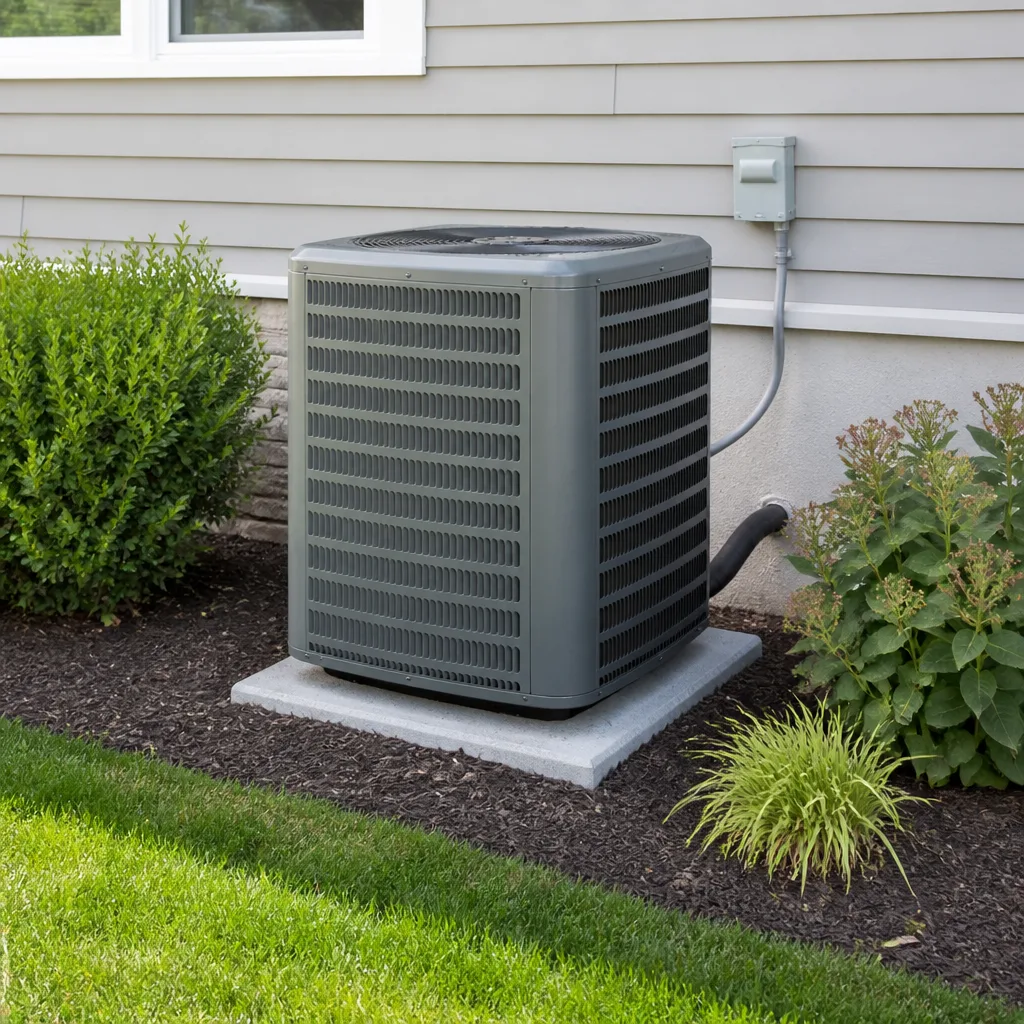 Goodman
Seasonal tune-up and full diagnostic on your Carrier, Trane, or Goodman system - readings shown to you before any repair is proposed
Diagnosis first, numbers second - you approve the repair price before a single part goes in.
Get your free estimateHeat Pump & Mini Split Warning Signs Every Homeowner Should Know
A refrigerant leak will cut your mini-split’s cooling capacity roughly in half before it ever trips an error code. By the time the unit shuts itself down to protect the compressor, you’ve already been running it damaged for weeks. That’s the quiet part about heat pumps and ductless systems: they fail slowly, in ways that read like “it’s just getting older” instead of “something is wrong right now.” We’ve walked into Spring Valley homes where the homeowner wrote off a six-degree gap between the thermostat and the room as normal tech behavior, and the actual problem had been chewing on the system since spring. This guide covers what the failing signs really are, what each sound means, and the honest age-and-symptom math that tells you whether you’re looking at a repair or a replacement.
Quick Answer
The warning signs of a failing heat pump or mini-split are longer run times to reach setpoint, ice on the indoor coil or outdoor unit in warm weather, a faint sweet or chemical smell near the indoor head, grinding or hissing sounds, a persistent 4 – 6 degree gap between the thermostat and the room, and water dripping from the indoor head. One warning sign on a newer system is usually a repair call. Two or more on a unit past ten years is a replacement conversation.
Styles & brands we work with
- AC repair
- Furnace & heating
- Heat pumps
- Ductless mini splits
- Carrier
- Trane
- Goodman
Table of Contents
- Refrigerant Leak Signs Most Homeowners Miss
- What Each Unusual Sound Actually Means
- The Thermostat Gap Problem
- Water Dripping From the Indoor Head
- Short Cycling, Breaker Trips, and the Capacitor Question
- The Honest Age-and-Symptom Framework
- Why Spring Valley Heat Pumps Fail in the Shoulder Season
- The Single Biggest Tell: Capacity Loss Without an Error Code
Refrigerant Leak Signs Most Homeowners Miss
Refrigerant leaks are the number one cause of premature compressor death in ductless systems, and they almost never announce themselves with a code. They show up as performance drift. The system still runs, still blows cool air, but it takes longer to get there and never quite gets to the setpoint you remember from last summer. Three signals together are the strongest case for a leak.
- Longer run times to reach setpoint. If a room that used to cool in fifteen minutes now takes forty, and the weather is the same, the system is working harder to move the same heat. That means it isn’t moving as much refrigerant.
- Ice forming on the indoor coil or the outdoor unit in summer. Ice at the indoor head is a low-refrigerant symptom, not a “the unit is freezing because it’s hot out” symptom. The coil gets colder than it should, moisture condenses, and it freezes into a block. Ice on the outdoor unit in cooling mode is just as much a red flag.
- A faint chemical or sweet smell near the indoor head. Refrigerant isn’t harmless to breathe. If you notice something sweet, almost medicinal, drifting from the indoor unit when it kicks on, shut the system off and get it looked at before you run it further.
Ice on the coil is the one homeowners ignore longest. It’s easy to see it as “well, it’s cold, that’s the point.” It isn’t. Ice on the coil is a low-charge symptom, and every hour you run it that way the compressor is pulling against pressure it was never designed to fight. If you’ve got ice and it’s July in Spring Valley, that unit needs eyes on it this week. We handle refrigerant leak diagnosis and repair as part of our Heat Pump & Mini Split in Spring Valley service, and it’s usually a one-visit fix if we catch it before the compressor is gone.
What Each Unusual Sound Actually Means
Sound is the most misunderstood diagnostic tool in the toolkit. A lot of homeowners hear a noise and panic, and a lot of them hear a noise and shrug. The right response depends entirely on which noise it is. Here’s the breakdown we use in the field.
- Startup rattle. Usually vibration against drywall, a loose panel, or a fan blade that’s picked up a leaf. Not serious on its own, but worth tracking down. We’ve seen mini-split heads mounted in Spring Valley where the bracket had loosened enough after a hot summer to let the housing touch the stucco exterior wall, and the “rattle” was just the wall talking.
- Grinding. Bearing wear in the indoor blower or the outdoor fan motor. This gets worse, not better, and the longer you run it the more of the motor you chew up. Grinding on an outdoor fan means the motor is close to seizing.
- Gurgling. Refrigerant flow, often normal, especially at startup and shutdown. If it starts and stops within seconds, it’s usually the reversing valve doing its job. If it’s constant and paired with other symptoms above, it’s worth a look.
- Hissing or bubbling. Leak, almost always. Hiss is refrigerant escaping under pressure. Bubbling is refrigerant foaming through oil at the leak point. This is not normal, and the system should be shut off. Running a hissing unit is running a unit with a hole in it.
The one we get called about most is a sound the homeowner can’t quite describe, which is why we listen before we touch anything. Your system tells us what’s wrong. We just listen first.
The Thermostat Gap Problem
If your thermostat reads 72 and the room feels like 78, that’s not a quirk of ductless technology. It’s a symptom. A persistent 4 to 6 degree gap between setpoint and actual room temperature points to at least three diagnosable problems, and they’re not all created equal.
- Low refrigerant charge. Covered above, and the most common cause of the gap. The system can’t move enough heat to close the temperature delta.
- A clogged filter or blocked return. The cheapest fix on this list, and the most underdiagnosed. A filter that’s loaded up with dust and pollen restricts airflow, and the indoor head can’t circulate enough air to bring the room down.
- An undersized unit for the space. This is the harder conversation. Some mini-splits get installed to hit a spec number rather than a proper load calculation, and they never quite catch up in a big open room or a west-facing bedroom in Spring Valley.
The gap is where homeowners get talked into the wrong repair. It’s why we test the capacitor before anyone says the word compressor. Readings first, numbers second. You’ll see both before any work gets quoted.
Water Dripping From the Indoor Head
Water dripping from the indoor head is a clogged condensate drain. In a Spring Valley stucco wall, that water has nowhere to go except into your drywall. Stucco is a great exterior material and a merciless one for water damage, because it doesn’t show the damage until the drywall behind it is soft or the paint is bubbling, and by then you’re looking at a repair that has nothing to do with the HVAC system.
Here’s the sequence that causes it, and why it’s worth catching early:
- Condensation from the indoor coil drains into a condensate line rather than dripping into the room.
- Dust, algae, insect nests, or just time clogs the line. In our climate, algae grows fast in a warm condensate line, and a line that ran clean last summer can clog by mid-July.
- The drain pan under the coil fills up. On a well-designed system, a float switch shuts the unit down before it overflows. On older or cheaply installed systems, there is no float switch, and the water has to go somewhere.
- Water finds the path of least resistance, which is usually the penetration in the drywall where the refrigerant lines and drain pass through.
If you see dripping from the indoor head, shut the unit off and get the drain cleared. Don’t run it and hope. A $200 drain clearing beats a $2,000 drywall and paint repair every day of the week. If it’s been dripping for a while, take a look at the wall behind the indoor head and feel for soft spots before anything else happens.
Short Cycling, Breaker Trips, and the Capacitor Question
Short cycling is a heat pump or mini-split starting and stopping more often than it should, and it’s often a sign the system is having trouble starting at all. On heat pumps, the outdoor unit starting against high pressure or a weak start capacitor is a common cause. On mini-splits, the inverter board can be heading toward failure, or the unit is oversized for the space and hits setpoint too fast.
A weak run capacitor is the most common electrical cause we find, and it’s the cheapest to fix. A capacitor that’s drifted out of spec will cause the compressor to draw high amps on startup, which trips a breaker, which the homeowner resets, which trips again. The system keeps running in this degraded state until the compressor gives out. This is why we test the capacitor before anyone says the word compressor. Readings first, numbers second, always.
If your outdoor unit trips the breaker or the indoor fan cuts out at random, don’t reset the breaker a fourth time. Get it read on a meter. We handle electrical diagnostics as part of our AC Repair & Installation in Spring Valley work, and the difference between a capacitor replacement and a compressor replacement is one honest diagnostic visit.
The Honest Age-and-Symptom Framework
The single most useful thing we can give a homeowner is a framework for the age-and-symptom math. Most people make the repair-versus-replace decision on the size of the repair bill alone. That’s the wrong input. The right inputs are age, number of warning signs, and whether the system has any remaining efficiency warranty.
- A 3-year-old unit with one warning sign is a repair call. Period. Capacitor, drain, filter, top off a slow leak and find the source. You’re protecting a system that has most of its life ahead of it.
- A 5-year-old unit with two warning signs is still a repair call, with a caveat. If the warning signs point to a compressor or reversing valve, get a second opinion on the diagnosis before you write the big check. Our Ray’s Heating & Air Spring Valley home page has the standing Free Second Opinion offer on any written estimate, and it exists for exactly this moment.
- A 10-year-old unit with two or more warning signs is a replacement conversation worth having. Not a sales conversation, a real one. On heat pumps and mini-splits, the compressor or reversing valve repair often runs half the cost of a new system, and the new system comes with a fresh warranty. At ten years old, in our experience, putting a $1,500 repair into a system that has another failed component waiting in the wings usually goes badly.
- A 10-year-old unit with one warning sign is a judgment call. If it’s a capacitor or a drain, do the repair. If it’s a leak plus anything else, sit down and do the math honestly.
There’s no rule that fits every house. But if you don’t have the framework, you make the decision on emotion or on whoever got to you first. Neither one ends well.
Why Spring Valley Heat Pumps Fail in the Shoulder Season
Spring Valley runs hot and dry from May through September, and that’s when the load is heaviest. But the failures we see most often show up in the shoulder season, March through May, when the system switches from heating to cooling and the first big temperature swing lands. Here’s why the timing matters.
In our climate, outdoor coils collect fine dust and pollen through the spring, and the first week the system runs hard in cooling mode is the week the coil is clogged enough to run hot. A refrigerant leak that’s been slow all winter has been fine in low-load weather and suddenly isn’t in a 105-degree week. Condensate lines that were dry all winter are suddenly full of warm water and algae grows fast. And that’s before you get to stucco walls, which trap moisture behind the indoor head and don’t show damage until it’s expensive.
Spring is the right time to check a system, not the wrong one. If you’re due, our Heating & Furnace in Spring Valley tune-up work includes the heat pump side of the system and the transition check that catches most of these before the first hot week. The person at your door should walk you through what they found on the readings, not just hand you a bill. Ask anyone on your street who they’ve had out to check theirs.
The Single Biggest Tell: Capacity Loss Without an Error Code
If we could only give a homeowner one piece of information about mini-split and heat pump failure, it would be this: the biggest warning sign has no sound and no code. It’s capacity loss. The system still runs, still blows cool air, still trips nothing. But it takes longer, and it doesn’t quite get there, and you’ve been running it damaged for weeks.
A heat pump that’s working correctly should reach setpoint in a predictable amount of time. If you can’t remember the last time it did, that’s your sign. Look at the system the same way you’d look at any other expensive piece of equipment: it either performs to spec or it doesn’t, and if it doesn’t, that’s information. Don’t wait for the unit to shut itself off. By the time it does, you’ve usually been running on borrowed time for a month.
If you’ve got one of the symptoms above and you want a straight answer on what it costs to fix, we handle this every week in Spring Valley. Our hours are when you call, and the phone is answered by a person, not a menu.
Common Mistakes to Avoid
- Assuming the thermostat gap is “just how mini-splits work.” It isn’t. A 4 to 6 degree gap is a diagnosable symptom of at least three different problems, and treating it as normal lets the real issue run for another season.
- Running the system with ice on the coil. Ice in summer is a low-refrigerant symptom. Every hour you run it that way the compressor is pulling against pressure it wasn’t designed for, and compressor replacement is a much bigger bill than a leak repair.
- Resetting the breaker a fourth time. A breaker that trips more than once on your heat pump isn’t going to fix itself, and a weak capacitor or a shorting compressor winding is not a reset-the-breaker problem. Get it read on a meter.
- Ignoring a slow drip from the indoor head. A clogged condensate line in a Spring Valley stucco wall doesn’t just make a mess on your floor. It finds the drywall penetration, and the repair stops being an HVAC repair.
- Calling a loud noise “normal” because it goes away. Startup rattles that get quieter after a few seconds are often a loose bracket, but grinding that comes and goes is bearing wear that comes and goes. It doesn’t stop being a problem because you stopped noticing.
- Making a compressor-replacement decision on one quote. Big-ticket diagnoses deserve a second set of eyes. A Free Second Opinion on a written estimate is exactly what this situation calls for, and it’s a standing offer here.
- Waiting for the error code to call. By the time a modern inverter mini-split throws a code, it’s already been protecting itself for weeks. The earlier signs are the ones that save you the money.
See the difference
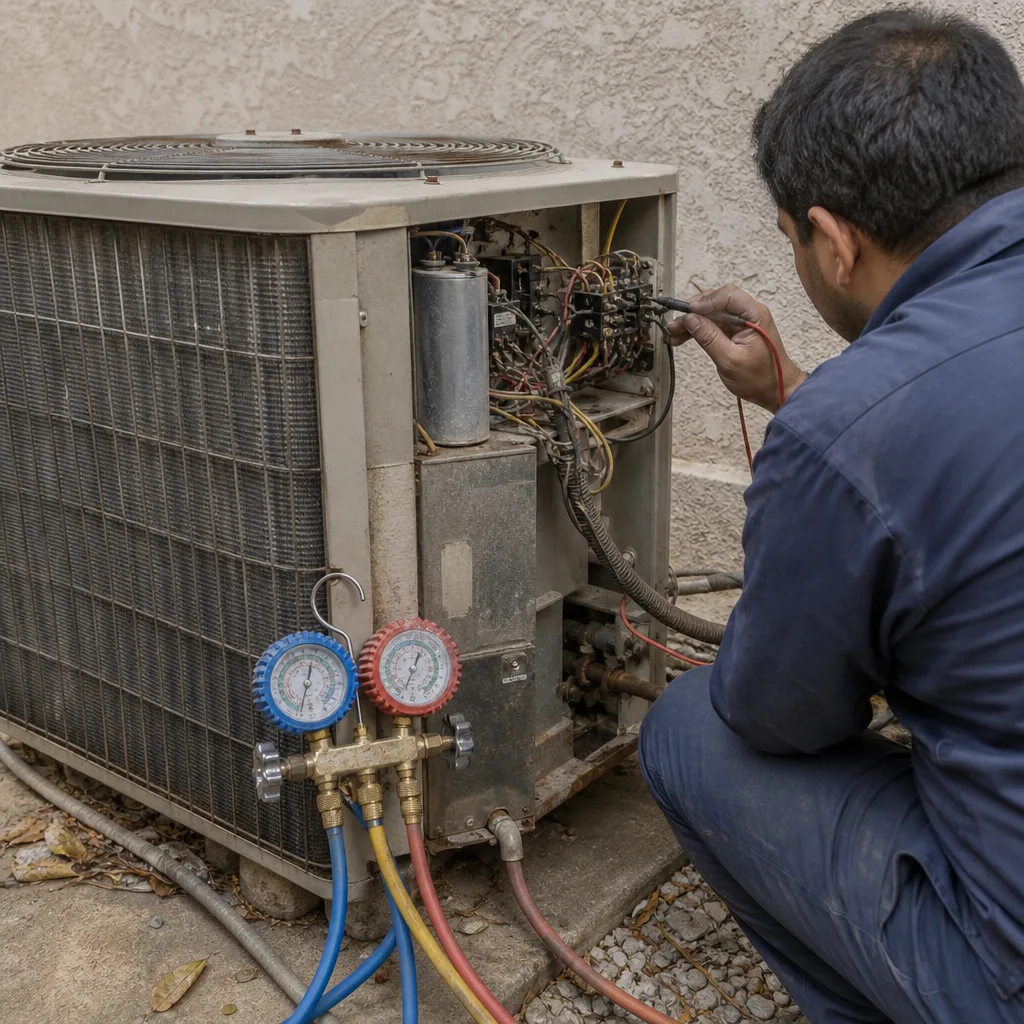 Before
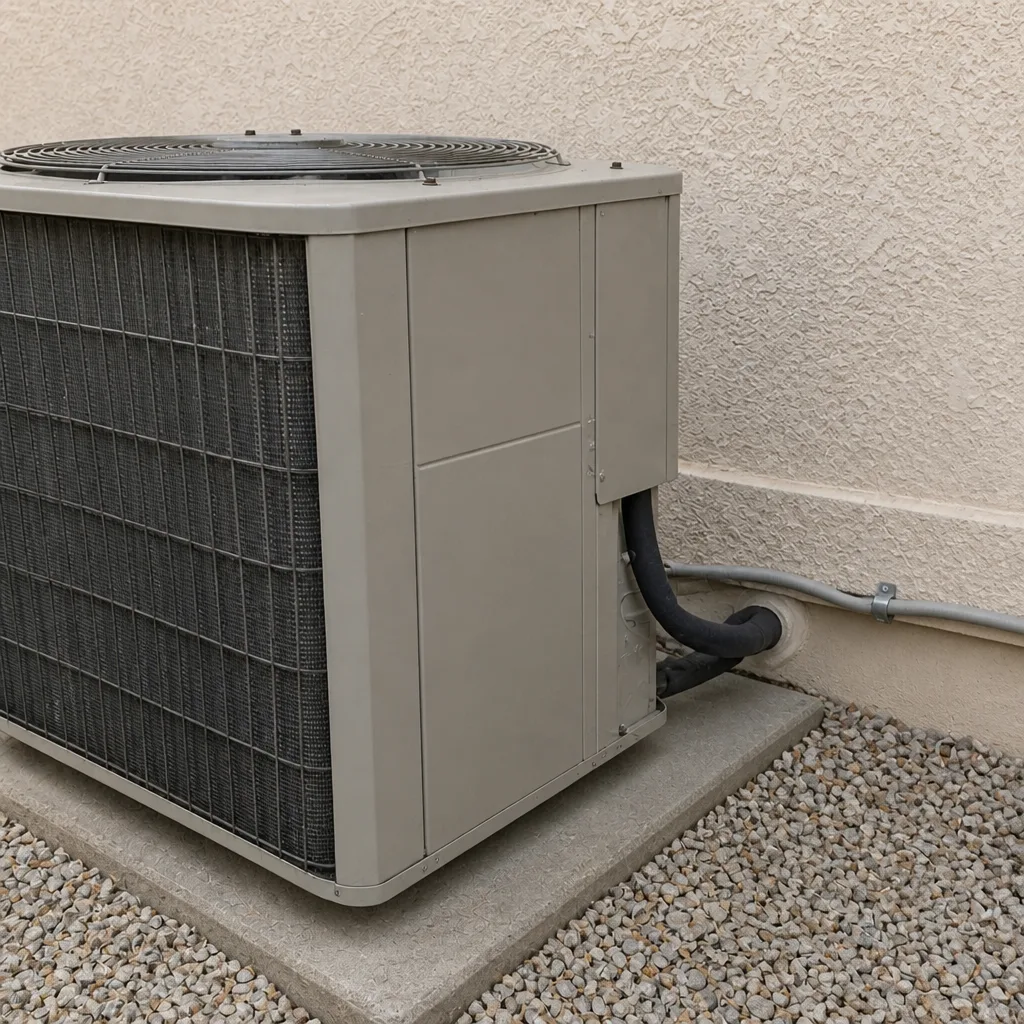 After
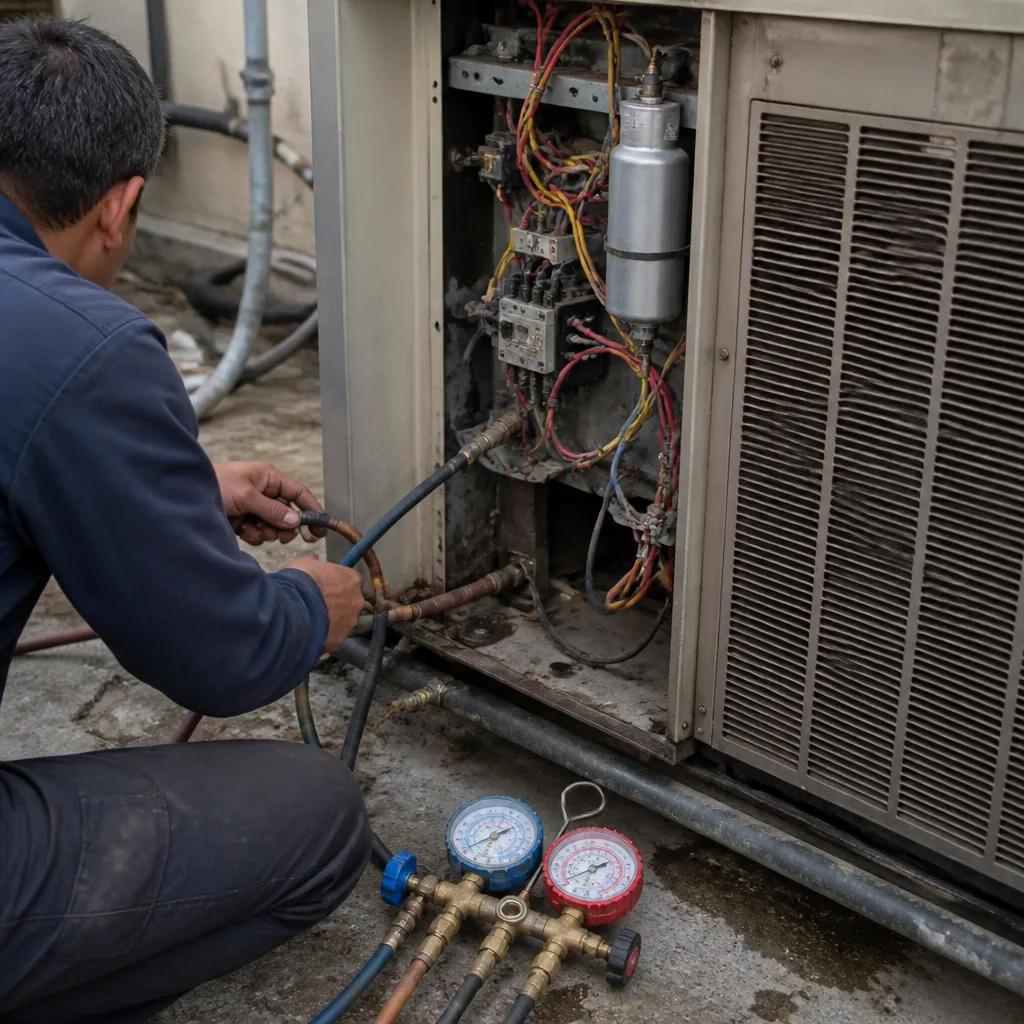 Before
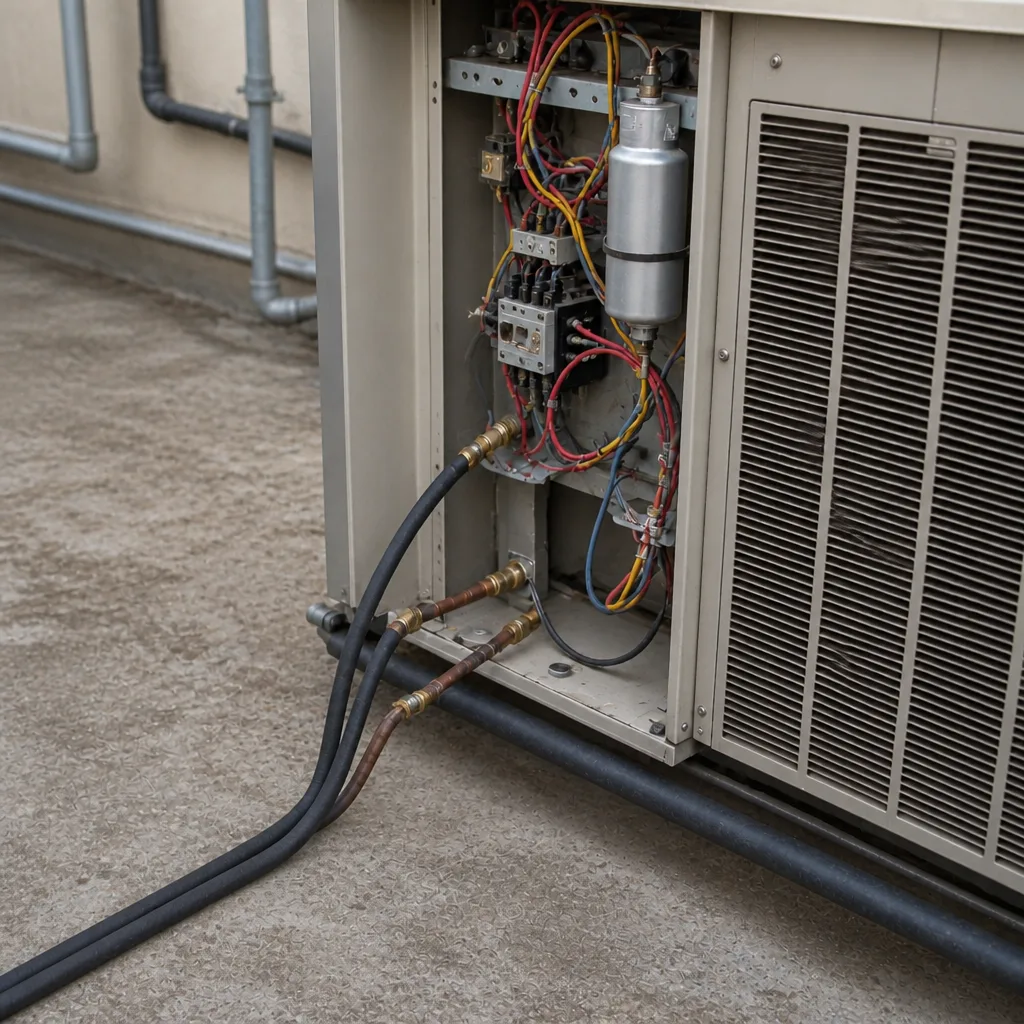 After
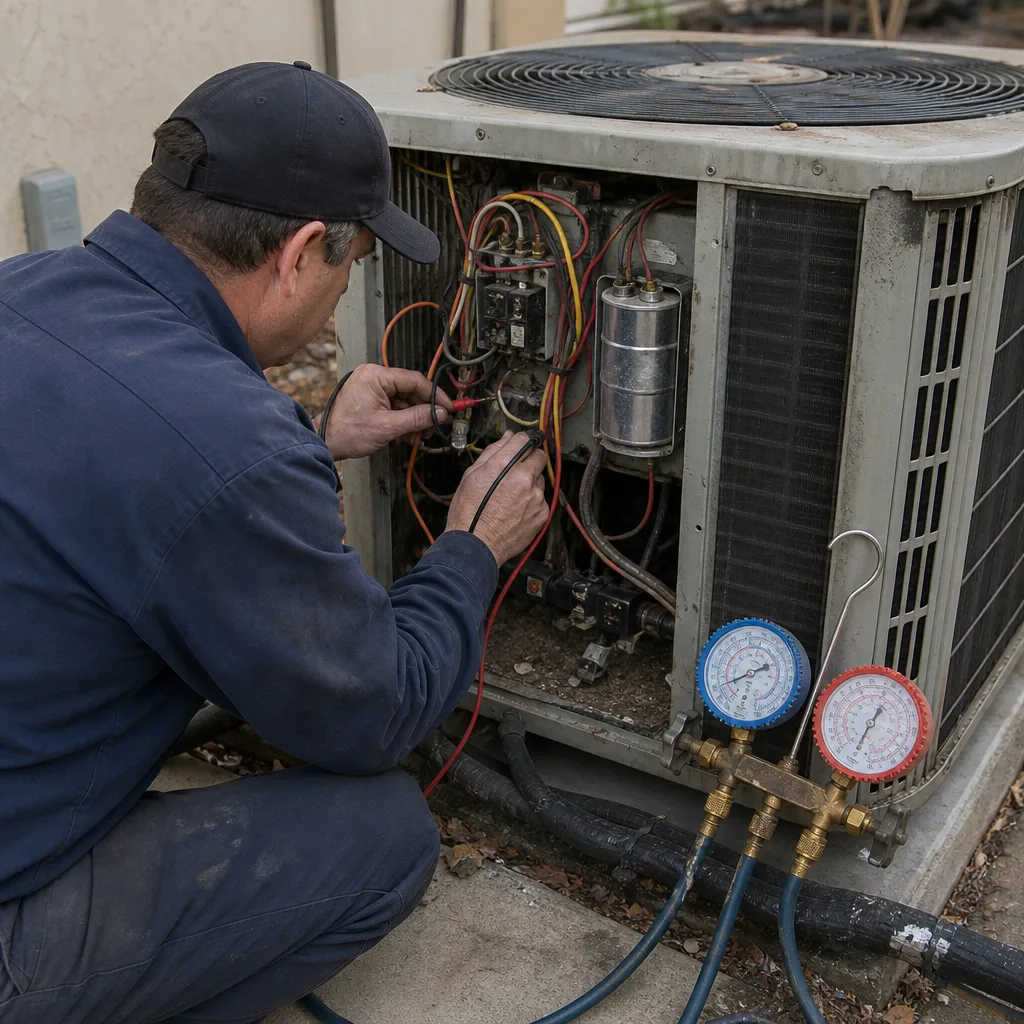 Before
 After
When to Call a Professional
Call when you’ve got a hissing sound, a sweet or chemical smell near the indoor head, ice on the coil in warm weather, water dripping from the indoor head, or a breaker that trips more than once. Call if the gap between setpoint and the room has gotten wider than 4 degrees and it isn’t a clogged filter. Call if you’ve got a grinding sound from the indoor or outdoor fan, and call if the system short cycles more than three times in an hour. Those are the scenarios where the difference between a prompt visit and another month of running it is the difference between a $300 repair and a $3,000 replacement. Ray’s Heating & Air offers free estimates in Spring Valley. Call (833) 620-7288 and a live person picks up, any hour.
Frequently Asked Questions
The first signs are longer run times to reach setpoint, a wider than normal gap between the thermostat and the room, and the system not quite getting to the temperature it used to hit easily. Those three usually show up before any error code does. If they’ve been building for weeks, the system has been running damaged. Call (833) 620-7288 for an exact quote on a diagnostic visit – estimates are free.
Water from the indoor head almost always means a clogged condensate drain, not a refrigerant problem. The drain pan fills up and the water finds the drywall penetration. Shut the unit off and get the drain cleared before the wall gets soft. Call (833) 620-7288 – we handle drain clearing as part of a standard repair visit.
Gurgling refrigerant flow is usually normal, especially at startup and shutdown when the reversing valve switches modes. It’s not normal if it’s constant and paired with a hiss, a bubbling sound, or a loss of heating or cooling capacity. Those combinations point to a leak. Call (833) 620-7288 to get it read on a meter – estimates are free.
On our side of the table, two warning signs on a 10-year-old heat pump is a real replacement conversation, not a hard-sell one. If both symptoms point to a compressor or reversing valve, the repair is often half the cost of a new system, and the new unit comes with a fresh warranty. If one of the two is a capacitor or a drain, the math often still favors the repair. Call (833) 620-7288 for a written estimate and a second opinion before you decide.
Cost depends on the load calculation for your house, the number of indoor heads, and the brand – Daikin, Bryant, Carrier, and American Standard all price differently for the same job. Replacement isn’t same-day work; it’s load-calculated, ordered, and scheduled with a written fixed price, an install date, and any rebate or financing paperwork handled. Call (833) 620-7288 for an exact quote – estimates are free.
Rebate programs change, and they depend on the efficiency rating of the specific unit being installed. The right way to answer the rebate question is to match the rebate to the exact model, which happens during the written estimate. Call (833) 620-7288 and we’ll walk through what applies to your house – estimates are free.
The Bottom Line
The costly failures on heat pumps and mini-splits come with warning signs that show up weeks before the shutdown, and the difference between a $300 repair and a $3,000 replacement comes down to catching them. Longer run times, ice on the coil in summer, a sweet smell near the indoor head, grinding or hissing sounds, a persistent 4 to 6 degree thermostat gap, and dripping water from the indoor head are all signs worth acting on. Age plus symptom count is the honest framework for repair versus replace. One symptom on a 3-year-old unit is a repair. Two or more on a 10-year-old unit is a conversation worth having. If you’re in Spring Valley and any of this is sounding familiar, get it looked at before the shoulder season heat shows up.
Ray’s Heating & Air is local, owner-operated, and answers the phone around the clock with a real person. Every heating and cooling job carries the 90-Day Done Right Promise in writing: if it isn’t done right, one call brings Ray back. We work on all the major brands including Daikin, Bryant, Carrier, and American Standard. Upfront pricing means you see the readings and the numbers before any work begins. Call (833) 620-7288 for a free estimate on any heat pump or mini-split work in Spring Valley, and get a straight answer before you spend a dime.
Written by the team at Ray’s Heating & Air Spring Valley.