
Last updated November 18, 2026
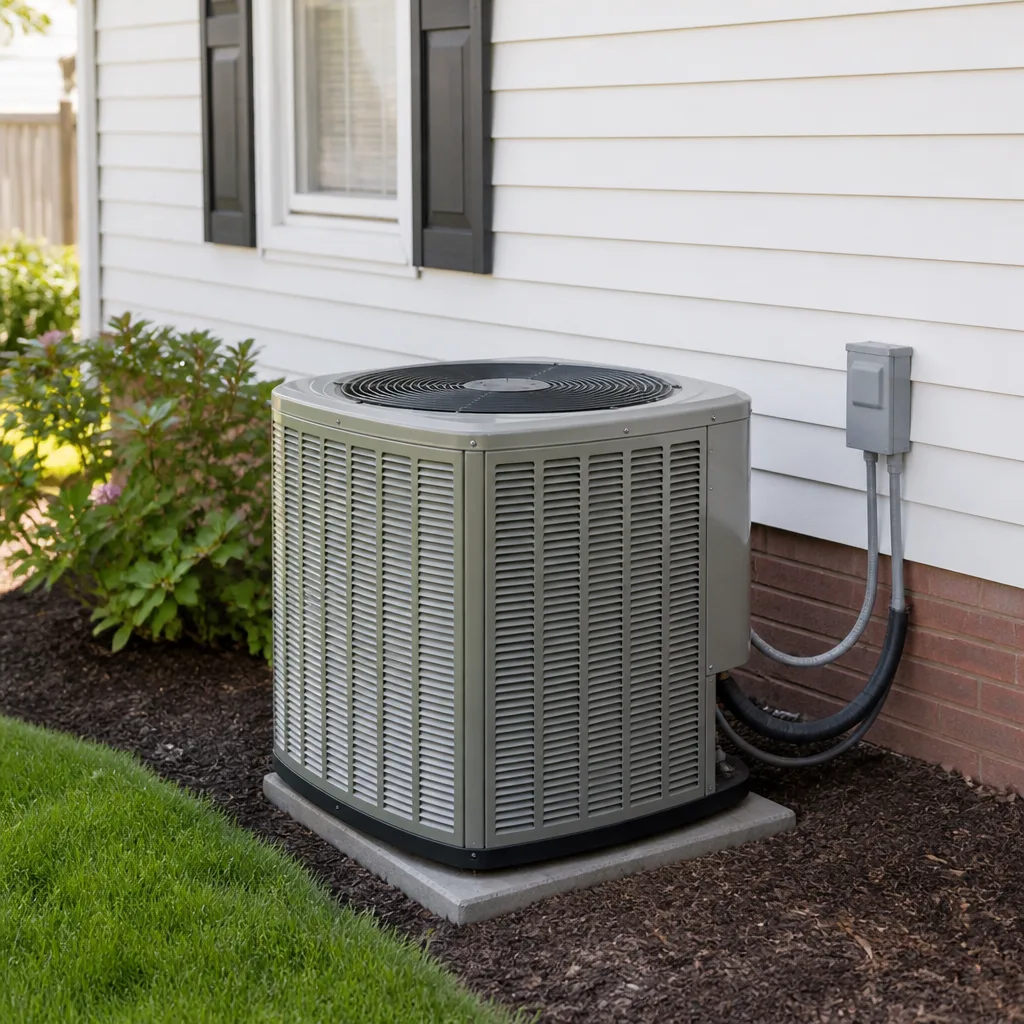 AC repair
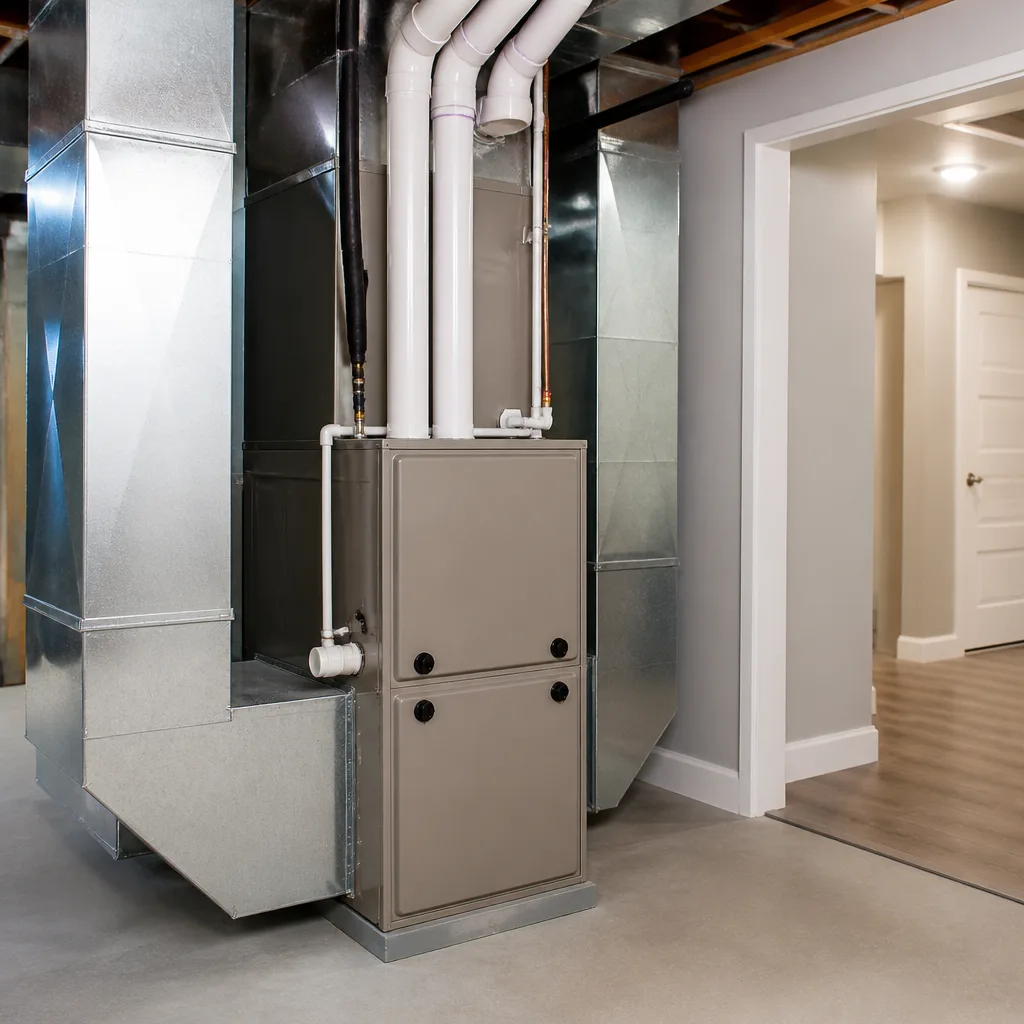 Furnace & heating
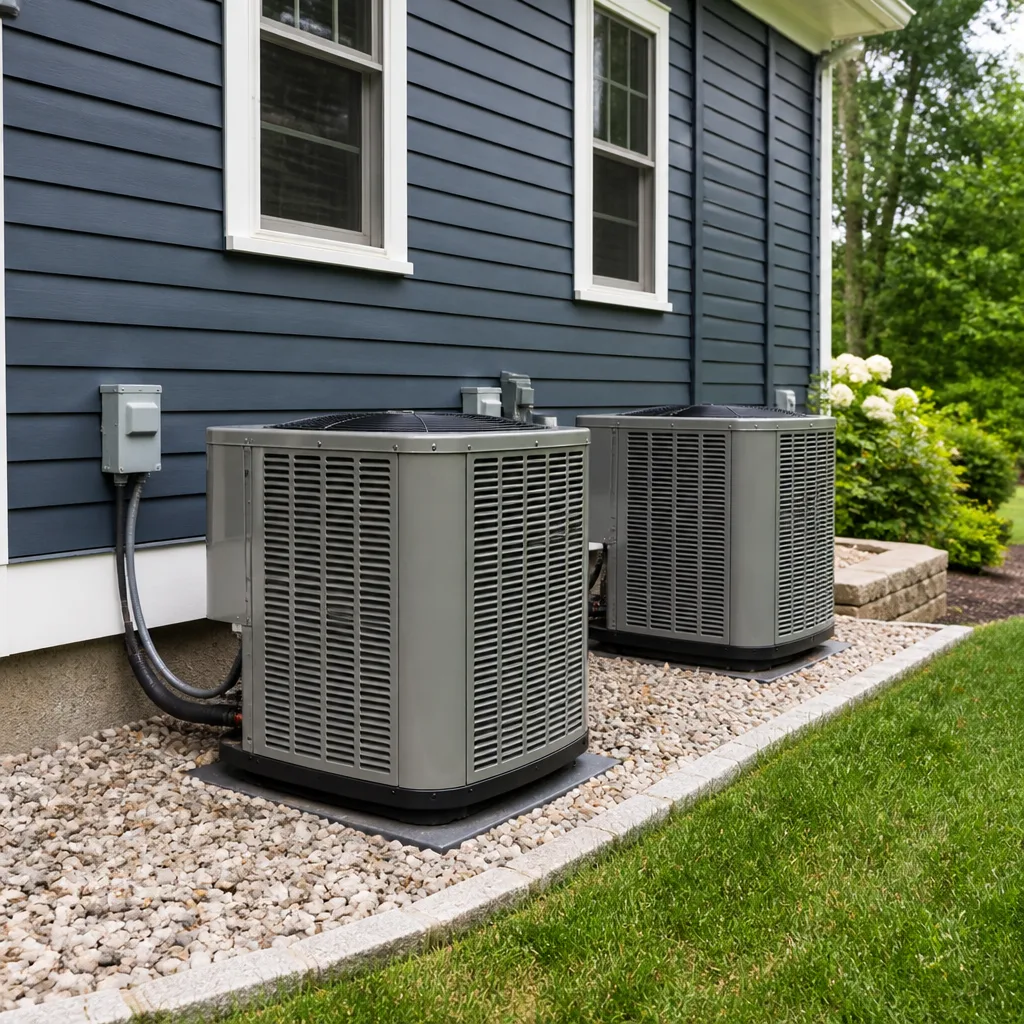 Heat pumps
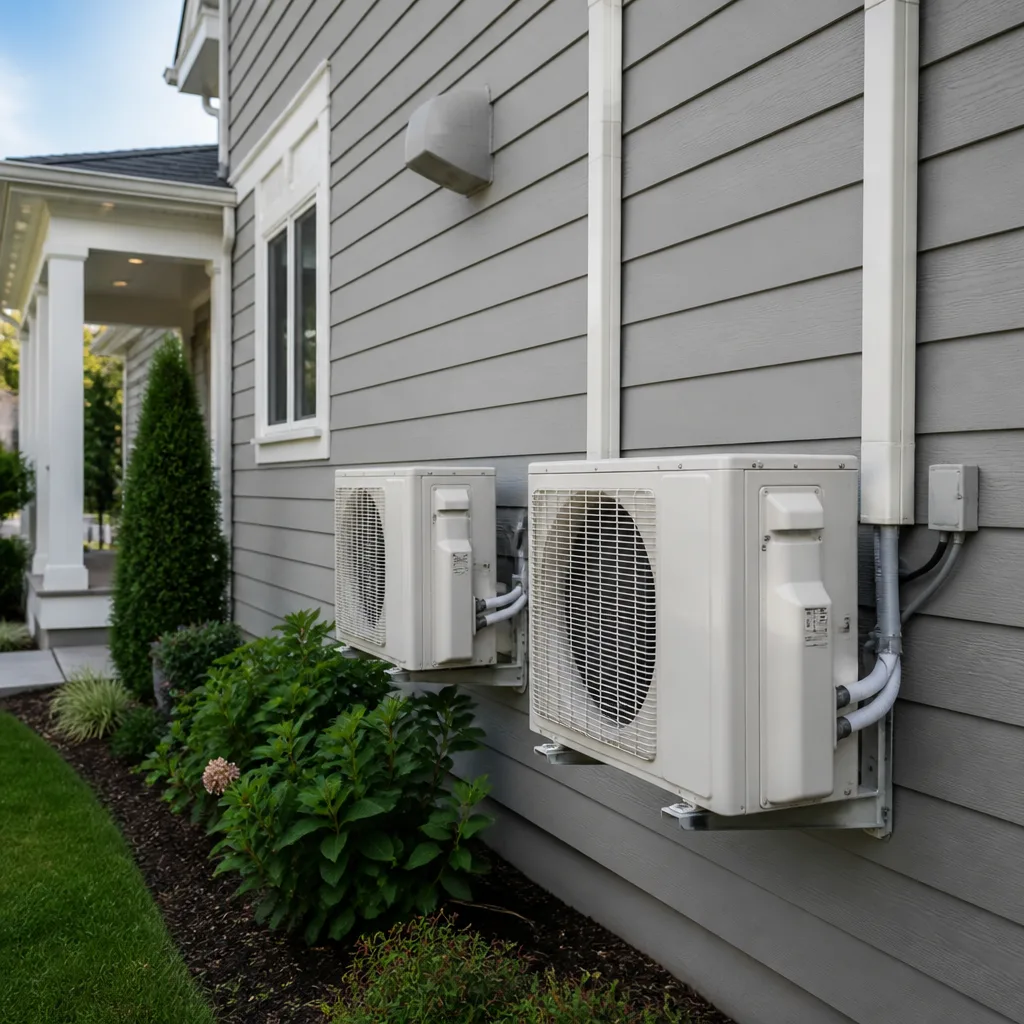 Ductless mini splits
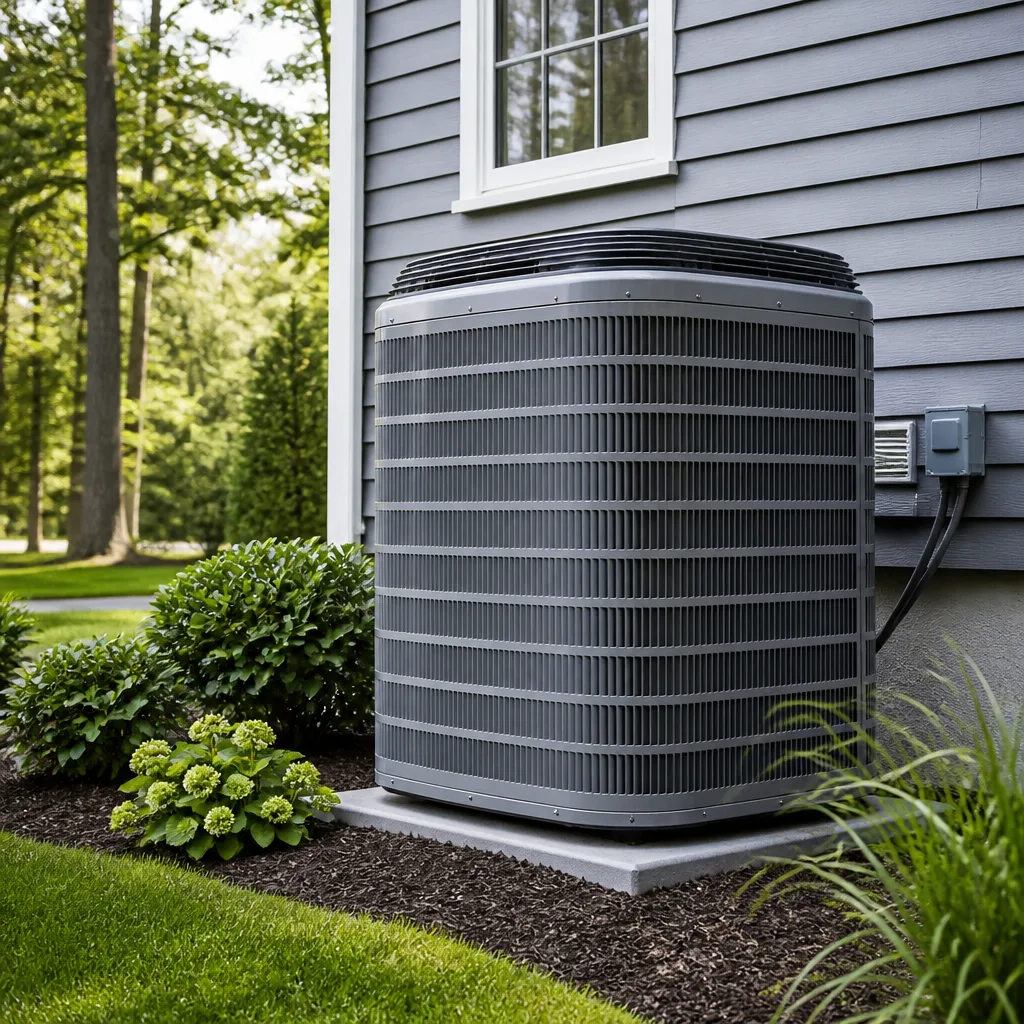 Carrier
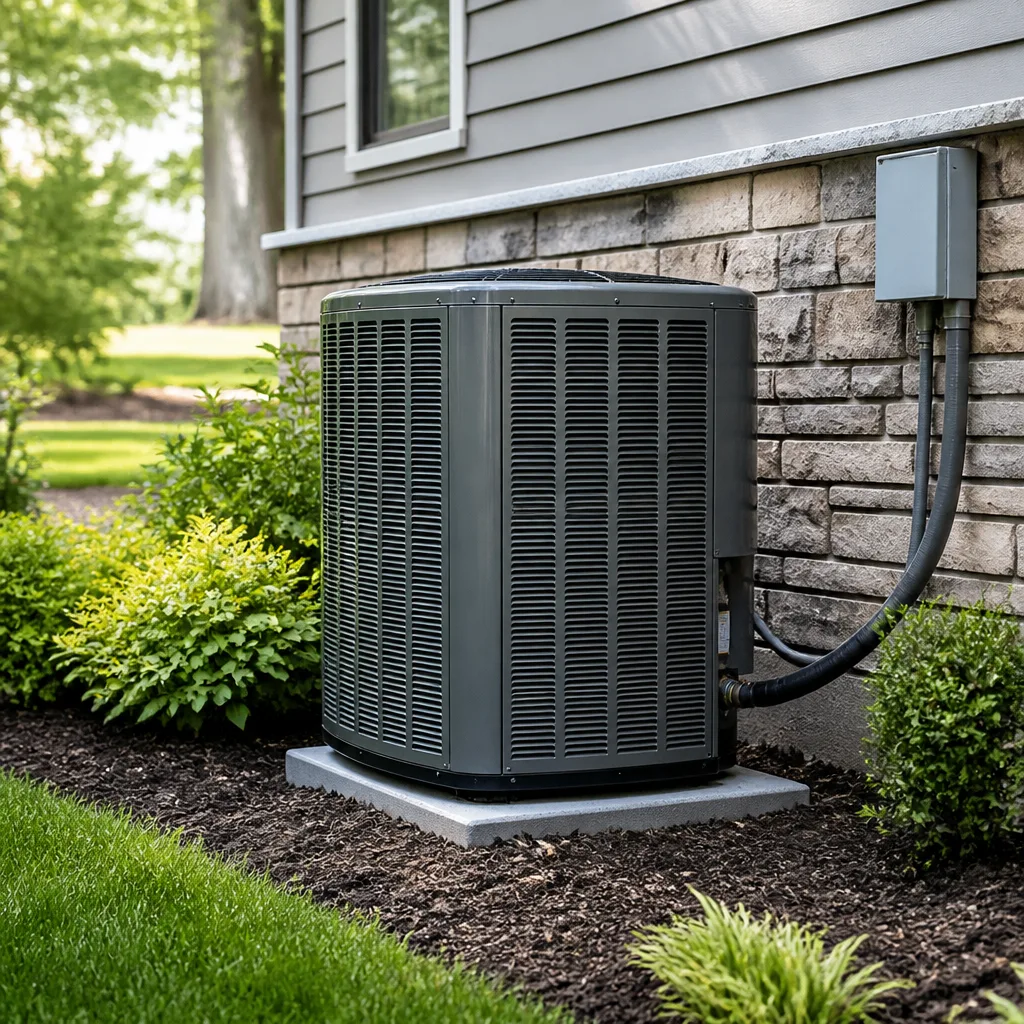 Trane
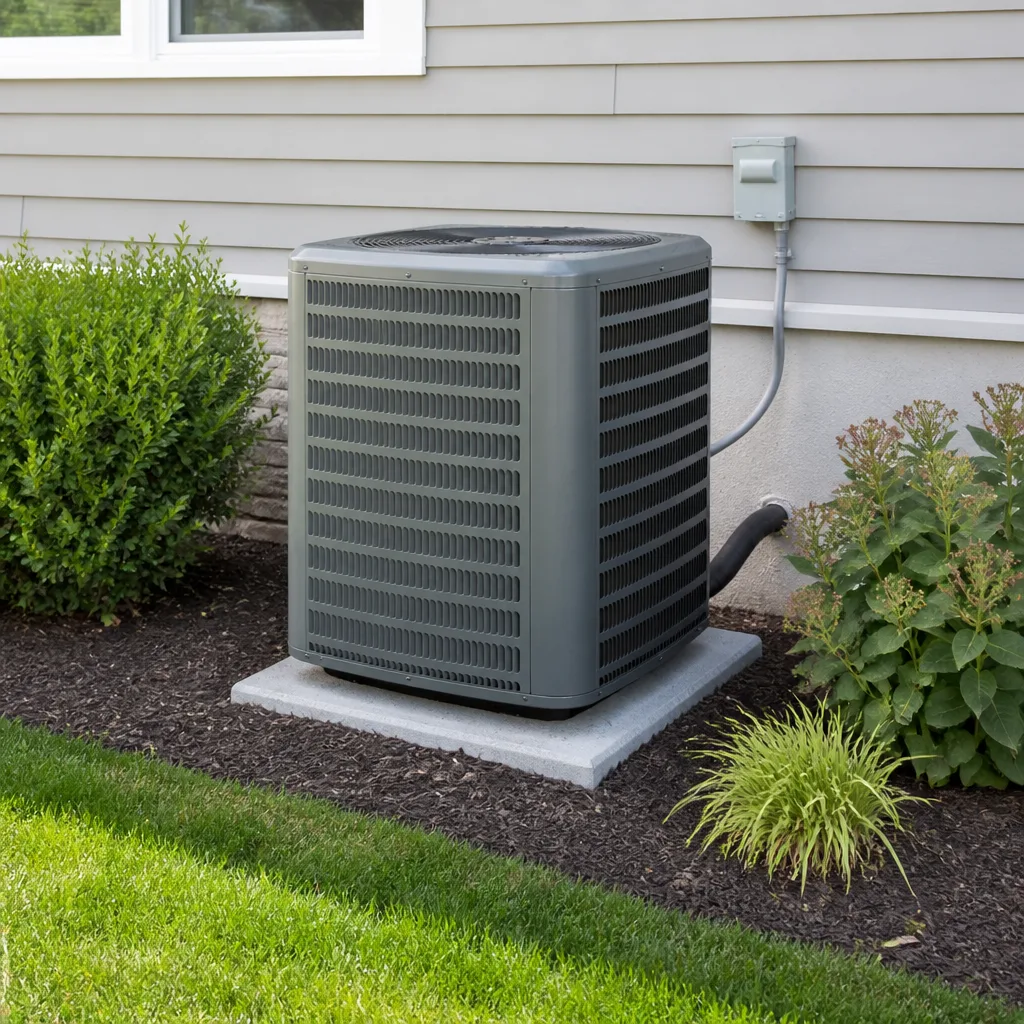 Goodman
Seasonal tune-up and full diagnostic on your Carrier, Trane, or Goodman system - readings shown to you before any repair is proposed
Diagnosis first, numbers second - you approve the repair price before a single part goes in.
Get your free estimateEmergency & Commercial HVAC Warning Signs Every Homeowner Should Know
A unit that’s starting to run three hours straight to keep the house at 75 in October, not July, October, is telling you something. By the time it quits cold on a June afternoon, that warning has been sitting there for eight months. Air conditioners rarely die without warning. They whine, they short-cycle, they smell, they blow air that’s five degrees warmer than it used to be. Most people just don’t know what they’re hearing because nobody ever pointed it out. This guide walks you through the warning signs in plain language, with the specific things we watch for on Spring Valley rooftops and in closets from Fort Apache to Rhodes Ranch.
Quick Answer
HVAC systems fail in slow motion. The warning signs are longer runtimes, a supply-return temperature split under 15 degrees, short cycling, oily residue on capacitors, failing contactors (a humming or clicking sound outside), plus smells and airflow changes that don’t match normal season startup. In a Spring Valley summer, a struggling system has less time between “warning” and “dead” than it would in a milder climate, so the window to catch these signs is compressed. Do a monthly check and you’ll catch 80 percent of emergency calls before they become emergencies.
Styles & brands we work with
- AC repair
- Furnace & heating
- Heat pumps
- Ductless mini splits
- Carrier
- Trane
- Goodman
Table of Contents
- The Sounds a Failing System Makes (Weeks Before It Dies)
- The Runtime and Temperature Split Test Any Homeowner Can Do
- Smells and Airflow: What’s Normal, What’s Not
- Why Spring Valley’s Heat Compresses the Warning Window
- Commercial System Warnings That Landlords Miss
- The Monthly 10-Minute Check That Catches 80 Percent of Problems
- When It’s Already an Emergency: Shut-Down Steps
The Sounds a Failing System Makes (Weeks Before It Dies)
Every capacitor and contactor in your condenser has a sound. When they start to fail, that sound changes, and it changes weeks before the system quits. The trick is knowing which sounds matter. In our experience, the four you don’t want to ignore are:
- A hard click-click-click from the condenser on startup. That’s usually a contactor that’s pitted or a capacitor that’s lost capacitance. It might start fine for weeks, then quit during a 108-degree afternoon.
- A low hum that goes on for 5 to 10 seconds before the fan spins up. On a healthy system, the fan and compressor kick in almost immediately. The long hum is the compressor straining to start against a weak capacitor.
- A metallic rattle from the fan cage or motor. Loose blades, worn bearings, or debris. Cheap to fix now, expensive after the motor seizes mid-summer.
- Buzzing from inside the wall or ceiling where a line set runs. Sometimes refrigerant lines vibrating against a stud. Sometimes the start of a bigger issue. Worth a look.
A Carrier or Trane condenser that’s been solid for a decade can start making these sounds inside one season. That doesn’t mean the whole system is done. It usually means a $10 part and a diagnostic. But if you wait, a weak capacitor can take the compressor with it, and now you’re looking at a repair three times the cost. We test the capacitor before anyone says the word compressor, every time. That’s the whole reason to listen.
The Runtime and Temperature Split Test Any Homeowner Can Do
You don’t need gauges or a laptop to know something’s wrong. You need a clock and a thermometer. Here’s the test:
- Pick a hot afternoon (95 or above in Spring Valley). Run the system normally for 20 minutes before testing.
- Read the return air at the intake grille (the big one in the hallway) using a cheap digital thermometer held there for a full minute.
- Read the supply air at the nearest register, again for a full minute.
- Subtract. A healthy split is 15 to 22 degrees. If the return reads 78 and the supply reads 68, that’s 10 degrees. Not enough.
- Time a cycle. A system that runs 20 minutes and rests 15 is normal. A system that runs 45 minutes, rests 5, and repeats is working too hard.
A 10-degree split means the system is losing capacity somewhere. Could be a dirty evaporator coil, low refrigerant, a failing blower, or a duct leak in an attic hitting 150 degrees. Those are different repairs. But every one of them is a warning sign you caught in October instead of a summer emergency. A split that drops from 20 to 12 over one season means the system is degrading. That’s the number to write down and compare next month.
Smells and Airflow: What’s Normal, What’s Not
When you fire up the system in May for the first time, a dusty smell for 20 minutes is fine. That’s the dust that settled on the heat exchanger or evap coil over winter burning off. Anything past the first day is a sign of a problem.
- Musty or dirty-sock smell means mold or mildew on the evap coil or in the ductwork. Spring Valley’s monsoon season pushes humidity up for a few weeks in July and August, and that’s when we see the most of it.
- A sweet, chemical smell near the condenser means refrigerant. That’s not a “let it ride” smell. That’s a leak and a call.
- Smell of hot dust or burning from the registers means the blower motor or a heat strip is failing. Shut it down, call someone.
- Airflow that changes (weak in one room, strong in another, or weaker everywhere) means a duct leak, a collapsed flex run under the house or in the attic, or a blower wheel that’s packed with debris.
One thing we hear a lot: “the AC works fine, but the back bedroom is always hot.” That’s an airflow warning, not a comfort quirk. Flex duct in a Spring Valley attic takes a beating from the heat, and a split seam in a run to the master bedroom is a common culprit. It’s also the kind of thing that gets worse quietly until the whole system is struggling.
Why Spring Valley’s Heat Compresses the Warning Window
A system in a mild climate can limp along on a weak capacitor for a full season. In Spring Valley, the same system gets about a third of that window. When your afternoon high is 112 and the attic is 155, a condenser that’s already working against a fading part has nowhere left to go.
We see it every June on units in Rhodes Ranch and the neighborhoods around Spring Valley High School. A homeowner tells us the system “was fine last summer.” What they mean is it was survivable. It was running 90 percent of the day and they didn’t notice because the house stayed cool enough. Then the first real 110-degree week hits and the system that was at the edge of failure all spring drops off the edge. Same system in San Diego would have coasted another two years.
Spring Valley also sits in a dust zone. The prevailing winds off the mountains and the construction in the southwest valley kick up fine dust that packs condensers faster than you’d expect. A condenser coil that’s 40 percent blocked can still cool on a 95-degree day. At 108, it can’t. That’s the compression. The failure is not sudden; it’s the same curve you’d see anywhere, it just hits the wall sooner locally.
If you want a fuller picture of what your system is doing season to season, the Ray’s Heating & Air Spring Valley home page is where we lay out how we look at systems before we quote anything.
Commercial System Warnings That Landlords Miss
Commercial equipment on a strip center or a small office building fails differently than a house, and the warnings show up in different places. Package units on a roof in Spring Valley see worse conditions than residential condensers (more sun, more wind-driven dust, no shade from a tree), and the signs are usually noticed by a tenant, not a facilities person.
- Tenants complaining about afternoon heat in one zone is the number one commercial warning sign. It means a package unit is losing capacity during peak hours. Catch it in May, fix the part in May. Catch it in August, close a business for two days.
- Rising electric bills month over month with the same thermostats means the equipment is working harder to hit setpoint. On a small commercial unit, that’s often a failing blower or a coil that needs a deep clean.
- Ice on the suction line or evaporator is a low-refrigerant or airflow warning. On a commercial rooftop, that usually means the filter rack hasn’t been changed in way too long or the coil is packed.
- Short cycling during occupied hours (unit on for four minutes, off for four) means the control board, thermostat, or safety switch is doing its job. It’s telling you to call somebody before the compressor locks up.
Commercial systems on Trane and Bryant rooftop units are among the more common we see in Spring Valley, and they’re generally forgiving. That’s the trap. They hide a problem longer than cheaper equipment, so the swing from “tenant hasn’t mentioned it” to “unit is down” is sharper.
The Monthly 10-Minute Check That Catches 80 Percent of Problems
This is the routine we recommend to every Spring Valley homeowner we visit. Ten minutes, once a month, from May through October. It catches the majority of the warning signs before they turn into an emergency.
- Listen to the outdoor unit for 30 seconds at startup. Click, hum, or rattle that wasn’t there last month is your signal.
- Look at the slab around the condenser. Water pooling is fine (that’s the condensate). Oil stains or an oily sheen on the pipes means a refrigerant leak.
- Check the condenser coil for dust. Rinse it gently from the inside out with a garden hose once a month in dust season. Don’t power-wash it; you’ll bend the fins.
- Change the filter. In Spring Valley dust, a 1-inch filter lasts about 30 days. A 4-inch cabinet filter gets 90 days. Don’t guess.
- Run the temperature split test from the section above. Write the number on the filter box. Compare month over month.
- Walk the house and feel every register. If one feels different from the rest, note it.
- Look at the thermostat history if yours has one (most smart thermostats do). Rising runtime is a yellow flag even if the house feels fine.
If the split drops two degrees or more in a month, that’s a call now, not later. If your runtime is creeping up and the afternoon high is still under 100, you’re in the warning window. That’s the cheapest time to fix it.
When It’s Already an Emergency: Shut-Down Steps
If the system is making a loud grinding sound, smoking, or tripping the breaker, stop using it. These are not warning signs anymore; they’re failure in progress.
- Turn the thermostat to OFF (not just fan-on; the whole system off).
- Flip the breaker for the air handler and the condenser at the panel. Two separate breakers in most homes.
- If it’s a gas furnace and you smell gas, get everyone out of the house and call your gas utility from outside first. Then call us.
- Don’t reset the breaker twice. A breaker that trips on startup is telling you something. Resetting it a third time can turn a $300 repair into a compressor replacement.
- For a system making a grinding sound at the outdoor unit, stop it at the breaker and leave it off. A fan blade striking a housing is not something to “watch for a day.”
If you’re not sure whether it’s an emergency or a warning, call us and describe what you’re hearing. We answer the phone around the clock with a live person, and we’ll tell you straight whether to shut it down or let it ride until morning. If the fix is something for AC repair and installation in Spring Valley, we handle it. If it’s heat-side, heating and furnace in Spring Valley is where we do that work.
Common Mistakes to Avoid
- Waiting until the house won’t cool at all. By that point, the warning signs have been there for months. In our climate, that’s the most expensive way to find out your capacitor was failing.
- Trusting the phone quote. A price given before anyone has looked at your system is a guess. The reading comes first, then the number. Anyone who quotes the compressor before testing the capacitor is guessing at your expense.
- Not changing the filter often enough in desert dust. A clogged filter in Spring Valley at 112 degrees is the leading cause of frozen coils and locked-up blowers we see. Set a reminder on your phone for the first of every month.
- Ignoring “the AC is fine, the back room is just hot.” That’s an airflow warning, usually a collapsed flex duct in the attic. It gets worse quietly.
- Power-washing the condenser coil. It bends the fins and cuts efficiency. Rinse gently from inside out with a hose, once a month.
- Resetting a tripping breaker more than once. Breakers are safety devices, not annoyances. If it trips twice, something is wrong.
- Assuming last summer’s performance is this summer’s baseline. Write down the temperature split each month. The number is the truth, not the memory.
See the difference
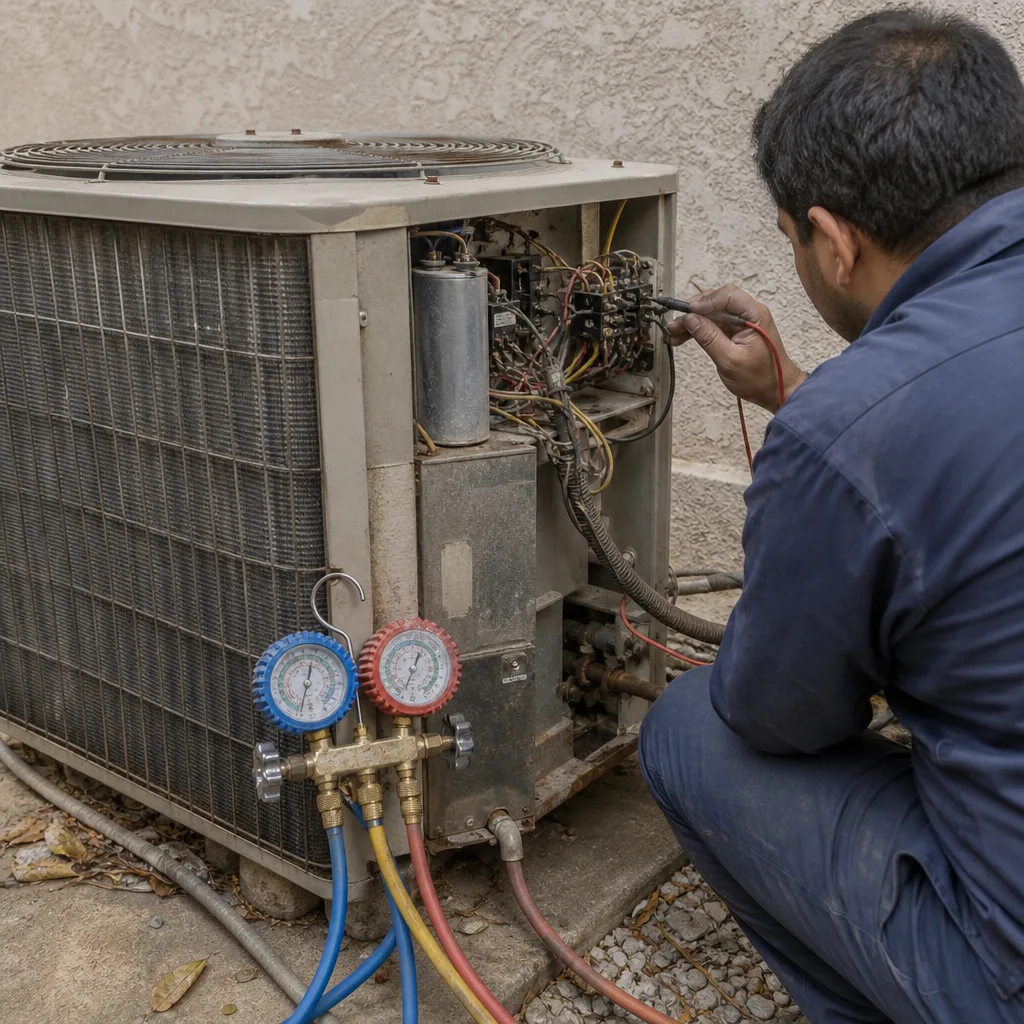 Before
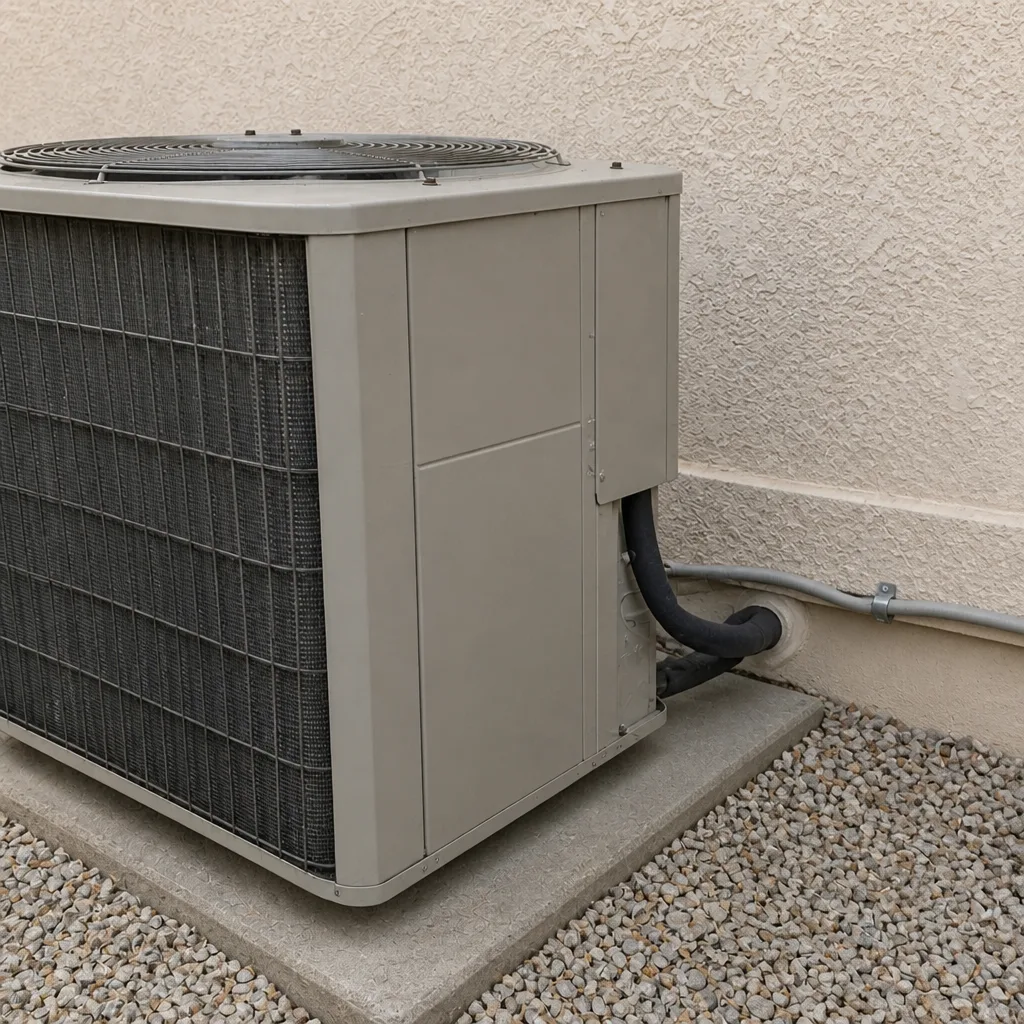 After
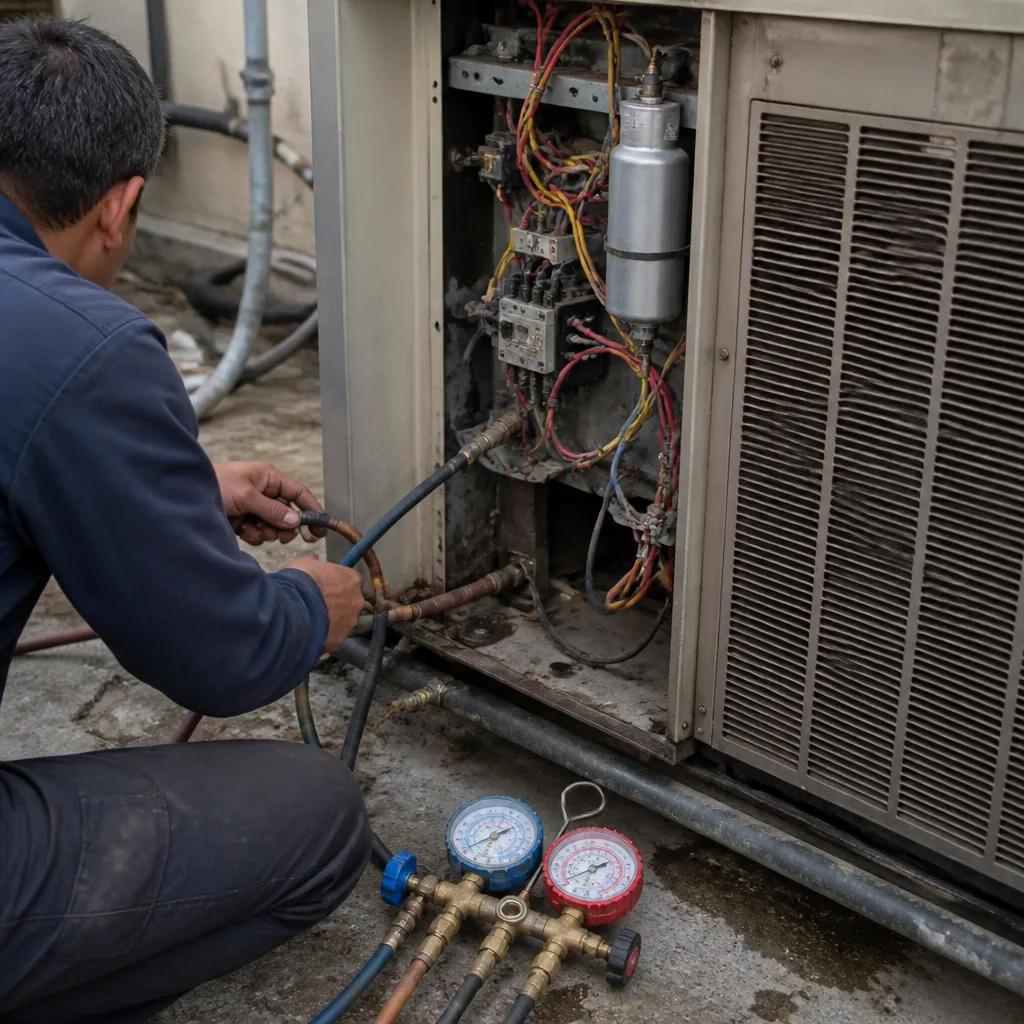 Before
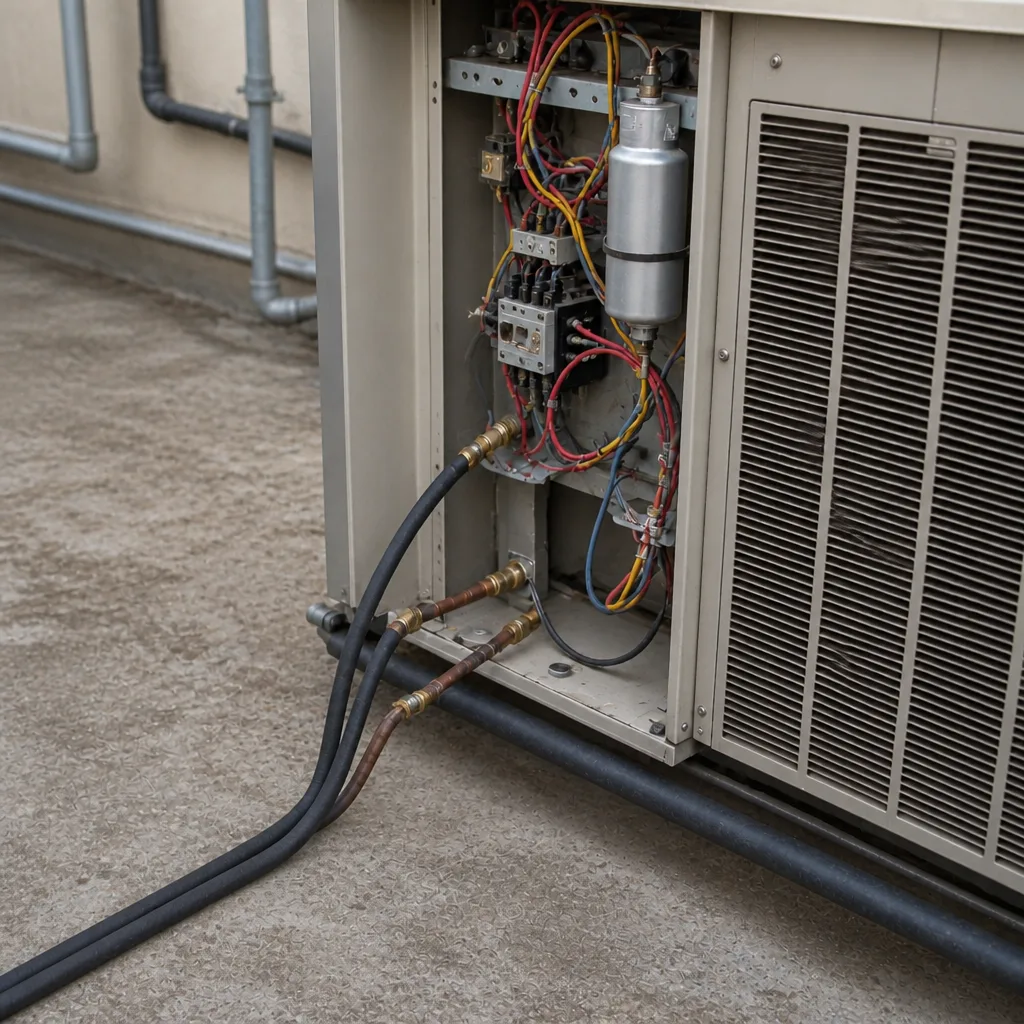 After
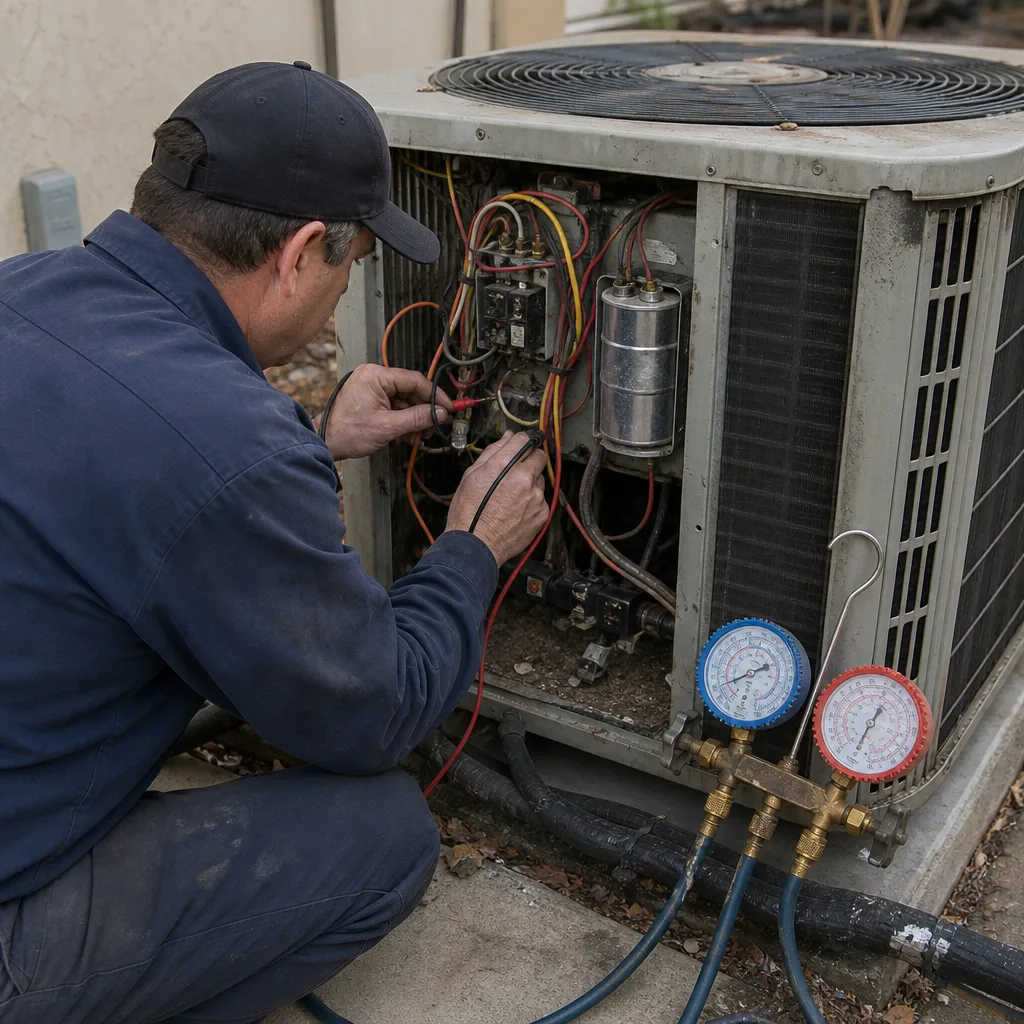 Before
 After
When to Call a Professional
Call us when you hear the click-click-click at startup, when your temperature split drops below 15, when the outdoor unit hums and won’t start, or when a commercial tenant reports a hot zone that wasn’t hot last month. Call when you smell refrigerant, when the breaker trips twice, or when a furnace is making noise you’ve never heard before. And call before the first 110-degree week, not during it, because that’s when every homeowner in Spring Valley finds out at once. Ray’s Heating & Air Spring Valley offers free estimates in Spring Valley, and the number is (833) 620-7288. You’ll get a live person, day or night. Any estimate gets a free second opinion, and inside the county there’s no trip charge.
Frequently Asked Questions
Most residential systems give you two to eight weeks of clear warning signs before full failure, but in Spring Valley that window narrows to a few weeks once summer peaks because the equipment has no headroom at 110 degrees. A weak capacitor can run a system for weeks in May and take it out in one afternoon in June. If you’re hearing startup clicks or the temperature split is dropping, the clock is already running.
It means the system is at the edge of its capacity and you’re probably one hot week away from a failure. Constant running with a cool house usually points to a dirty condenser coil, a failing capacitor, low refrigerant, or duct leaks in the attic. Read the temperature split. If it’s below 15, call us at (833) 620-7288 and we’ll test the parts before we quote anything.
They change season to season, and the manufacturers (Carrier, Trane, American Standard, among others) run promotions at different times of year. When replacement is the answer, we walk through what’s available at the time and handle the paperwork so you’re not chasing it. A failing system caught early is often a repair, not a replacement, so get the diagnosis first. Call us and we’ll tell you which side of that line you’re on.
That’s a capacity loss warning, and it’s usually the first sign a package unit is struggling. Common causes are a packed evaporator coil, a failing blower motor, a refrigerant leak, or a control board that’s short-cycling. Spring Valley rooftop units take more sun and dust than residential condensers, so they lose efficiency faster than people expect. Get it looked at before the tenant escalation meets the first really hot week.
Twice a year is the standard: once in spring before cooling season, once in fall before heating season. Do the 10-minute monthly check yourself in between. The homeowner check catches most warning signs, and the professional tune-up catches the rest. We’ll test, clean, and give you readings, not just a sale.
Sometimes. If the parts test clean and the readings are steady, yes. But “ride it out” in a Spring Valley July means you’re gambling on a system that’s already telling you it’s tired. The cost of a pre-summer repair is almost always lower than the emergency call in the middle of the heat. For heat pumps and mini-splits, our heat pump and mini split in Spring Valley team can look at those specific systems. For everything else, (833) 620-7288 gets you a live person.
The Bottom Line
Every emergency HVAC call starts as a warning sign, and the warning signs in Spring Valley show up differently than the ones in a generic guide. Listen for clicks and hums at startup. Run the temperature split test every month. Watch the smells and airflow. Do the 10-minute check from May through October and you’ll catch most failures before they happen. If something’s off, don’t wait for the first 110-degree week. Call, describe what you’re hearing or smelling, and let the readings tell the story. Your system tells you what’s wrong. We just listen first.
Ray’s Heating & Air Spring Valley covers AC repair and installation, heating and furnace service, heat pumps and mini-splits, air quality, and emergency and commercial HVAC for all major brands (Carrier, Trane, Lennox, Goodman, Rheem, York, Daikin, Bryant, American Standard). Every heating and cooling job carries the 90-Day Done Right Promise in writing. For a free estimate in Spring Valley, call (833) 620-7288. You’ll get a live person around the clock, and a name and a license you can verify.
Written by the team at Ray’s Heating & Air Spring Valley.