
Last updated November 18, 2026
 Heat pumps
 AC repair
 Furnace & heating
 Ductless mini splits
 Carrier
 Trane
 Goodman
Seasonal tune-up and full diagnostic on your Carrier, Trane, or Goodman system - readings shown to you before any repair is proposed
Diagnosis first, numbers second - you approve the repair price before a single part goes in.
Get your free estimateHow Long Does Heat Pump & Mini Split Take? Timelines and What to Expect
A single-zone mini-split install takes us about four to six hours on a straightforward job. The permit to do that same job legally in Clark County takes three to ten business days. That gap is where most homeowners get frustrated, and it’s why the ads showing a system running by dinner leave out the part that actually matters. Multi-zone projects, panel upgrades, and inspection scheduling can stretch a “one-day” install into a week-long project. This guide maps every honest scenario – single-zone, multi-zone, electrical surprises, permit waits, parts lead times – so nothing catches you off guard on a job in Spring Valley or anywhere in the valley.
Quick Answer
Single-zone mini-split installation takes four to six hours of actual work, but plan on three to ten business days for the Clark County permit before we can legally start. Multi-zone systems (two to five heads) run one to three days on site once the permit clears, and a needed electrical panel upgrade adds another day or more. A full heat pump replacement typically takes one to two days of installed work, scheduled after a load calculation and equipment order.
Styles & brands we work with
- AC repair
- Furnace & heating
- Heat pumps
- Ductless mini splits
- Carrier
- Trane
- Goodman
Table of Contents
- Single-Zone Mini-Split: The Four-Hour Job With a Ten-Day Permit
- Multi-Zone Systems: Two to Five Heads Is a Different Project
- The Clark County Permit and Inspection Timeline, Step by Step
- When Your Electrical Panel Needs an Upgrade
- Equipment Lead Times in Las Vegas
- The First 48 Hours After Install: What’s Normal
- Heat Pump Replacement Timelines
- How Long Until Rated Efficiency Shows Up
Single-Zone Mini-Split: The Four-Hour Job With a Ten-Day Permit
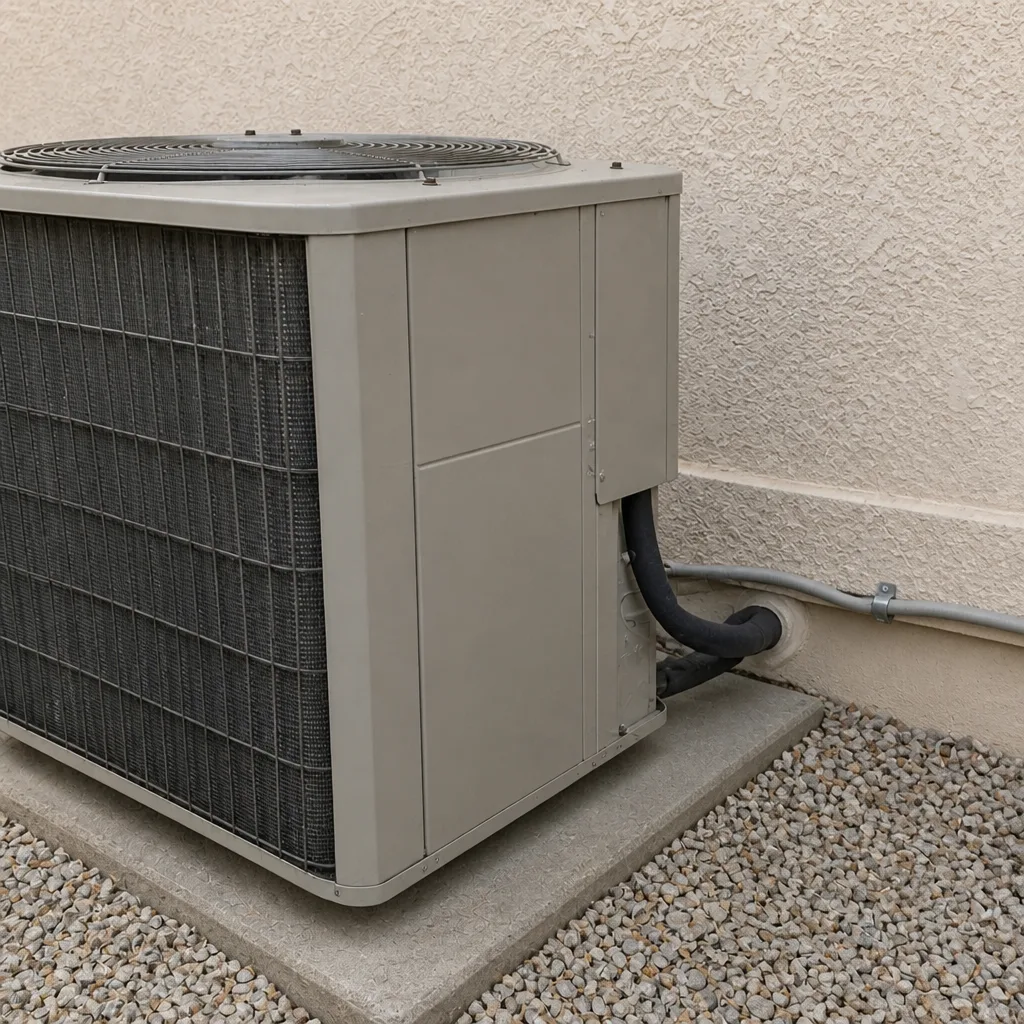
A single-zone mini-split – one outdoor unit, one indoor head – is the fastest HVAC install there is. On a clean job, the person at your door spends four to six hours total: setting the outdoor condenser, mounting the indoor head, running the line set and drain, pulling the electrical whip, vacuuming the lines, and charging the system. That’s the work. That’s the part the ads show.
The part they skip is the paper. In unincorporated Clark County, mechanical permits for mini-split work go through the county building department, and the wait varies with their workload. We’ve seen permits turn around in three business days and we’ve seen them sit for ten. Spring Valley sits mostly in unincorporated Clark County, so that’s the clock most of our neighbors are on. Permits are not optional, and any contractor who tells you they’ll “just install it” is setting you up for a problem at resale or a failed inspection later.
The realistic single-zone calendar looks like this:
- Day 1: Site visit, load calculation, written estimate, signed contract.
- Days 1 to 10: Permit application and county review (average four to seven business days).
- Day of install: Four to six hours of on-site work.
- Within days of install: County inspection scheduled and passed.
Add a day of buffer if the indoor head location needs a wall penetration that wasn’t obvious at the first visit, or if the line set run is long and the drain needs a pump. Most single-zone jobs in Spring Valley – the older single-story homes off Desert Inn and the stucco ranches near Tropicana – go in clean. The permit is still the pacing item.
Multi-Zone Systems: Two to Five Heads Is a Different Project
Two heads isn’t twice the work of one – it’s a different project. A multi-zone system means one outdoor unit with a branch box or multiple line sets feeding two to five indoor heads, and every one of them needs its own location, its own drain, its own electrical, and its own wall penetration. In our experience, a two-zone job runs six to eight hours on site, three zones runs a full day, and four to five zones runs two days, sometimes three if the line set runs go through difficult attic or chase space.
Why it stretches:
- Line set routing. Each additional head means another pair of copper lines from the outdoor unit to a room that may be on the far side of the house. Long runs mean more drilling, more outdoor line hide, more time.
- Drain paths. Every indoor head needs a condensate drain that actually drains. In a two-story Spring Valley home with heads on the second floor, that often means a condensate pump per head, which adds time.
- Electrical. Each head draws a small amount of power, but the outdoor unit for a four-zone system is a bigger load than a single-zone condenser – sometimes 30 amps or more, which is where panel capacity comes into play.
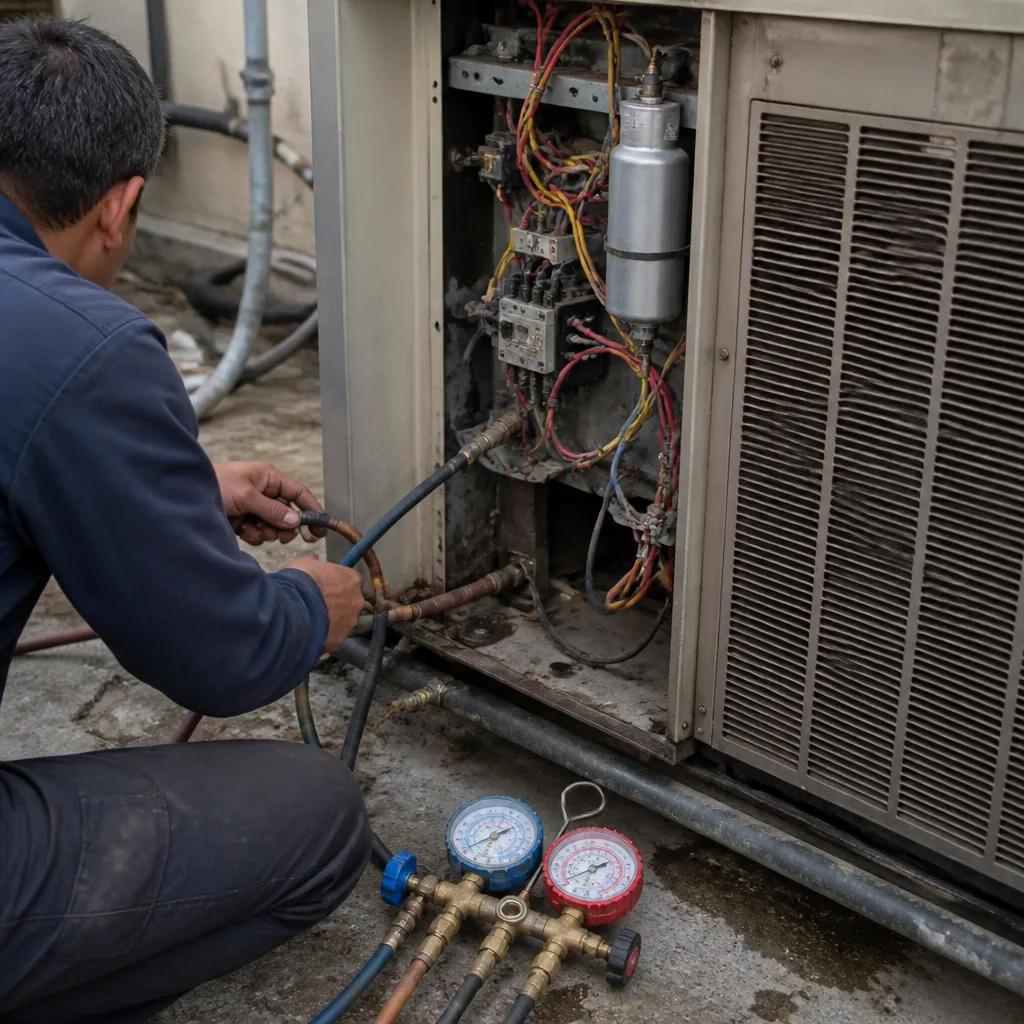
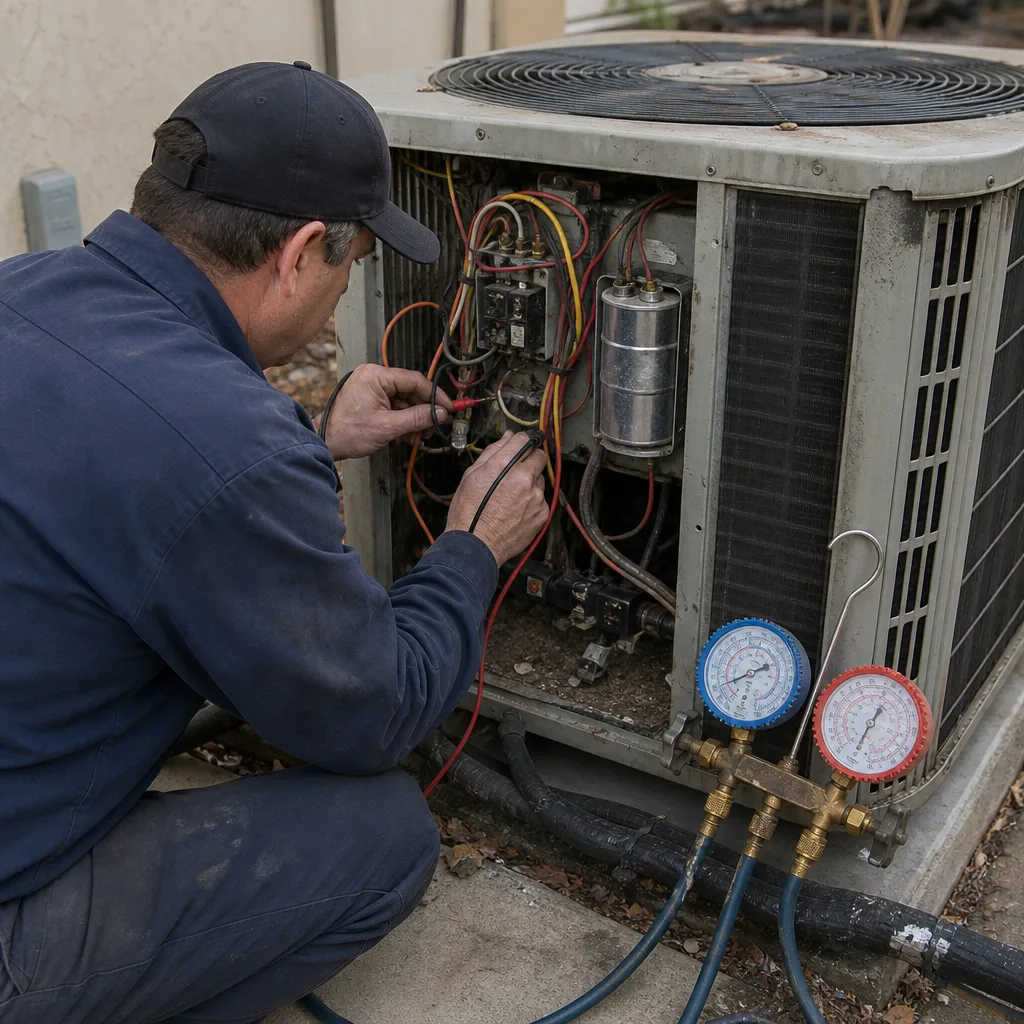
- Refrigerant charging. A multi-zone system has to be charged zone by zone and verified with gauges at each head. That’s an hour or two of the job on its own.
The permit for a multi-zone system goes through the same county process, so the calendar looks like single-zone plus the extra install days. If you’re comparing bids on a Spring Valley multi-zone quote and one number is dramatically lower than the rest, ask what’s not in it – panel work, line hide, condensate pumps, and permit fees are the usual missing pieces. You can see how we scope this work on our Heat Pump & Mini Split in Spring Valley page.
The Clark County Permit and Inspection Timeline, Step by Step
Here’s the full paper trail, because this is the part nobody explains and it’s the part that decides your calendar.
- Contractor submits the application. That happens the day you sign, if you sign early in the day. The county needs the equipment make and model, the location of the units, the electrical details, and the load calculation.
- County review. Clark County runs three to ten business days on mechanical permits depending on volume. This step is out of our hands.
- Permit issued. Now – and only now – the install is legal to begin.
- Install day(s). Four to six hours for single-zone, one to three days for multi-zone.
- Inspection requested. The contractor calls for inspection once the install is complete and the equipment is running.
- Inspection. Usually scheduled within a few business days. The inspector looks at the equipment placement, the electrical connections, the refrigerant line routing, and the condensate drain.
- Pass or rework. If it passes, you’re done. If not, the contractor fixes the issue and requests a re-inspection.
The most common reasons a mini-split inspection fails in Clark County:
- Missing or improper condensate drain termination. The drain has to terminate where the code says, not just drip onto a sidewalk or into a wall cavity.
- Equipment too close to a property line or window. Outdoor unit setbacks are real, and a condenser set two feet from a neighbor’s fence is a fail.
- Electrical connections not in a proper disconnect or not properly bonded.
- Line set not properly supported or protected where it penetrates a wall.
- Load calculation missing or mismatched to the equipment installed.
None of these are hard to get right if the contractor knows the code. They’re all hard to fix after the fact, which is why the permit should be the first thing on the schedule, not an afterthought. If you want to understand the seasonal context for this kind of work in the valley, our Ray’s Heating & Air Spring Valley home page lays out when the busy months hit. We’re happy to walk through a permit timeline for a Spring Valley job at (833) 620-7288 before you commit to anything.
When Your Electrical Panel Needs an Upgrade
Here’s the scenario that turns a one-week project into a two-week project: your panel doesn’t have the capacity the new system needs. Older Spring Valley homes – especially anything built before the mid-1980s – often have a 100-amp panel that’s already close to full. Add a multi-zone heat pump condenser pulling 30 amps and the math doesn’t work. The panel has to be upgraded before the system can go in.
A panel upgrade is not something the HVAC contractor usually does. That’s an electrician’s job, and it adds time to the project:
- The upgrade itself: typically one day of an electrician’s time plus a permit of its own.
- The electrical permit: same county process, similar wait, sometimes longer than the mechanical permit.
- Utility coordination: if the service drop or meter base changes, the utility has to schedule a disconnect and reconnect. That’s usually a few days’ lead.
- Sequencing: the panel work has to finish before the HVAC install can start, so you can’t run them in parallel on the same day.
Realistic total: add three to seven business days to the project for a panel upgrade, sometimes more if the utility scheduling is tight. The reason this matters is that some contractors skip the panel math and just install on what’s there. The system runs, and then it trips breakers in July when the whole house is drawing. We’ve been called to Spring Valley homes exactly that way – the “installer” who showed up last summer is unreachable and the homeowner is calling us for a second opinion. That’s part of why we test readings first and hand you numbers second. If a quote doesn’t mention your panel capacity, ask the contractor to check it before they order anything.
Equipment Lead Times in Las Vegas
Equipment availability affects scheduling as much as the permit does. The distributors in Las Vegas typically stock the common sizes and the common brands. That’s good news on a straightforward job – a Carrier, Bryant, or American Standard single-zone system in a standard size is usually on the shelf and picked up the same day or next.
Where it gets slow:
- Oversized or unusual-tonnage condensers. A 4- or 5-ton heat pump in a less common configuration may need to be ordered, one to two weeks.
- Specific efficiency tiers. Higher-efficiency inverter equipment is sometimes stocked less deeply than the standard tier. One to two weeks if it’s not on the floor.
- Matching indoor heads. A multi-zone system where you want specific head capacities in specific rooms sometimes requires ordering individual components – a week is common.
- Shoulder-season and summer stock pressure. When a heat wave rolls through, distributors sell down the popular sizes fast. If we’re ordering during a June or July shortage, add a week.
The practical takeaway: if you’re scheduling in April or October, equipment is usually ready and the only clock is the permit. If you’re scheduling in July, the equipment lead time can be the deciding factor, so getting the order placed early matters more than getting the install date locked. We’ve seen jobs in Spring Valley slip a full week waiting on a compressor that was three days late from the distributor – that’s not something anyone can promise away, but it is something you should know about before you sign.
The First 48 Hours After Install: What’s Normal
Once the system is running, most homeowner anxiety in the first two days is about things that are actually working correctly. Here’s what’s normal after a mini-split or heat pump install:
- A slight hiss or whoosh at startup. The refrigerant is still stabilizing after the charge. Normal.
- The indoor unit sounds louder than expected for the first day. A new blower running in a brand-new cabinet, plus the gurgle of condensate draining, settles within a day or two.
- The outdoor unit cycling on and off more often than you’d expect. Inverter systems modulate, but at startup a system will run through a few cycles to find its balance point. Normal.
- Condensation on the outdoor unit or the line set. In a Las Vegas summer, condensation on the outdoor coil and line set is expected. It’s not a leak.
- The system feeling “not cold enough” on day one. A heat pump in cooling mode can take a few cycles to pull a warm house down. Give it 24 to 48 hours before you judge.
- A faint musty smell the first day. New equipment off-gassing plus the drain trap filling. Dissipates.
What’s not normal: water pooling on the floor or ceiling, a breaker that trips more than once, the outdoor unit running continuously without a break for hours in mild weather, or the indoor head freezing up. Any of those mean calling. If you see them, don’t wait for the inspection – call us at (833) 620-7288 and we’ll take a look. And if you’re wondering how this all fits with the rest of your HVAC picture, our AC Repair & Installation in Spring Valley page covers cooling-side maintenance and repair.
Heat Pump Replacement Timelines
Replacing an existing heat pump is a different scheduling reality than a fresh mini-split install. The good news on a straight swap: the existing line set, electrical, and pad often stay in place, so on-site time is shorter – typically one to two days of installed work for a standard single-system swap. The bad news: it’s still a load-calculated, ordered, permitted job, and none of that happens same-day.
Here’s the sequence we run in Spring Valley:
- Load calculation and site visit. We measure the house, check the existing ductwork, check the panel, and put the sizing numbers in writing.
- Written fixed price. You see the readings and the price before anything is ordered. If the existing system was oversized, this is where you find out – a lot of heat pumps in homes built before 1990 were sized on rules of thumb, not on the house.
- Equipment order. Same-day to one or two weeks depending on availability, as covered above.
- Permit. Three to ten business days.
- Install. One to two days on site.
- Inspection and follow-up. A few days after install.
Emergency heat pump failures don’t fit the timeline above, and we treat those separately. If your heat pump has died in July or your system won’t hold heat in January, call. We keep the phones answered around the clock – a live person, including at two in the morning – and we can get an emergency repair or temporary cooling plan moving while the replacement is scheduled. Our Heating & Furnace in Spring Valley page covers the heating side of the same picture. The important thing: don’t let anyone tell you a full system replacement happens same-day. It doesn’t, and a contractor who says it does is either cutting the permit or cutting the load calculation.
How Long Until Rated Efficiency Shows Up
The rated efficiency number on the box (SEER2 on a heat pump or mini-split) is a lab number. In a real Spring Valley home, you’ll see it gradually. On a new mini-split, the first two to three cycles are usually a stabilization period – the system is pulling down the initial heat load. Real efficiency numbers show up over the first two to four weeks of regular use, and the biggest single factor is whether the system was sized to your actual house, not to a rule of thumb.
What you should expect month by month:
- Week 1: System is running and comfortable. Bills may still look like last month’s because the cycle started mid-month.
- Weeks 2 to 4: First full billing cycle. This is where you see the real comparison against last year’s same month.
- Month 2 onward: Numbers stabilize. If efficiency didn’t move and the old system wasn’t failing, the sizing is worth rechecking.
- Seasonal context: Comparing a July bill to an October bill tells you nothing. Compare same-month, year over year.
One thing we look at during a first-visit call in Spring Valley: if the previous system was oversized, the new correctly-sized system will feel slower to cool a hot house on the first cycle, and that’s fine – it’ll run more efficiently once it’s caught up. If the previous system was undersized, the new one will feel dramatically better on day one. Both scenarios are normal, and both are worth understanding before you judge the new system by week one.
Common Mistakes to Avoid
- Starting the install before the permit clears. A contractor who wants to “get started and file the permit Monday” is setting you up for an inspection fail or a resale problem. Wait for the permit. We do.
- Skipping the load calculation on a heat pump. A heat pump sized on square footage alone is a coin flip in a Spring Valley summer. If a quote doesn’t show a room-by-room load calculation, ask why.
- Ignoring the panel. A multi-zone system on a 100-amp panel with a full breaker box is a future breaker trip. Have the panel capacity verified before you order equipment, not after.
- Assuming a multi-zone system is a single-day install. It isn’t. A two-head system typically takes a full day; four heads takes two. Plan for that in your calendar.
- Panicking at day-one sounds. Startup refrigerant stabilization, drain gurgle, and a slight blower-noise difference are all normal. Wait 48 hours before calling – except for water, tripped breakers, or freeze-ups, which you should call on immediately.
- Comparing monthly bills across seasons. A July bill next to an October bill is not a fair comparison. Compare same-month, year over year, and look at the actual usage, not just the total.
- Taking a “no permit needed” quote seriously. In unincorporated Clark County, mechanical work of this size needs a permit. Period.
See the difference
 Before
 After
 Before
 After
 Before
 After
When to Call a Professional
If you’re planning a mini-split or heat pump project, the right time to call is before you’ve signed anything – a lot of the frustration we see in Spring Valley could have been solved by a five-minute phone call about permit timelines and panel capacity. If your existing system is failing and you’re weighing repair against replacement, that call is urgent. If you’ve got water pooling, a breaker tripping more than once, or an indoor head freezing up, that’s an emergency – those don’t wait for a scheduled visit. And if you’ve gotten a written quote and you’re not sure whether the panel math adds up, we’ll take a second look at no charge. We also handle the heating side – if you’re trying to sort out a furnace or heat pump issue in the middle of a cold snap, don’t sit on it.
Ray’s Heating & Air Spring Valley offers free estimates in Spring Valley – call (833) 620-7288. A live person answers, any hour.
Frequently Asked Questions
Four to six hours of on-site work, once the permit clears. The Clark County permit itself takes three to ten business days, so the realistic calendar from signed contract to system running is about one to two weeks. Call (833) 620-7288 for an exact timeline on your Spring Valley home.
One to three days on site, depending on the number of zones. A two-zone system is usually a full day; four to five zones runs two days, sometimes three if the line set routing is difficult. The permit wait is the same as single-zone and typically adds one to two weeks to the total calendar.
Yes. Unincorporated Clark County requires a mechanical permit for mini-split and heat pump installation, and an inspection after the work is complete. The permit is not optional and it’s the pacing item on the project calendar. A contractor who offers to skip it is offering to create a problem for you.
The install itself, yes – a single-zone system is a one-day job. Getting to install day is the part that takes time. The county permit waits three to ten business days, and equipment lead time can add more if the size and brand you want isn’t in local stock. Plan on a week to two weeks from contract to running system.
Two to four weeks of regular use before the numbers stabilize, and the first full billing cycle is the first meaningful comparison point. Compare same-month, year over year. If you’re not seeing improvement by month two and the old system wasn’t failing on its own, the sizing is worth rechecking.
Add three to seven business days to the project. The panel upgrade is an electrician’s job with its own permit and its own scheduling, and it has to finish before the HVAC install starts. In older Spring Valley homes on 100-amp panels, this comes up more often than people expect.
The Bottom Line
The honest answer to “how long does a heat pump or mini-split take” is two timelines running in parallel: the work, and the paper. The work is four to six hours for a single-zone mini-split, one to three days for multi-zone, one to two days for a heat pump swap. The paper is three to ten business days for the Clark County permit, plus one to two weeks of equipment lead time if what you want isn’t on the distributor’s shelf. Add a week for a panel upgrade if it’s needed. Plan for the full calendar, not just the install day, and nothing about the project will surprise you. If you’re in Spring Valley and want a real timeline on your actual house, call us and we’ll put the numbers in writing.
Get a Free Estimate
We’d rather talk through your project before you’ve signed anything than after. Free estimates on every job, and a free second opinion on any written quote you’ve already received. Call (833) 620-7288 for a straight answer on what your project will actually take.
Written by the team at Ray’s Heating & Air Spring Valley.