
Last updated November 18, 2026
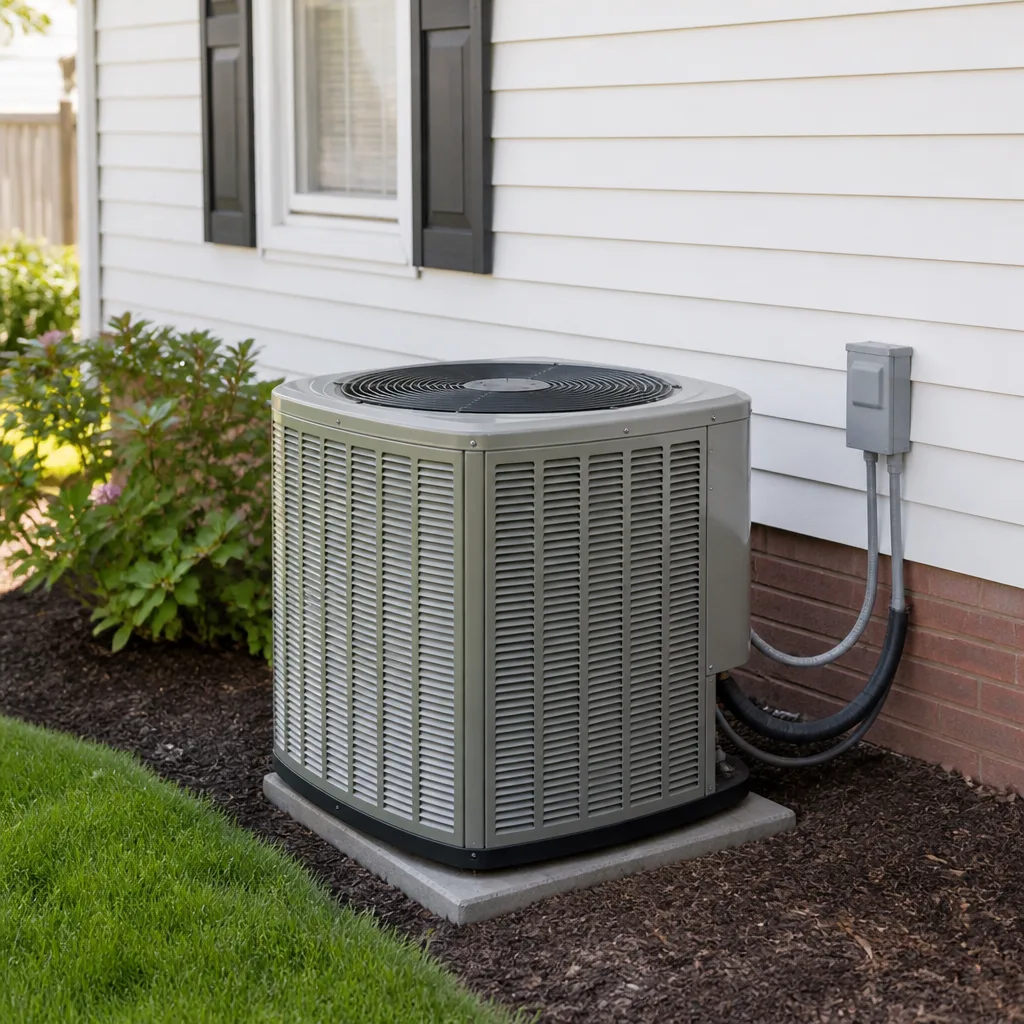 AC repair
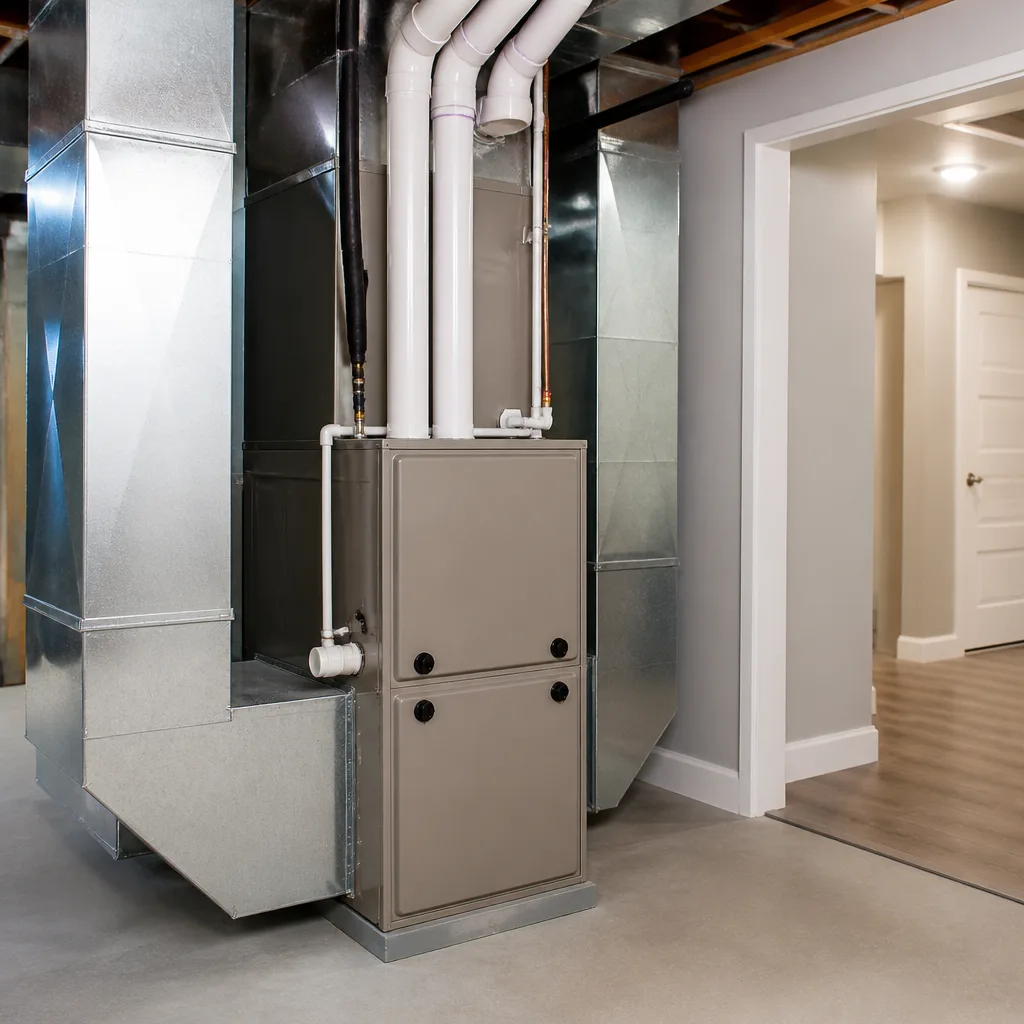 Furnace & heating
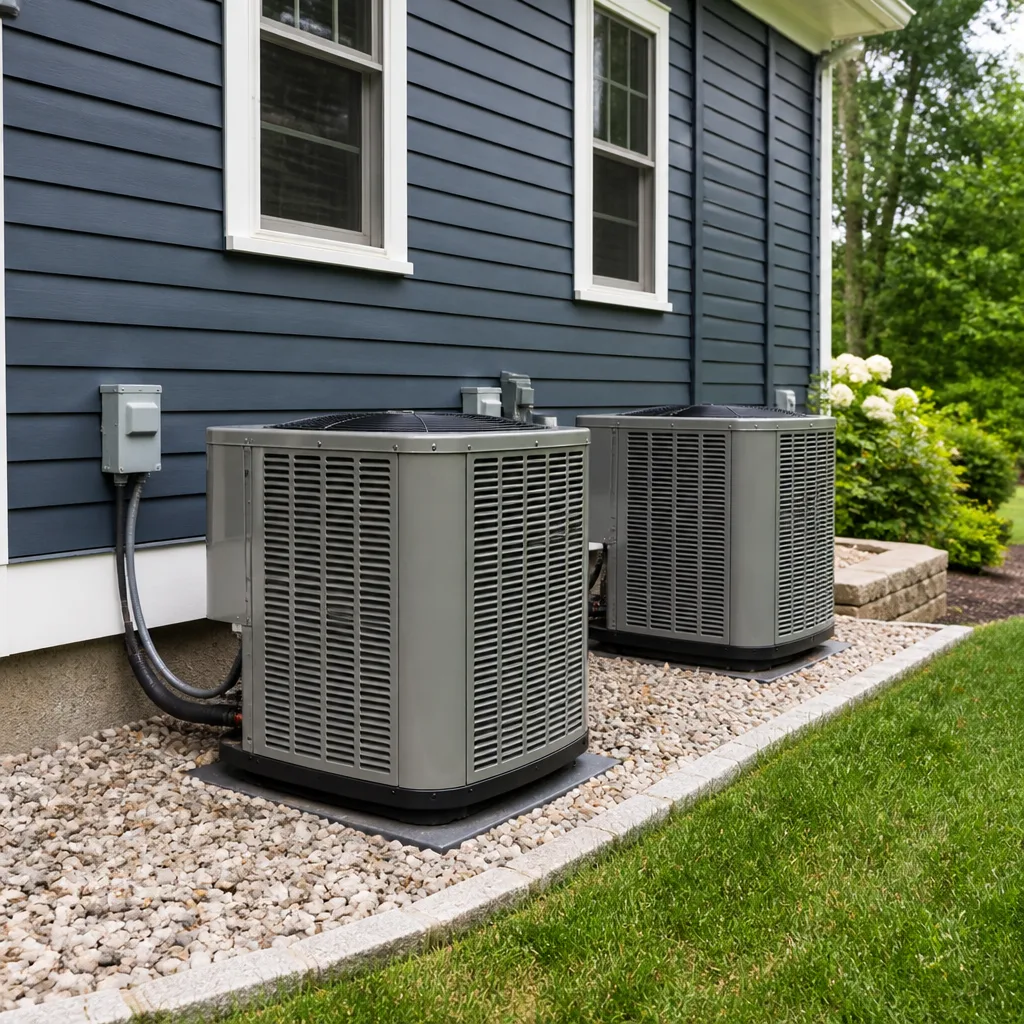 Heat pumps
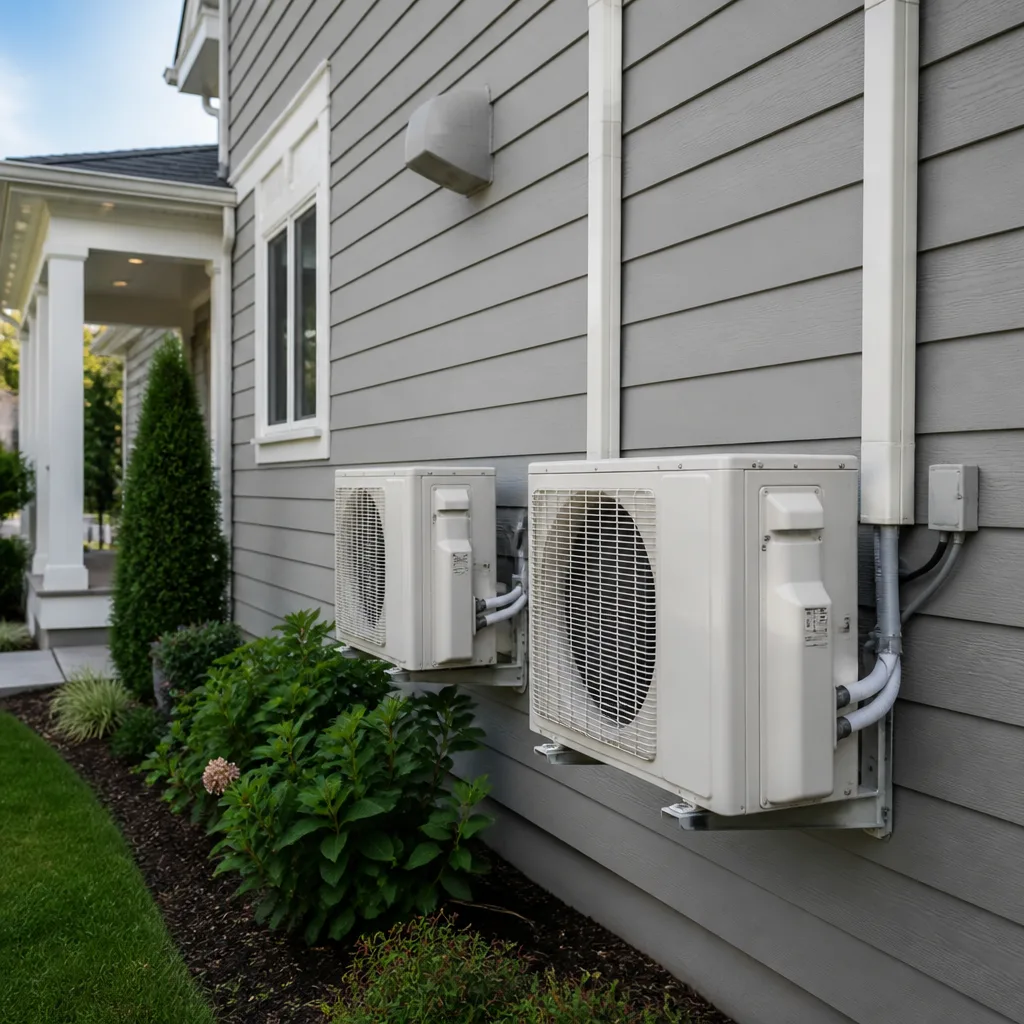 Ductless mini splits
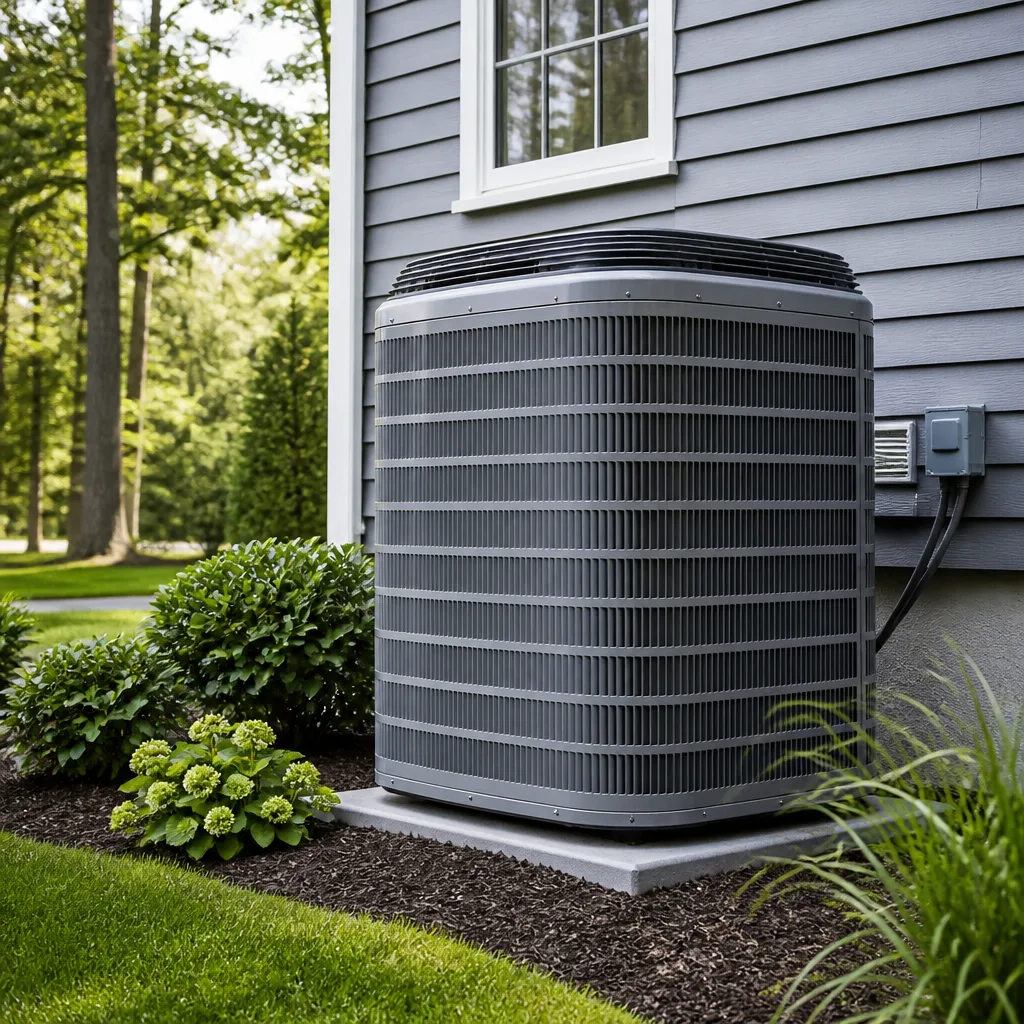 Carrier
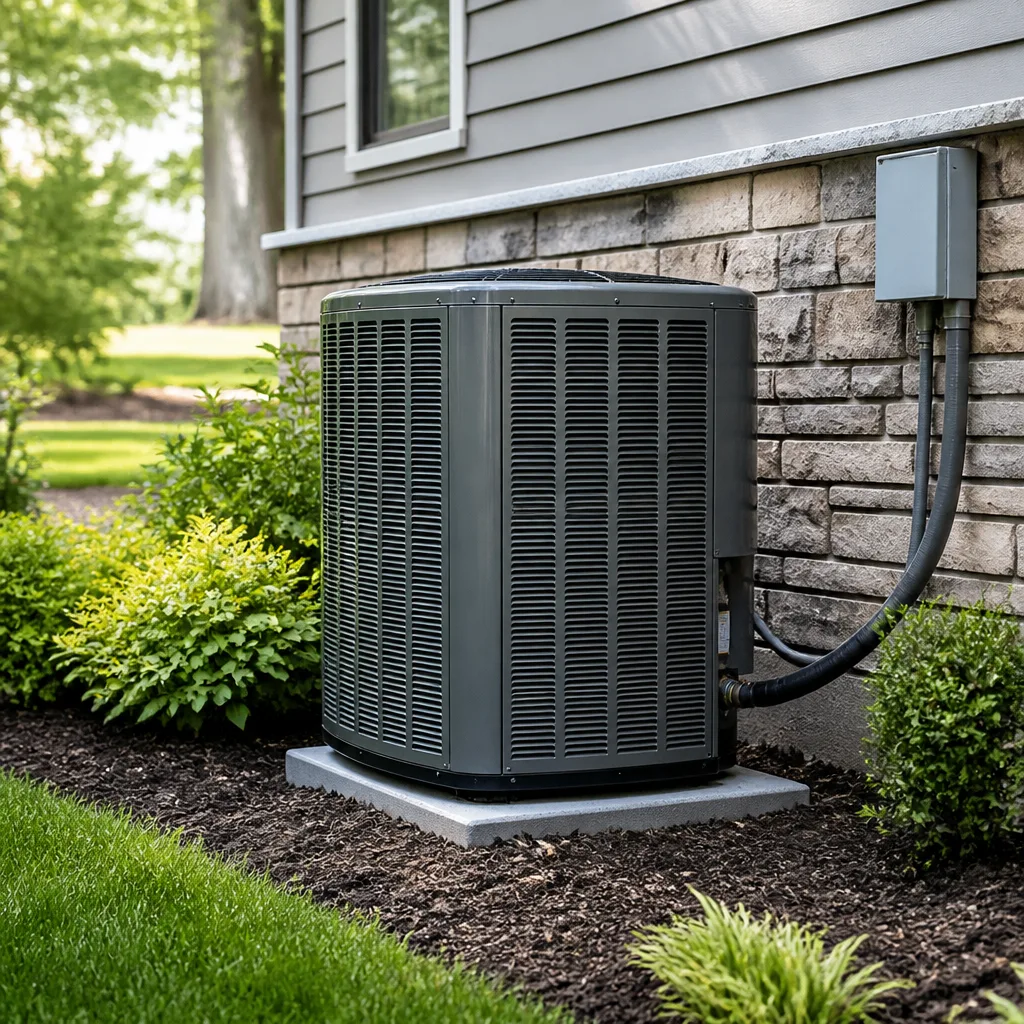 Trane
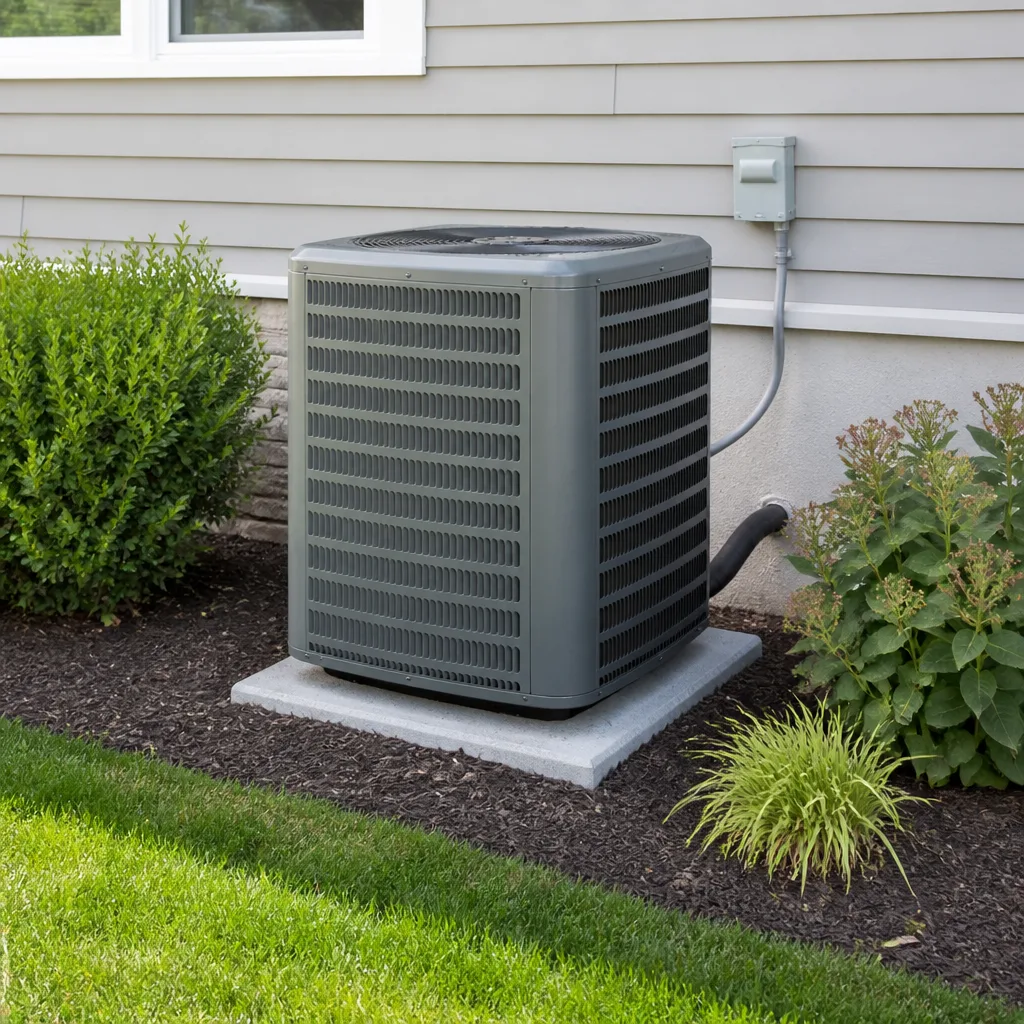 Goodman
Seasonal tune-up and full diagnostic on your Carrier, Trane, or Goodman system - readings shown to you before any repair is proposed
Diagnosis first, numbers second - you approve the repair price before a single part goes in.
Get your free estimateHow Long Does AC Repair & Installation Take? Timelines and What to Expect
A straightforward AC installation takes four to six hours. Getting scheduled for one in June in the Las Vegas valley can take ten to fourteen days if the contractor’s truck is already full, which is why the homeowners who call in April are sleeping fine in July. That gap between “how long does the work take” and “how long until someone actually shows up with your parts” is the real story behind this question. Here in Spring Valley, we see it every single summer: a homeowner calls on a 112-degree Friday, furious, because three companies promised a date and none of them delivered. What follows separates the job timeline from the scheduling reality, so you can plan like someone who has done this before.
Quick Answer
A typical AC repair in Spring Valley takes one to three hours on site, while a full system replacement runs four to eight hours, often spread across two days once you add the Clark County permit inspection. The bigger variable is scheduling, not labor: in peak summer, expect a one-to-two-week wait for installation unless you booked ahead or the contractor already has your equipment on hand. Repair calls are usually same-day or next-day. Installation is a scheduled project, not a same-day rescue.
Styles & brands we work with
- AC repair
- Furnace & heating
- Heat pumps
- Ductless mini splits
- Carrier
- Trane
- Goodman
Table of Contents
- Realistic Timelines for the Five Most Common AC Jobs
- Why Parts Availability Is the Real Timeline Variable
- The Clark County Permit Question Nobody Warns You About
- What “We’ll Be There Between 8 and 5” Really Signals
- How Scheduling Works in a Las Vegas Summer
- Red Flags That a Quoted Timeline Is Unrealistic
- The April Call That Saves Your July
Realistic Timelines for the Five Most Common AC Jobs
Ranges so wide they’re useless don’t help anyone. Here’s what we actually see across Spring Valley and the surrounding valley, based on the calls that come in during a typical June through September. Our technicians have up to 24 years of experience, and the honest breakdown by job type looks like this:
- Capacitor swap: 30 to 60 minutes on site, plus diagnostics. This is a cheap part that fails hard and fast in valley heat. A good tech tests the capacitor before anyone says the word compressor, and if that’s the problem, you’re back in cool air the same visit.
- Refrigerant recharge (with leak check): 1.5 to 3 hours. The recharge itself is quick; the leak detection is what takes time. Skip the leak check and you’ll be recharging again next month.
- Evaporator or condenser coil replacement: 3 to 6 hours for the coil itself, sometimes a full day if the coil is buried and the lineset needs attention. Coils are the slowest repair in the book because so much has to come apart to reach them.
- Full system replacement: 4 to 8 hours of install labor, plus a permit inspection that adds a day or two to the overall schedule (more on that below).
- Ductwork repair: 2 to 5 hours for a targeted leak or disconnect; a full duct replacement in a larger Spring Valley home can stretch to two days.
If someone quotes you a coil replacement in “an hour” or a system replacement in “two hours,” they’re either not doing the whole job or they’re guessing. Real work takes real time. That’s the first thing to understand before you compare quotes on cost alone.
Why Parts Availability Is the Real Timeline Variable
The single biggest reason a job takes longer than quoted isn’t the labor. It’s whether the contractor had your parts lined up before they showed up. A tech can be the fastest wrench in the valley and still leave your house after four hours with the system still open because the capacitor, the blower motor, or the TXV valve wasn’t on the truck and wasn’t at the supply house either.
Summer 2024 and the seasons since taught every honest HVAC company in Las Vegas a hard lesson: parts chains are not guaranteed, and manufacturers like Rheem, York, and Daikin have all had stretches where specific components went on backorder for days or weeks. When that happens, a company that ran a proper diagnostics call and pulled parts in advance ships you through it. A company that eyeballed the problem and ordered “whatever” leaves you waiting with a hole in your wall.
Here’s what actually determines whether your repair finishes today or next Tuesday:
- Whether the tech tested the actual failing component (capacitor, contactor, motor winding) or just guessed based on symptoms.
- Whether the company stocks common failure parts, or orders every single one.
- Whether your system is a brand and model they can actually source parts for within the region.
- Whether the supply house had it on the shelf that morning.
Ask the person giving you an estimate a direct question: “Do you already have this part, or are you expecting to find it?” The answer tells you more than the timeline they quoted.
The Clark County Permit Question Nobody Warns You About
A full AC installation in Clark County requires a permit and an inspection. That step adds a day or two to your total schedule, and skipping it is the kind of mistake you don’t discover until you try to sell the house and a title company flags an unpermitted mechanical change. We’ve seen Spring Valley homeowners stuck in exactly that position, trying to close a sale with a system the county has no record of.
Here’s the honest sequence for a permitted installation:
- Day 1, morning to afternoon: Removal of the old equipment, setting the new condenser and air handler, running refrigerant line and electrical. Four to six hours of real work.
- Day 1, late afternoon: Vacuum, charge, startup, and a test of pressures and temperatures. This is where “readings first, numbers second” matters – you should see the actual numbers the system is running at.
- Day 1 or Day 2: Permit inspection scheduled with the county. Sometimes same day if you got an early slot; often the next business day.
- Day 2 or Day 3: Final sign-off, system verification, and a walkthrough with you on the new thermostat and filter schedule.
Skip the permit to save a day, and you’ve saved nothing. Insist on it, and your install takes a day or two longer upfront and closes clean whenever you sell. If a contractor offers to “handle the paperwork later,” ask them whether that means they filed the permit or not. Get a straight answer.
What “We’ll Be There Between 8 and 5” Really Signals
When a company tells you the window is 8 to 5, they’ve just told you something specific: they don’t run a scheduling system that respects your day. Eight to five is a nine-hour window that says “your time is not our problem.” A company that can give you a two- or three-hour window is a company that knows where its people are and can plan a route.
In our experience, the biggest offenders are outfits that dispatch from a central board and send whoever is closest. You have no idea who’s coming. That’s also the reason calls to those companies go to a voicemail maze – nobody is actually answering a phone, because nobody at that company is the person who will show up at your door.
What a reasonable window looks like: a two-hour block, a call or text 20-30 minutes ahead, and the same face you’ve seen before. Continuity matters more than people realize. A technician who has seen your system before remembers the odd duct run, the undersized return, the panel that needs a specific breaker. A rotating cast doesn’t. That saves time on the visit itself and prevents repeat trips for the same problem.
How Scheduling Works in a Las Vegas Summer
From mid-May through September, HVAC companies in the Las Vegas valley are running at or beyond capacity. The demand curve is not linear: a 108-degree stretch in July can triple the call volume of a mild April. That’s why anyone promising a same-day full installation in late June is telling you something about their honesty.
The realistic summer schedule looks like this. Repairs: same-day or next-day, especially if it’s a safety issue like no cool in extreme heat, which is genuinely a health risk for older homeowners. Full replacements: one to two weeks out, sometimes longer if the specific brand and model you want isn’t in stock. Adding a permit inspection pushes final sign-off by another day or two.
Spring Valley sits close enough to the city core that we can often move faster than companies running from the outer fringe, but we won’t pretend the calendar is empty in July when it isn’t. A system replacement involves load calculations, equipment selection, and delivery – it’s a scheduled project, not a rescue call. That’s true at our shop and every other honest one in the valley.
The other critical summer piece: heat-related calls trump comfort-related calls. If an 80-year-old in a Spring Valley home is without cooling in 110 degrees, that gets handled first. Routine tune-ups and non-emergency repairs can wait a day. Understanding that triage helps you read a schedule realistically.
Red Flags That a Quoted Timeline Is Unrealistic
If the timeline sounds too good, it usually is. Here are the specific red flags we’ve watched homeowners discover the hard way:
- “Same-day full install” in June or July. No legitimate shop can pull, deliver, install, and permit a system in one day during peak summer.
- A one-hour window with no confirmation call. Either they’re not actually busy, or they’re not actually coming. A 20-30 minute heads-up text is a normal, respectful practice.
- No discussion of the permit at all. In Clark County, a full install needs one. If the contractor never mentions it, ask.
- A quote that only covers “the unit” with no line items for line set, pad, drain, or electrical. The job takes longer than the quoted hours because half of it wasn’t in the quote.
- No diagnostic test before a compressor recommendation. If the timeline starts with “we’ll need to replace the compressor,” verify they tested the capacitor and the contactor first. Compressors get blamed for a lot of $200 problems.
- No published name, address, or license number. Anyone who won’t stand behind a name in writing won’t stand behind a timeline either.
- “We can’t tell you if we have the part until we’re there.” That’s an honest answer, but it should come with a plan for what happens if it isn’t in stock.
The questions that separate honest contractors from the guessing kind: “Do you have the part or are you ordering it?”, “When is my permit filed?”, “Who exactly is coming to my house?”, and “Can you give me a two-hour window?” The answers do the sorting for you.
The April Call That Saves Your July
The homeowners who are comfortable in July made one decision back in April: they called before the rush. A spring AC tune-up costs a fraction of a mid-summer repair, and it catches the failing capacitor, the low refrigerant, or the worn contactor while the calendar is empty and the supply house is stocked. Those are the calls that make a difference.
If your system is over twelve years old and you’re in the Spring Valley area, spring is also the right time to start asking whether repair or replacement makes more sense. A written estimate in April gives you time to plan, get financing in order, and schedule around your life instead of the other way around. If you’re weighing that decision, our guide to AC repair and installation in Spring Valley walks through where the repair-versus-replace line actually sits, and our Spring Valley home page has the full lineup of what we handle.
For homes with heat pump or mini-split systems, the planning math changes a little because these systems work year-round. If that’s what you’re running, our heat pump and mini split page covers the servicing rhythm. And if you’re thinking about winter while your AC is on your mind, the heating and furnace service page covers the other half of the year.
Common Mistakes to Avoid
- Waiting until the system dies in July to call. By then the schedule is full and the supply house is picked over. Spring Valley summers don’t announce themselves; they arrive in one week.
- Skipping the permit to save a day. It’s a problem you won’t discover until a home sale stalls out. Insist on it and get documentation.
- Accepting a quote that wasn’t based on actual readings. If nobody tested the capacitor, the refrigerant pressures, or the amp draw before quoting a compressor, get a second opinion.
- Hiring the cheapest bid without checking the timeline. A low price from a company that can’t deliver your parts is a high price in days of misery.
- Not asking who’s actually coming. A rotating crew who has never seen your system starts every visit from zero. Continuity is worth paying for.
- Believing an “8 to 5” window is normal. It isn’t. It’s a scheduling system that doesn’t respect your day, and it’s a preview of how the rest of the job will go.
- Assuming the brand matters more than the installer. Whether the contractor carries Rheem, Bryant, or Daikin matters less than whether they know how to size and dial it in for a valley summer.
See the difference
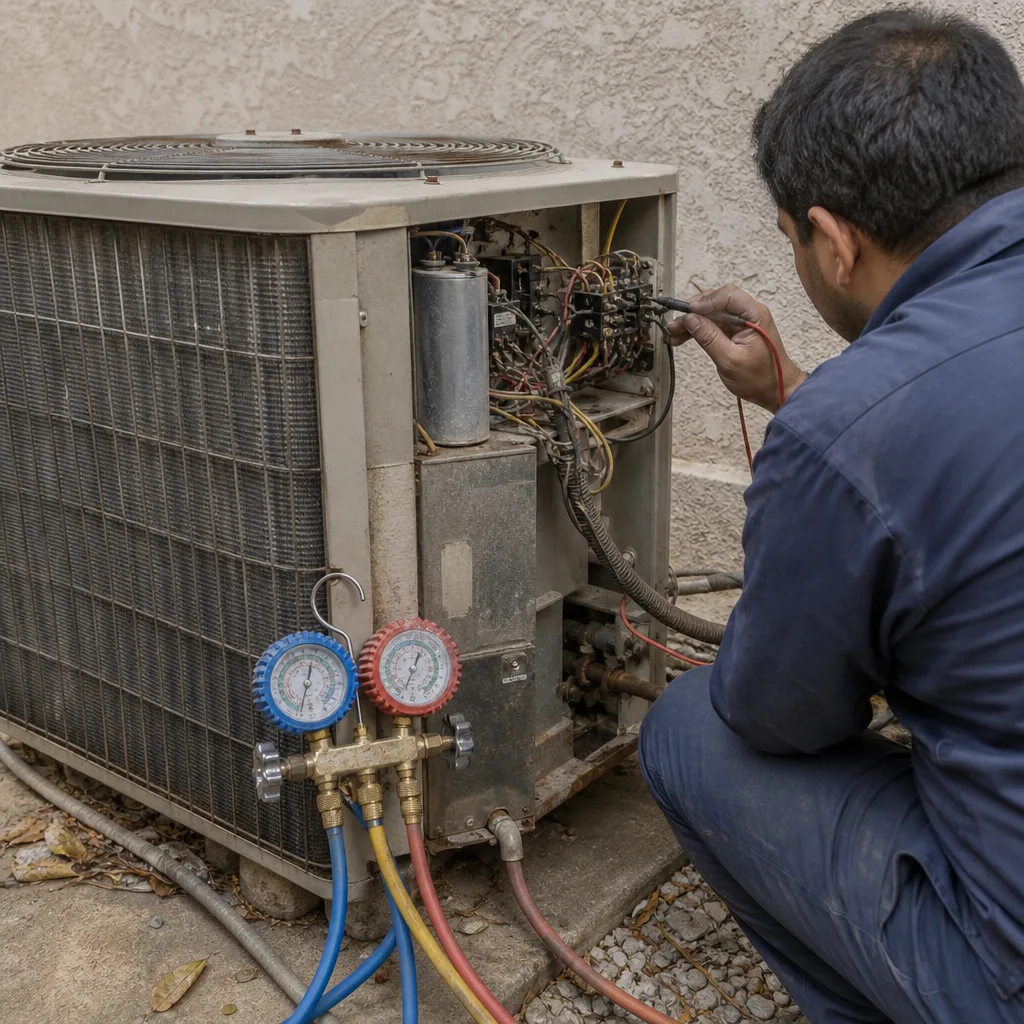 Before
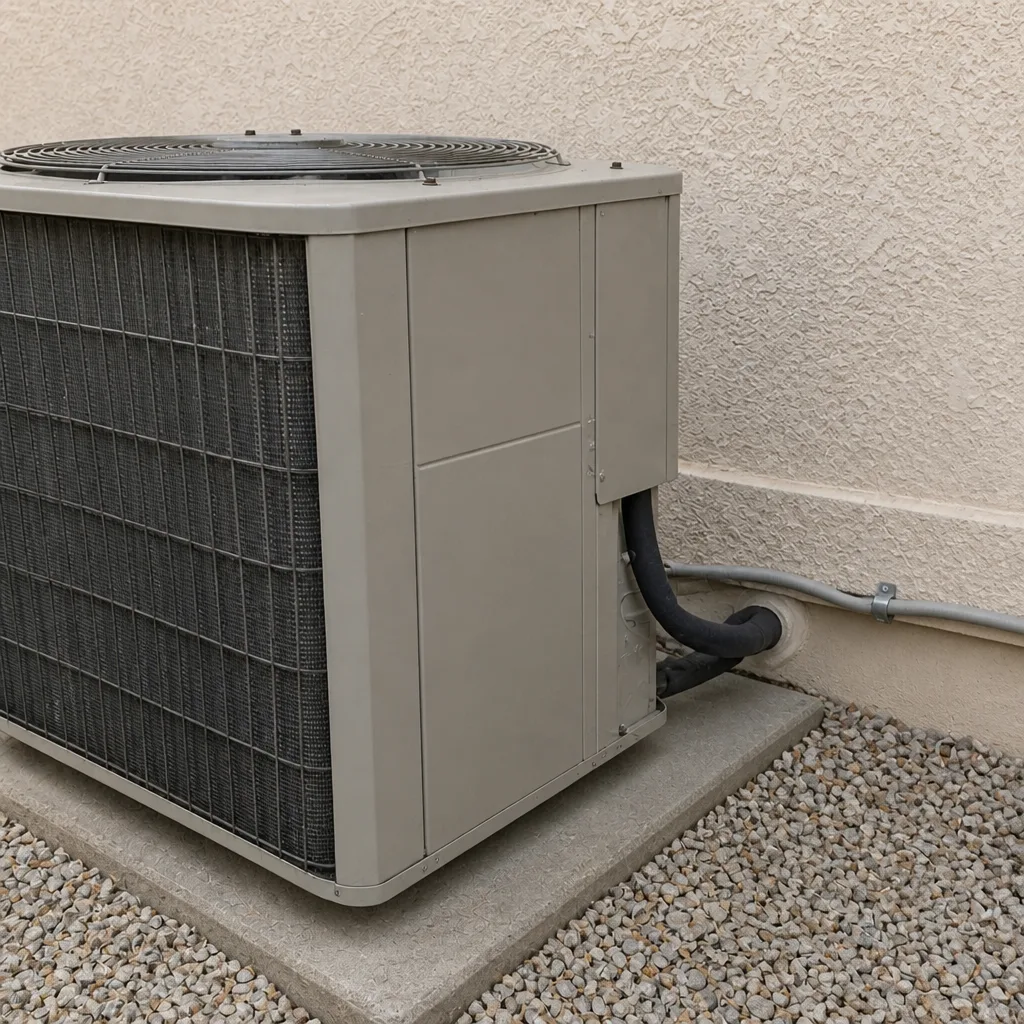 After
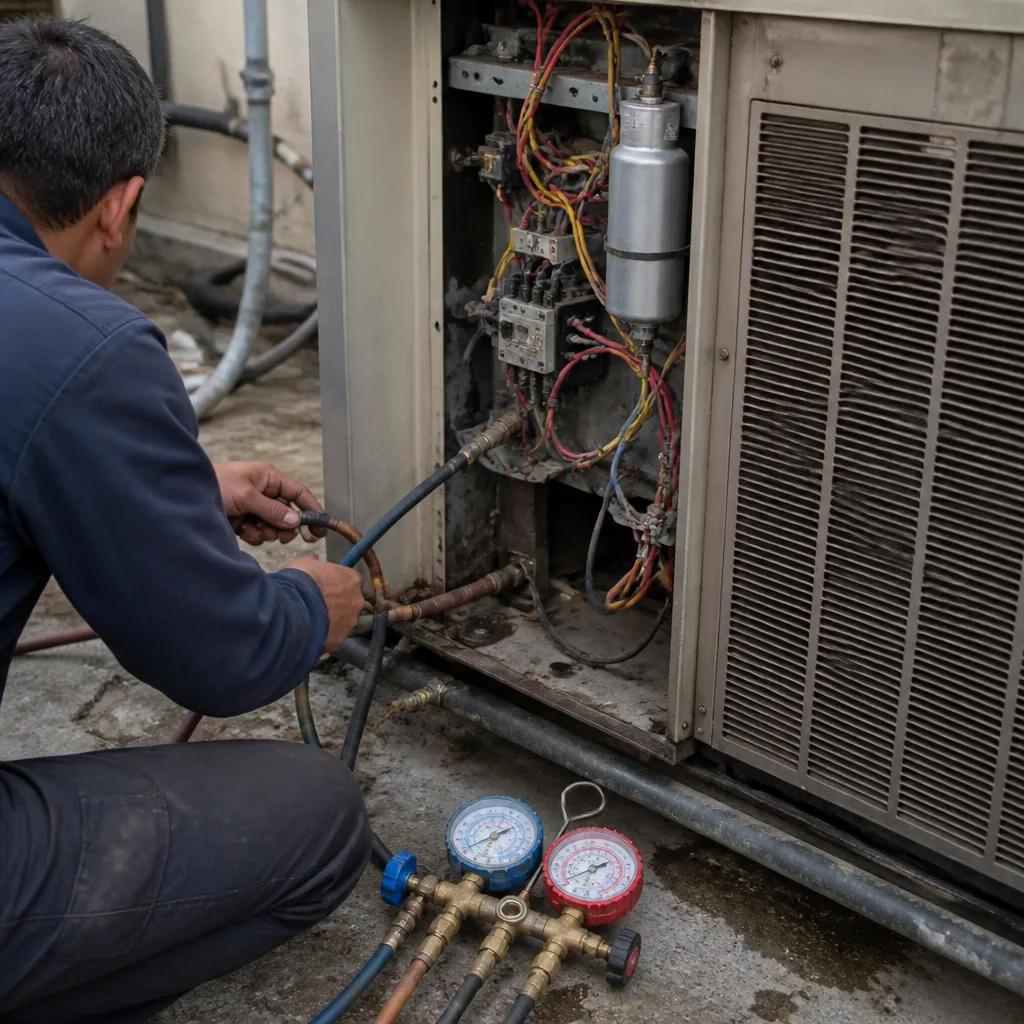 Before
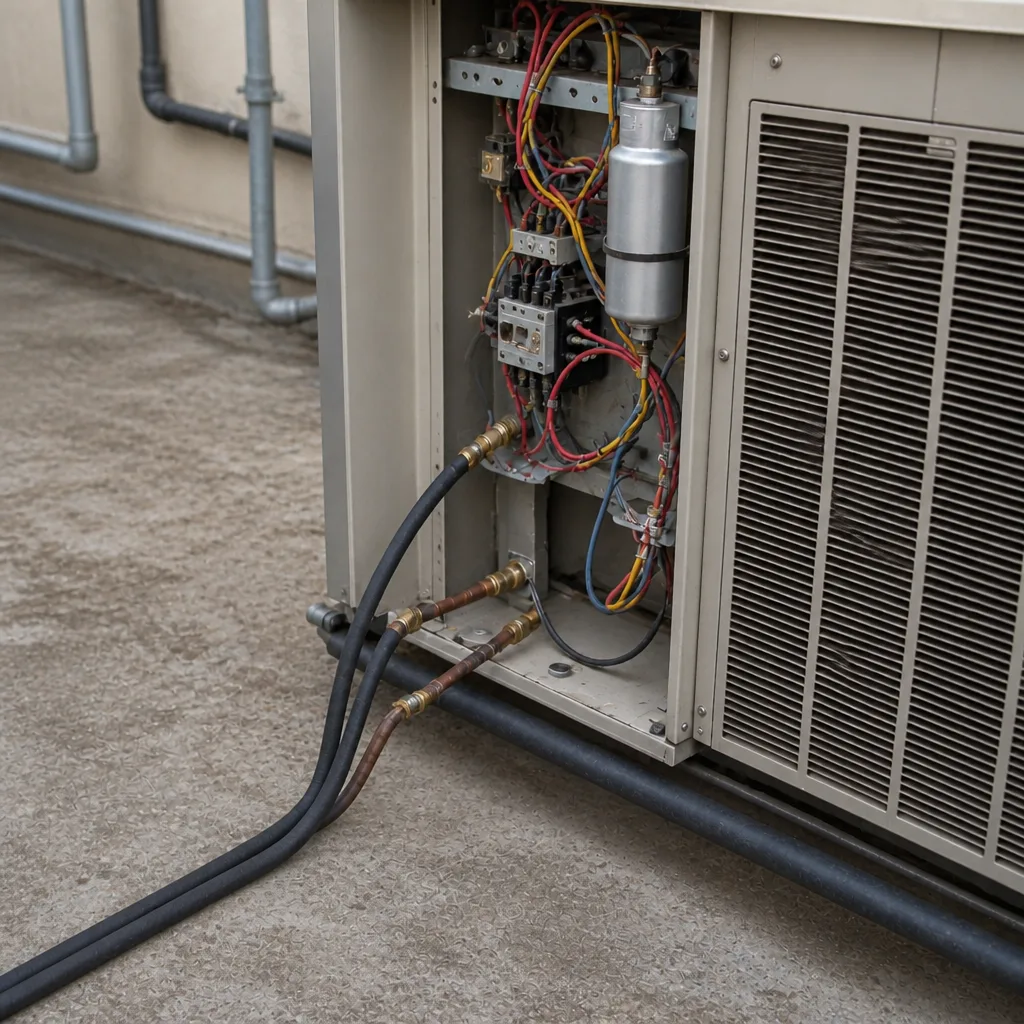 After
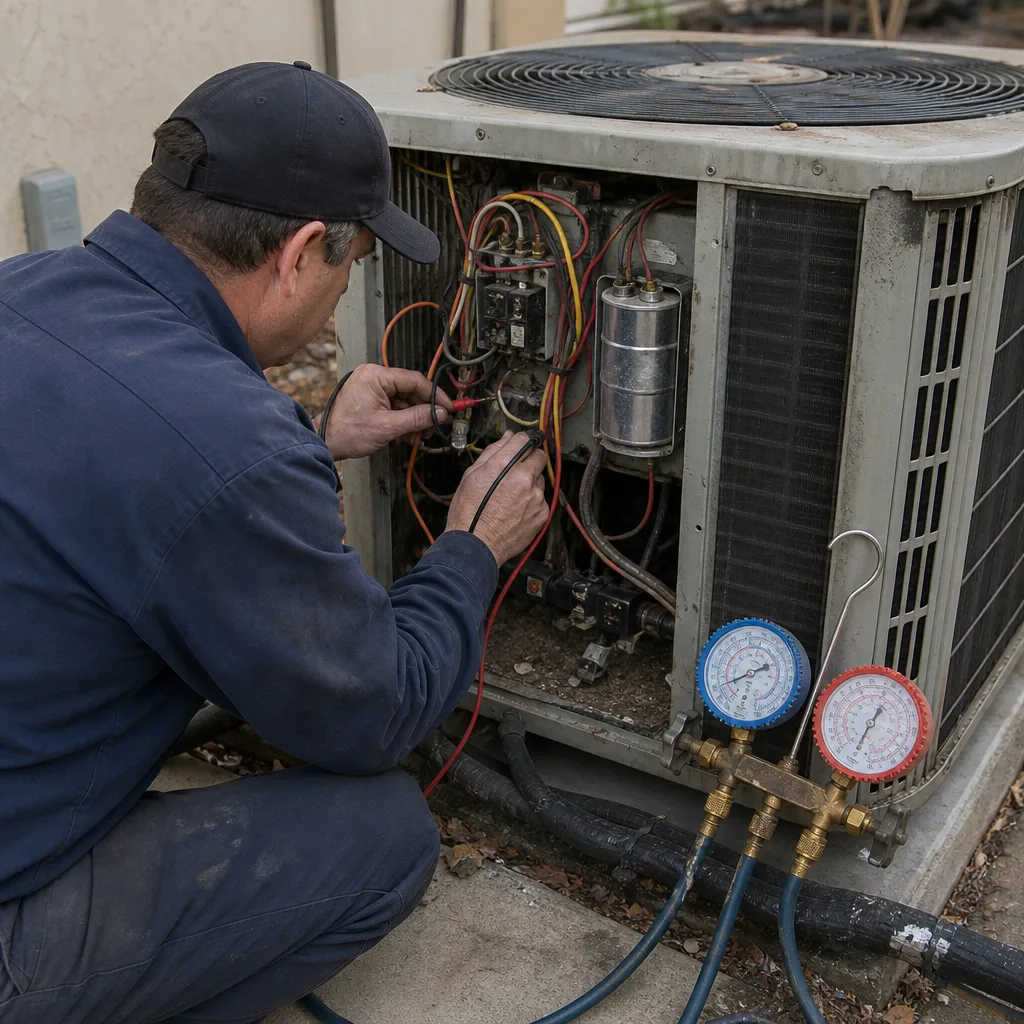 Before
 After
When to Call a Professional
Some things you can check yourself: thermostat batteries, the breaker at the panel, the filter. Everything else in an AC system involves refrigerant, high-voltage electrical, or gas – and those are the parts where mistakes hurt people. If your breaker trips repeatedly, if the outdoor unit hums but won’t start, if you see ice on the indoor coil, or if the system is blowing warm air in 105-degree heat, call a professional. Refrigerant work requires a licensed technician, and the electrical side of an HVAC system can kill you if you don’t know what you’re touching.
For a system over twelve years old that’s needed two repairs in two summers, the question of repair versus replacement is worth a real conversation. Ray’s Heating & Air Spring Valley offers free estimates in Spring Valley – call (833) 620-7288 and a live person will answer, day or night.
Frequently Asked Questions
A full AC installation in Las Vegas takes four to eight hours of on-site labor, plus a Clark County permit inspection that adds a day or two to the total schedule. The bigger variable is getting scheduled during summer: expect one to two weeks out for a replacement in June or July, and call in spring if you want a same-week slot. Call (833) 620-7288 for an exact quote – estimates are free.
Yes. A capacitor swap is a 30-to-60-minute job once it’s diagnosed, and it’s the single most common summer failure we see. The key is testing it before anyone jumps to “compressor,” which is a much bigger and more expensive repair. If your outdoor unit hums and won’t start, that’s the first thing to check.
Repair makes sense if the system is under ten years old and the fix is a mid-priced part. Replace if it’s over twelve years old, needs two or more repairs in a season, uses R-22 refrigerant, or the coil and the compressor are both failing. In Spring Valley heat, a system running at reduced capacity costs you real money in electric bills while it’s failing. Call (833) 620-7288 for a free estimate on either path.
Yes. A full AC installation in Clark County requires a permit and an inspection. It adds a day or two to the schedule, and skipping it is a problem you won’t discover until you try to sell the home. Insist on the permit and get documentation that it was filed and closed.
Because they don’t have a scheduling system that respects your time. A company that can give you a two-hour window and a 20-30 minute heads-up call is a company that knows where its people are. Ask any contractor upfront what window they actually run.
Pricing depends on the size, brand, and efficiency of the system, plus any duct or electrical work needed. Every job we quote starts with readings – not a phone estimate – so the number you see reflects your actual home and setup. Call (833) 620-7288 for a free written estimate; you’ll see the readings and the numbers before any work begins.
The Bottom Line
The honest answer to “how long does AC work take” splits into two parts: the job itself, which is measured in hours, and the scheduling, which is measured in weeks during a Las Vegas summer. A repair is usually same-day. An install is a four-to-eight-hour project plus a permit inspection, scheduled one to two weeks out in peak season. The variable that determines whether your quote holds up is whether the contractor had your parts before they showed up and gave you a realistic window. Homeowners in Spring Valley who call in April are sleeping in July. The ones who wait until the thermometer hits 112 are the ones who find out the truth the hard way.
If you’re ready to plan ahead or already in the middle of it, call (833) 620-7288 for a free estimate. Ray Alvarez answers his own phone around the clock, and every heating and cooling job carries the 90-Day Done Right Promise in writing – if it isn’t done right, one call brings him back.
Written by the team at Ray’s Heating & Air Spring Valley.