
Last updated November 18, 2026
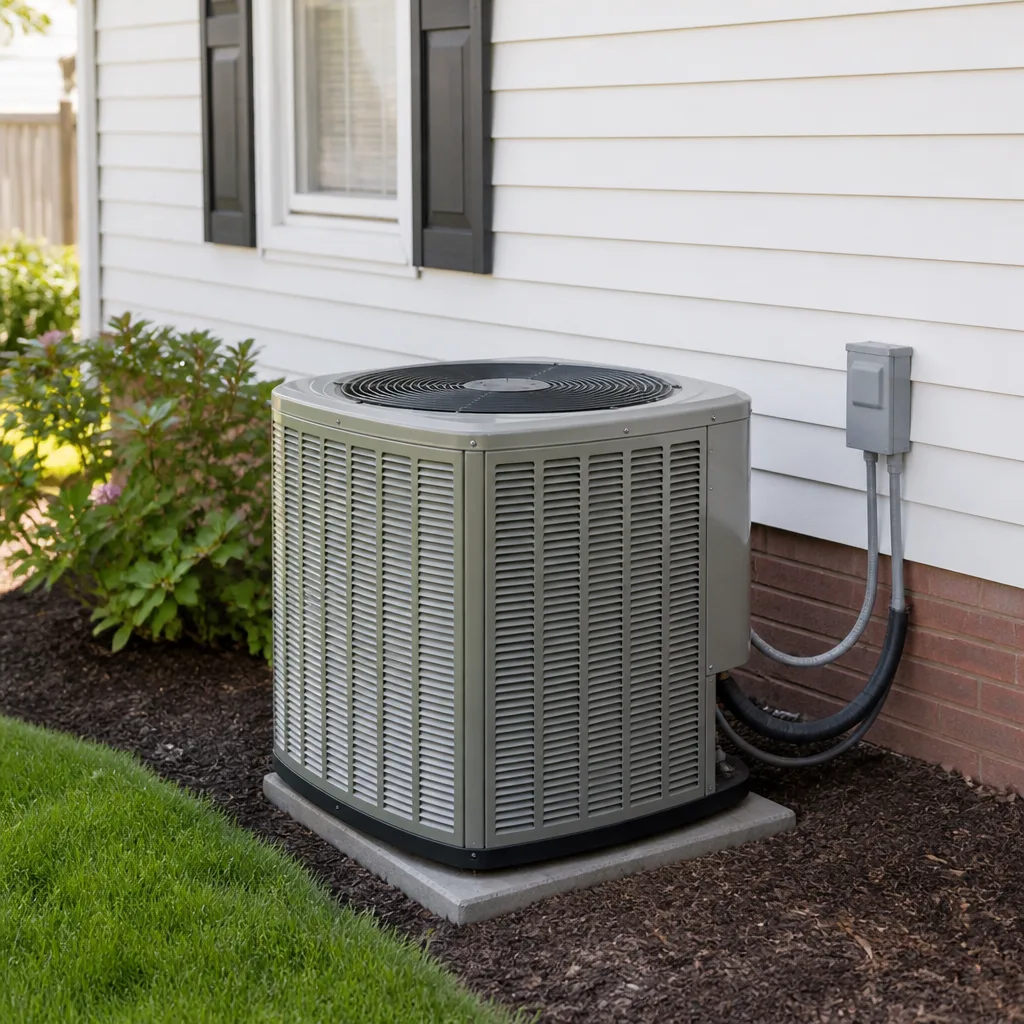 AC repair
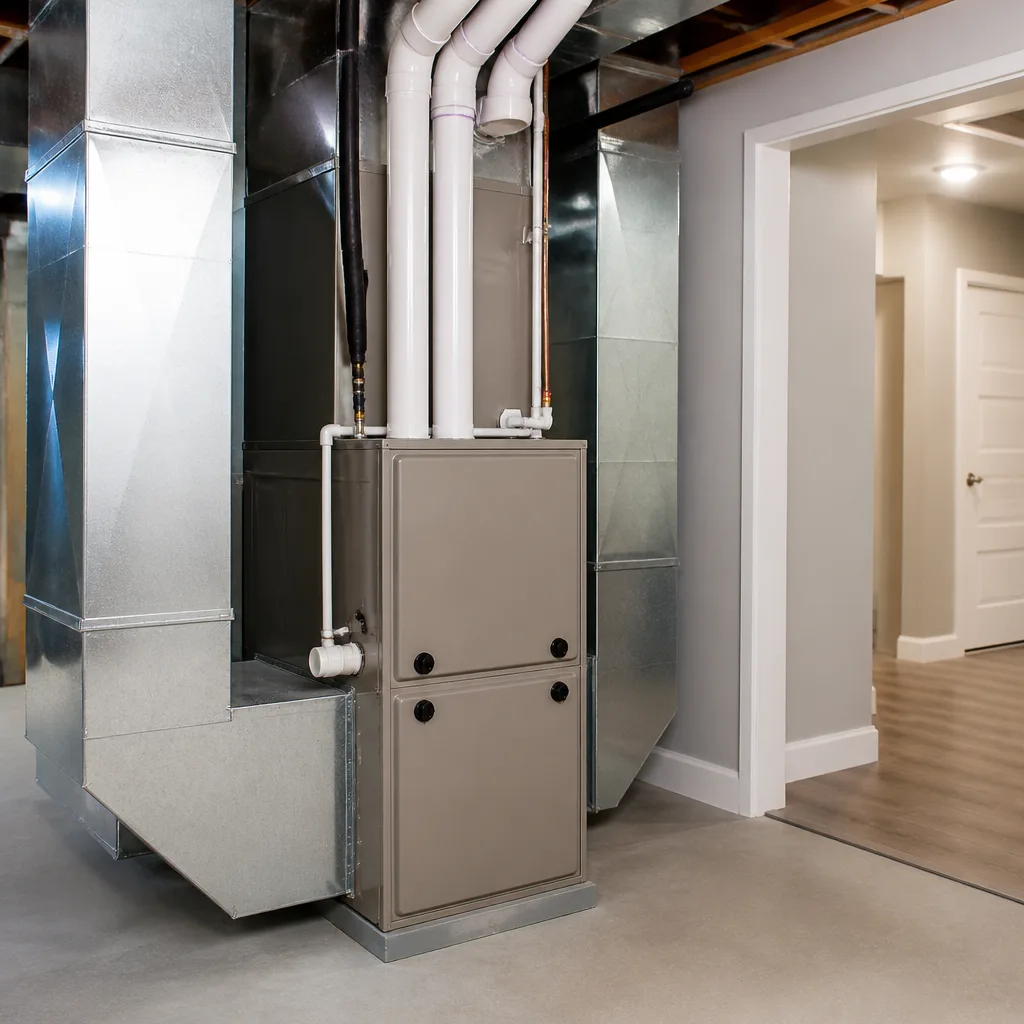 Furnace & heating
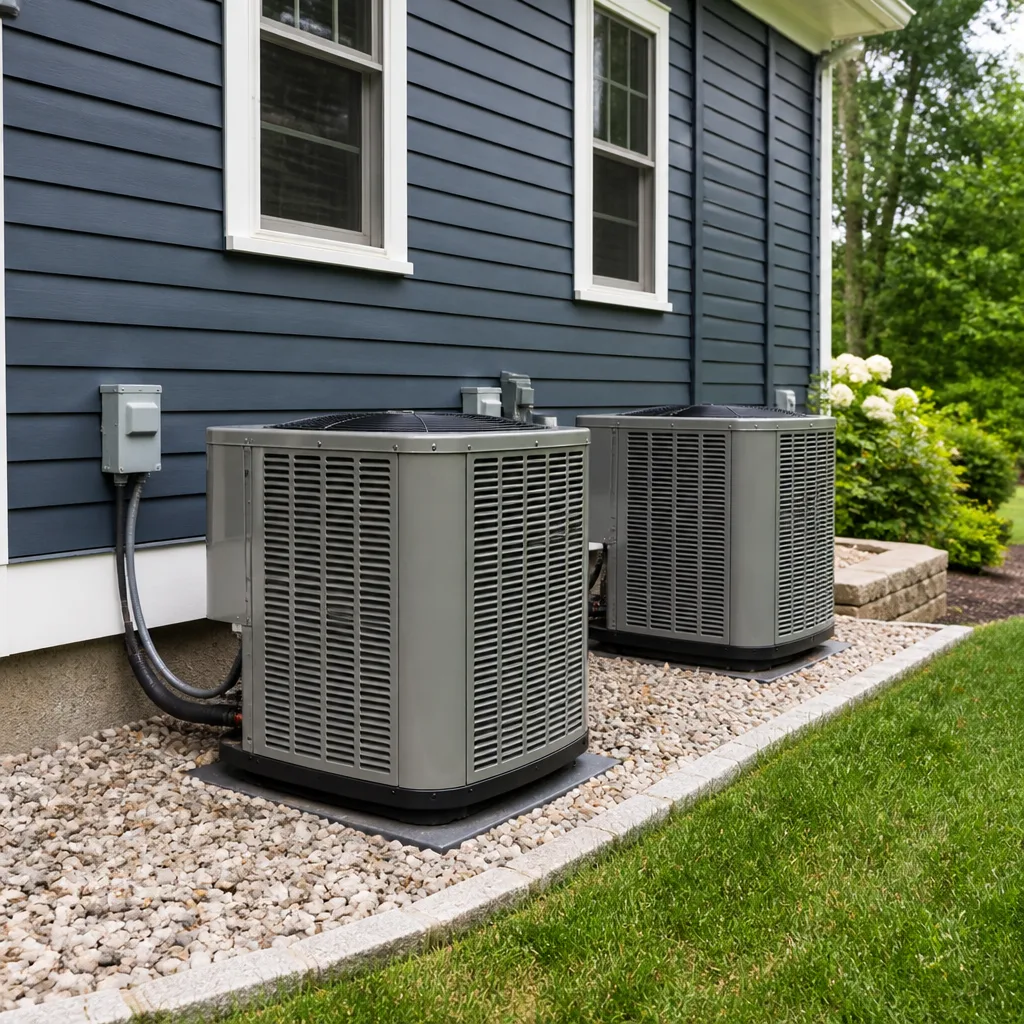 Heat pumps
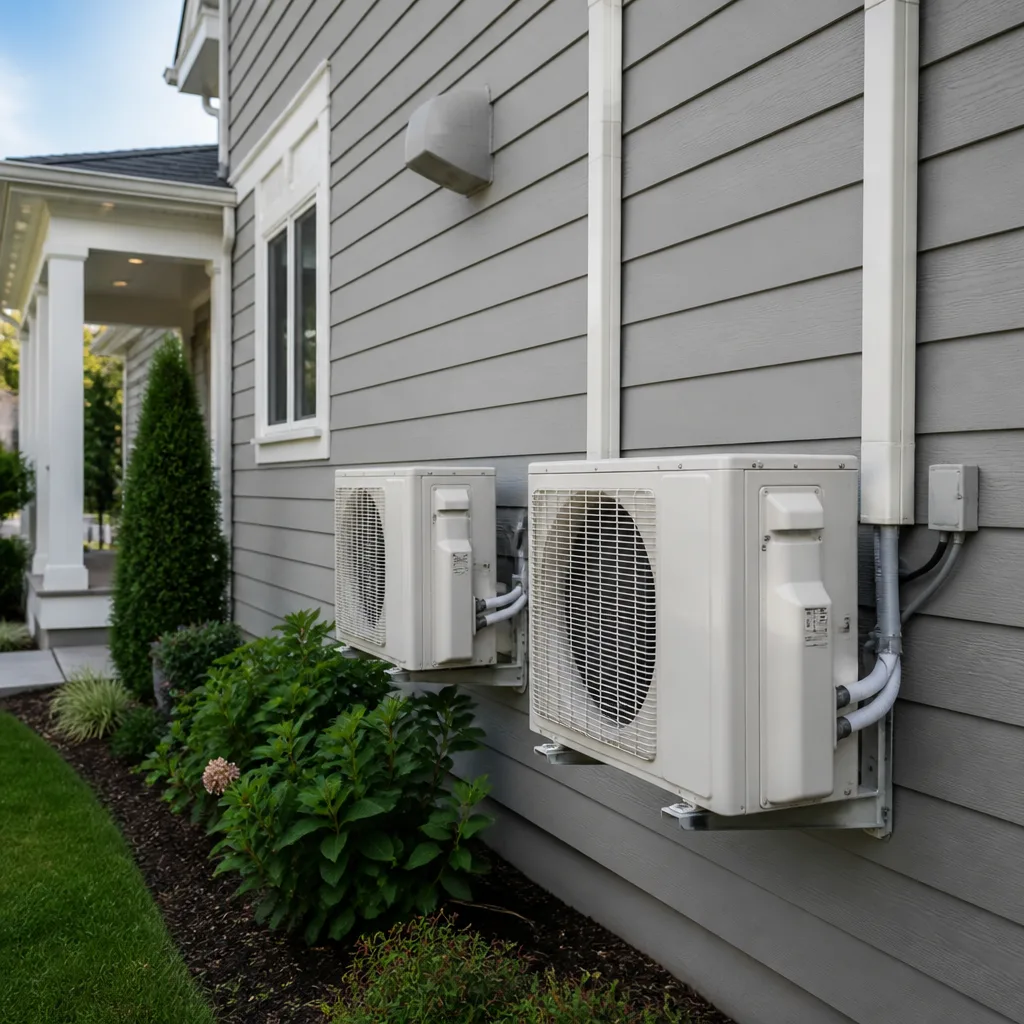 Ductless mini splits
 Carrier
 Trane
 Goodman
Seasonal tune-up and full diagnostic on your Carrier, Trane, or Goodman system - readings shown to you before any repair is proposed
Diagnosis first, numbers second - you approve the repair price before a single part goes in.
Get your free estimateHVAC Warning Signs: A Spring Valley Homeowner’s Reference Guide
A refrigerant hiss at the outdoor unit on a 108-degree day isn’t a noise you sleep on. It means the system is bleeding out, and you’ve got maybe a few hours before it’s pulling warm air through the house at full speed. Most warning-sign articles tell you to “call someone if it’s making a weird noise” and leave it there. That’s useless when you’re standing in your backyard at 6 p.m. trying to decide whether to shut the whole thing down or wait until morning. This guide separates the Tuesday fix from the turn-it-off-right-now emergency for a Spring Valley home, sound by sound and smell by smell.
Quick Answer
The warning signs that mean “call today, not next week” are a hissing outdoor unit (refrigerant leak), a burning-electrical smell (stop and shut it off), ice on the indoor coil in summer (airflow or charge problem, not a cooling problem), and a thermostat stuck running past 20 minutes on a sound, steady cycle. Everything else – a light rattle, a single squeal at startup, a musty smell in one room – is usually a same-week service call, not an emergency. When in doubt, shut it off at the thermostat and call (833) 620-7288. A live person picks up.
Styles & brands we work with
- AC repair
- Furnace & heating
- Heat pumps
- Ductless mini splits
- Carrier
- Trane
- Goodman
Table of Contents
- What Each Sound Is Telling You
- Why a Frozen Coil in Summer Is a Symptom, Not the Problem
- Thermostat Behaviors That Point to Specific Failures
- Smell Identification: The First 10 Minutes
- Your Electric Bill as an Early Warning System
- Spring Valley Context: Heat, Dust, and Duct Work
- Common Mistakes to Avoid
- Frequently Asked Questions
What Each Sound Is Telling You
Your system tells us what’s wrong. We just listen first. The trick is knowing which sounds point to which component, because “weird noise” covers everything from a $40 part to a $2,400 compressor. Here’s the sound-by-sound breakdown we walk Spring Valley homeowners through on the phone before anyone gets in a truck.
Rattling
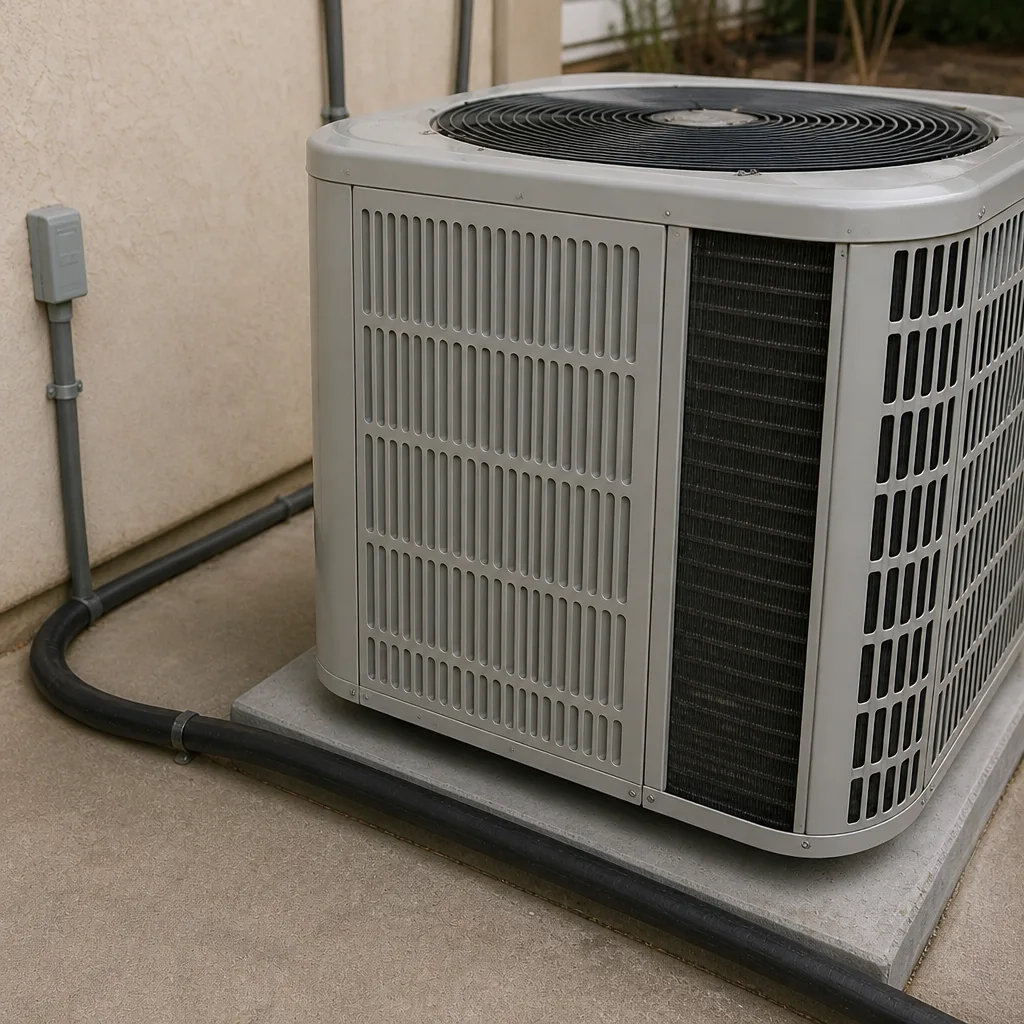
Rattling at the outdoor condenser is usually loose hardware: a fan blade that’s lost a screw, a panel vibrating against the frame, or debris caught in the fan cage. It’s rarely an emergency. It can become one if the fan blade is unbalanced and starts eating the motor bearing, so treat a rattle that’s grown louder over a week as a same-week call. Rattling from the indoor air handler can be a loose blower wheel, which is noisier than it is dangerous.
Squealing
A squeal at startup that stops within a few seconds is often a belt or a blower bearing on older equipment. A squeal that keeps going is a bearing about to seize. Once a bearing seizes, you’re replacing a motor instead of a belt. Squealing comes up more in Spring Valley as the fan motors get to the end of their life.
Hissing
This is the one to take seriously. A steady hiss at the outdoor unit, especially paired with the system running but not cooling the house, is refrigerant leaking out. Turn the system off at the thermostat. Running a system low on refrigerant is how a $300 leak repair becomes a $1,800 compressor replacement, because the compressor is trying to compress gas that isn’t there and it runs hotter doing it.
Banging
A single bang at startup can be ductwork popping from pressure change – annoying, not dangerous. Repeated banging from inside the outdoor unit is a compressor or fan problem. Repeated banging from inside the indoor unit means a blower issue or something loose inside the cabinet. Turn it off. Banging is not something to run through.
Clicking
One click at the end of a cycle is normal – that’s the contactor opening. Repeated clicking that never gets the outdoor unit to run, or clicks every few seconds while the fan spins up and stops, points to a failing capacitor or a control board. That’s a same-day call, especially when Spring Valley is above 100.
If you’ve got sounds you can’t sort out, the AC repair and installation team in Spring Valley can walk the symptoms on the phone before we ever send anyone.
Why a Frozen Coil in Summer Is a Symptom, Not the Problem
Here’s a counterintuitive one. Ice on the indoor coil or the refrigerant line after a Spring Valley July is not a “my system is too cold” story. It’s a “my system is starving for airflow or refrigerant” story. The ice is the symptom. The cause is upstream.
Ice forms when the coil drops below freezing. That happens for two reasons. Either not enough warm air is moving across the coil (low airflow), or the coil itself is holding too little refrigerant (low charge). Both have the same visible result, and both get worse the longer you let the system run.
What to look for upstream:
- The air filter. Pull it. If it’s grey and caked, that’s your cause. A clogged filter in a dusty Spring Valley home cuts airflow enough to freeze a coil within a day.
- Frozen line set. If the copper line from the outdoor unit to the wall has frost on it, you’ve got a charge or airflow problem, not a thermostat problem.
- Weak airflow at the registers. Hold a hand up to a supply register in a room you know is cold. If the air is weak or barely moving, that’s an airflow path issue – filter, blower, or duct.
- Blower wheel. The blower inside the air handler collects dust over years. A caked blower wheel does the same airflow job as a clogged filter.
- Return grille. Check for a return that’s been blocked by furniture, a rug, or a dropped cardboard box.
Turn the cooling off and let the coil thaw. Do not chip ice off a coil. It’s soft tubing and you will cut it. If the coil freezes again after you’ve changed the filter and cleared the return, that’s a call – it’s almost always a refrigerant charge issue at that point.
Thermostat Behaviors That Point to Specific Failures
The thermostat is the most-misread thing in the house. People replace thermostats when the system is the problem. Here’s how to read what yours is doing.
System runs 20 minutes, never cools past a point, then runs again forever
That’s usually a failing capacitor or a compressor starting to struggle. The thermostat is doing its job. A capacitor is a $20 to $60 part. Call us and we’ll test the capacitor before anyone says the word compressor. This is why we test first. Ask anyone on your street who’s been quoted a compressor and then paid for a capacitor instead.
Fan runs, outdoor unit doesn’t kick on
Same pattern – capacitor, contactor, or the outdoor unit’s low-voltage control. The thermostat shows “cool” but you’re getting room-temperature air. Turn it off. If it’s Aug. 10 in Spring Valley and the house is climbing past 85, that’s the same-day call.
Thermostat screen is dead or dimmed
Check the breaker first (the air handler breaker, not just the outdoor unit). If the breaker is fine and the screen is still dead, you’ve probably got a low-voltage transformer issue or a blown control fuse – that’s a control board territory, not a thermostat swap.
System short-cycles – 3 to 5 minutes on, then off, then on again
Short cycling overloads the compressor and destroys it faster than almost anything else. In Spring Valley, short cycling in July is often a refrigerant issue combined with an overheating compressor trying to protect itself. Shut it off. Call.
Thermostat says “Hold” or shows a system fault code
Write the code down before you touch anything. Literally a photo on your phone. That code gives the person at your door a head start, and we do better diagnostics when we don’t have to chase the fault back from scratch.
Smell Identification: The First 10 Minutes
Smells are the fastest warning sign to read. Three types, three different first responses.
Burning electrical smell
Metallic, acrid, like hot plastic or a scorched wire. This is the one that stops you cold. First 10 minutes:
- Turn the system off at the thermostat. Not the breaker first – the thermostat.
- Then kill power at the breaker for both the indoor air handler and the outdoor condenser.
- Smell the air at the air handler closet or furnace door. If the smell is coming from there, leave the breaker off.
- If the smell has stopped and there’s no visible scorching or soot, call. If there IS visible scorching or smoke, get out of the house and call 911, then call us.
Burning-electrical smells come from failing control boards, loose wire terminations, seized blower motors, and contactors that have burned their contacts. None of these are DIY. Do not open the air handler and start touching anything – the control board still has stored voltage, and the wiring is 240 volts on the air handler side.
Musty or mold smell
Damp basement, wet socks, old wood. That’s the evaporator coil, the drain pan, or the inside of the ducts. Spring Valley home ducts run hot and cold repeatedly, and moisture that doesn’t fully dry in the pan grows things in six weeks flat. That’s a call when you notice it, not an emergency. The fix is usually a pan clean-out, a drain trap repair, or in worse cases duct cleaning. If anyone in the house has started sneezing more since the smell showed up, that’s your signal to move it up the list.
Chemical or sweet smell
Refrigerant has a faint sweet, chemical note when it’s venting. If you smell it near the outdoor unit or along the line set, the system is leaking. That hiss we opened this guide with. Turn it off, open the windows for ventilation, and don’t sit in the same room as the leak. Refrigerant displaces oxygen in a small space, and while a home system is unlikely to leak enough to be dangerous, it’s not a smell to hang around in. Call us and we’ll come read the pressures.
Air quality issues that linger past a cleansed coil are a separate conversation – ventilation and filtration fixes are usually rolled into the same visit.
Your Electric Bill as an Early Warning System
The bill is the warning sign nobody reads until it’s already a bad month. Here’s what the numbers look like, and what should make you call someone before anything breaks.
- Same-month, year-over-year increase of 20% or more with no change in habits. A $220 July bill becoming a $290 July bill on a system that runs the same schedule is a system that’s lost efficiency. Usually it’s a dirty condenser coil, a failing capacitor that’s making the compressor work harder, or a blower motor on its last legs.
- Same-month, year-over-year increase of 30%+ and climbing. Now you’re into refrigerant leak or compressor territory. Don’t wait for a failure. The same week – call.
- Bill drops suddenly after no change. Almost always means the system stopped running for part of the month. Not a win. Something failed.
- Bill climbs while the house runs seven to ten degrees warmer than the setpoint. This is the loudest warning. The system is working harder than ever and delivering less. Compressor or charge – call same day.
One Spring Valley reality: July and August electric bills with any single-family home running a central system routinely cross $280 to $400 in a normal summer. If you know your July baseline, you have a private benchmark for the whole rest of the year. That’s the whole point. A bill that’s off its baseline by a lot is a system telling you first. If you want a second opinion on whether the equipment is worth repairing, our AC repair team offers a free second opinion on any written estimate. Bring the bill with you.
Spring Valley Context: Heat, Dust, and Duct Work
Spring Valley summers regularly cross 105 and touch 108. That’s the design temperature for the equipment here, and it means capacitors, compressors, and fan motors are running at the top of their spec all day. A capacitor that would last 12 years in a milder climate often fails in year 6 or 7 in Spring Valley. That’s not a sales pitch – it’s physics. We see more failed capacitors in one July in Spring Valley than in three years of cooler-climate service calls.
Our monsoon season runs July through September, and the dust that comes with it is the second-biggest driver of freeze-ups after dirty filters. The outdoor condenser coil here gets a coat of fine desert dust on the fins that’s easy to miss from standing height. Coil grime is why an outdoor unit that was cooling fine in May starts short-cycling in August. A condenser coil rinse twice a season (May and again in early August) is cheap insurance.
Older Spring Valley homes – and there are plenty of them – often carry original 1980s and 1990s ductwork. If you’ve got flex duct that’s lost its inner liner or a supply run that was capped off during a remodel and never capped correctly, you’re paying to cool the attic. A single disconnected supply in a Spring Valley ranch home can cost more on the bill than a failing capacitor does. If your bill is up and airflow in one or two rooms is weak, that’s the first thing to check.
Also worth knowing: if you’re having equipment replaced, permit and inspection requirements for HVAC change-outs in Spring Valley are enforced through the local jurisdiction. The permit is not the interesting part – the inspection is, because it’s what catches a contractor who skipped the load calculation or stuffed equipment that’s oversized for the house. It’s one of the small reasons we like doing this work here, and one of the reasons we can tell you from the driveway whether a Spring Valley house is going to short-cycle on an oversized unit. If you’re already shopping, the heating and furnace page has the same warning-sign breakdown for the cold months.
When the heat pump or mini-split is what’s actually in the house, the behavior isn’t quite the same – the heat pump and mini-split service in Spring Valley has the specifics on reversing valve symptoms and defrost faults that don’t read like standard AC failures. And if the wider set of seasonal care questions is what you want, our Ray’s Heating & Air Spring Valley home page is a good place to start.
Common Mistakes to Avoid
- Chipping ice off the coil. That copper is soft and thin. A scratch you can barely see becomes a refrigerant leak in six weeks. Thaw it and find the real cause.
- Replacing the thermostat to fix a cooling problem. The thermostat reports. It doesn’t cool. A dead-screen thermostat is usually a low-voltage or control-board issue, and swapping the thermostat hides the real problem for a while.
- Running through a hiss. A refrigerant leak doesn’t seal itself. Running the system low on charge is the fastest way to kill a compressor, and it’s a $40 capacitor to a $1,800 compressor in one summer.
- Ignoring the electric bill. The bill is the cheapest diagnostic you have and the least expensive one to read. A 20% jump year over year with no habit changes is a system telling on itself.
- Hiring on a phone quote. A quote over the phone is a guess dressed up as a price. Fair quotes come from readings – superheat, subcooling, capacitor microfarads – and you should see all of them.
- Letting someone you’ve never met touch the system. In Spring Valley, the outfits that change faces on every visit are the ones that quote a compressor on a Tuesday afternoon in July. A named person with a published address and a written promise is a different experience on the same system.
- Waiting for “the season” before calling. In our experience, the same Spring Valley house calling in May for a tune-up spends $180. Calling in August with a dead compressor spends $1,800. Early is cheaper.
See the difference
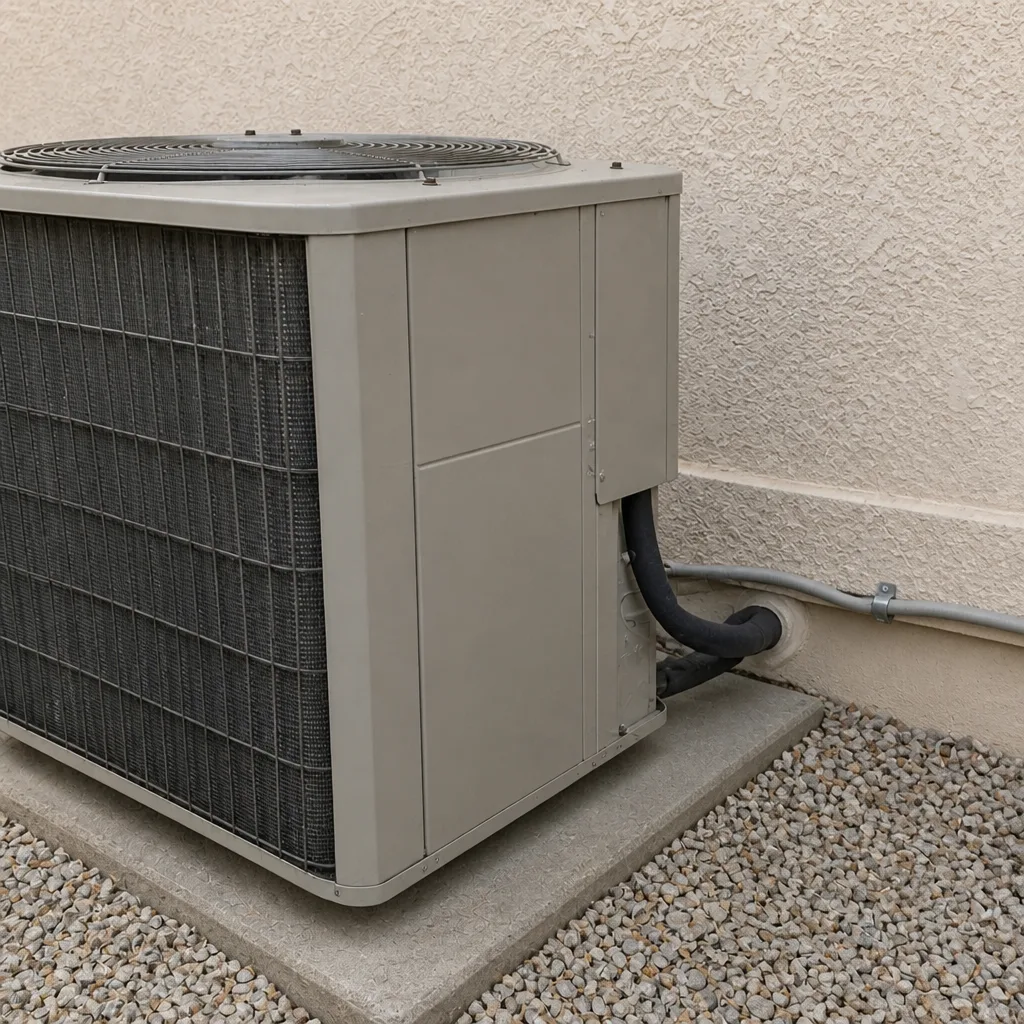
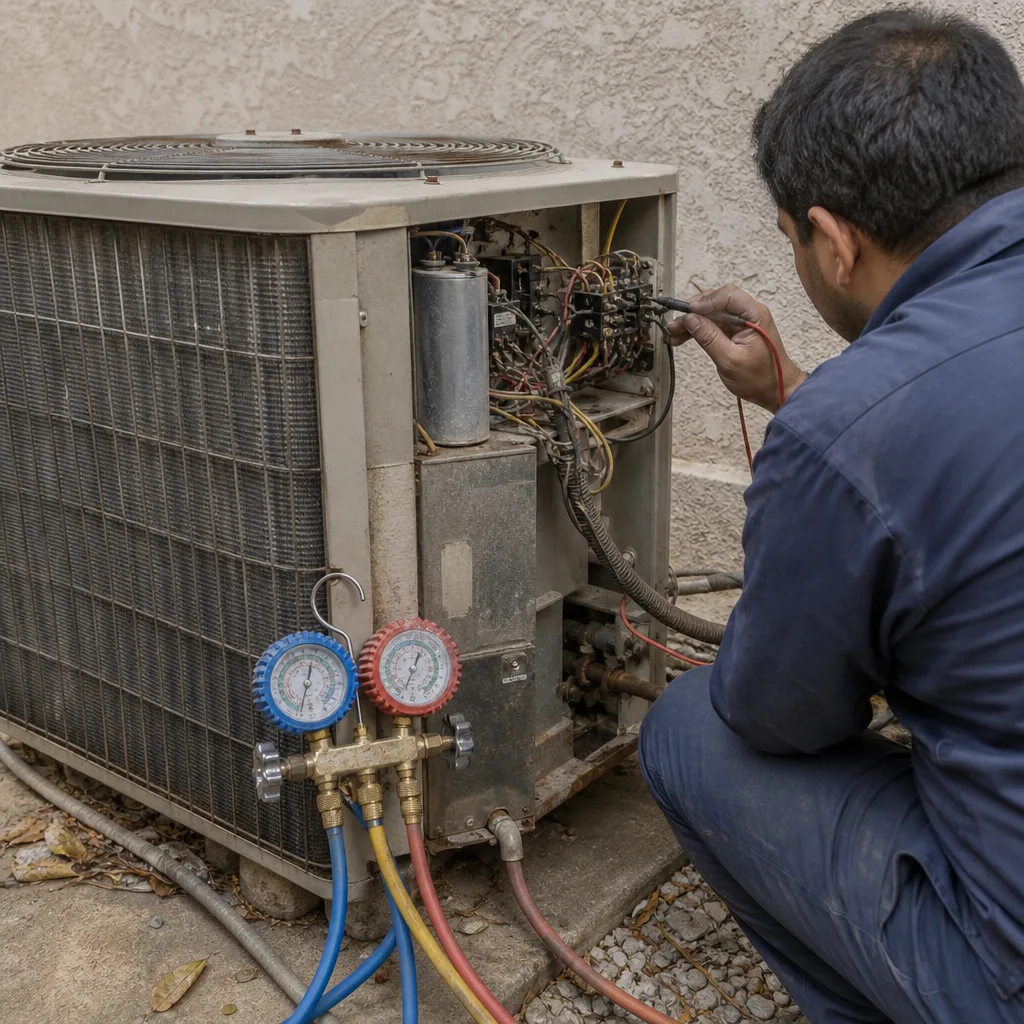 Before
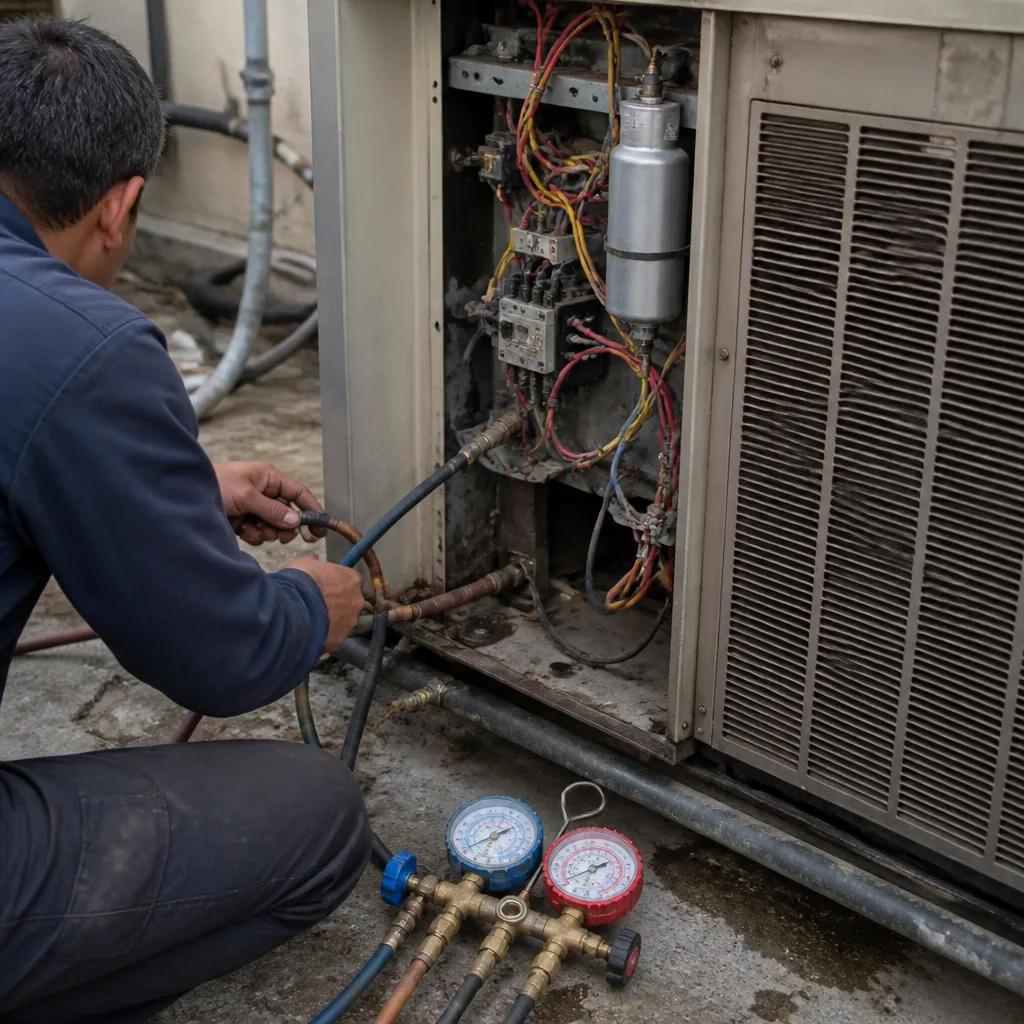
 After
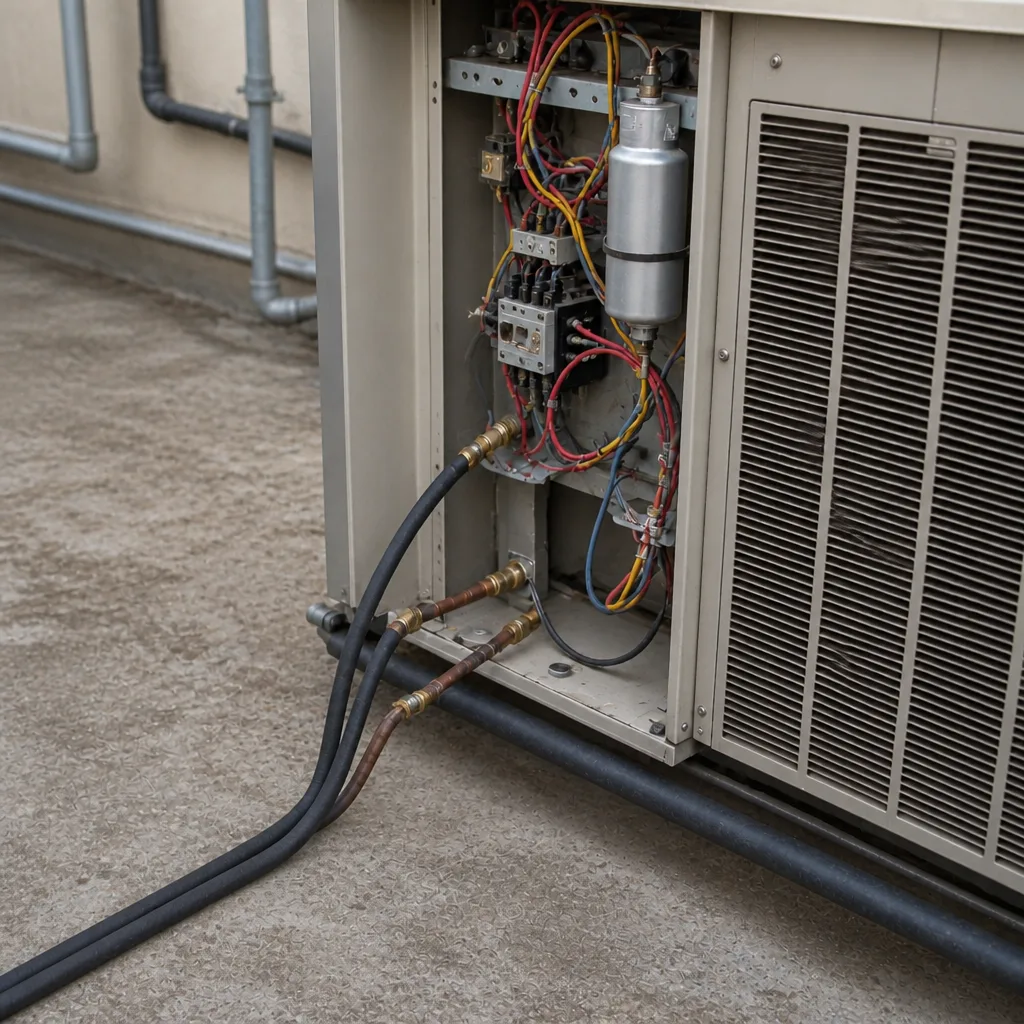
 Before
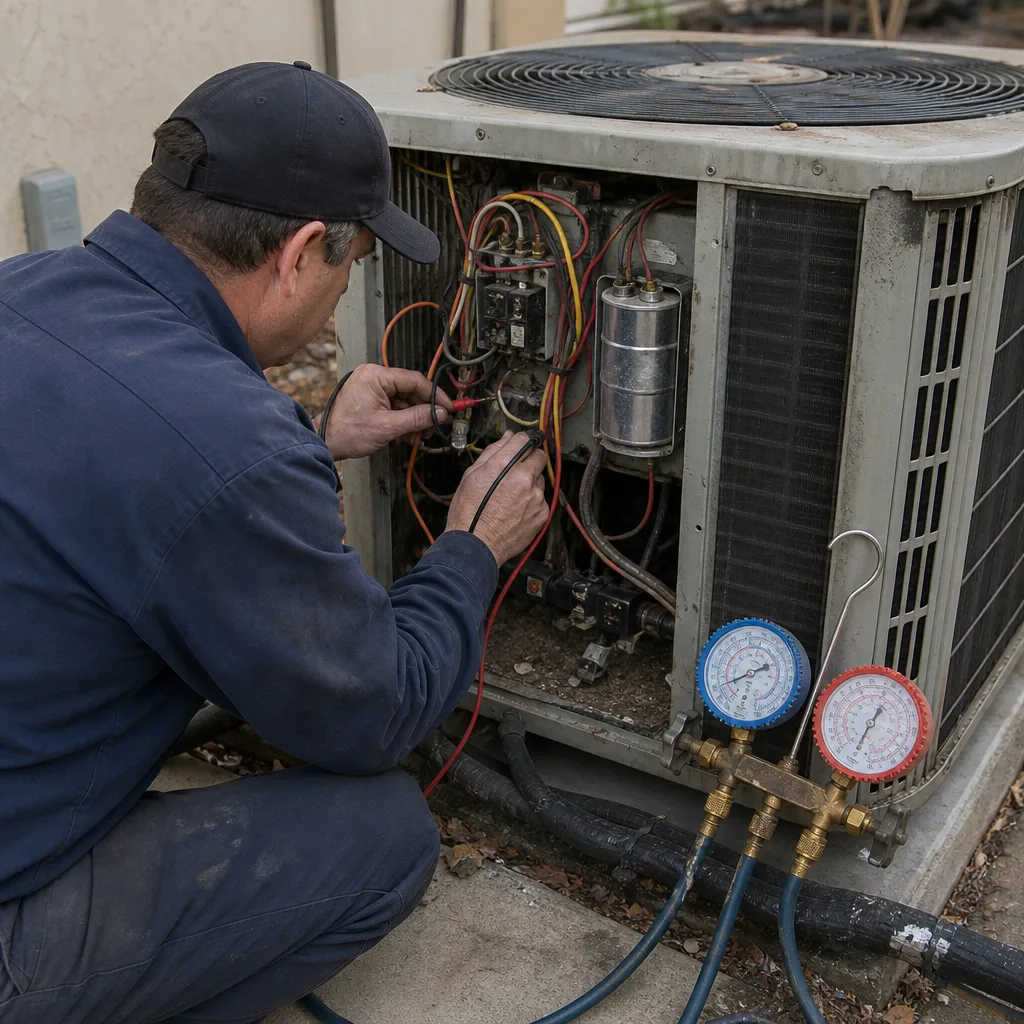
 After
 Before
 After
When to Call a Professional
Call us right now, before anything else, if you’re seeing any of these: a burning-electrical smell anywhere near the air handler or furnace; a hissing outdoor unit; ice on the line set; a thermostat stuck running with no cooling past 85 in the house; or a breaker that trips twice in a week. Those are the ones we want a person at your door on the same day, not “maybe Thursday.”
Call for the same week, not the same hour, if it’s: rattling that’s grown louder, a musty smell in one room, short cycling that resets itself, or a bill that’s up 20% over last year on the same usage. Those are real problems that are not emergencies, and they don’t need an evening call.
Ray’s Heating & Air Spring Valley offers free estimates in Spring Valley – call (833) 620-7288. A live person picks up around the clock, and it might be the person who ends up at your door.
Frequently Asked Questions
Yes, treat it as one. A hiss at the outdoor unit means refrigerant is escaping, and running the system on low charge will damage the compressor. Turn the system off at the thermostat and call (833) 620-7288 – estimates are free, and the sooner we read the pressures, the cheaper the repair.
Because the system is starved for airflow or refrigerant, not because it’s cooling too hard. Common causes are a clogged air filter, a dirty blower wheel, a blocked return grille, or a refrigerant leak. Turn the cooling off, let it thaw, change the filter, and if it freezes again, that’s a refrigerant charge call. Call (833) 620-7288 for an exact quote – estimates are free.
It means a control board, a wire termination, a blower motor, or a contactor is overheating, and it’s a shut-it-down-now problem. Turn the system off at the thermostat, then kill the breaker for both the indoor and outdoor units. If there’s visible smoke or scorching, get out and call 911. If it’s just the smell, leave the breaker off and call (833) 620-7288.
Yes, if your habits haven’t changed. That kind of jump usually means a dirty condenser coil, a failing capacitor, or a blower motor on its way out. Catching it now is a $180 to $350 repair; catching it after a compressor failure is a much bigger number. Call (833) 620-7288 – estimates are free.
If it’s the same recurring problem – a compressor or coil that’s already been worked on once – and the equipment is past 15 years, replacement usually wins on the math. If it’s the first big repair in a decade, repair usually wins. We’ll read the system, give you both numbers, and you decide. Call (833) 620-7288 for a free second opinion on any written estimate.
For refrigerant leaks, burning smells, and no-cooling during extreme heat, yes – that’s exactly what our same-day service is for. Call (833) 620-7288 and the person answering will ask you the same sound-and-smell questions in this guide so they can bring the right parts on the first trip.
The Bottom Line
The main takeaway from this guide: your system tells you what’s wrong, and the sound, smell, and bill are the three best signals you’ll ever get for free. Hiss, burn, and ice are the same-day emergencies. Rattle, musty smell, and a bill that’s off baseline are the same-week calls. Everything in between is a diagnostic conversation, and the honest way to have that conversation is readings first, numbers second. If you’re in Spring Valley and something in this guide matched what you’re hearing, don’t wait for it to break on its own schedule.
Call (833) 620-7288 for a free estimate. A live person answers, day or night. Every job is backed by our 90-Day Done Right Promise – if it’s not done right, one call brings us back. We service all major brands, including Carrier, Trane, Lennox, and Goodman.
Written by the team at Ray’s Heating & Air Spring Valley.