
Last updated November 18, 2026
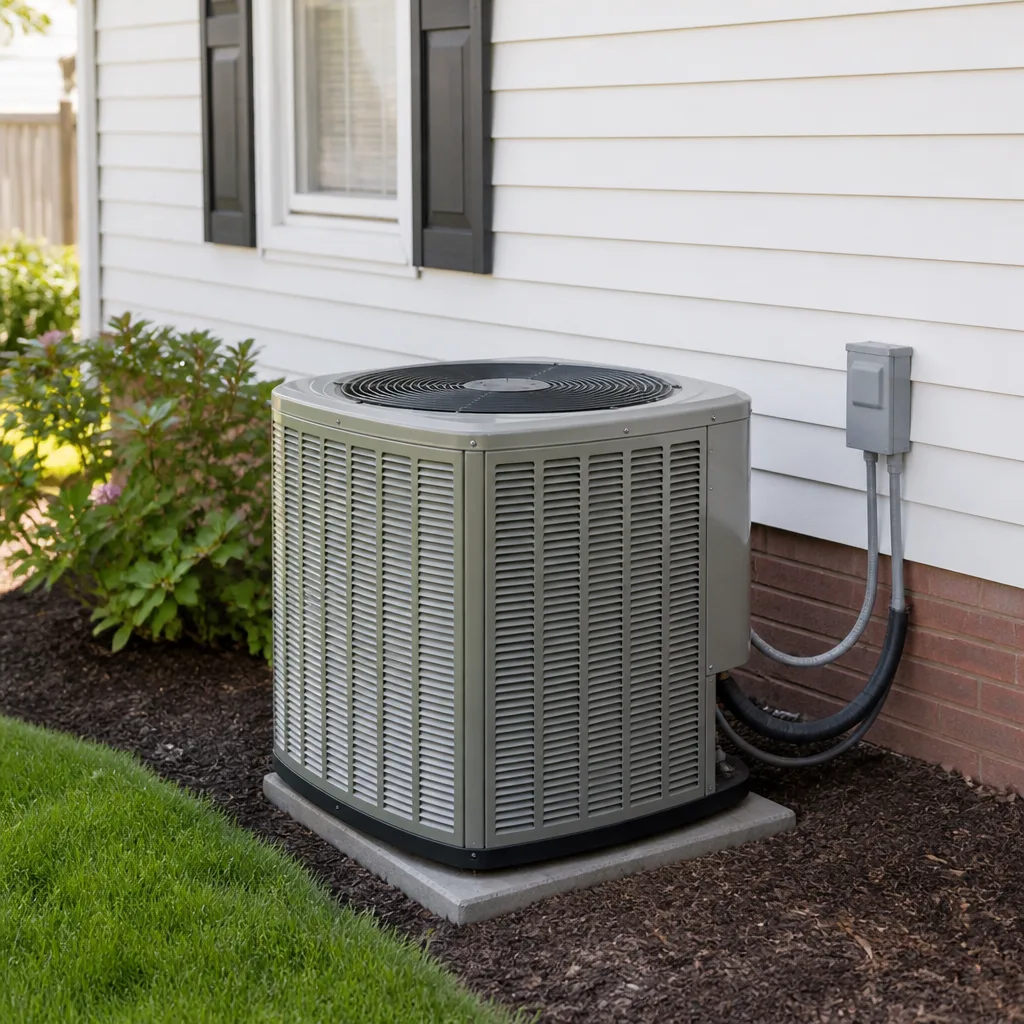 AC repair
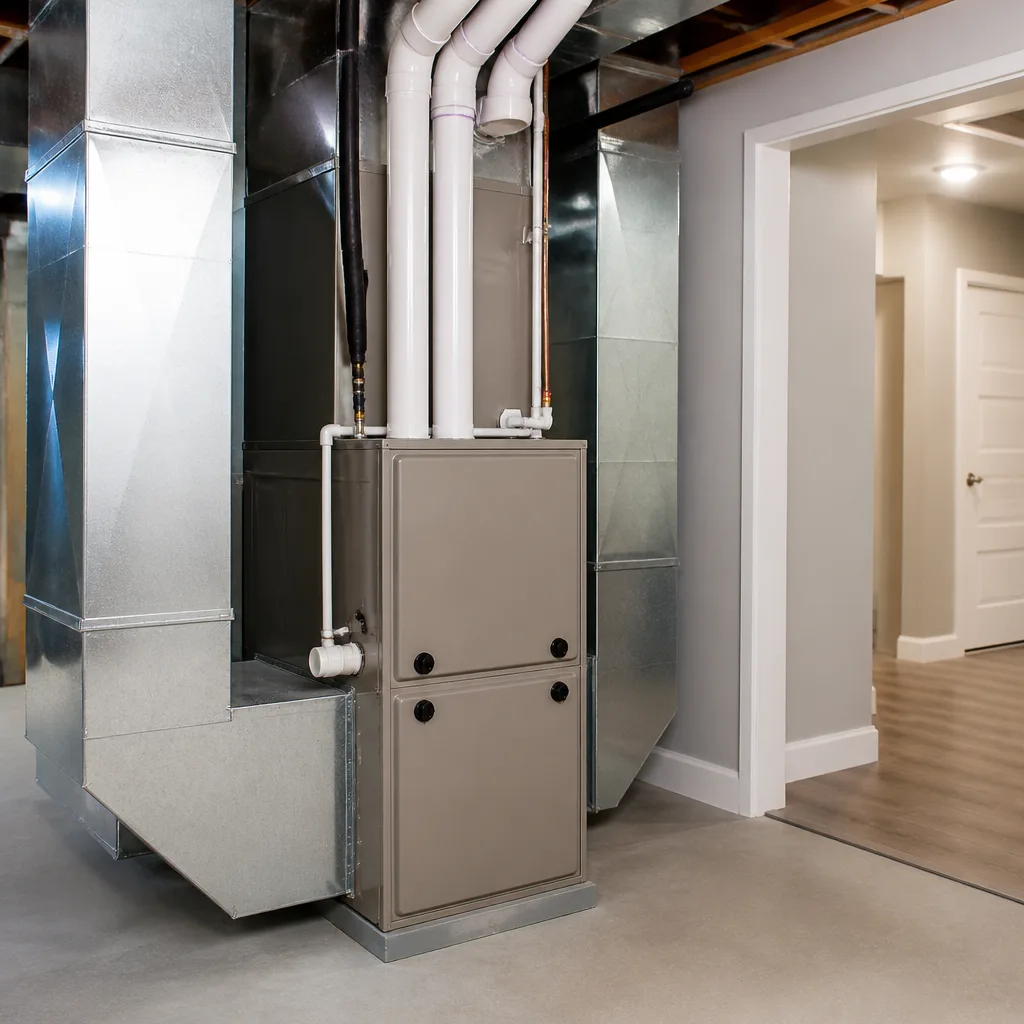 Furnace & heating
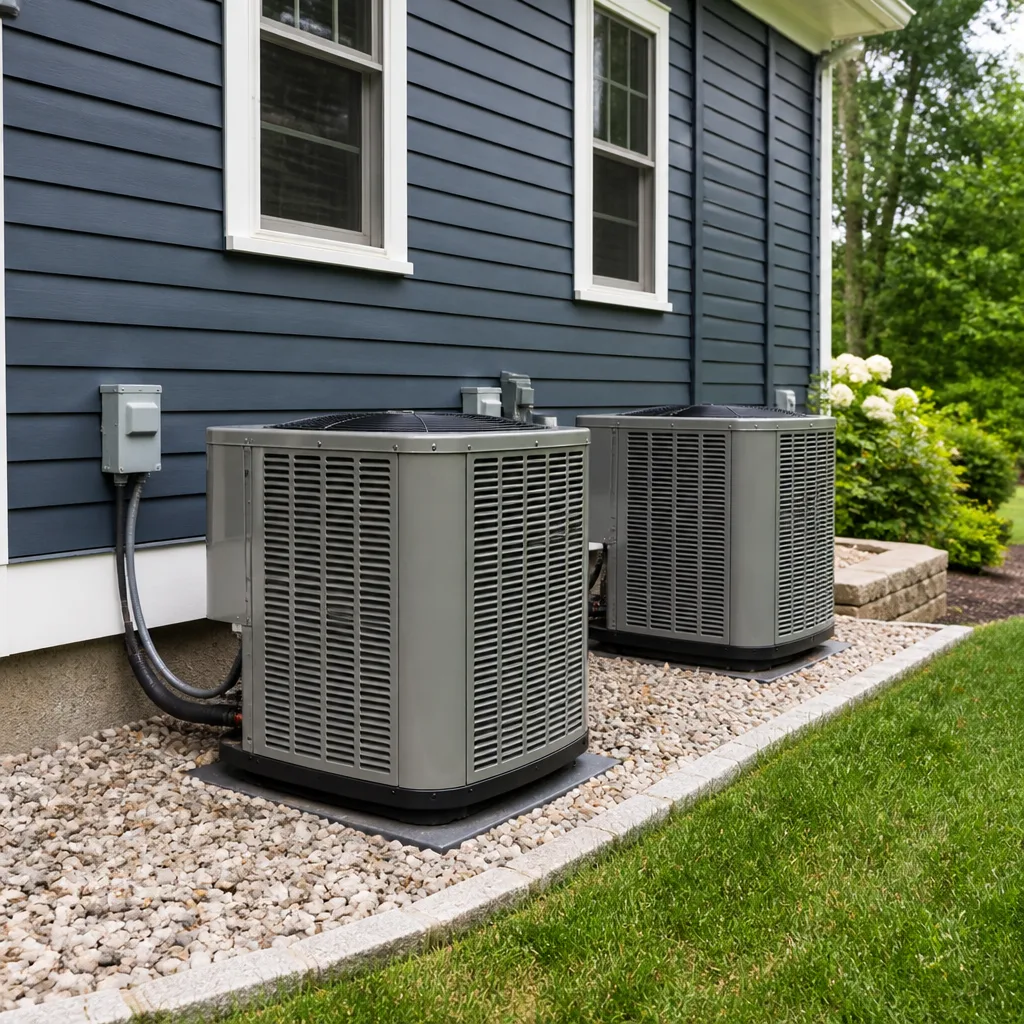 Heat pumps
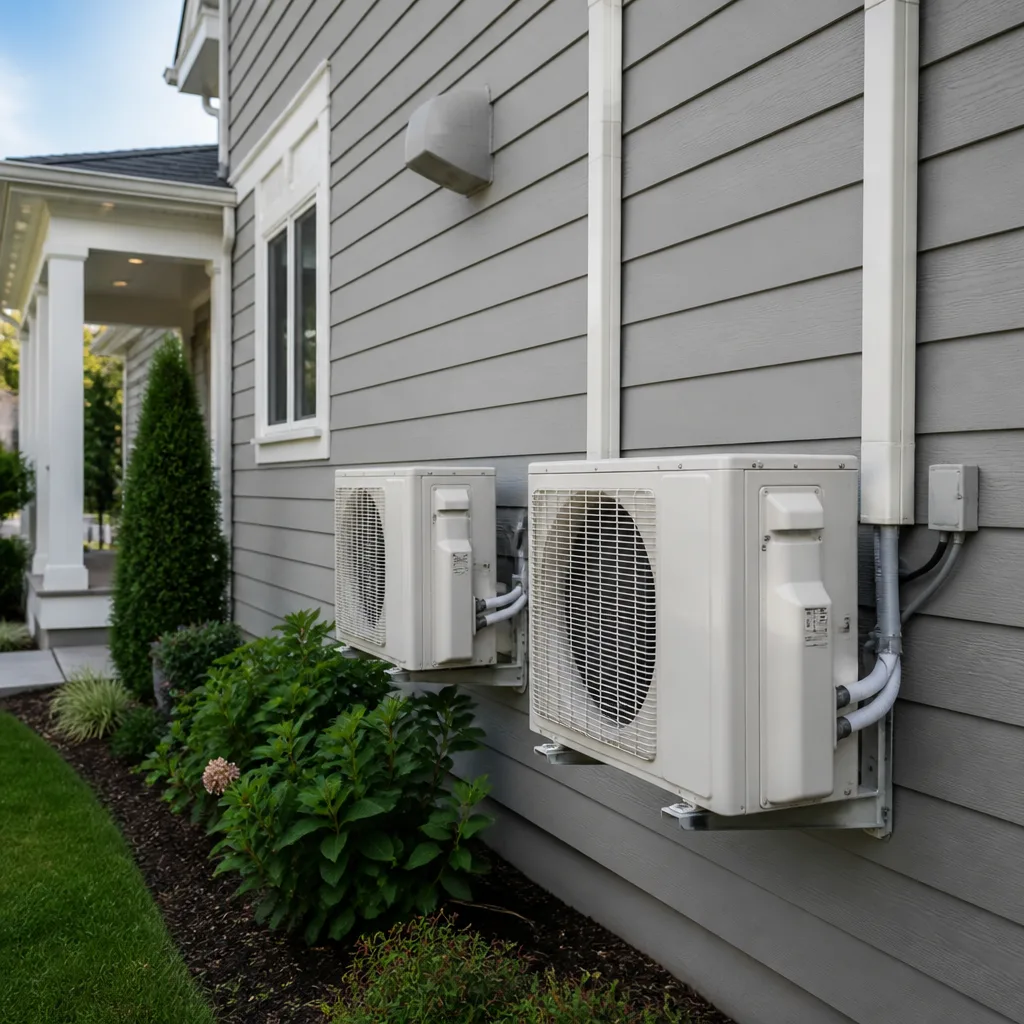 Ductless mini splits
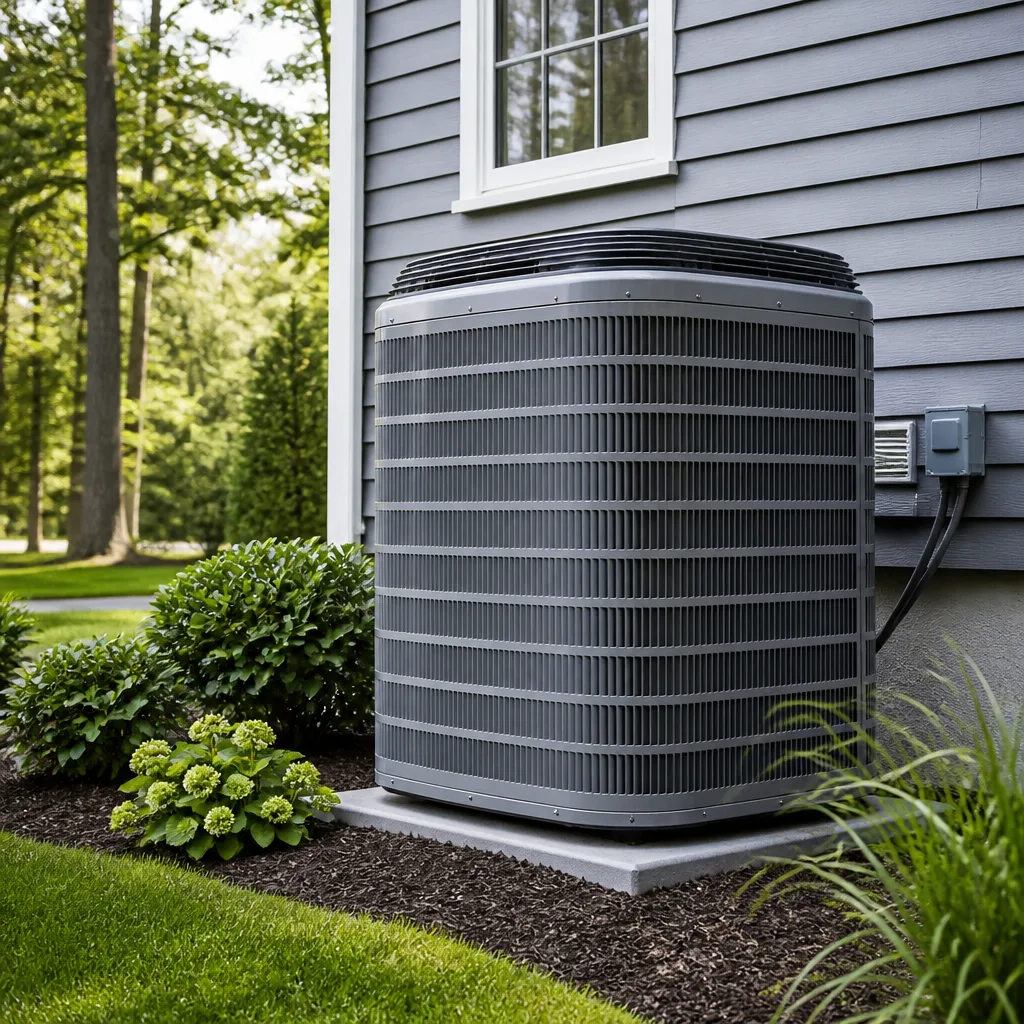 Carrier
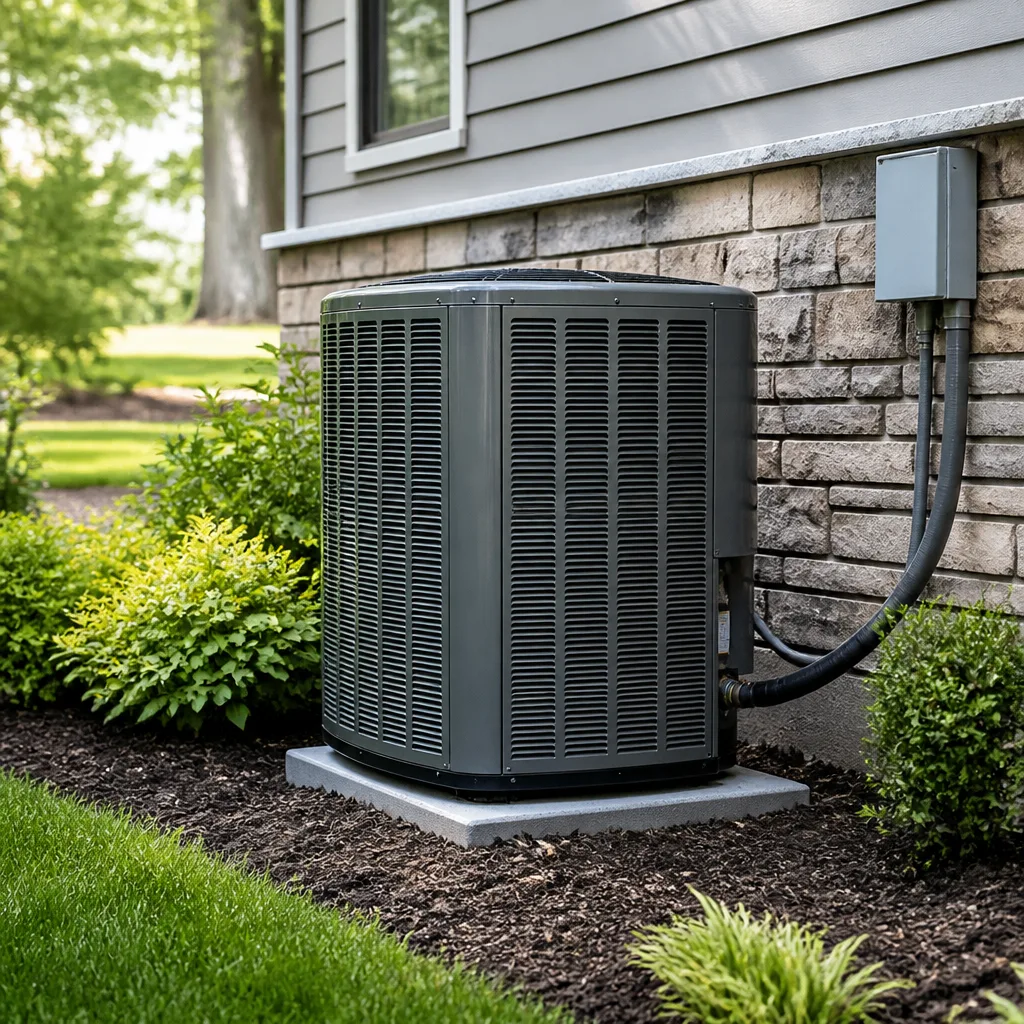 Trane
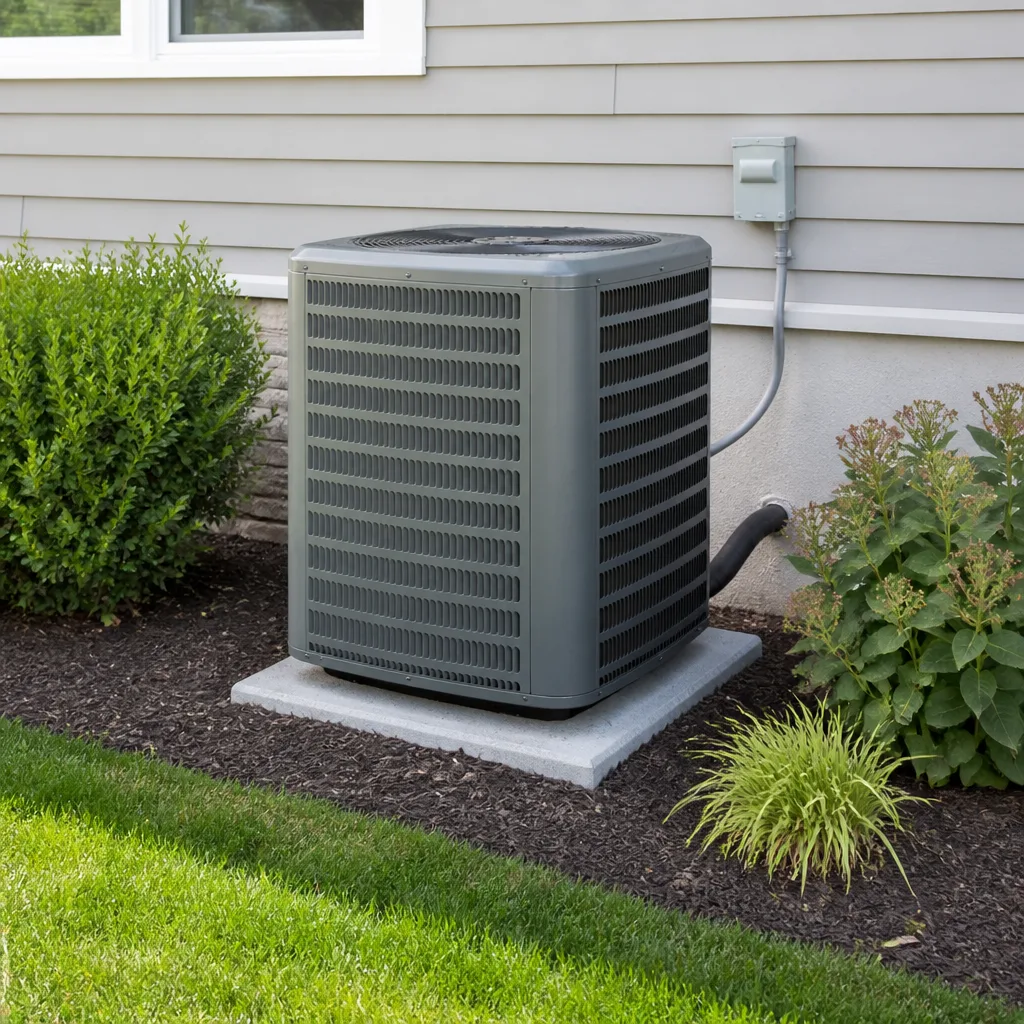 Goodman
Seasonal tune-up and full diagnostic on your Carrier, Trane, or Goodman system - readings shown to you before any repair is proposed
Diagnosis first, numbers second - you approve the repair price before a single part goes in.
Get your free estimateHVAC Emergency Preparedness Guide for Spring Valley Homes
During the 2023 heat dome, Clark County logged over 400 heat-related ER visits in a single week. Most of them started the same way: an AC quit in the late afternoon, nobody in the house knew what to check first, and by evening the living room was hotter than the patio. If you live in Spring Valley and your system fails on a 110-degree July day, the ninety minutes before a tech walks through the door matter more than most people realize. This guide is about those ninety minutes. We’ll cover what to check, what to shut off, where to go if your home gets dangerous, and exactly what to have ready when you call.
Quick Answer
If your AC fails during extreme heat, close blinds, block sun-facing windows, put the household in the coolest room on the lowest floor, and drink water before you feel thirsty. Then figure out whether it’s a tripped breaker, a failed capacitor, or a refrigerant problem, because that determines whether you can wait until morning or need help right now. Elderly residents, infants, and anyone on medications that affect sweating should not wait alone. Call (833) 620-7288 and a live person answers around the clock.
Styles & brands we work with
- AC repair
- Furnace & heating
- Heat pumps
- Ductless mini splits
- Carrier
- Trane
- Goodman
Table of Contents
- The 90-Minute Protocol: What to Do the Moment Your AC Quits
- Breaker, Capacitor, or Refrigerant? How to Tell What You’re Dealing With
- Spring Valley Cooling Centers and Public Resources Most Residents Don’t Know About
- What to Have Ready When You Call a Tech at 11 PM
- Building a Simple HVAC Emergency Kit
- When the Heat Fails Instead: Winter Emergency Prep
- The Warning Signs You Can Catch Before the Emergency
The 90-Minute Protocol: What to Do the Moment Your AC Quits
July 14th. Ten at night. The thermostat is at 84 and climbing, and the air coming out of the vents feels like nothing at all. Here’s the order that keeps your household safe while you wait.
- Close every blind and curtain on the sunny side. West-facing windows in Spring Valley homes can push a room several degrees hotter on their own. Fabric or a folded blanket over glass helps more than people expect.
- Move everyone to the lowest floor, in the room with the fewest windows. Heat rises, and upstairs bedrooms get dangerous fast in a house that’s been cooking all day.
- Drink water now, not when you’re thirsty. Thirst lags behind dehydration by the time you notice it, especially in adults over 60.
- Run box fans for airflow, not for cooling. Fans move air and help sweat evaporate. They do not lower the temperature. Above roughly 95 degrees indoor, fans on skin can help but fans pointed at an empty room don’t.
- Take cool showers or apply wet cloths to wrists, neck, and ankles. This is the fastest way to bring core temperature down without equipment.
- Check on anyone elderly, pregnant, or under five every hour. They can’t always tell you they’re in trouble.
If you have a window unit stored in the garage, get it out early. Don’t wait until midnight to discover the cord doesn’t reach an outlet. That leads us to the kit section further down.
Breaker, Capacitor, or Refrigerant? How to Tell What You’re Dealing With
What fails determines how long you can safely wait. A tripped breaker is a ten-second check. A bad capacitor usually means the compressor won’t start, and it’s typically a same-day repair. A refrigerant leak on a 110-degree day is different math: the system can run on low charge and never cool the house below 80. Knowing which of these you’re facing helps you decide whether to sleep on it or pick up the phone.
Check these in order
- Thermostat first. Dead batteries in a thermostat have sent plenty of people into a panic over nothing. Check it, then change the batteries if it’s blank.
- Breaker panel. Find the double-pole breaker labeled for the AC (usually 30 or 40 amp). If it’s tripped, reset it once. If it trips again immediately, stop and call someone. Repeated tripping is a sign of a real electrical problem, and it’s not a job for a homeowner.
- Filter. A completely clogged filter in Spring Valley dust country can choke airflow to the point that the system freezes and stops cooling. Pull it, look at it, and change it if it’s gray.
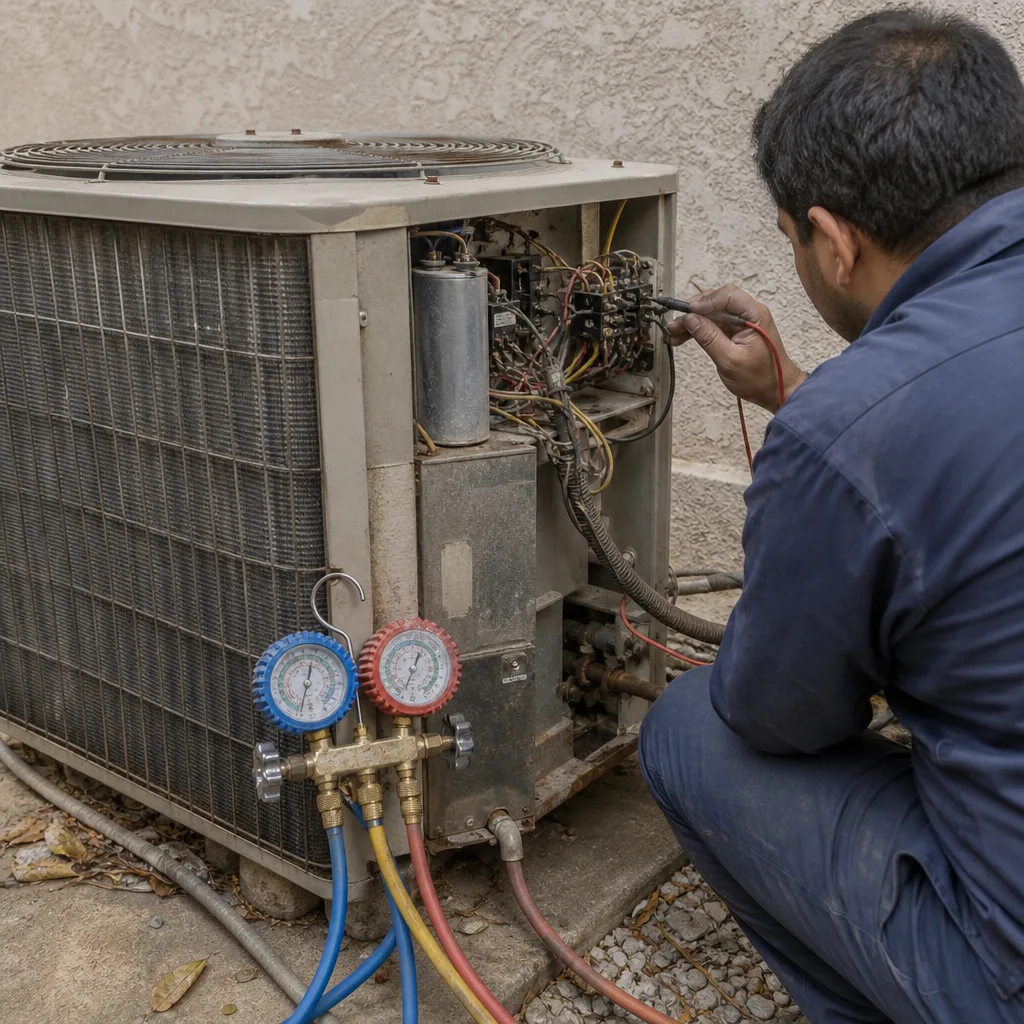
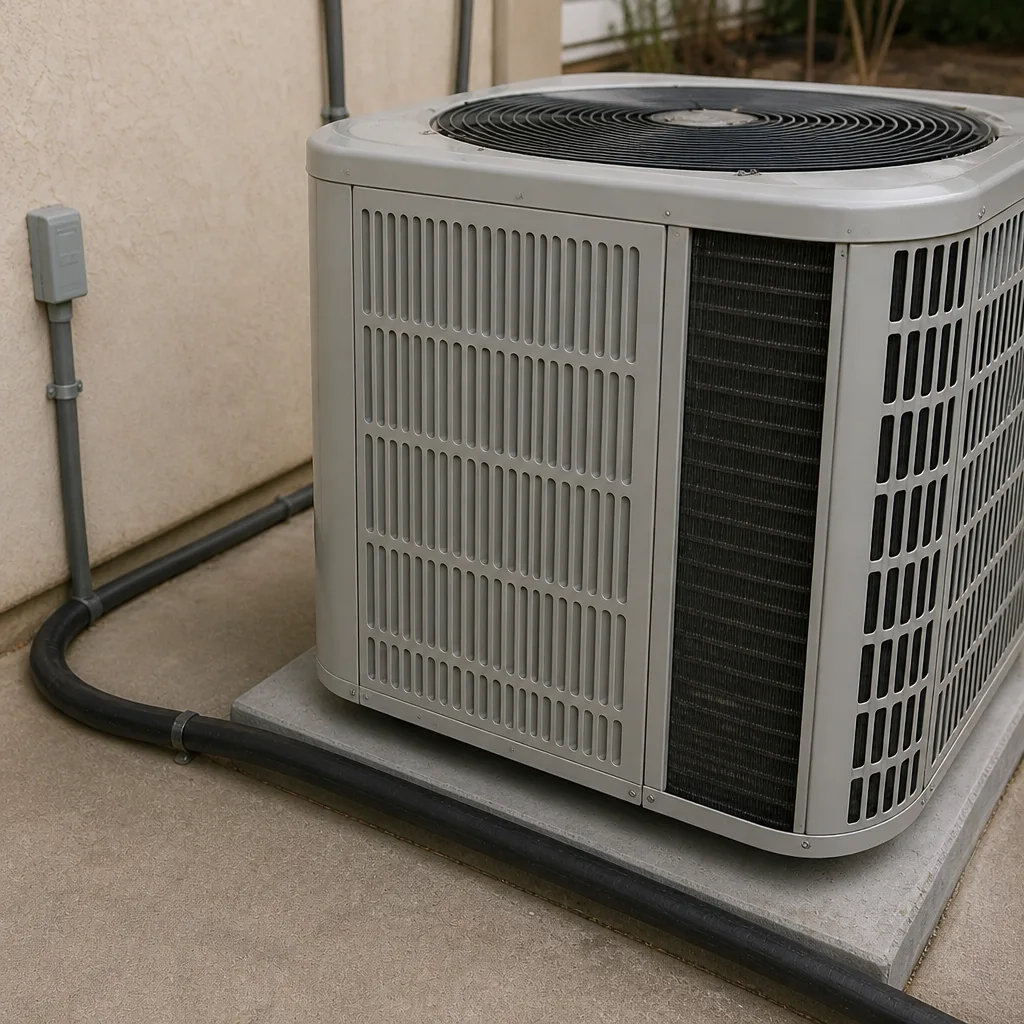
- Capacitor (listen and observe). If the outdoor unit hums but the fan doesn’t spin, or you hear a click and nothing else, a failed run capacitor is a very common cause. Capacitors are cheap parts and a common failure point in desert heat. Replacing one is a technician’s job, but recognizing the symptom tells you what to expect when you call.
Safety note: Capacitors hold a dangerous charge even after power is off, and the electrical panel and outdoor disconnect carry real voltage. We do not recommend opening the panel or handling capacitor leads yourself. The point of this section is to help you describe the symptom accurately, not to do the repair.
Refrigerant is the one problem you cannot diagnose from outside. Low charge shows up as weak cooling, ice on the lines, or the system running constantly and never catching up. If you see ice on the copper lines at the outdoor unit, turn the system off at the thermostat and call. Running a system on low charge can destroy the compressor, and that’s the most expensive kind of failure.
Spring Valley Cooling Centers and Public Resources Most Residents Don’t Know About
Most people don’t think about cooling centers until the night they need one. Clark County and the local library system open daytime cooling stations during heat emergencies, and the public libraries in and around Spring Valley routinely serve as a cool place to spend the afternoon when your home is unbearable. The Spring Valley Library on Flamingo is the one most of our neighbors end up at. Hours and heat-day availability change, so check ahead rather than drive over on assumption. For the current list of cooling stations and heat emergency resources, the Clark County website and the Southern Nevada Health District both publish them during declared heat events.
Two things worth doing before summer:
- Write down the closest cool location and its hours. Put it on the fridge. Your phone will not help you if it’s dead or you’re too overheated to search.
- Know your county services. Clark County’s social services line and the Area Agency on Aging can connect elderly residents with transportation or assistance during heat emergencies. This is the kind of thing that’s obvious in hindsight and invisible in the moment.
Cooling centers are a daytime backup, not a plan for an overnight failure. If it’s 10 PM, the outdoor temperature is still over 100, and there’s a newborn in the house, you don’t have the luxury of waiting until morning.
What to Have Ready When You Call a Tech at 11 PM
When you’re calling about an HVAC emergency in Spring Valley at eleven at night, the person on the other end is trying to figure out three things fast: what’s wrong, how urgent it is, and what to bring. The four details below cut roughly 30 minutes off a diagnosis because the tech arrives already knowing what to expect.
- The model and serial number of the outdoor unit. It’s on a plate on the side. Snap a photo of it during the day when you can, so you’re not crawling outside with a flashlight at midnight.
- What the system is doing. “Nothing at all,” “fan runs but it’s blowing warm,” “outdoor unit hums and clicks,” or “it’s running constantly and never cooling.” Four different diagnoses from four different descriptions.
- What you’ve already checked. Breaker, thermostat batteries, filter. Say so. It saves a trip through the same steps on arrival.
- Filter size and age, and the last time the system was serviced. A clogged filter and a system that hasn’t been looked at in three years tells the tech a lot about what to expect.
Have the address written down clearly, and note whether the gate is locked, dogs are out, or the unit is on the side of the house behind a fence. In Spring Valley neighborhoods with side-yard units, that detail alone saves five minutes of wandering.
Building a Simple HVAC Emergency Kit
Five items. Under a hundred dollars if you don’t already own some of them. This is the kit that turns a two-in-the-morning panic into a manageable night.
- A backup window unit, stored ready to go. Even a small 5,000 BTU unit will cool one bedroom enough to sleep in. Store it clean with the mounting hardware in a labeled box. Test it in April, not in July.
- An extension cord rated for the job. Window ACs draw serious current. Use a 12-gauge (or heavier) cord of the shortest length that reaches the outlet. A thin cord on a window unit can overheat and start a fire. This is not a place to grab the old lamp cord.
- A written contacts list. Your HVAC company’s number, the cooling center info, your utility number, and a family member’s number. On paper. Because phones die, drop signals, and lock you out of your own contact list when you need them most.
- A cheap thermometer for the supply vent. A small thermometer lets you tell whether the system is actually blowing cold air or just blowing. That’s the difference between “wait until Monday” and “call now.”
- Batteries and a spare filter. The right-size filter, not the one that was on sale. A filter too dense for your system chokes airflow.
Our team’s experience with desert-system failures is that the emergency is rarely the failure itself. It’s the two or three missing tools or pieces of information that turn a manageable night into a rough one.
When the Heat Fails Instead: Winter Emergency Prep
Spring Valley winters are mild, but they get cold enough that a failed furnace in an older house with poor insulation matters. When the heat stops:
- Close off unused rooms and block drafts under doors with rolled towels. You’re trying to heat less square footage.
- Never use a gas oven, charcoal grill, or outdoor propane heater indoors. Carbon monoxide kills quietly. No exceptions, no debate.
- Space heaters need three feet of clearance and their own outlet. No extension cords on the high-wattage ones.
If the furnace is running but the house won’t warm up, the issue is likely airflow, a dirty filter, or a failed igniter. The pattern matters. If you smell gas at all, get out and call the gas company from outside. That’s not an HVAC question. That’s an emergency.
The Warning Signs You Can Catch Before the Emergency
The best emergency prep is catching the problem in May. These are the signals we regularly see in Spring Valley homes that should trigger a service call before the failure happens.
- Your system is running longer than it used to and still not reaching setpoint. That’s the classic low-refrigerant or compressor sign.
- You hear clicking or humming from the outdoor unit on startup. That’s a capacitor telling you it’s tired.
- The system is 12 years old or older and this is the first summer it’s worried you. A Goodman or Rheem unit that’s been fine for eleven summers and suddenly isn’t usually has a story behind it. Get it looked at before the 110-degree week, not during it.
- Filters that clog in a month instead of three. Spring Valley dust is real, but accelerating clogs suggest airflow issues worth checking.
- Ice on the indoor coil or outdoor lines. Turn it off and call.
If you haven’t had your system checked this year, our AC Repair & Installation in Spring Valley page covers what a proper pre-summer check looks like. The Heating & Furnace in Spring Valley page covers the winter side of the same conversation. And if you’re wondering whether a heat pump or mini-split would handle the desert heat better than your current system, Heat Pump & Mini Split in Spring Valley breaks that down.
Common Mistakes to Avoid
- Opening the outdoor unit electrical panel. Capacitors hold a nasty charge even with the power off, and we’ve seen homeowners get badly shocked trying to save a service call. Call someone.
- Resetting the breaker three or four times. Reset it once. If it trips again, the panel is telling you something. Call it in.
- Relying on a phone contact list you can’t access. Phones die and lock. Write the number on paper and put it on the fridge.
- Buying the most expensive filter at the hardware store. A high-MERV filter that was designed for a different system chokes airflow and makes the house hotter. Use the size and rating your system is built for.
- Waiting out an overnight failure in a house with an infant or elderly resident. Heat illness is the emergency, not the broken AC. Move people somewhere cool, even if that means a hotel, a family member’s house, or the daytime cooling center when it opens.
- Adding refrigerant without finding the leak. Refrigerant doesn’t get used up. It gets lost, and where it was lost is the actual problem. Anyone who “tops off” without finding the leak is charging you to fix nothing.
- Calling at 11 PM and not knowing the model number. The four details in this guide take thirty minutes off a night call. Have them ready.
See the difference
 Before
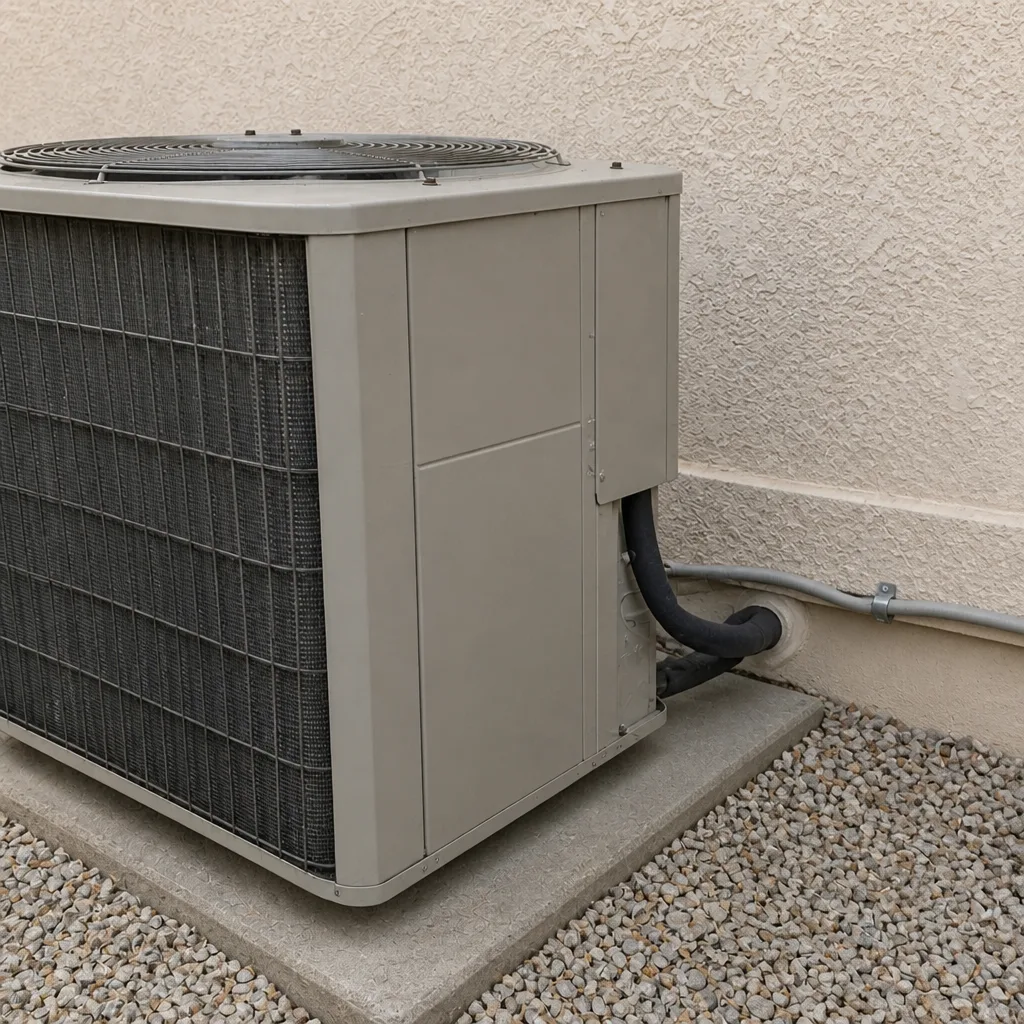 After
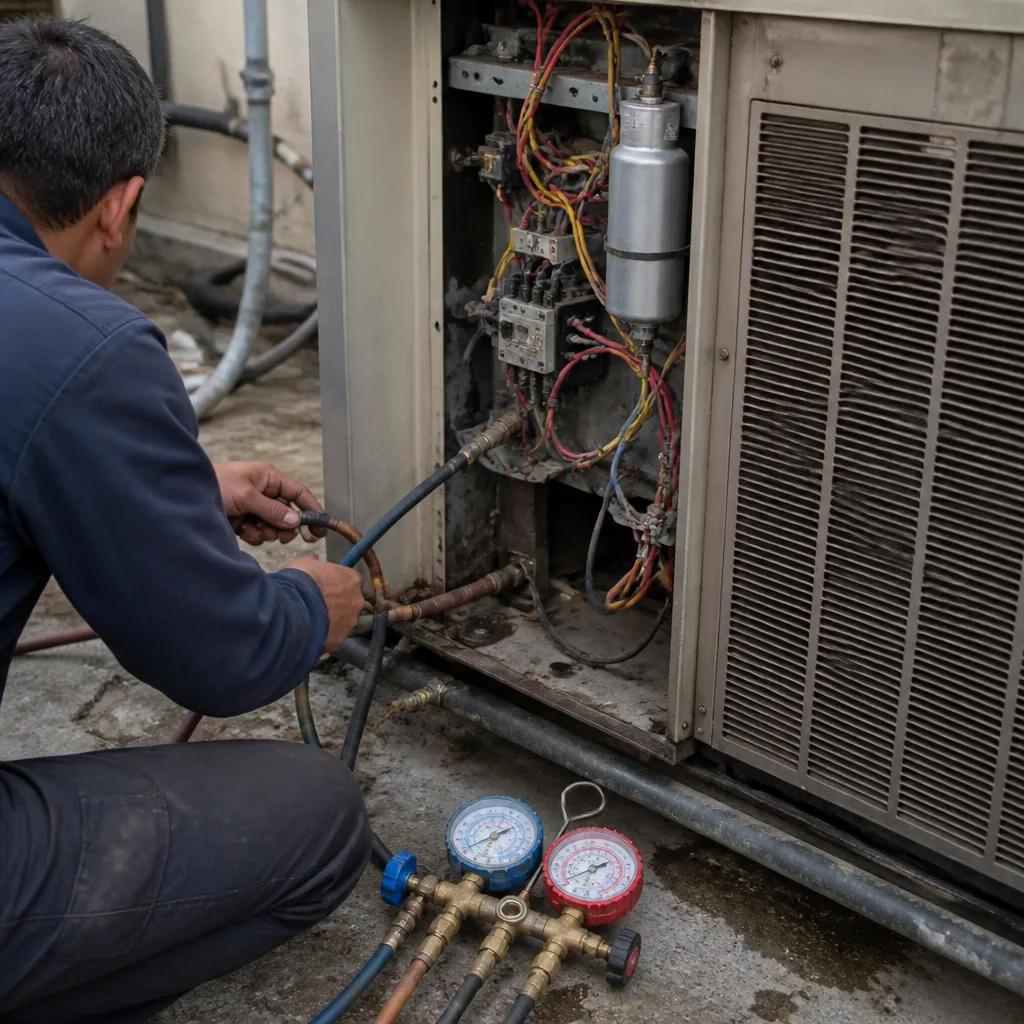 Before
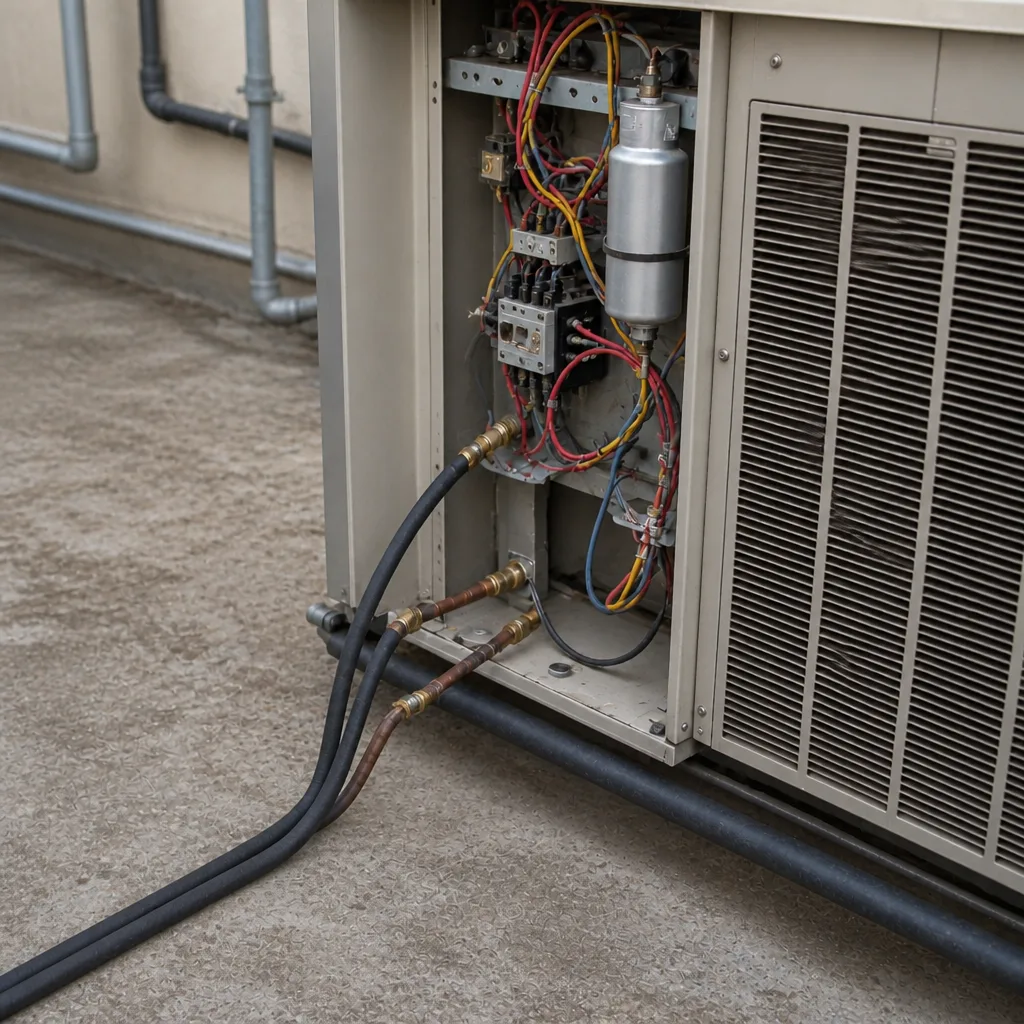 After
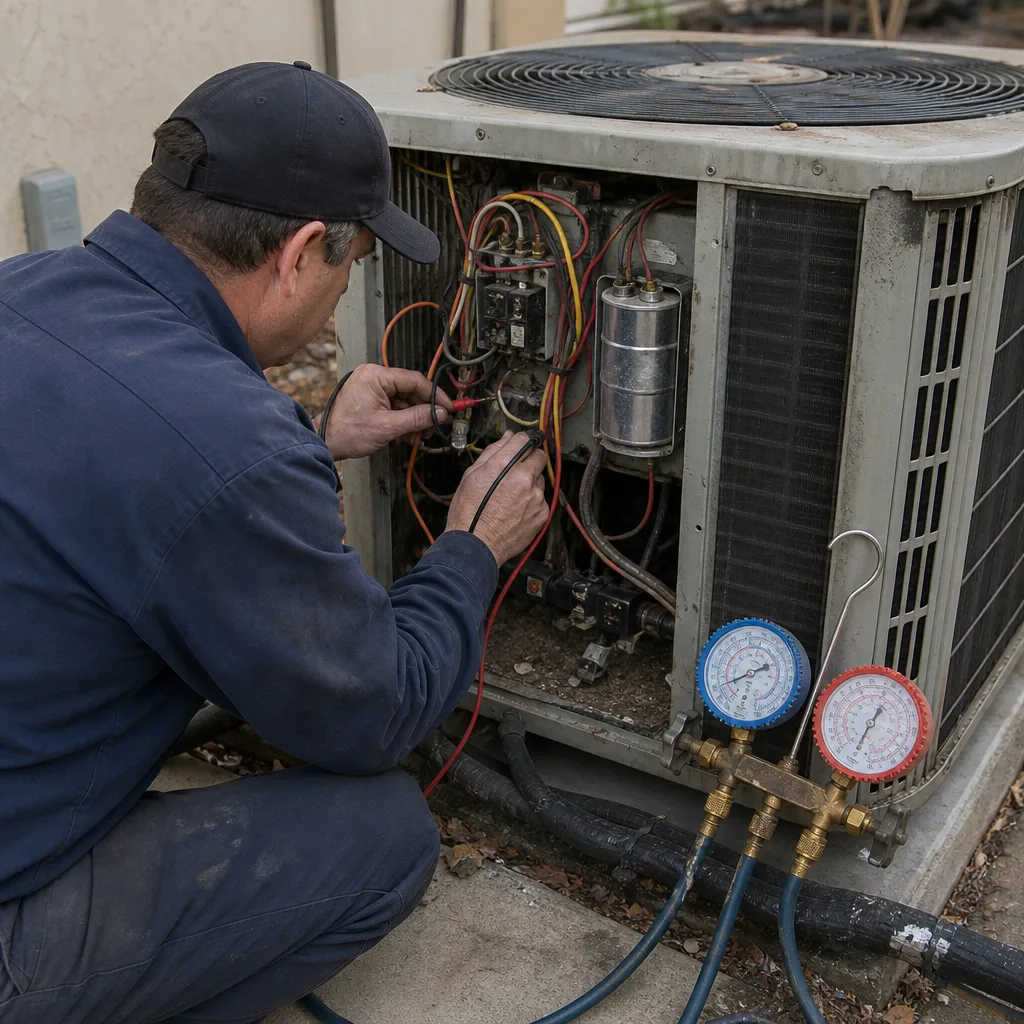 Before
 After
When to Call a Professional
Call Ray’s Heating & Air Spring Valley when the breaker trips more than once, when the outdoor unit clicks or hums and doesn’t spin up, when there’s ice on the lines, when your system runs constantly and can’t keep up, when a furnace won’t fire up on a cold night, or when you smell gas (from outside the house, immediately). When anyone in the home is elderly, very young, or medically vulnerable and the house can’t be kept cool, call regardless of what the diagnosis turns out to be, because the household safety comes first. We answer every call with a live person, 24 hours a day, and Ray himself picks up plenty of them. Free estimates in Spring Valley, no trip charge inside the county, and a free second opinion on any written estimate you’ve already got. Call (833) 620-7288 for a free estimate.
Frequently Asked Questions
For a healthy adult in a ventilated home with fans and water, waiting until morning is usually fine. For an infant, an elderly resident, anyone on medications that affect sweating, or anyone with heart or lung problems, waiting is not safe once indoor temperatures climb past the low 90s. Move them to a cool location and get help now. Call (833) 620-7288 for a free estimate.
A tripped breaker is a single breaker in the panel that resets once and stays on. A bad capacitor shows up as a humming, clicking outdoor unit where the fan doesn’t spin, or a compressor that won’t start. Reset a tripped breaker once, then call if it trips again. Don’t go past the panel yourself. Call (833) 620-7288 for a free estimate.
Four details cut real time off a night call: the model and serial number of the outdoor unit, what the system is doing, what you’ve already checked (breaker, thermostat, filter), and the filter size and last service date. Have the gate code, dogs, or side-yard access noted too. Call (833) 620-7288 for a free estimate.
Clark County and the Southern Nevada Health District publish cooling center lists during heat emergencies, and the local library branches serve as daytime cool locations. Spring Valley Library on Flamingo is the closest for most residents. Check the county website before you drive over, since hours and availability change with heat declarations. Call (833) 620-7288 for a free estimate.
Yes. A small 5,000 BTU window unit under a couple hundred dollars, stored ready to go, cools one bedroom enough to sleep in during a failure. Test it in April, and use a 12-gauge extension cord of the shortest reach. Call (833) 620-7288 for a free estimate.
Sometimes, yes. Same-night service depends on how many other homes are in the same boat on a given night, and during a heat wave the phones light up fast. We answer live and give honest travel expectations. Ray’s Heating & Air Spring Valley has a no trip charge inside the county and a free second opinion on any written estimate. Call (833) 620-7288 for a free estimate.
The Bottom Line
The ninety minutes before help arrives are the part of an HVAC emergency you actually control. Check the thermostat, then the breaker, then the filter. Know the difference between a tripped breaker and a humming capacitor, and don’t open the panel to check further. Move elderly residents and young kids to the coolest room in the house, or to a cooling center if it’s daytime. Keep a window unit, a proper extension cord, and a written contacts list ready before summer. A system that fails at 10 PM on July 14th can be a rough night or a dangerous one. The difference is the prep. Ray’s Heating & Air Spring Valley answers the phone every hour of every day, and Ray will be the person you see again at the hardware store. Back to the Ray’s Heating & Air Spring Valley home.
Written by the team at Ray’s Heating & Air Spring Valley.