
Last updated November 18, 2026
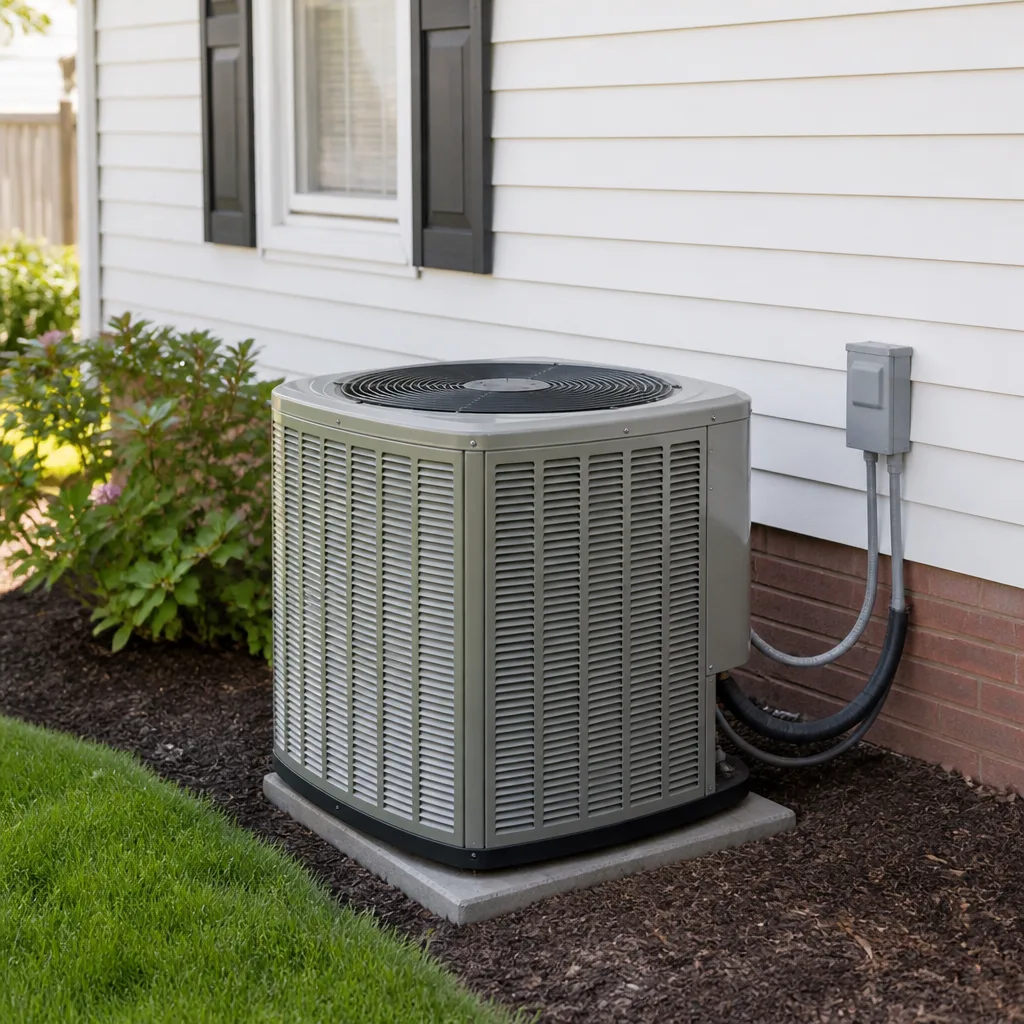 AC repair
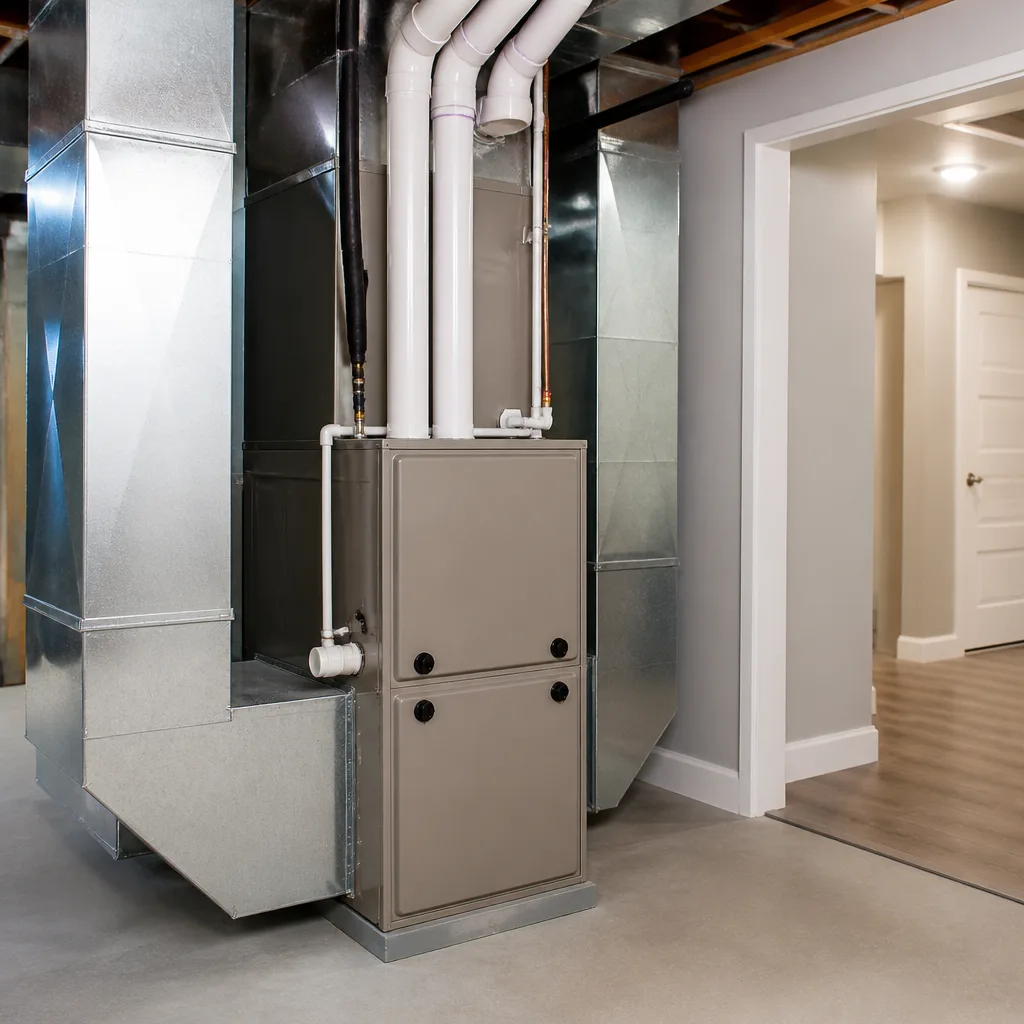 Furnace & heating
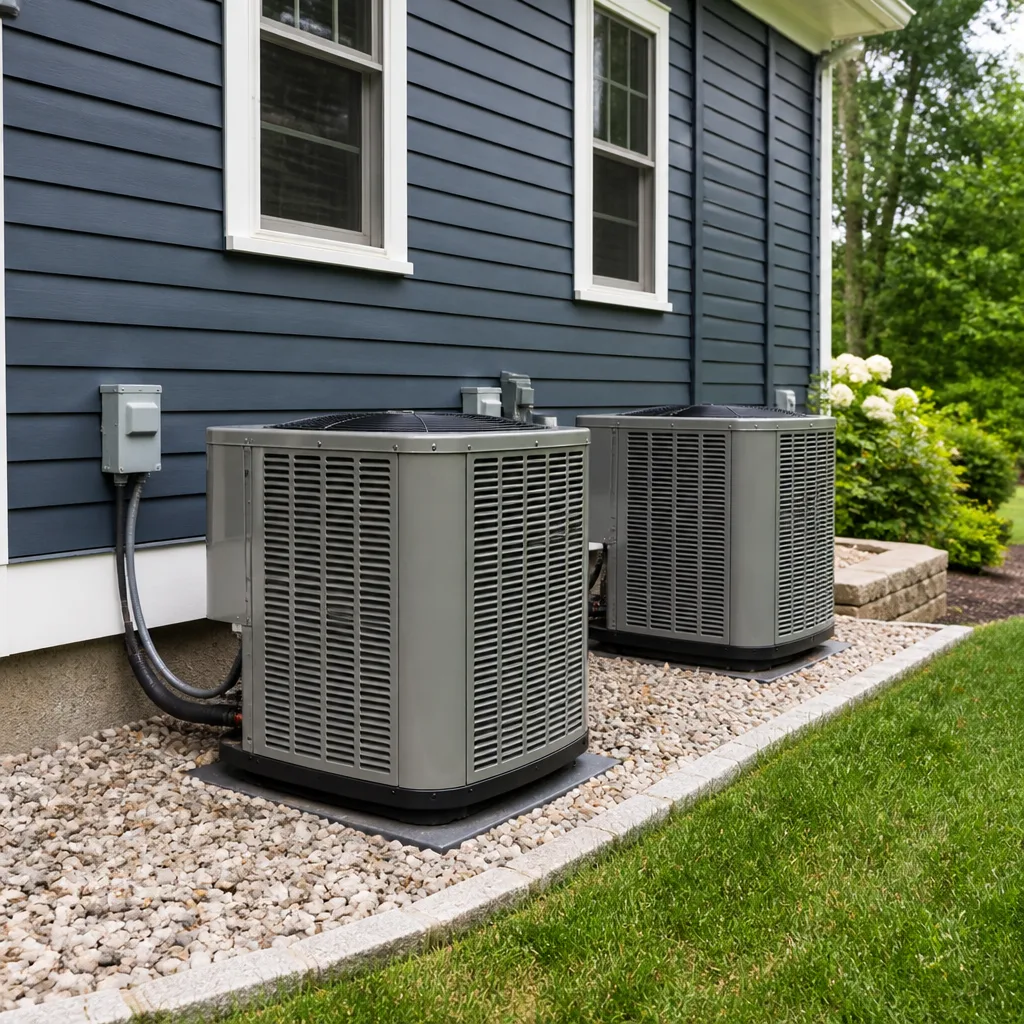 Heat pumps
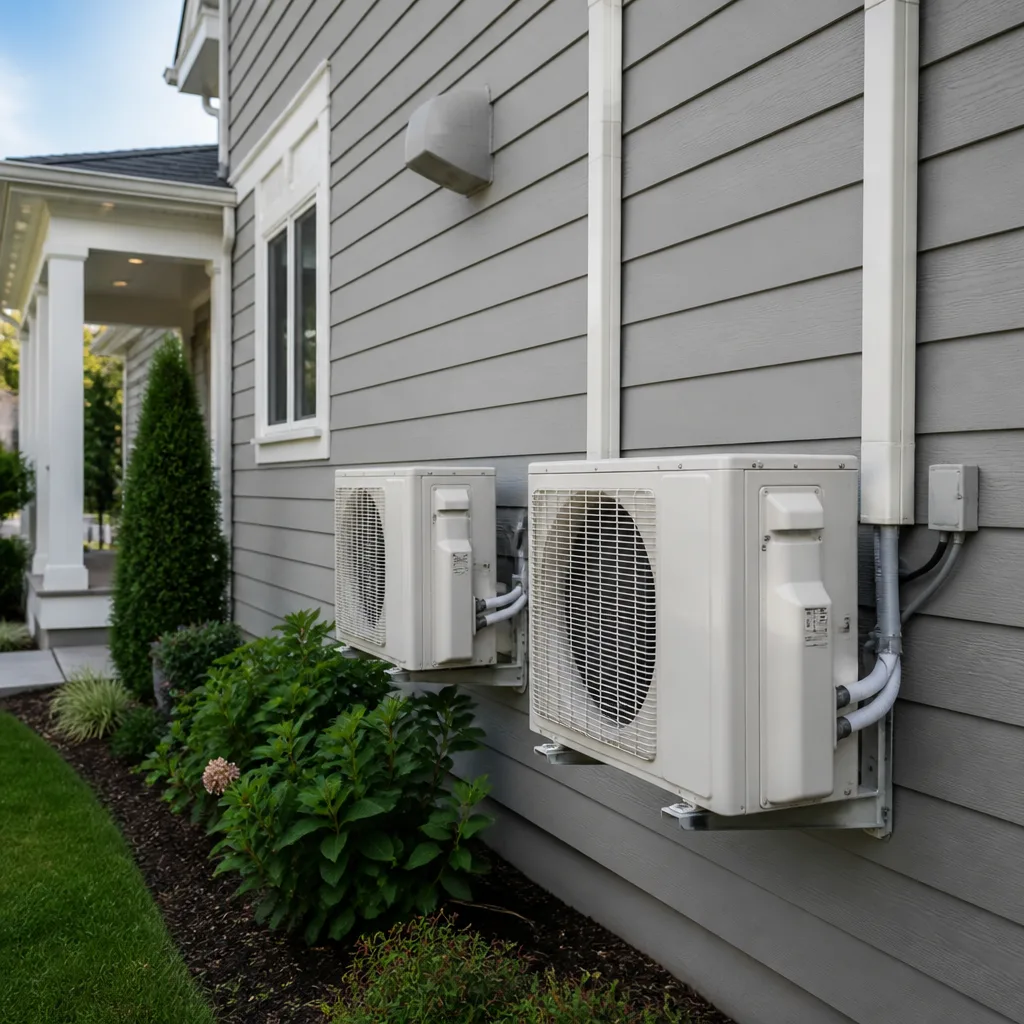 Ductless mini splits
 Carrier
 Trane
 Goodman
Seasonal tune-up and full diagnostic on your Carrier, Trane, or Goodman system - readings shown to you before any repair is proposed
Diagnosis first, numbers second - you approve the repair price before a single part goes in.
Get your free estimateEmergency & Commercial HVAC Maintenance Schedule: What to Do and When
About 70 percent of the emergency calls Ray takes in July trace back to something that would have been caught at a spring checkup. The homeowner didn’t skip maintenance because they were negligent – they skipped it because nobody told them what was actually at stake. That’s the whole point of this guide. We’re going to walk through the exact maintenance steps that stop the most common breakdowns in desert heat, organize them by urgency so you know what matters most, and show you what skipping each one costs you in real dollars per season. If you live in Spring Valley or anywhere in the valley where June hits 105 and doesn’t let up until September, this schedule is built for your climate, not a generic national checklist.
Quick Answer
The short version: your HVAC system needs a spring checkup before the first hot week, a filter change every 30 to 90 days depending on dust and pets, a condenser coil rinse in late spring, and a fall furnace inspection before the first cold snap. The single most important window in Spring Valley is April through May, because a system that hasn’t been checked before June is the one most likely to fail in July. Skip the spring visit and you’re gambling on the capacitor, the contactor, and the refrigerant charge all holding through the worst heat of the year.
Styles & brands we work with
- AC repair
- Furnace & heating
- Heat pumps
- Ductless mini splits
- Carrier
- Trane
- Goodman
Table of Contents
- Why Emergency Calls Aren’t Random Bad Luck
- Why Spring Is the Critical Window in Spring Valley
- The Maintenance Steps That Actually Prevent Breakdowns
- Your Maintenance Schedule by Urgency
- What Skipping Each Step Costs You Per Season
- How to Keep an Equipment Log That Saves You Money
- What a Maintenance Visit That Actually Works Looks Like
- Commercial Systems: A Different Schedule
Why Emergency Calls Aren’t Random Bad Luck
We’ve been running emergency calls in Spring Valley long enough to see the pattern clearly. The systems that die in a July heat wave are almost never the ones that got a spring checkup. They’re the ones that ran all of last summer, sat through the winter untouched, and came into June with a weak capacitor, a dirty condenser coil, and a refrigerant charge that was already drifting low.
Heat doesn’t break a system all at once. It stresses the parts that were already marginal. A capacitor that tested at 80 percent of its rated microfarads in April might hold through a mild June and fail on the first 110-degree afternoon in July. The compressor didn’t fail because of bad luck. It failed because it was starting against a weak capacitor for six weeks and nobody caught it.
That’s the whole thesis here: emergencies are predictable. Not every single one, but the majority. When you know what actually fails first under desert heat stress, you can schedule maintenance around those specific failure points instead of a generic 20-point checklist that spends half its time on things that don’t break.
If you want the full picture of how we approach repairs when something does go down, the AC repair and installation page for Spring Valley covers it in detail. But the goal of this guide is to keep you off that page in the first place.
Why Spring Is the Critical Window in Spring Valley
Spring Valley sits in a high desert bowl where the swing from April to July is brutal. You can have a 78-degree afternoon in mid-April and a 108-degree afternoon by the second week of July. That’s roughly a 30-degree jump in about twelve weeks, and your system feels every degree of it.
Here’s what happens to a system that doesn’t get checked before June. The condenser coil accumulates a winter’s worth of dust, cottonwood fluff, and the fine caliche dust that blows through the valley in spring. That dust insulates the coil. The system can’t reject heat as efficiently, so it runs longer cycles, the compressor gets hotter, and the refrigerant pressures climb. By the time July arrives, the system is working 20 to 30 percent harder than it should to move the same amount of cool air.
That extra load is what kills marginal parts. The capacitor that would have lasted another two seasons fails in six weeks. The contactor pits and sticks. The blower motor runs hot and trips its thermal overload. None of that is dramatic on its own, but stacked together it’s the recipe for a no-cool call on the hottest day of the year.
The spring window matters because it’s the last chance to catch those marginal parts while they’re still just marginal. A spring checkup in April catches the weak capacitor before it takes out the compressor. A spring checkup in June is a repair visit dressed up as maintenance.
For heating systems, the same logic applies in reverse. We see furnace failures in December trace back to a fall inspection that got skipped, most often a dirty flame sensor or a cracked heat exchanger that was showing warning signs in October. The heating and furnace service page covers the specific fall checklist if you want to dig into that side.
The Maintenance Steps That Actually Prevent Breakdowns
Most maintenance checklists are 20 to 30 items long, and about half of them don’t prevent anything. They generate a report that looks thorough but doesn’t change the odds of a July emergency. These are the steps that actually move the needle in a high-heat climate. When we say “move the needle,” we mean these are the specific maintenance points tied to the failure modes we see most in Spring Valley.
The Eight Steps That Matter Most
- Test the capacitor under load. A capacitor is the cheapest part in the system and the most common cause of a no-cool call. Testing microfarads against the rated value – not just checking for bulging – catches a weak capacitor weeks before it fails. This is the single most important maintenance step in a desert climate.
- Check the contactor for pitting and sticking. The contactor is the switch that fires the compressor and condenser fan. In a dusty environment it pits faster than in a clean one. A pitted contactor causes intermittent failures that are hard to diagnose later. Catch it early and it’s a $20 part.
- Wash the condenser coil. Not rinse – wash. The coil needs a proper cleaning with coil cleaner, not a garden hose spray. A dirty coil on a 110-degree day is the number one cause of high head pressure and compressor shutdown.
- Verify the refrigerant charge by superheat or subcooling. A system that’s 10 percent low on charge runs longer to hit the same setpoint, which stresses the compressor. Checking charge accurately (not just “it feels cold”) catches slow leaks before they become a dead compressor.
- Measure amp draw on the compressor and blower motor. Amp draw above nameplate rating means the motor is working harder than it should. That’s a signal something else is wrong – dirty coil, failing bearing, low charge – and it’s a leading indicator of failure.
- Inspect and clean the blower wheel. A dirty blower wheel cuts airflow, which makes the system run longer and can freeze the evaporator coil in low-humidity conditions. In Spring Valley’s dust, the blower wheel needs attention every spring.
- Check the condensate drain and float switch. A clogged drain line can trip the float switch and shut the system down in the middle of July. It’s a five-minute check and a two-minute fix that prevents a call.
- Verify the thermostat calibration and the filter condition. A thermostat reading 3 degrees off means the system runs longer than it needs to. A dirty filter chokes airflow. Both are cheap to fix and both matter more than people think.
Notice what’s not on this list: checking the air filter housing bolts, wiping down the cabinet, and the other cosmetic items that pad out a report. Those things aren’t harmful, but they don’t stop emergencies. The eight above do.
Your Maintenance Schedule by Urgency
Not every task belongs in the same visit. Some things need to happen in April, some can wait until May, and a few can wait until fall. Here’s how we’d organize the calendar if it were our own house in Spring Valley.
Do First (April – Before the First Hot Week)
- Full spring cooling checkup with capacitor and contactor testing
- Condenser coil cleaning
- Refrigerant charge verification
- Blower wheel inspection and cleaning
- Condensate drain and float switch check
- Filter change and thermostat calibration check
Do Next (May – Before the First 100-Degree Day)
- Second filter change if you have pets or a dusty lot
- Outdoor unit clearance check – trim vegetation and remove debris
- Ductwork visual inspection for disconnected runs or obvious leaks
- Confirm the thermostat schedule matches your actual routine for the season
Do in Fall (October – Before the First Cold Snap)
- Full furnace or heat pump heating inspection
- Heat exchanger inspection for cracks (this is a safety item, not a comfort item)
- Flame sensor cleaning or replacement
- Igniter and burner inspection
- Carbon monoxide test on any gas-fired equipment
Year-Round (Every 30 to 90 Days)
- Filter check and change based on condition, not the calendar
- Visual check of the outdoor unit for debris, ice, or unusual noise
The exact dates aren’t as important as the sequence. The spring cooling checkup is the one that prevents summer emergencies. The fall heating inspection is the one that prevents winter emergencies and carbon monoxide worries. Everything else is secondary.
What Skipping Each Step Costs You Per Season
This is the part most maintenance guides won’t put in writing. Here’s what it actually costs to skip each step, based on the calls we see in Spring Valley and the surrounding valley towns.
Real Dollar Cost of Deferred Maintenance
- Skip the capacitor test: A weak capacitor fails in July and takes the compressor with it on a hot restart. A $20-capacitor visit becomes a $1,200 to $2,800 compressor replacement, or a full system replacement if the compressor is out of warranty.
- Skip the contactor check: A stuck contactor causes intermittent “system won’t turn on” calls that require two or three diagnostic visits to pin down. You’re paying for diagnostics on a part that costs less than a pizza.
- Skip the condenser coil cleaning: A dirty coil runs the system 20 to 30 percent harder. In a Spring Valley summer that’s an extra $60 to $140 on your July and August power bill, plus accelerated compressor wear that shows up as a failure within a season or two.
- Skip the refrigerant charge check: A system 10 percent low on charge runs 15 to 20 percent longer to hit setpoint. That’s another $40 to $100 per summer month, and the slow leak gets worse over time until the system stops cooling entirely.
- Skip the blower wheel cleaning: A dirty blower wheel reduces airflow enough to freeze the evaporator coil in low-humidity conditions. A frozen coil means a service call, a thaw-out, and sometimes a coil replacement.
- Skip the condensate drain check: A clogged drain trips the float switch and shuts the system down on the hottest day of the year. That’s an emergency after-hours call for something a five-minute check would have prevented.
- Skip the fall heat exchanger inspection: This is the one that isn’t about money. A cracked heat exchanger leaks carbon monoxide into the airstream. It’s a safety issue, not a comfort issue, and it’s non-negotiable.
Add it up and a household that skips two or three springs in a row is looking at $400 to $600 a year in extra energy cost, plus a much higher chance of a $1,500-plus emergency repair. The checkup that would have prevented all of it runs a fraction of that.
How to Keep an Equipment Log That Saves You Money
This is the single most underrated thing a homeowner can do, and almost nobody does it. A simple equipment log makes every future service call faster, cheaper, and less likely to end in a wrong diagnosis. The person at your door doesn’t know your system the way you do. A log closes that gap in about two minutes.
What to Put in the Log
- Model and serial number of the outdoor unit, indoor air handler, and furnace. Take a photo of the data plate and keep it in the log. When the system fails, you won’t be crawling around in the dark trying to read a faded sticker.
- Installation date and installing company. This matters for warranty claims and for figuring out the age of the system.
- Every service call: date, what was found, what was replaced, and the part numbers. If the capacitor was replaced in 2023, that tells the next person a lot. If the same part fails twice in two years, that’s a signal.
- Filter change dates and the filter size you use. This stops the annual “what size filter does this take” scramble and helps you buy in bulk.
- Refrigerant type and charge readings from each visit. A slow leak shows up in the numbers before it shows up in comfort. A log makes the leak visible.
- Any odd noises, smells, or behaviors, with dates. “Rattles on startup since March” is a lot more useful than “it’s been making a noise.”
You don’t need a fancy app. A spiral notebook in a kitchen drawer works. So does a note on your phone. The point is that the information is written down and you can hand it to whoever shows up. In our experience, a homeowner with a good log gets a faster diagnosis, fewer repeat visits, and a lower bill than one who doesn’t.
What a Maintenance Visit That Actually Works Looks Like
Not every maintenance visit is created equal. Some visits are thorough and actually reduce emergency risk. Others are a brisk walk-around, a filter swap, and a report that looks impressive but doesn’t tell you anything. Here’s how to tell the difference.
Signs of a Maintenance Visit That Reduces Risk
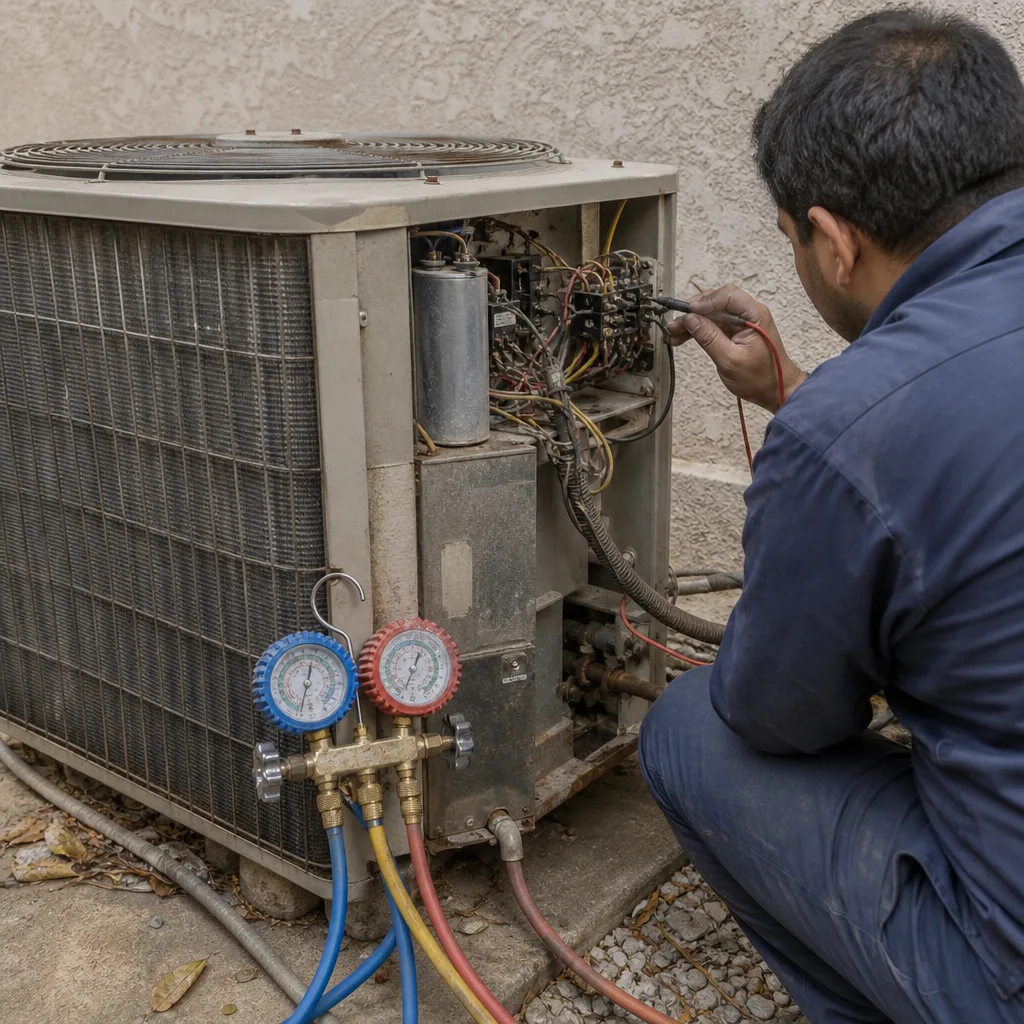
- The technician takes readings before touching anything. Capacitor microfarads, amp draw, refrigerant pressures, temperature split. If those numbers aren’t being recorded, the visit is cosmetic.
- You see the numbers. Readings first, numbers second. A technician who walks you through the actual readings – not just “everything looks good” – is a technician who is actually looking.
- The capacitor gets tested under load, not just visually inspected. A bulging cap is already bad. A cap that reads 80 percent of rated microfarads is on its way and needs to be flagged.
- The condenser coil gets washed with coil cleaner, not just hosed off. There’s a real difference and it shows up in the head pressure readings.
- The technician writes down the specific readings for you to keep. A visit with no written record can’t be compared to the last visit or the next one.
- The visit is long enough to actually do the work. A 15-minute “maintenance” visit on a full system isn’t a maintenance visit. It’s a filter change with a stamp on it.
Signs of a Visit That Just Generates a Report
- No actual readings recorded, just checkmarks
- A long list of “recommended services” with no explanation of what problem each one solves
- A sales pitch for a new system on a system that’s clearly still got years left
- Pressure to sign a service agreement on the spot without seeing the readings
If you’re in Spring Valley and you’re not sure what a good maintenance visit looks like, the standard is simple: you should be able to point to the readings and see the health of your system on paper. If you can’t, you got a report, not a maintenance visit.
Commercial Systems: A Different Schedule
Commercial HVAC runs on a different clock than residential. A rooftop unit on a Spring Valley strip mall runs 12 to 16 hours a day, not 6, and it’s working against the same desert heat with less downtime to recover. The maintenance schedule that works for a house will not protect a commercial system.
Commercial Maintenance Schedule
- Quarterly full inspections on any unit running more than 10 hours a day. Spring and fall are the minimum; summer needs a mid-season check in high-heat climates.
- Monthly filter changes in dusty commercial environments, or at minimum every 30 days during cooling season. Commercial filters load up fast.
- Belt inspection and tension check every quarter. A failing belt is a common commercial failure point and it’s cheap to prevent.
- Coil cleaning every six months minimum. Commercial coils load up faster than residential because of the surrounding dust and traffic.
- Economizer inspection each spring. A stuck economizer wastes money in mild weather and can fail to close in hot weather, driving up cost.
- Refrigerant leak check annually and after any low-charge event. Commercial systems have longer line sets and more joints, which means more leak points.
The good news about commercial is that the failure modes are the same as residential – capacitors, contactors, dirty coils, low charge, belts – just on a bigger scale and a faster clock. The bad news is that a commercial downtime event is more expensive because it shuts down the business, not just the living room. The heat pump and mini-split page has some relevant detail if you’re running split systems in a commercial space.
Common Mistakes to Avoid
- Skipping the checkup because the system “seems fine.” A system that’s running fine in April can be one weak capacitor away from a July emergency. Testing the marginal parts is the whole point, and you can’t feel a marginal capacitor from the thermostat.
- Only changing the filter when you remember to. In Spring Valley’s dust, filter change intervals should be based on condition, not the calendar. A filter that looks clean from the top can be fully loaded on the underside. Pull it and look.
- Waiting until June to schedule the spring checkup. By June, every HVAC company in the valley is booked solid, and you’re calling about a problem instead of scheduling maintenance. The good window is April and May.
- Trusting a maintenance visit that doesn’t record readings. If the report doesn’t show capacitor microfarads, amp draw, refrigerant pressures, and temperature split, the visit didn’t actually check the things that fail. It generated paper.
- Ignoring the outdoor unit’s surroundings. Trim anything within two feet of the outdoor unit. Cottonwood fluff, dryer vents pointed at the unit, and stored yard tools all reduce airflow and drive up head pressure.
- Treating commercial maintenance as a bigger version of residential. Commercial systems run longer hours and need a different schedule. Quarterly, not annual. Monthly filter changes during cooling season, not quarterly.
- Not keeping a log. Every service call without a written record is a call that the next technician has to re-diagnose from scratch. That’s your money and your time.
See the difference
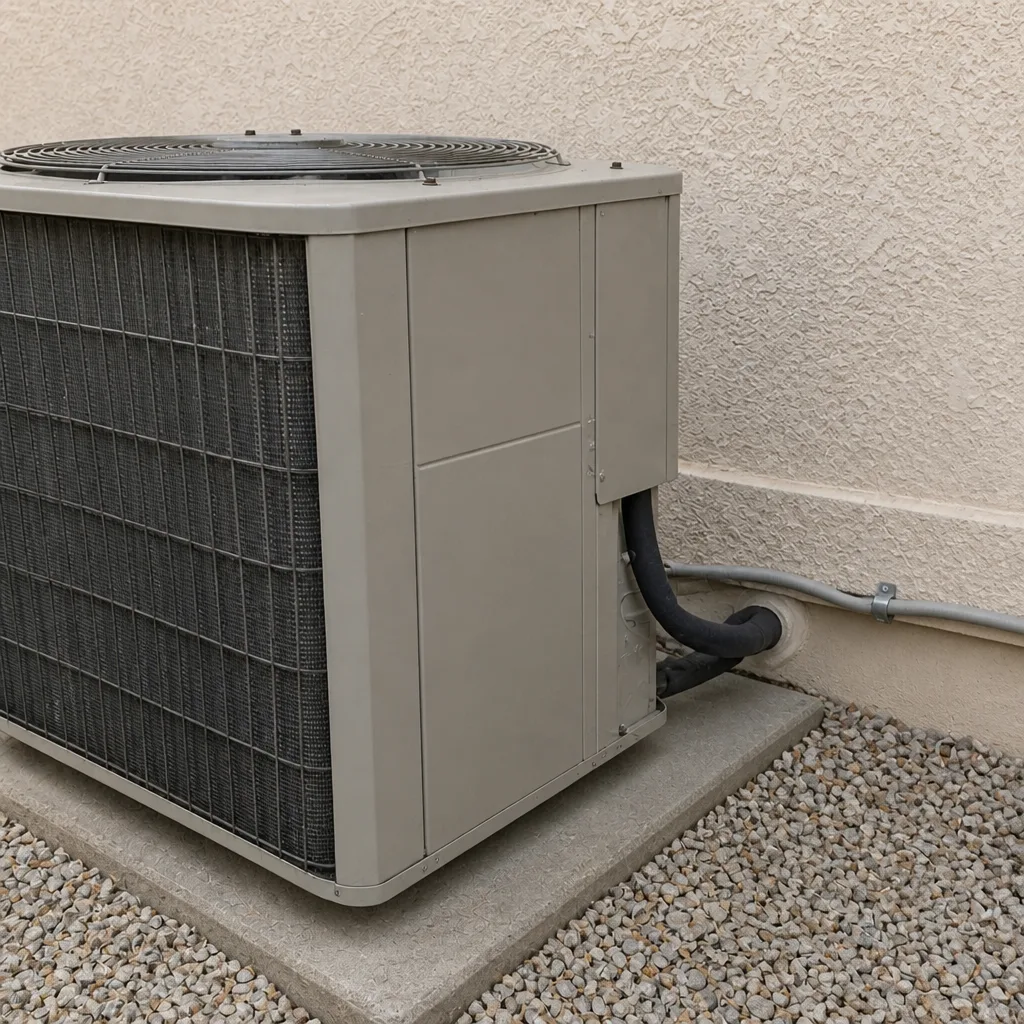
 Before
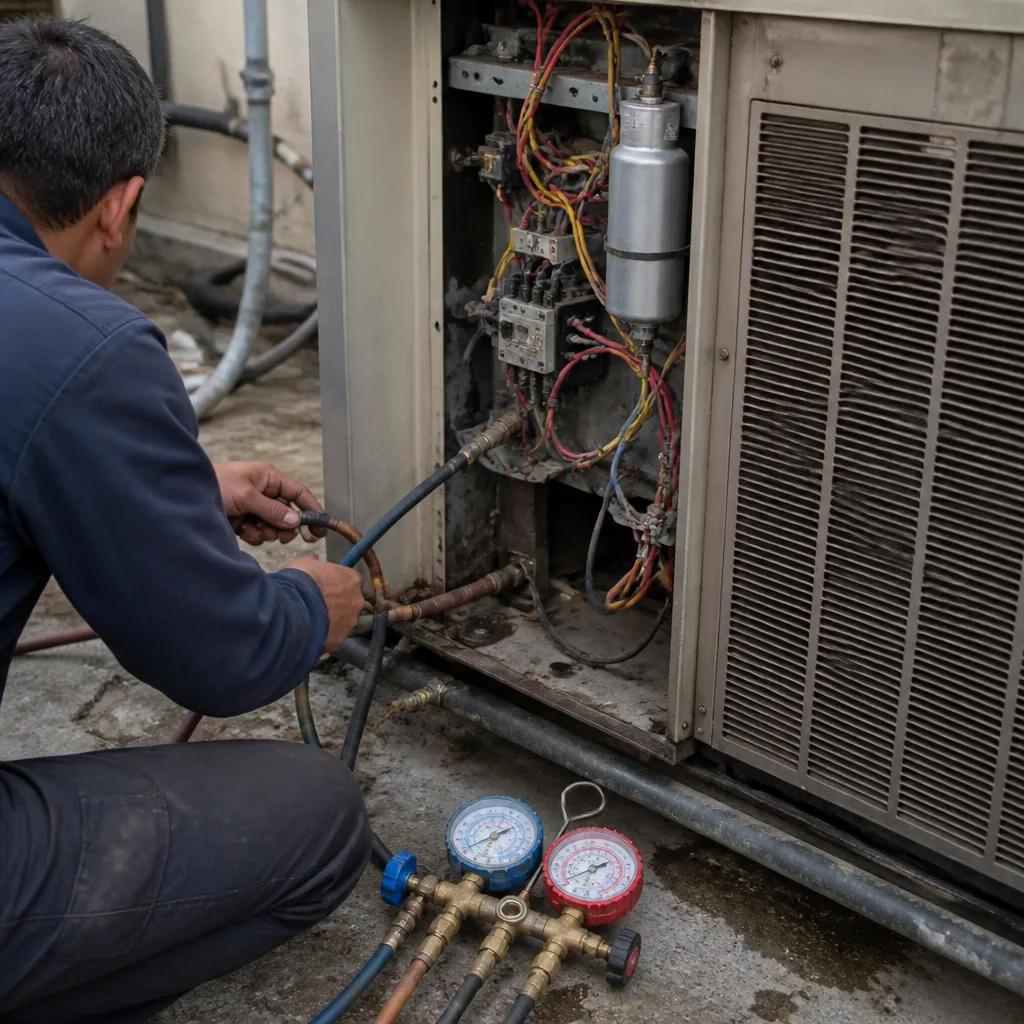
 After
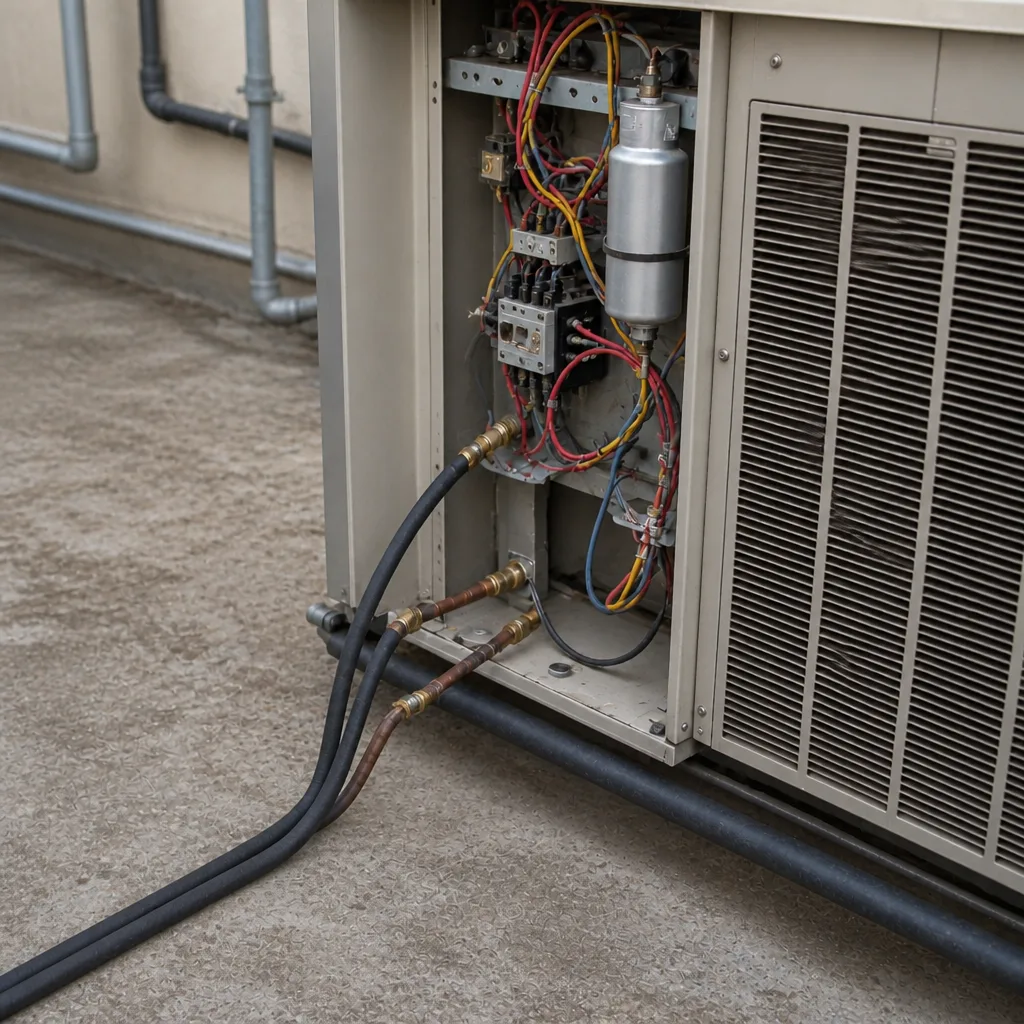
 Before
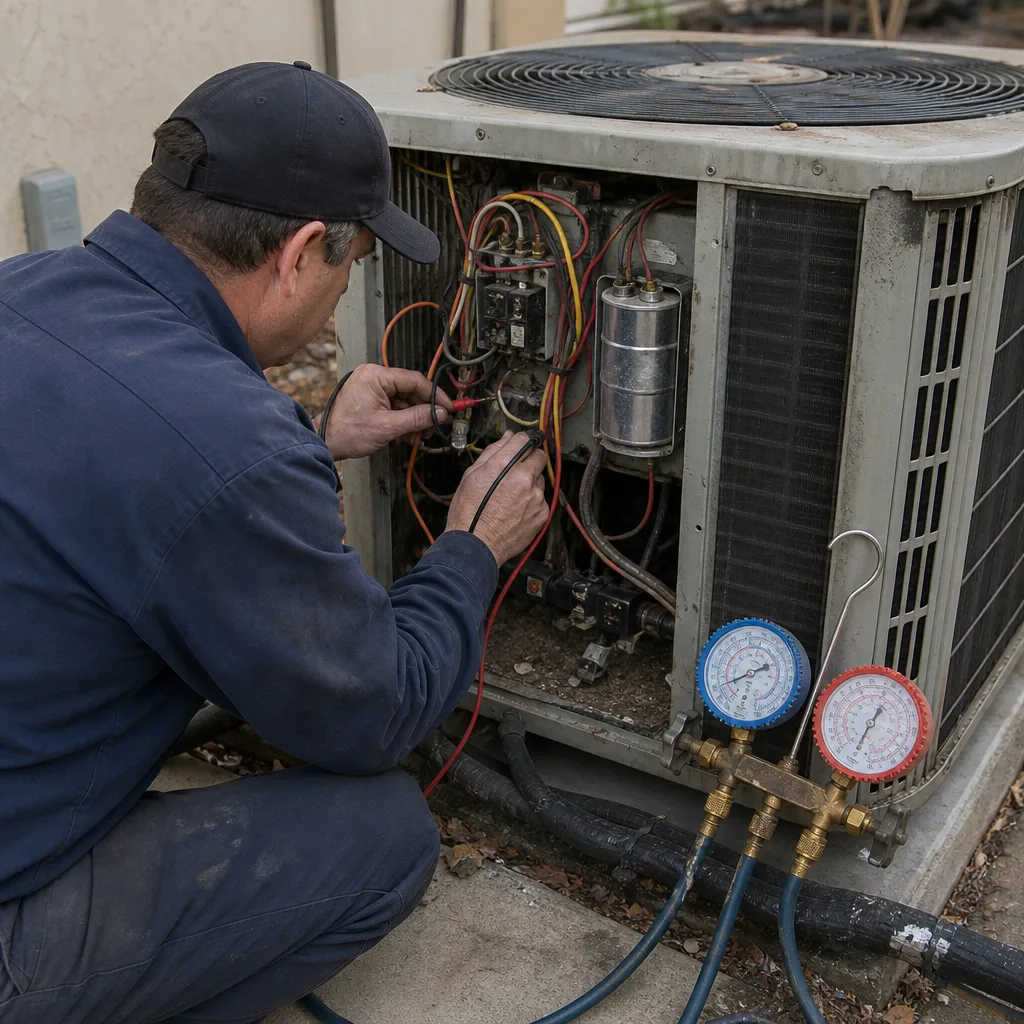
 After
 Before
 After
When to Call a Professional
There are some things you should check yourself – filter condition, outdoor unit clearance, thermostat settings, unusual noises. There are also things you should never touch, and a few of them are on the maintenance list above. Capacitor testing is a live electrical test at high voltage and should only be done by a trained tech. Refrigerant work is licensed and regulated. Heat exchanger and flame sensor inspection on a gas furnace is a safety-critical task that requires a trained eye and a combustion analyzer. If your furnace is making a funny smell, your AC is tripping the breaker, or your heat pump is running but not conditioning, that’s a professional call – not a homeowner project.
At Ray’s Heating & Air Spring Valley, we offer free estimates in Spring Valley – call (833) 620-7288. The person who answers is a live human, and if it’s after hours, Ray himself picks up. Every job carries the 90-Day Done Right Promise in writing. If we come out and the readings don’t justify a repair, we’ll tell you that too – that’s the whole point of readings first, numbers second.
Frequently Asked Questions
Twice a year for residential – once in spring before cooling season and once in fall before heating season. Spring Valley’s summers are hard enough on equipment that skipping the spring checkup is a real risk. Commercial systems running more than 10 hours a day should be on a quarterly schedule, with an extra mid-summer check in this climate. Call (833) 620-7288 to get on the schedule before the April rush.
Capacitor testing, capacitor replacement when readings are marginal, and contactor checks prevent the majority of no-cool calls. A weak capacitor is the single most common failure point in a desert climate, and it’s a part that costs very little to replace preemptively. Condenser coil cleaning is a close second – a dirty coil runs the compressor hot, and that’s what shortens system life. Get the readings checked before June each year.
Yes, in Spring Valley it is. The April-to-July temperature swing is about 30 degrees, and the systems that fail in July are almost always the ones that came into June unchecked. Spring is the window to catch marginal parts while they’re still cheap to fix. By June you’re not doing maintenance, you’re doing triage. Schedule the spring checkup in April or May – the exact date matters less than doing it before the first hot week.
A real maintenance report includes recorded readings – capacitor microfarads, compressor and blower amp draw, refrigerant pressures and superheat or subcooling, and the temperature split across the evaporator coil. If those numbers aren’t on the report, the visit didn’t check the parts that actually fail. A report with just checkmarks is a report; a report with readings is a maintenance visit. Call (833) 620-7288 for a visit where you see the numbers.
A maintenance visit that records real readings saves money. A maintenance visit that generates a report is a sales call in disguise. The difference shows up in the record – if the technician can show you the readings and explain what each one means, the visit is doing its job. If you get a checklist and a pitch for a new system, ask to see the numbers. At Ray’s Heating & Air Spring Valley we test the capacitor before anyone says the word compressor, and every job carries the 90-Day Done Right Promise. Call (833) 620-7288 and ask for the readings.
The rule of thumb is the $5,000 rule – if the system is more than 10 years old and the repair cost multiplied by the age of the system exceeds about $5,000, replacement usually makes more financial sense. In Spring Valley’s climate, systems work harder than in a mild climate, so a 12-year-old system here has been through more than a 12-year-old system back east. Get a second opinion on any written estimate – we offer a free second opinion on any written estimate, and the number is (833) 620-7288. If the readings say the system has years left, that’s what you’ll hear from us.
The Bottom Line
Emergency HVAC calls aren’t bad luck. They’re predictable. The majority trace back to a capacitor that was marginal in April, a condenser coil that wasn’t washed before the first hot week, or a refrigerant charge that was already drifting low when the summer started. In Spring Valley, the spring window is the one that matters most, and it’s April through May, not June. The maintenance steps that actually reduce emergency risk are the ones tied to specific failure modes – capacitor testing, contactor checks, coil cleaning, charge verification, amp draw, blower wheel inspection, condensate drain checks, and the fall heat exchanger inspection. Keep a simple equipment log, ask to see the readings, and treat commercial systems on a stricter schedule than residential. That’s the whole plan.
If you want this done right in your home, call Ray’s Heating & Air Spring Valley at (833) 620-7288 for a free estimate. We’re on the Spring Valley home service page with the full lineup, and if you’re comparing a repair to a replacement, the AC repair and installation page walks through the decision. A live person answers every call, 24/7, and the 90-Day Done Right Promise is stamped on every heating and cooling job. Call today – the best time to schedule a spring checkup is before the rush.
Written by the team at Ray’s Heating & Air Spring Valley.